The food-safety challenges facing Vietnamese agriculture
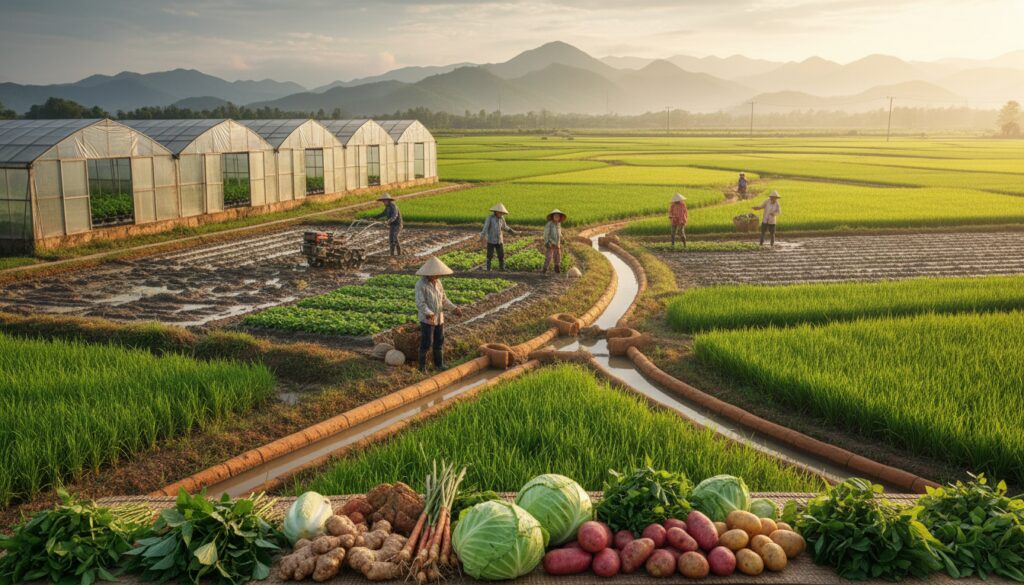
Vietnam is an agricultural power As such, rice export second in the world by output, and coffee output it holds the record of ranking second in the world. The total export value of farming, forestry, and fisheries reached about US$53 billion in 2023, an important industry that accounts for more than 15% of the country's total exports.
But behind this quantitative success lie hidden challenges.
Soil degradation and water pollution from excessive use of pesticides and chemical fertilizers, along with the problem of pesticide residues, pose a double challenge: health risks to domestic consumers and compliance with the sanitary standards of destination countries. Major destinations such as the EU, Japan, and the US tighten their residue and sanitary standards year by year, and produce that cannot meet them may find market access difficult.
The Vietnamese government has set out the "Strategy for Sustainable Agriculture and Rural Development to 2030, with a Vision to 2050," positioning the qualitative transformation of agriculture as a national priority. At the core of this transformation is establishing sanitary management that conforms to international standards.
[Point 1] Understanding and complying with the Food Safety Law
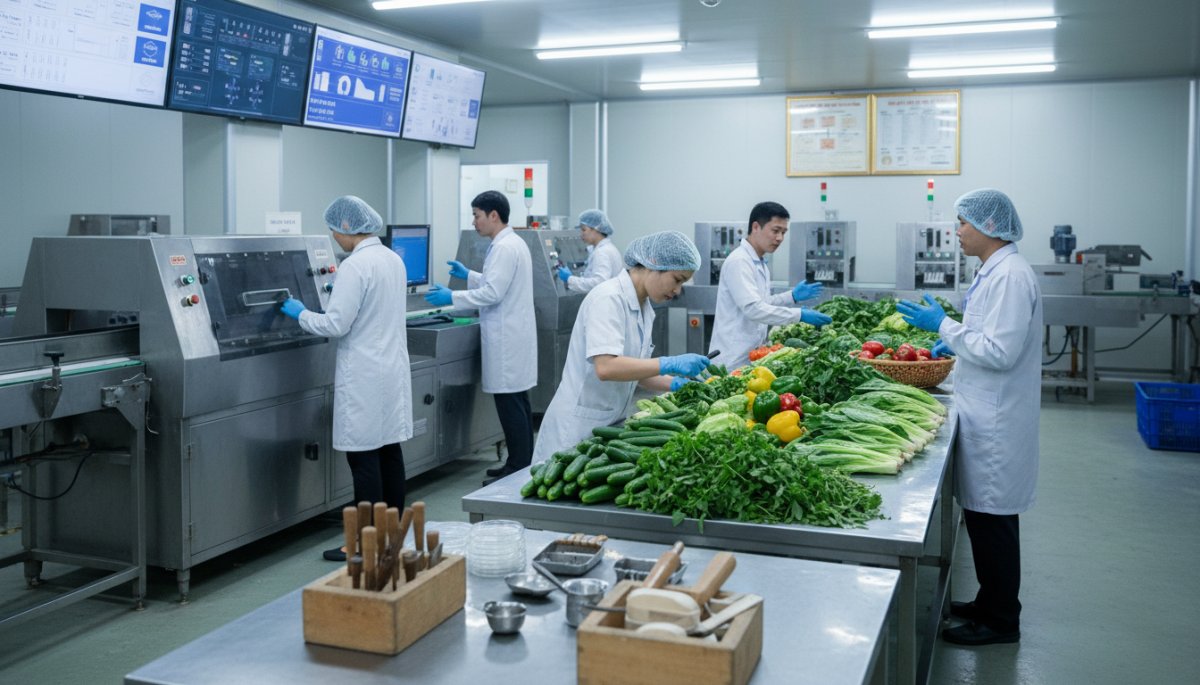
In Vietnam, food hygiene is regulated on the basis of the Law on Food Safety (55/2010/QH12) and multiple decrees and circulars. A revision of the Food Safety Law is being advanced in 2025, with the following as key points.
Expansion of prohibited acts: false advertising, concealment of consumer information, and illegal labeling in e-commerce, among others, are prohibited. Strengthened responsibility of registrants: those who register products or make self-declarations bear responsibility for safety and quality, and the risk of having registration revoked for violations has been strengthened.
Furthermore, the introduction of risk-based management is shifting the system toward strict oversight for high-risk products and companies and a simplified procedural track for low-risk ones.
[Point 2] Obtaining and practicing GAP certification
GAP (Good Agricultural Practices) is an international standard for ensuring the safety and quality of agricultural produce. In Vietnam, building traceability systems for produce has advanced in recent years, but implementation at the smallholder level lags.
Introducing blockchain-based origin-tracking systems and spreading GAP certification are being attempted. As a whole, however, this is still at an early stage, and penetration among small and medium-sized farmers is a challenge. Given that 97% of all Vietnamese farmers are small and medium-sized, developing a low-cost model for supporting certification is important.
[Point 3] Ensuring traceability
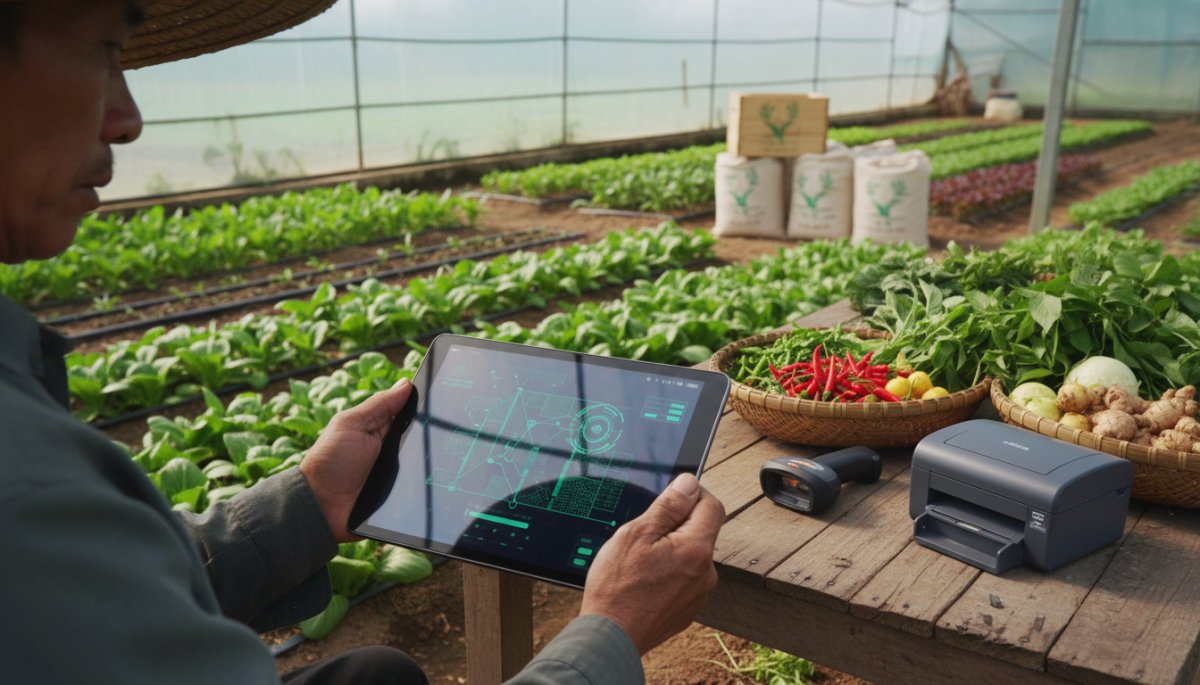
Recording and managing production history
Ensuring traceability (the ability to trace production history) is an important challenge for Southeast Asian produce to raise its competitiveness in international markets. Production-history records include detailed information such as the types and amounts of pesticides and fertilizers used, the timing of application, harvest dates and times, and storage conditions.
What is required is to record this information accurately and build a system that can present it at any time.
The use of digital technology is also advancing. Using smartphone apps and cloud-based systems, farmers can now record and manage production history. This improves the accuracy of information compared with paper-based records and reduces the risk of losing data.
Introducing blockchain technology
Origin-tracking systems using blockchain technology have the property that data is hard to falsify. With this technology, consumers can check in real time the production location, producer, distribution route, and other information for the produce they buy.
In Vietnam, some agricultural companies and cooperatives have begun pilot tests of this technology. However, the high introduction cost and technical complexity currently act as barriers to widespread adoption. Support from the government on both the technical and the economic-incentive fronts is hoped for.
[Point 4] Meeting export standards for Japan
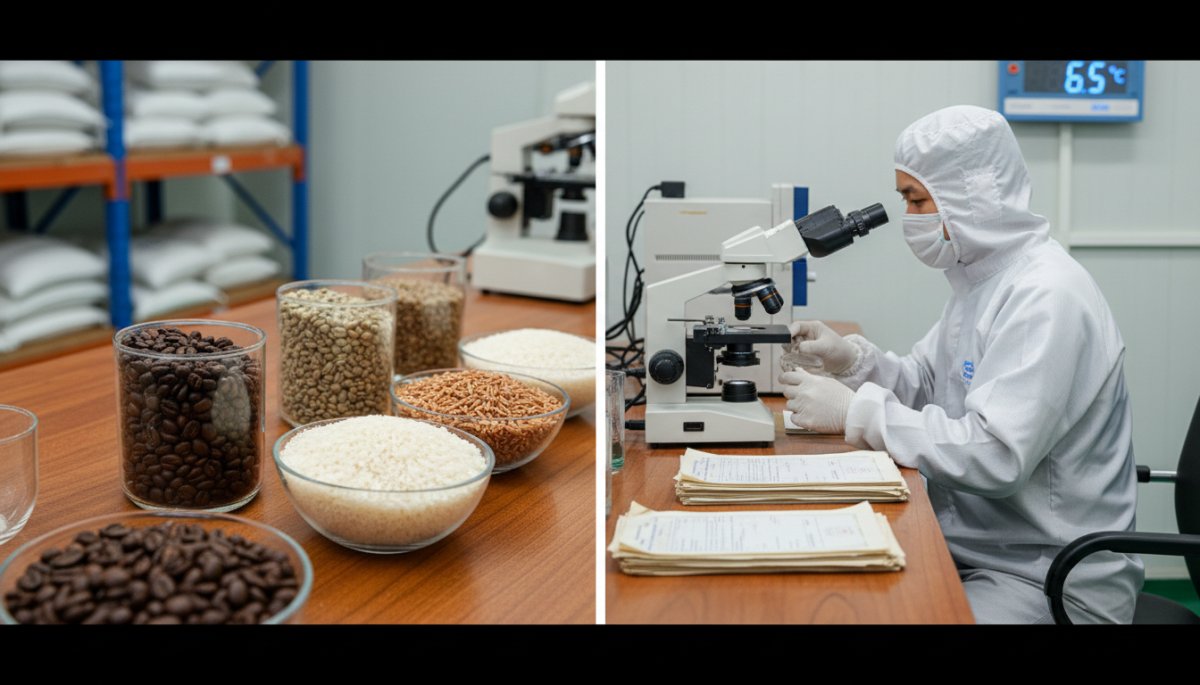
Clearing pesticide-residue standards
Japan is one of the countries with the strictest pesticide-residue standards in the world. When exporting produce from Vietnam to Japan, it must meet the residue standards under Japan's Food Sanitation Act.
To clear these standards, it is first important to limit the pesticides used to those approved in Japan. Furthermore, the amount and timing of pesticide application must be managed appropriately, and the "pre-harvest interval" — refraining from pesticide use for a set period before harvest — must be strictly observed.
Conducting regular pesticide-residue testing is also important. By documenting the results of testing by a third-party institution and building a system to present them at export, you can earn the trust of the Japanese side.
The process for obtaining export certificates
Circular 08/2025/TT-BYT, issued in March 2025, clarified the procedures for issuing certificates for food destined for export. It stipulates the application and issuance process for the "export certificates" and health certificates issued according to the requirements of the destination.
Obtaining an export certificate requires inspection of the hygiene-management status of production facilities, submission of product safety-test results, and confirmation of the state of the traceability system. To meet these requirements, maintaining a hygiene-management system day to day is important.
[Point 5] Developing the cold chain and preserving quality
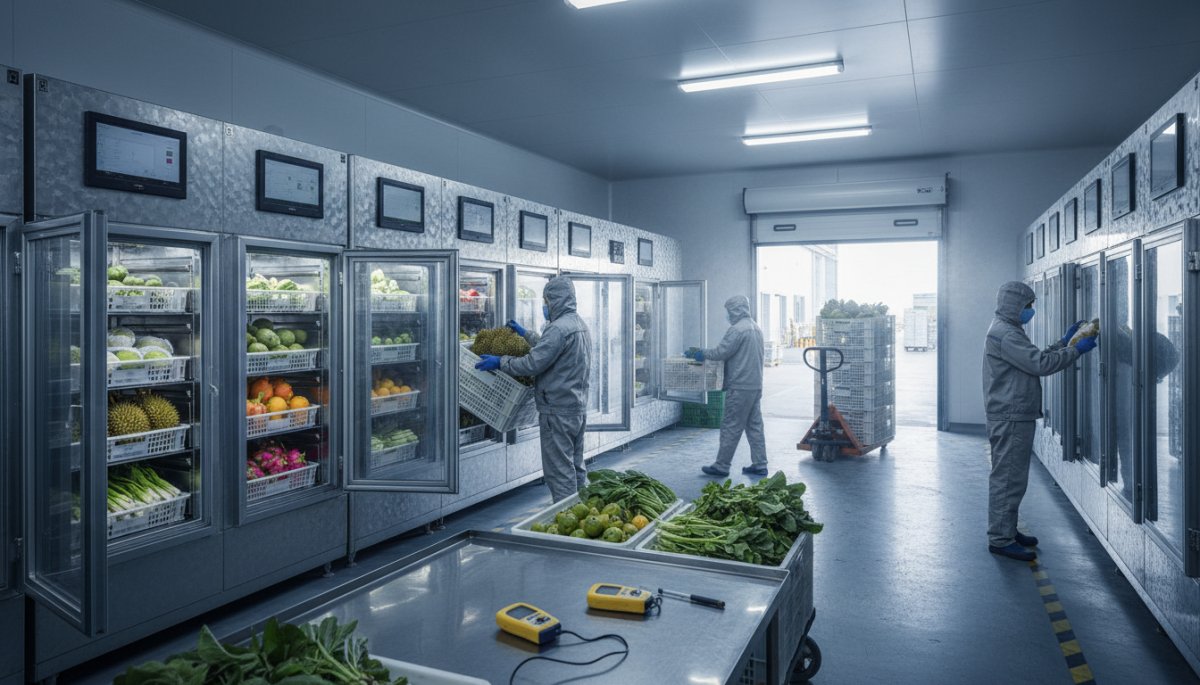
Post-harvest temperature management
One of the structural challenges of Vietnamese agriculture is the underdeveloped cold chain (low-temperature logistics). There are many cases in which harvested produce deteriorates and is discarded because it is not properly stored and transported, and post-harvest loss squeezes the profitability of agriculture as a whole.
Especially for perishable items such as fruit and seafood, a shortage of refrigeration and freezing facilities currently hinders improvements in export competitiveness.
By applying appropriate temperature management from right after harvest, produce freshness can be preserved for a long time. Building a consistent low-temperature system — introducing pre-cooling facilities, transporting by refrigerated trucks, and managing storage-warehouse temperatures — is required.
Making use of drying-processing technology
Developing the cold chain requires large investment, which is a burden for small and medium-sized farmers. One way to solve this challenge is to make use of primary-processing techniques such as drying and powdering.
Tropical produce spoils quickly and is difficult to transport long distances or store for long periods as is, but drying or powdering improves shelf life and also reduces logistics costs. Dried vegetables, dried fruit, and freeze-dried products are seeing growing demand in developed-country markets against a backdrop of rising health consciousness, and they can be a means of delivering Vietnamese produce to developed countries with added value.
The Vietnamese government has set a goal of entering the world's top 15 in agriculture and food processing by 2030, promoting a policy built on three pillars: attracting investment in processing facilities, building out the cold chain, and strengthening branding.
[Point 6] Making hygiene management more efficient with smart-agriculture technology
Environmental Monitoring with IoT Sensors
The Vietnamese government positions the introduction of smart agriculture as a national priority. Various technologies — environmental monitoring with IoT sensors, pesticide spraying by drones, pest prediction using AI, and automation of hydroponics — are being demonstrated in various places.
Lam Dong province (around Da Lat) is a leading region for smart agriculture in Vietnam, where greenhouse systems for vegetable cultivation and automatic irrigation systems have been introduced. In the Mekong Delta, demonstrations of water-saving rice farming through the introduction of water-management systems are advancing.
Technical cooperation by Japanese companies is also active, with demonstration projects for introducing small- and medium-scale greenhouses and remote cultivation support solutions being rolled out.
Preventive management through data analysis
The value of smart-agriculture technology lies in preventive management through data analysis. By collecting and analyzing environmental data such as soil moisture, temperature, and humidity in real time, pest outbreaks can be predicted in advance and controlled effectively with minimal pesticide use.
This reduces the risk of pesticide residues while also stabilizing yields. However, introducing smart agriculture requires an initial investment, so its spread among small farmers with limited funds is a challenge. Developing a low-cost smart-agriculture model that does not assume expensive equipment is important.
[Point 7] Making use of the Japan–ASEAN Green Cooperation Plan
Technology transfer through international cooperation
The "Japan-ASEAN Green Cooperation Plan," adopted at the Japan-ASEAN Agriculture and Forestry Ministers' Meeting in May 2023, is a comprehensive cooperation framework for building a sustainable agriculture and food system in the Asian monsoon region. Japan positions ASEAN as an important partner in the international rollout of the environmental-impact-reduction technologies set out in its "Strategy for Sustainable Food Systems (MIDORI)."
Specifically, the pillars are the transfer of precision-agriculture technology, support for promoting organic farming, the introduction of paddy-field management techniques to reduce greenhouse-gas emissions, and support for upgrading the produce value chain. Japan's strength lies in having technologies and know-how suited to small and medium-sized farmers.
Unlike the smart-agriculture solutions of the Netherlands or Korea, which assume large-scale farming, Japanese agricultural technology may fit the realities of Southeast Asia's small farmers.
Source Ministry of Agriculture, Forestry and Fisheries, "Final Report on Promoting the Use of Standards and Certification Systems for Agricultural Products and Foods in Vietnam" Prepared from the above (fiscal year 2020)
Supporting the Transition to Organic Farming
In Southeast Asia, the shift from conventional chemical agriculture to organic and sustainable farming has emerged as a policy issue for each country's government. In Vietnam too, the Ministry of Agriculture and Rural Development has set expanding organic farming as a policy goal, but the area of certified-organic farmland is still only a tiny fraction of the total.
Switching to organic farming often involves a temporary drop in yield, which can be a risk for small farmers with little margin. The cost of obtaining organic certification and the complexity of production management that meets certification standards are also barriers. Building a mechanism to encourage the switch, from both the technical-support and economic-incentive sides, is hoped for.
Summary: the shift to sustainable agriculture opens the future
For Vietnamese agriculture to maintain and improve its competitiveness in international markets, thorough hygiene management is important. Complying with the Food Safety Law, obtaining GAP certification, ensuring traceability, clearing pesticide-residue standards, developing the cold chain, introducing smart-agriculture technology, and making use of international cooperation. By practicing these seven points, Vietnamese produce may come to be recognized as high-quality products trusted in world markets.
The shift from quantity to quality is not easy.
But this very shift is an important path to realizing the sustainable development of Vietnamese agriculture. Given that small farmers make up 97% of the current picture, developing and spreading hygiene-management methods that are low-cost and practical is important. Building a uniquely Vietnamese agricultural model while making use of the technology and know-how of developed countries such as Japan may determine success in the next decade.
Vietnamese agriculture, which feeds the stomachs of 100 million people, is right now in the midst of transformation. Through the practice of hygiene management, toward an industry we can be proud of before the world, agricultural power let us carve out the path ahead.