The Strength of Southeast Asian Agriculture: A Growth Market Centered on Vietnam
Looking at the world agricultural map, Southeast Asia's presence grows year by year.
Vietnam, Thailand, Indonesia—these countries have nurtured thousands of years of farming civilization against a backdrop of tropical monsoon climate and fertile delta zones. As of 2026, Southeast Asia's agricultural export value continues to rise, playing an important role in the world's food supply.
This article explains in detail the strength of agriculture in the main countries—Thailand, Indonesia, the Philippines, and others—centered on Vietnam, which is at the core of Southeast Asian agriculture. By analyzing each country's strengths and characteristics, the direction of their agricultural policies, and their future prospects, you can deepen your understanding of the Southeast Asian agricultural market.
The Strength of Vietnamese Agriculture: A Fast-Growing Export Power
Vietnam is an agricultural power of about 100 million people, with agriculture accounting for about 12% of GDP and more than 40% of the labor force.
The 1986 Doi Moi policy Since then, agricultural production has expanded dramatically. Ever since it first became a net rice exporter in 1989, it has consistently remained one of the world's leading rice export countries. Annual rice output is about 43.5 million tonnes, and export volume ranks second in the world.
Coffee output ranks second in the world, and for the Robusta variety it is the world's largest producer. Large-scale coffee growing is carried out centered on Dak Lak and Lam Dong provinces in the Central Highlands, boasting an output second only to Brazil. Its output of cashew nuts and black pepper ranks first in the world, while shrimp output ranks third in the world and exports rank second.
Total agriculture, forestry, and fishery exports reached about US$53 billion in 2023, accounting for more than 15% of the country's total exports. The main destinations are Japan, the US, the EU, and China, with aquatic-product exports alone reaching about US$9 billion a year.
The Mekong Delta: The Heart of Vietnamese Agriculture
Vietnamese agriculture is supported by the Red River Delta in the north and the Mekong Delta in the south.
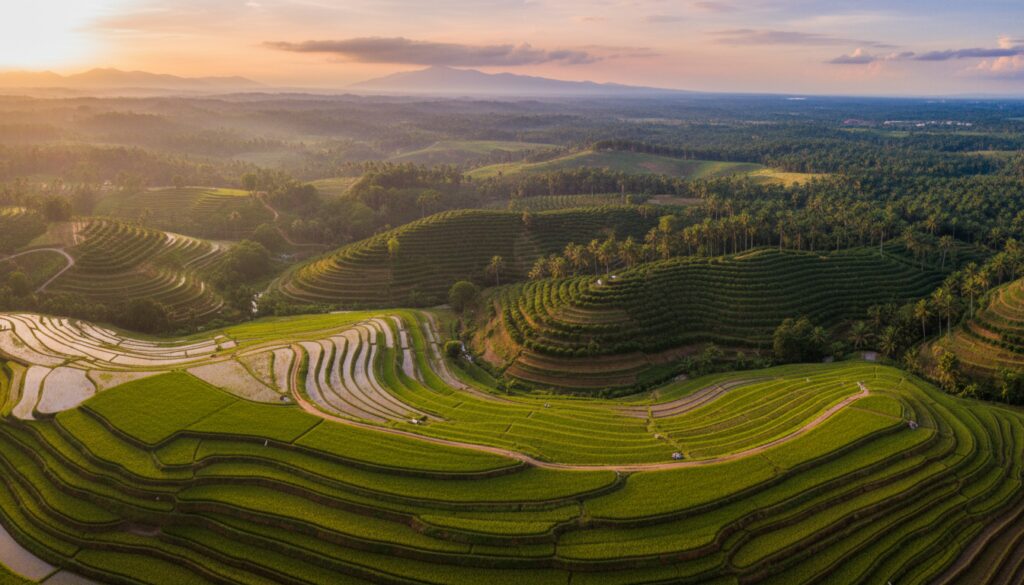
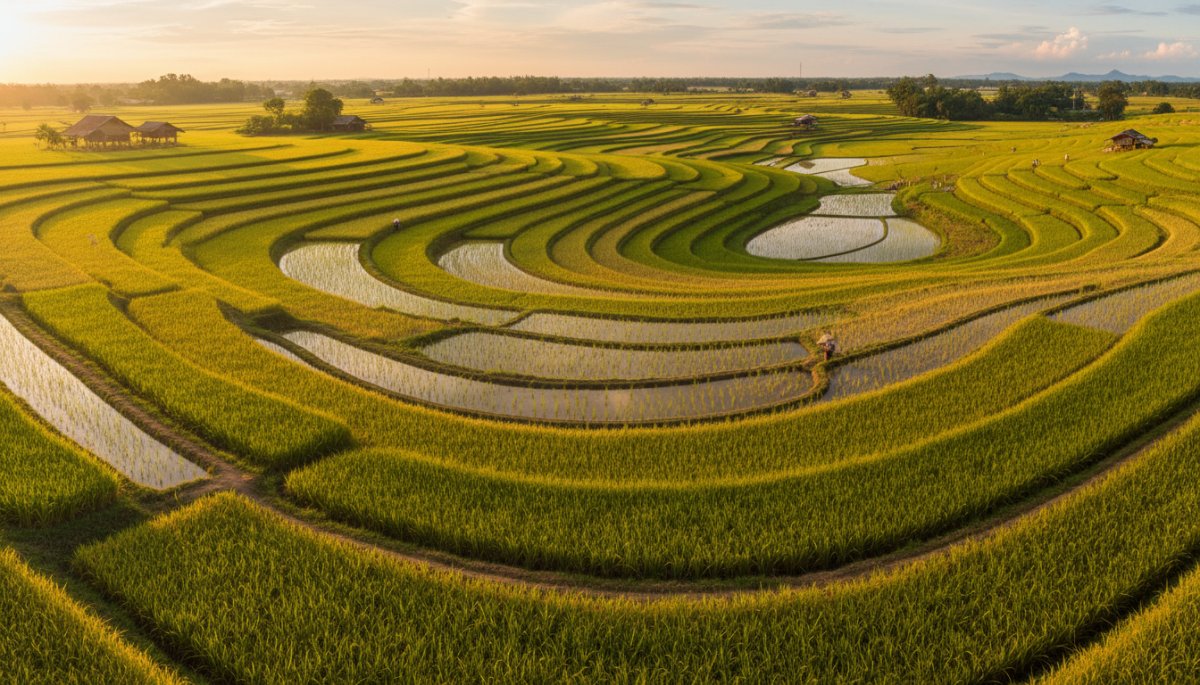
The Mekong Delta is one of the world's leading production zones, responsible for more than half of the country's rice output. Thanks to fertile alluvial soil and abundant water resources, two to three rice crops a year are possible, forming the foundation on which Vietnam became a rice export power.
The Central Highlands is a major producing area for plantation crops such as coffee, tea, cacao, and pepper, and this region's contribution has been a large part of why Vietnam became a coffee power.
The Agricultural Revolution Brought About by the Doi Moi Policy
When the 1986 Doi Moi policy granted land-use rights to individual farmers and introduced a market economy, agricultural production expanded dramatically.
The shift from collective farming to family management raised farmers' motivation and improved productivity. In 1989 the country became a net rice exporter for the first time, and has since consistently kept increasing its export volume.
The Structural Challenges Facing Vietnamese Agriculture
At present, however, Vietnamese agriculture faces serious structural challenges.
The average cultivated area per farm is about 0.44 hectares, among the smallest in the ASEAN countries, and 97% of all farmers are small and medium-scale. About 57% of agricultural workers are unskilled, and the share aged 50 and over reaches about 43%, so aging is advancing.
In response to challenges such as low added value, an underdeveloped cold chain, the low productivity and aging of smallholder farmers, and food-safety and environmental problems, the Vietnamese government has set out its "Strategy for Sustainable Agriculture and Rural Development to 2030, with a Vision to 2050." It positions the adoption of smart agriculture as a national priority, and demonstration projects for precision agriculture using IoT sensors, drones, and AI are being rolled out across the country.
Source Policy Research Institute, Ministry of Agriculture, Forestry and Fisheries, "Changes in Asian Food, Agriculture and Agricultural Policy: An Overview" prepared from
Thailand: The Strength of the "Kitchen of the World"
Thailand is an export power in agricultural products and food, dubbed the "kitchen of the world."
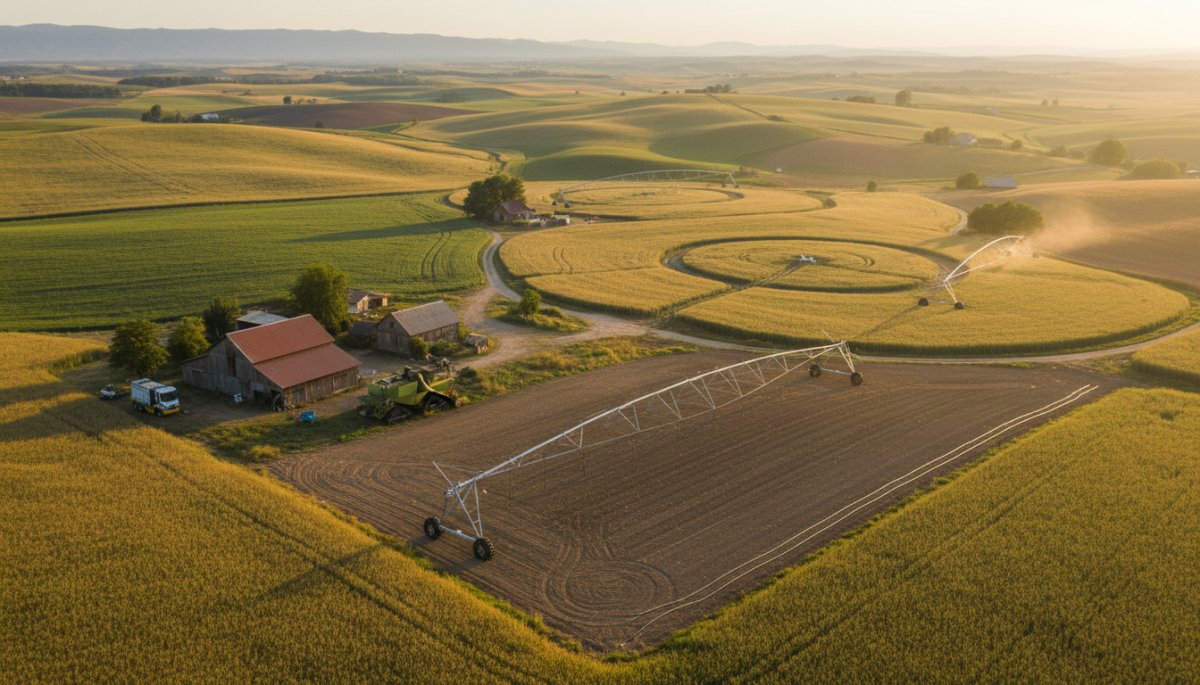
Agriculture accounts for about 8-9% of GDP, and about 30% of the population works in agriculture-related jobs. The farmland area per household averages about 3 hectares, which is large-scale compared with Vietnam's roughly 0.44 hectares, and its commercial history of farming is long, which is a hallmark.
An Export Power in High-Quality Rice and Natural Rubber
Jasmine rice (khao hom mali) has earned high regard in international markets and is exported worldwide as Thailand's signature high-quality rice.
Natural rubber output and exports are among the largest in the world, and against the backdrop of rising demand from the auto industry and for medical gloves, they are a stable source of foreign currency. Thailand is also among the world's top exporters of processed chicken, and much of the chicken products sold at Japanese convenience stores are from Thailand.
The Promotion of Organic Farming
The Thai government puts effort into promoting organic farming, operating a certification system under the "Thai organic agriculture standard."
For jasmine rice, organic cultivation it actively promotes, positioning high-value-added agricultural exports as a growth strategy. Shrimp farming also thrives, with black tiger and whiteleg shrimp as the main export items.
Indonesia: ASEAN's Largest Agricultural Producer
Indonesia has ASEAN's largest population, about 280 million, and the largest land area, and is also the largest in ASEAN by agricultural output value.
The World's Largest Producer of Palm Oil
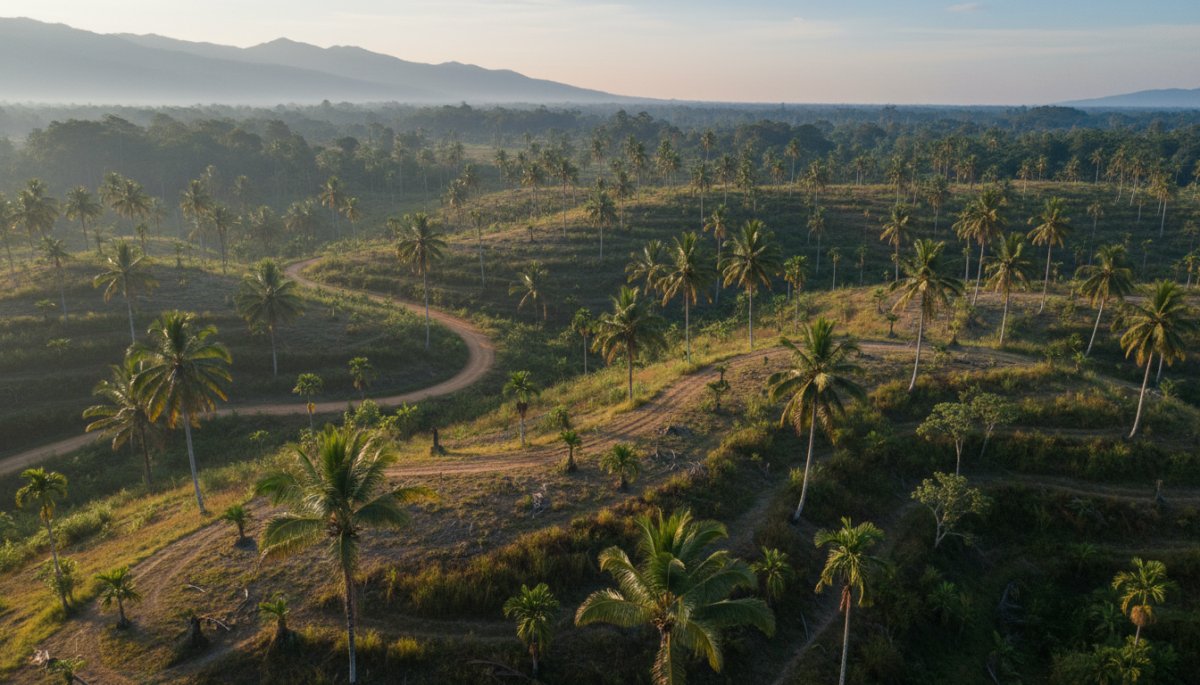
Its greatest hallmark is that it is the world's largest producer of Palm oil.
Together with Malaysia, it accounts for more than 85% of world output, exported worldwide as cooking oil, a cosmetics ingredient, and biofuel. It produces crops across the whole range of tropical agriculture, including rice, cassava, natural rubber, coffee, cacao, and sugarcane.
Centered on the Robusta variety, coffee output ranks fourth in the world, and Mandheling coffee from Sumatra in particular has earned high regard in international markets as a premium product.
Balancing Environmental Protection and Economic Growth
The challenge is the environmental problems that come with the Palm oil industry.
The destruction of tropical rainforest through plantation development and greenhouse gas emissions from the clearing of peatlands have drawn international criticism, and the spread of sustainable palm oil certification (RSPO, ISPO) is being advanced. Aiming to balance environmental protection and economic growth, the Indonesian government is promoting stronger certification systems and technical support for smallholder farmers.
The Philippines: An Exporter of Bananas and Coconuts
The Philippines holds one of the world's leading positions in banana exports.
Southern Mindanao Island is a large-scale plantation zone for bananas and pineapples, and much of the bananas for Japan are shipped from here. Coconut output is also among the world's largest, exported as coconut oil and coconut milk.
However, it faces the challenge that nearly 20 typhoons approach or make landfall each year on average, bringing a high risk of severe damage to crops. As the only net rice importer in ASEAN, it also carries a vulnerability in food security.
Cambodia, Myanmar, and Laos: Emerging Agricultural Countries with High Growth Potential
In Cambodia, Myanmar, and Laos, agriculture still accounts for a high share of GDP and employment, making agriculture's importance to economic development stand out.
Cambodia
In Cambodia, rice and cassava production thrives, centered on the area around Tonle Sap Lake and the Mekong River basin.
In recent years, rice output has increased, and the country is raising its presence as an exporter. Efforts to build agricultural value chains using international support, such as the World Bank-backed "Cambodia Agriculture Sector Diversification Project," are advancing, and future growth is expected.
Myanmar
Myanmar is a rice-farming power centered on the Irrawaddy Delta and was once one of Asia's leading rice exporters.
The production of pulses also thrives, and exports of chickpeas and mung beans in particular are among the world's largest. However, political instability has stalled agricultural investment, and worsening relations with the international community have also affected exports.
Laos
Though Laos is a landlocked country, rice farming thrives thanks to the fertile land of the Mekong River basin.
It puts effort into promoting organic farming, and environmentally conscious agriculture that limits the use of chemical fertilizers and pesticides is drawing attention.
Common Challenges and Future Prospects for Southeast Asian Agriculture
What challenges are common to the agricultural countries of Southeast Asia?
Vulnerability to Climate Change
First is vulnerability to climate change.
Rising sea levels, the increasing frequency of extreme weather, and changes in rainfall patterns directly hit the rice farming that depends on low-lying delta zones. Vietnam's Mekong Delta, Myanmar's Irrawaddy Delta, and Thailand's Chao Phraya Delta all lie at low elevations, and the risks of saltwater intrusion and flooding grow greater year by year.
The Agriculture-Industry Gap and the Outflow of Labor
Second is the agriculture-industry gap and the outflow of labor.
As industrialization advances, the income gap between the agricultural sector and the industrial and service sectors widens, and young people migrate to the cities in search of jobs in manufacturing and services. In Vietnam, 43% of agricultural workers are aged 50 and over, and this trend is common across Southeast Asia.
Ensuring Food Safety and Traceability
Third is ensuring food safety and traceability.
Major destinations such as the EU, Japan, and the US tighten their pesticide-residue and hygiene standards year by year, and produce that cannot meet them is shut out of the market. The introduction of origin-tracking systems using blockchain technology and the spread of GAP (Good Agricultural Practices) certification are being attempted, but overall they are still at an early stage.
Possibilities for the Future
On the other hand, there is great potential in the future of Southeast Asian agriculture.
The adoption of smart-agriculture technology, a shift to organic farming, and the processing and value-adding of agricultural products—these efforts are accelerating in each country. The "Japan-ASEAN Midori (Green) Cooperation Plan," adopted at the Japan-ASEAN Agriculture and Forestry Ministers' Meeting in May 2023, is a comprehensive cooperation framework for building sustainable agriculture and food systems in the Asian monsoon region.
Source Policy Research Institute, Ministry of Agriculture, Forestry and Fisheries, "Changes in Asian Food, Agriculture and Agricultural Policy: An Overview" prepared from
The Southeast Asian Agricultural Market as a Place for Business Entry
The agricultural market of Southeast Asia holds great potential as an investment destination.
The Expansion of Market Size
First is the expansion of market size.
Across Southeast Asia as a whole there are about 670 million consumers. The growth of the middle class that comes with economic growth is raising demand for high-quality agricultural products and processed foods.
Room for Technology Adoption
Second is the large room for technology adoption.
In many Southeast Asian countries, the rate of agricultural mechanization and the technical level are still developing, so there is much room to introduce smart-agriculture technology, cold chains, and processing technology. The technology and know-how that Japanese companies hold for small and medium-scale farmers are highly likely to fit Southeast Asia's realities, making for business opportunities.
Active Government Support
Third is active government support.
Each country's government positions the modernization of agriculture as a national priority and offers preferential measures for the technology adoption and investment of foreign companies. In Vietnam, Thailand, and Indonesia, foreign direct investment (FDI) related to agriculture is increasing year by year, and cases of Japanese companies entering are also on the rise.
Understanding the Differences in Each Country's Agricultural Structure
An important point when considering entry is to understand the differences in each country's agricultural structure.
In Vietnam, smallholder farmers make up 97%, and the average cultivated area is very small at 0.44 hectares, so low-cost solutions for smallholder farmers are needed. Thailand, by contrast, has a relatively large average cultivated area of about 3 hectares, and its commercial history of farming is long, so the introduction of more advanced technology and systems is possible.
Conclusion: The Strength and Potential of Southeast Asian Agriculture
Southeast Asian agriculture plays an important role in the world's food supply.
Vietnam's fast-growing export power, Thailand's position as the "kitchen of the world," Indonesia's palm oil production power, the Philippines' banana exports—each has its own strengths and is raising its presence on the world agricultural map.
As of 2026, Southeast Asian agriculture is at a turning point from "quantity to quality." As each country tackles challenges such as raising added value, securing environmental sustainability, adopting smart-agriculture technology, and strengthening food-safety standards, new business opportunities are being born.
For Japanese companies, the Southeast Asian agricultural market is a field where they can make use of their technology and know-how. Smart-agriculture technology for small and medium-scale farmers, raising added value through the drying and powdering of produce, support for building cold chains, support for organic-farming certification—all are areas where Japan has strengths, and there is potential to expand business while contributing to the development of Southeast Asian agriculture.
Correctly understanding the strength of Southeast Asian agriculture and building strategies suited to each country's characteristics will be the key to success.
You May Also Like
- What Is the History of Southeast Asian Agriculture? 7 Lessons for Modern Agriculture from Its Development
- Vietnam's main crop items and cultivation techniques | Production strategies for coffee, rice and shrimp
- What Is the Doi Moi Policy? The Full Story of the Economic Reform That Transformed Vietnamese Agriculture and Its 7 Effects