The Background to Vietnam Becoming a Rice-Export Powerhouse
Vietnam's rice industry has grown rapidly since the 1980s.
Until the 1980s, Vietnam was in a situation where it was difficult even to meet domestic demand. However, with the 1986 Doi Moi policy, a major shift was made from a collective-farming system to granting land-use rights to individual farmers, which heightened farmers' motivation to produce. The development of irrigation infrastructure, the spread of high-yield varieties, and expanded access to international markets all combined, and Vietnam turned into a net rice exporter for the first time in 1989.
At present, Vietnam's annual rice production reaches about 43.5 million tonnes. Total agriculture, forestry, and fishery exports reached about US$53 billion in 2023, growing to account for more than 15% of the country's total exports.
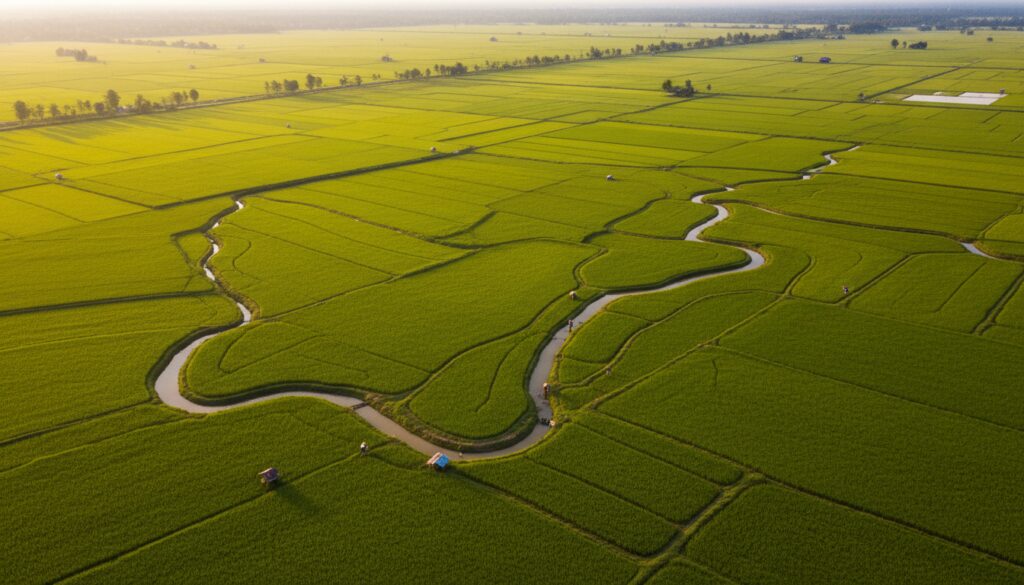
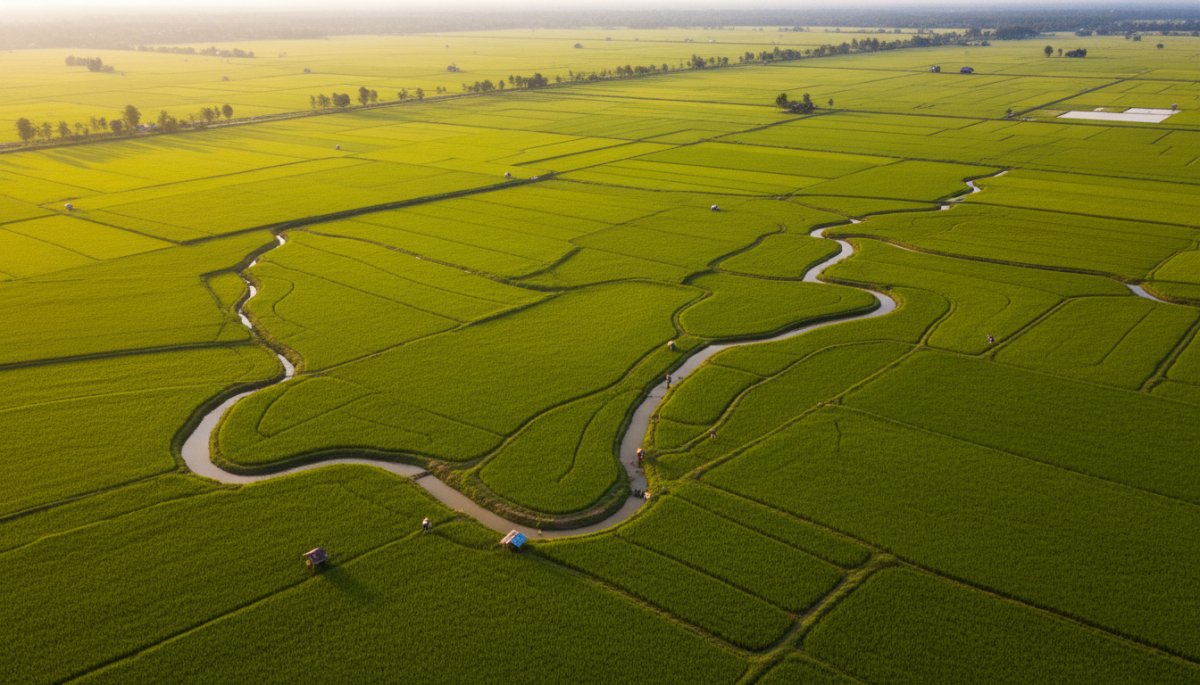
The key to this success lies in the diverse climatic conditions brought by a country long and narrow from north to south, and in two enormous delta regions. The Red River Delta in the north and the Mekong Delta in the south function as the core of Vietnamese agriculture.
Source
Ministry of Agriculture, Forestry and Fisheries, "Vietnam's Rice Economy and Rice Export Mechanism"
prepared from
The Mekong Delta — One of the World's Foremost Rice-Producing Regions
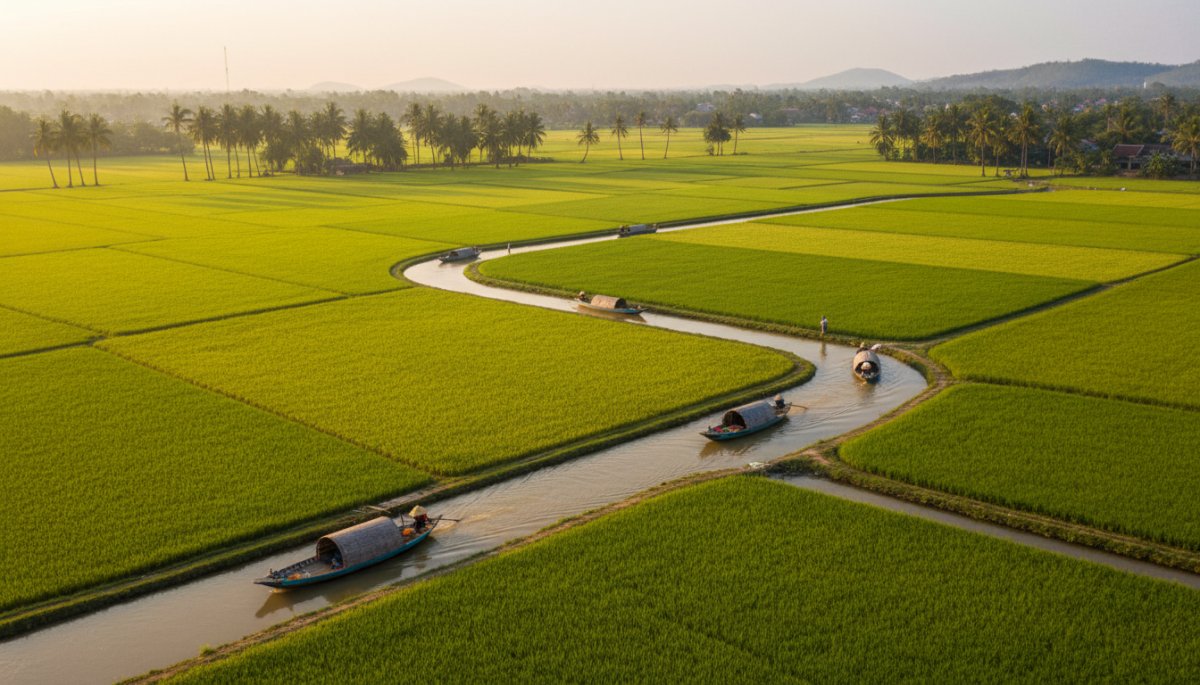
The Mekong Delta, spread across southern Vietnam, is one of the world's foremost rice-producing regions.
This region accounts for more than half of the country's rice production, and the greater part of export-bound rice is also shipped from here. In addition to large-scale rice cultivation that makes use of the vast, flat land, shrimp farming and fruit-tree cultivation are also thriving, making it a region that symbolizes the diversity of Vietnamese agriculture.
The abundant water and fertile soil brought by the Mekong River make year-round agricultural production possible. Double cropping, and triple cropping are common, and its high productivity ranks among the top in Southeast Asia. At the same time, this blessed environment is also a region readily affected by climate change.
New Challenges Brought by Climate Change
Saltwater intrusion from rising sea levels, intensified flooding, and dry-season water shortages are growing more serious year by year.
The Mekong Delta lies at a low elevation and has geographic characteristics that make it susceptible to rising sea levels. When saltwater intrudes into farmland, the soil changes into one unsuited to rice cultivation, and yields decline. The introduction of the flood-tolerant variety "Sub1" developed by the International Rice Research Institute and of salt-tolerant varieties is being advanced, but the reality is that the pace of countermeasures is not keeping up with the progress of climate change.
In years when El Nino occurs, water shortages arise across the entire Mekong basin, and many farmers are affected. Having to respond simultaneously to the opposing risks of drought and flooding is destabilizing farm management.
Seven Strategies Supporting Vietnam's Rice Exports
To maintain and expand its position as a rice-export powerhouse, Vietnam pursues a wide range of strategies promoted by the government and the private sector.
Strategy 1: Improving Quality and Adding Higher Value
Traditionally, Vietnamese rice has been rated as "large in quantity but inferior in quality."
To improve this situation, the government has set quality improvement as a key issue. Expanding the production of high-quality rice, organic cultivation promotion, and the development of brand rice are being actively advanced. Cultivating brand rice that earns high marks in international markets is the key to raising added value.
Strategy 2: Strategic Use of Free Trade Agreements
Vietnam participates in multiple free trade agreements, such as the CPTPP and the EU-Vietnam FTA.
These agreements have expanded access to developed-country markets. The entry into force of the EVFTA in particular has phased out tariffs in the EU market, improving competitiveness. To make the most of the FTAs' benefits, building production systems that meet the quality and sanitary standards of export destinations is being advanced.
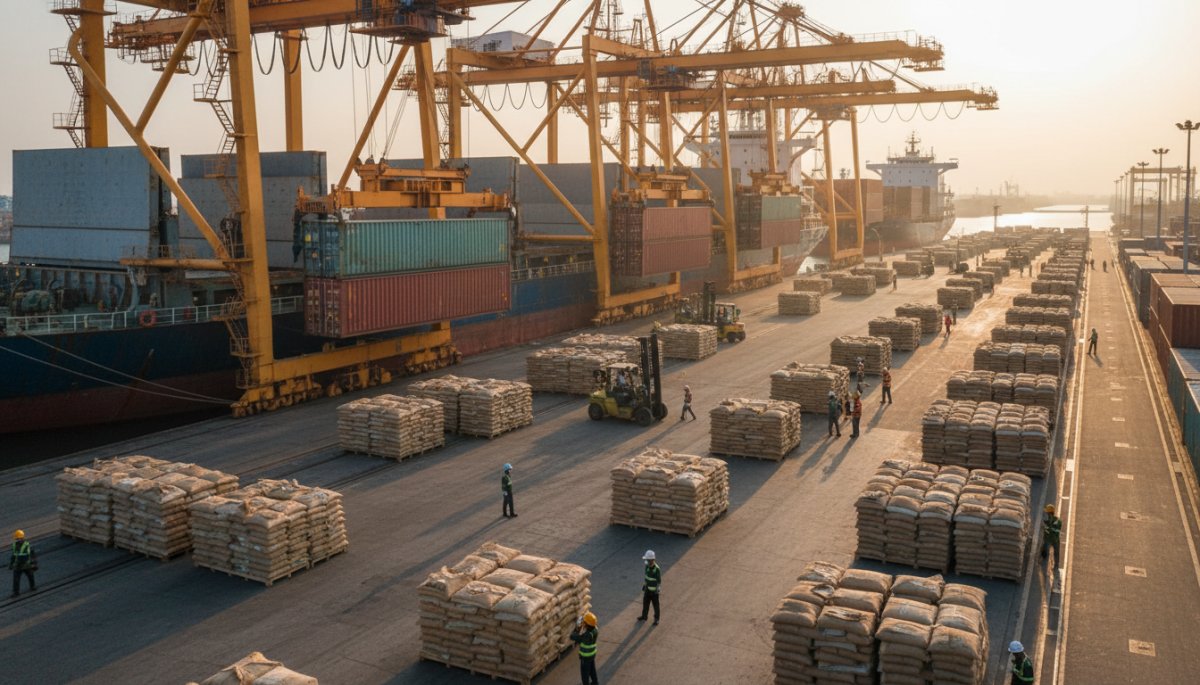
Strategy 3: Promoting the Introduction of Smart Agriculture
The Vietnamese government has set out its "Strategy for Sustainable Agriculture and Rural Development to 2030, with a Vision to 2050," positioning the adoption of smart agriculture as a national priority.
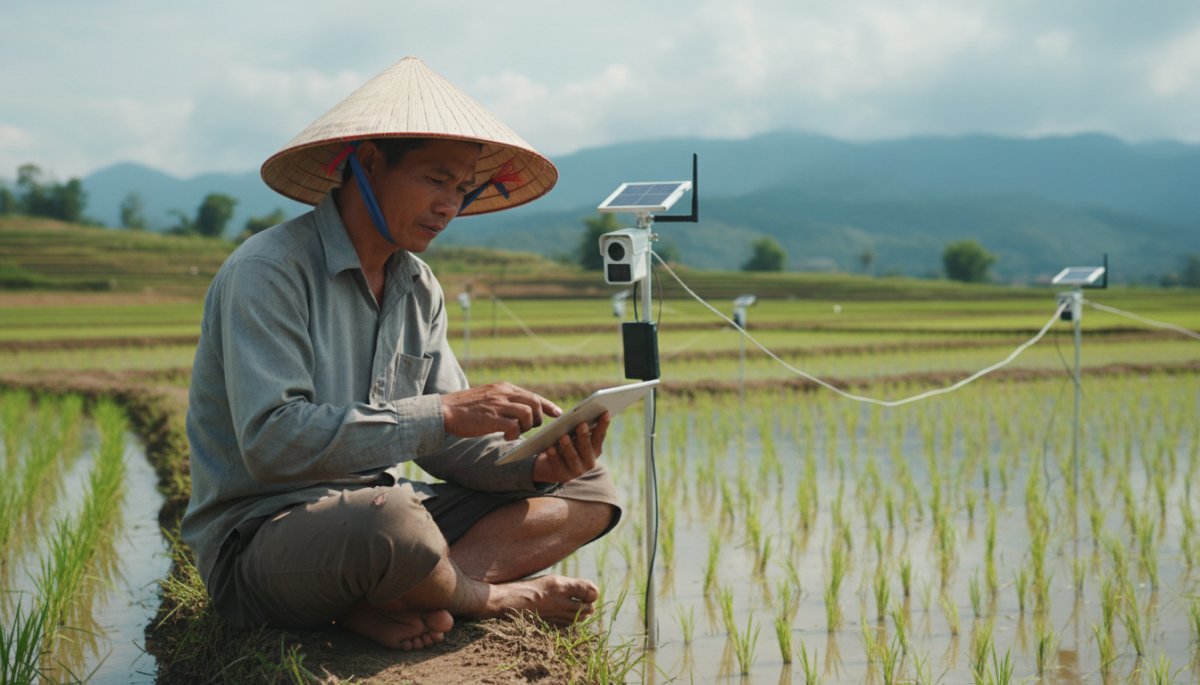
Various technologies are being demonstrated in different areas, such as environmental monitoring with IoT sensors, pesticide spraying by drones, and AI-based pest and disease forecasting. In the Mekong Delta, the demonstration of water-saving rice cultivation through the introduction of water-management systems is advancing. Technical cooperation by Japanese companies is also active, with the introduction of small and medium-scale greenhouses and demonstration projects for remote cultivation-support solutions being rolled out.
Strategy 4: Developing the Cold Chain
There are many cases where harvested agricultural products deteriorate and are discarded because they are not properly stored and transported, and post-harvest loss is squeezing the profitability of agriculture as a whole.
With rice in particular, storage under a hot, humid climate invites quality deterioration. Developing refrigeration and freezing facilities and building a cold-chain logistics network are indispensable to improving export competitiveness. The government has set a goal of entering the world's top 15 in agriculture and food processing by 2030, and is pursuing a policy that makes cold-chain development one of three pillars.
Strategy 5: Transition to Organic Agriculture
Aiming to achieve both reduced environmental burden and added value, a transition to organic agriculture is being advanced.
The "Japan-ASEAN Green Cooperation Plan," adopted at the 2023 Japan-ASEAN Ministerial Meeting on Agriculture and Forestry, is a comprehensive framework of cooperation for building sustainable agriculture and food systems in the Asian monsoon region. Japan positions ASEAN as a key partner for the international rollout of the environmental-impact-reduction technologies set out in its Strategy for Sustainable Food Systems (MIDORI).
In Vietnam, too, the Ministry of Agriculture and Rural Development has set expanding organic agriculture as a policy goal, but the area of farmland that has obtained organic certification is still only a tiny fraction of the whole. The transition to organic agriculture is often accompanied by a temporary drop in yields, and for small-scale farmers without a margin, the reality is that the risk is high.
Source
Ministry of Agriculture, Forestry and Fisheries, "The Current State of Vietnamese Agriculture and Its Agricultural and Trade Policy"
prepared from
Strategy 6: Improving the Productivity of Small-Scale Farmers
97% of all agricultural workers in Vietnam are small and medium-scale farmers, and the introduction of mechanization and smart-agriculture technology is not advancing.
The average cultivated area per farmer is about 0.44 hectares, among the smallest in ASEAN countries. According to estimates by the Ministry of Agriculture and Rural Development, about 57% of agricultural workers are unskilled, and the proportion aged 50 and over reaches about 43%. With the outflow of young people to urban areas continuing, securing people to carry on farming is an important challenge.
Developing low-cost smart-agriculture models suited to small-scale farmers, agricultural cooperatives strengthening, and enhancing technical training are called for. Japanese agricultural technology, unlike the solutions of the Netherlands or South Korea that presuppose large-scale agriculture, is expected to have a high likelihood of fitting the actual circumstances of small-scale farmers.
Strategy 7: Ensuring Food Safety and Traceability
In raising competitiveness in international markets, ensuring food safety and traceability is an important challenge.
Major export destinations such as the EU, Japan, and the United States are tightening pesticide-residue standards and hygiene standards year by year, and produce that cannot meet them is shut out of the market. In Vietnam, the building of traceability systems for produce has advanced in recent years, but implementation at the smallholder level lags behind.
The introduction of origin-tracking systems using blockchain technology and the spread of GAP (Good Agricultural Practices) certification are being attempted, but overall they are still at an early stage. Soil degradation and water pollution from excessive use of pesticides and chemical fertilizers, and pesticide-residue problems, pose a double challenge: the health risk to domestic consumers and the need to meet the hygiene standards of destination countries.
Latest Developments in 2026 and the Future Outlook
As of 2026, Vietnam's rice industry is facing a major turning point.
It must tackle three challenges at once: responding to climate change, improving quality, and ensuring sustainability. As the world's population exceeds 8 billion and climate change affects agricultural production in various regions, the production potential held by tropical agriculture in Southeast Asia is one of the foundations supporting the global food supply.
Vietnam is accelerating a shift in mindset from "agricultural production" to an "agricultural economy." The move from an era of pursuing quantity to an era that emphasizes quality, safety, environmental sustainability, and brand value also means a business opportunity for companies in Japan and other developed countries.
Strengthening Cooperation with Japan
Agricultural cooperation between Japan and ASEAN has entered a new stage in recent years.
The "Japan-ASEAN Green Cooperation Plan," adopted at the Japan-ASEAN Ministerial Meeting on Agriculture and Forestry in May 2023, is a comprehensive framework of cooperation for building sustainable agriculture and food systems in the Asian monsoon region. Its pillars are the transfer of precision farming technology, support for promoting organic farming, the introduction of paddy-field management techniques to reduce greenhouse gas emissions, and support for upgrading agricultural value chains.
Japan's strength lies in holding technology and know-how suited to small and medium-scale farmers. Raising added value through drying and powdering of agricultural products, rolling out smart-agriculture technology to small and medium-scale farmers, supporting organic-agriculture certification, and supporting the building of cold chains — all are areas where Japanese companies with the technology and know-how can contribute.
A Presence Shaping the Future of Southeast Asian Agriculture
The process by which Vietnam's rice industry becomes more sophisticated and is deeply incorporated into global value chains will become an important element in discussing the Asian economy of the twenty-first century.
The way the agriculture of Vietnam, which has the appetite of a hundred million people, is shifting from quantity to quality and from production to economy has the potential to become a reference case for agricultural development across Southeast Asia as a whole. The vast rice-paddy scenery of the Mekong Delta is right now in the midst of a great transformation.
Vietnam's rice exports, beyond mere agricultural-product trade, are at the frontline of global challenges that question sustainable food systems, adaptation to climate change, and the shape of international cooperation.
Summary — Structural Reform Supporting World-Class Capability
Vietnam produces about 43.5 million tonnes of rice a year and has established its position as one of the world's foremost rice-exporting countries.
Supporting this success are the two great producing regions of the Mekong Delta and the Red River Delta, Doi Moi policy the shift to a market economy since then, and expanded access to international markets. At the same time, it also faces structural challenges: vulnerability to climate change, the low productivity of small-scale farmers, and low added value.
As of 2026, Vietnam is pursuing seven strategies — improving quality, introducing smart agriculture, transitioning to organic agriculture, developing the cold chain, and ensuring food safety — and is accelerating the shift "from quantity to quality." Cooperation with Japan is also deepening, and technology transfer and the building of sustainable agricultural systems through the "Japan-ASEAN Midori Cooperation Plan" are advancing.
The future of Vietnam's rice industry is an important indicator that forecasts the future of Southeast Asian agriculture as a whole. While bearing a role in supporting the world's food security, Vietnam's challenge of aiming to balance the environment and the economy will continue from here on.
Those who want to learn more about Vietnam's rice industry, and those interested in investment in or technical cooperation with Southeast Asian agriculture, are encouraged to keep checking the latest agricultural trends continuously. Hints for building a sustainable future may be hidden in the rice paddies of the Mekong Delta.
You May Also Like
- What Is the Doi Moi Policy? The Full Story of the Economic Reform That Transformed Vietnamese Agriculture and Its 7 Effects
- What Is the Mekong Delta? Features of Vietnam's Largest Agricultural Region and Its 8 Key Roles
- A thorough analysis of the characteristics of Vietnamese agriculture | Its production structure seen through the Mekong Delta