Where Vietnamese agriculture stands now: the foundation supporting 100 million people
Vietnam is one of Southeast Asia's leading agricultural countries.
In this country of about 100 million people, agriculture, forestry, and fisheries make up around 12% of GDP. At first glance it looks industrialized, but on an employment basis about 30% are still engaged in agriculture-related work. Even now, with industrialization advanced, agriculture can be called the very foundation of society.
The 1986 Doi Moi policy brought an economic opening; before that, farming was organized collectively, but the individual allocation of land-use rights and the introduction of a market economy then sent productivity soaring. Since the 1990s, rice export have placed the country among the world's leaders, followed by coffee, pepper, Cashew nuts seafood, and other items have grown into major export products.
This article explains the structural features of Vietnamese agriculture in detail from a practical perspective, covering regional differentiation centered on the Mekong Delta, the realities of smallholder farming, the strengths and challenges of export-oriented agriculture, and the outlook ahead.
Three structures that characterize Vietnamese agriculture
Vietnamese agriculture today has three clear features.
1. An extremely smallholder structure
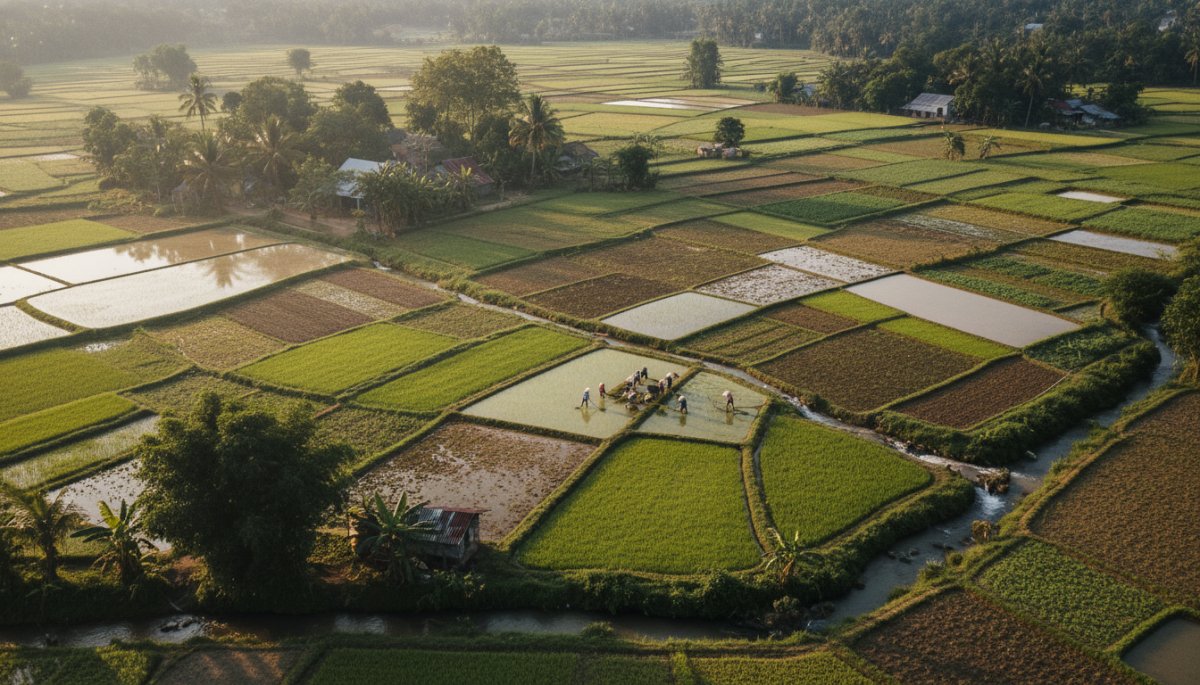
Most farms have an average cultivated area of under 1 ha, and many farmers hold only about 0.3 to 0.5 ha.
This leads to wide variation in quality and a structure where standardization and price negotiation are difficult. Organized aggregation like Japan's agricultural-cooperative model is weak, and the structure makes it hard for farm incomes to rise.
2. An export model centered on primary products
Most items, such as rice, coffee, pepper, and seafood, are exported as raw materials or in a lightly processed state.
In many cases the added value is captured overseas, processing infrastructure is limited, and secondary processing such as drying, milling, and extraction is still developing. As a result, large quantities of off-spec produce and surplus crops arise.
3. Clear crop differentiation by region
There is a clear division of roles by region: rice farming in the Mekong Delta in the south, coffee and pepper in the Central Highlands, and peri-urban agriculture in the Red River Delta in the north.
This regional differentiation formed naturally from differences in climate, soil characteristics, and water resources, but it also carries the risk of dependence on a single crop.
The Mekong Delta: the strength of the country's largest granary
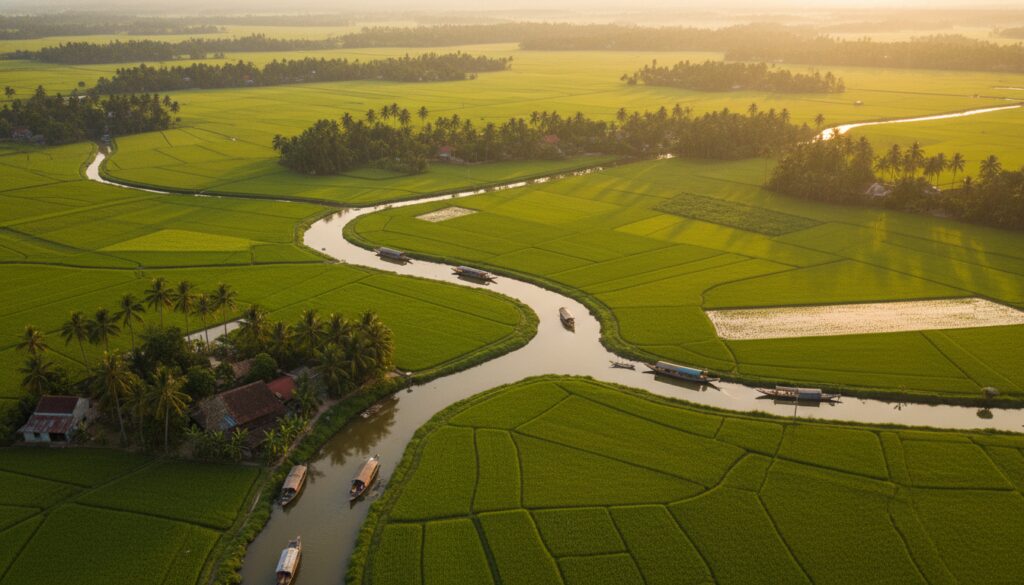
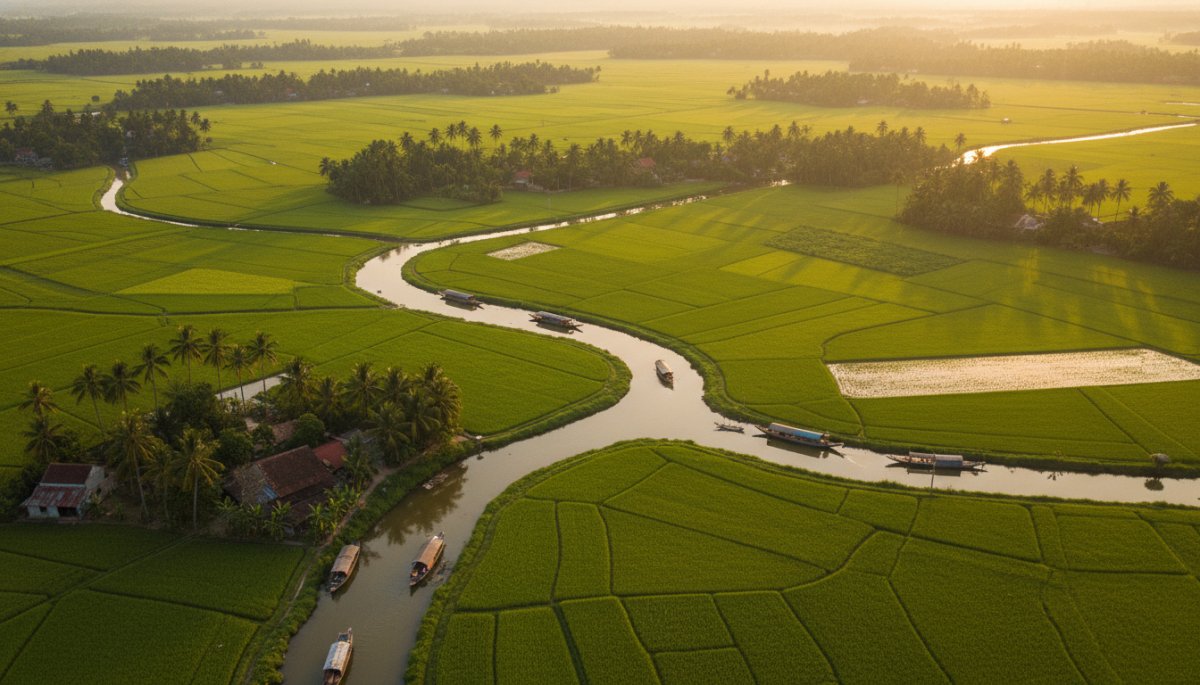
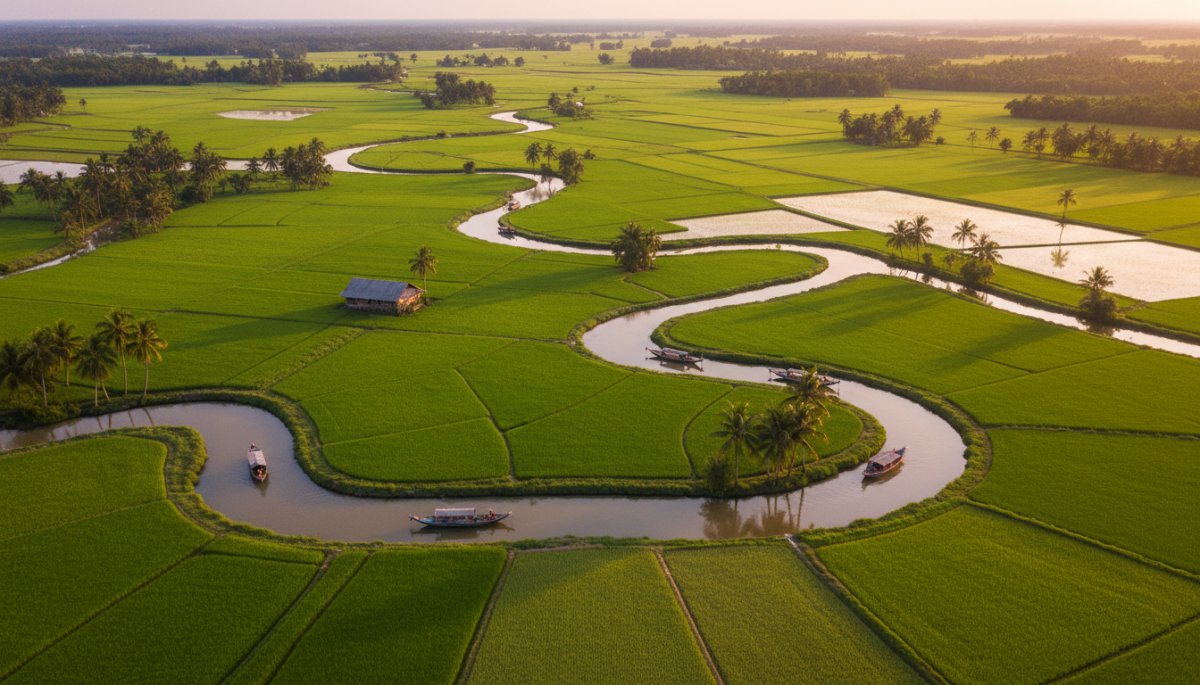
The Mekong Delta in the south is the heart of Vietnamese agriculture.
It accounts for about half of Vietnam's rice output and nearly 90% of export rice. The Mekong River's alluvial soil and abundant water allow two to three crops a year, and it boasts some of the world's highest land productivity.
Diverse crops beyond rice
Here, besides rice, there are tropical fruit trees such as coconut, mango, and dragon fruit, as well as freshwater fish and shrimp farming are also flourishing.
In recent years, salt damage has made rice monoculture difficult, and combined operations such as 'rice plus shrimp' and 'conversion to fruit trees' are increasing. This is because, owing to rising seas and upstream dams, saltwater travels inland during the dry season and areas where rice cannot be grown are increasing.
Adapting to environmental change
Structural changes are underway, such as switching to salt-tolerant varieties, converting to fruit trees, converting to aquaculture, and expanding dependence on groundwater.
In November 2023, the Vietnamese government announced the 'High-Quality, Low-Emission Rice Farming Project,' aiming to spread high-quality, low-impact rice farming across one million hectares of total paddy area in the Mekong Delta region by 2030. The introduction of AWD (alternate wetting and drying), along with the reorganization of production systems and the adoption of sustainable farming techniques, is called for.
Source
Green Carbon Inc., "Officially Joining the Vietnamese-Government-Led 'One Million Hectare Project'"
Created based on the above (2024).
North and center: the coexistence of different farming models
Vietnamese agriculture has entirely different faces from region to region.
The Red River Delta in the north: peri-urban agriculture
This is a peri-urban farming belt that includes the capital, Hanoi, centered on intensive cultivation of leafy vegetables and fruiting vegetables in addition to rice.
A feature here is a higher share aimed at domestic consumption than at export. As urbanization advances, the conversion of farmland to residential use is progressing, and the forms of farm management are changing too.
The Central Highlands: the core region for export crops
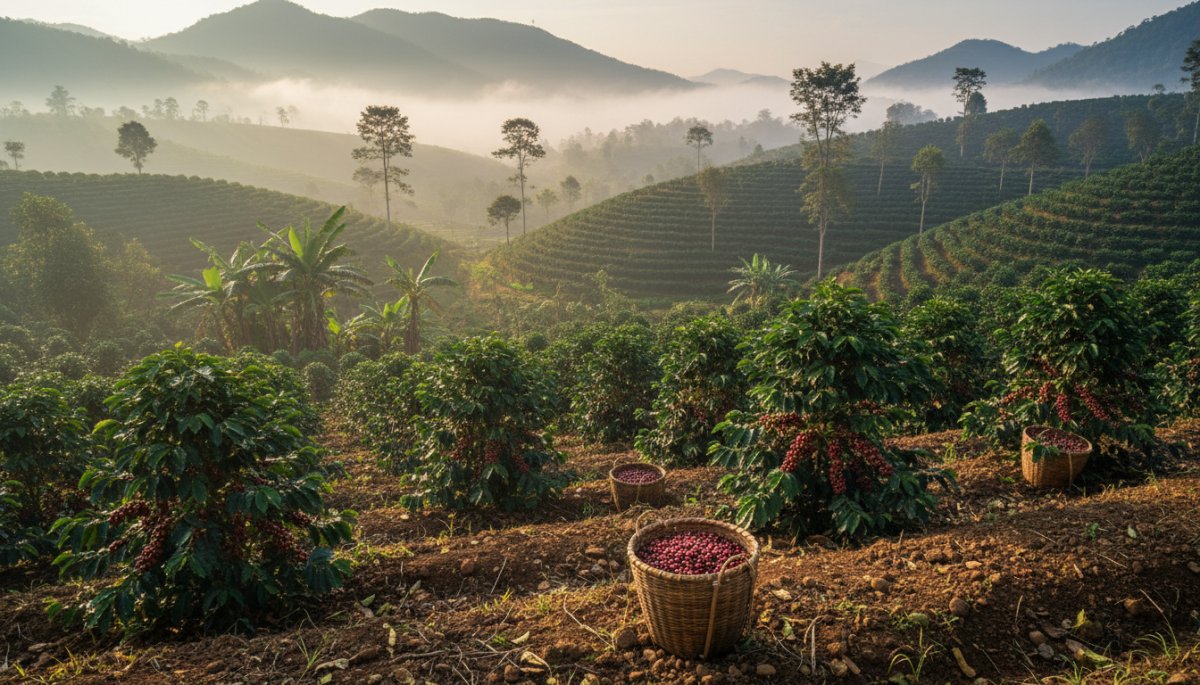
The Central Highlands, including Dak Lak Province, is a major producing region for coffee, black pepper, and Cashew nuts and others as a main production area.
Coffee in particular boasts the world's second-largest export volume, most of it being the Robusta variety. Volcanic soil and the climate at 500 to 800 m elevation suit these crops. Dependence on a single crop is strong, however, leaving a vulnerability that is directly exposed to international prices and drought.
Aquaculture: another national strategic industry
The national strategic industry that stands alongside agriculture is aquaculture.
In the Mekong Delta, shrimp farming and pangasius (catfish) farming are carried out on a large scale, forming a pillar of exports to Japan, the EU, and the United States. A value chain linked to frozen-processing plants has been built, and a model of earning foreign currency through "production plus simple processing" has been established.
The strengths of export-oriented aquaculture
Year-round production is possible, making the most of abundant water resources and a warm climate.
Shrimp farming in particular is increasingly introduced as a combined operation with rice farming and also works as a countermeasure against salt damage. Pangasius, though a freshwater fish, is exported around the world as frozen fillet and has established itself as a substitute for white fish.
Quality control and international certification
Against a backdrop of tighter regulation in destination countries, the acquisition of international certifications such as GlobalG.A.P., the management of pesticide residues, and traceability compliance are advancing.
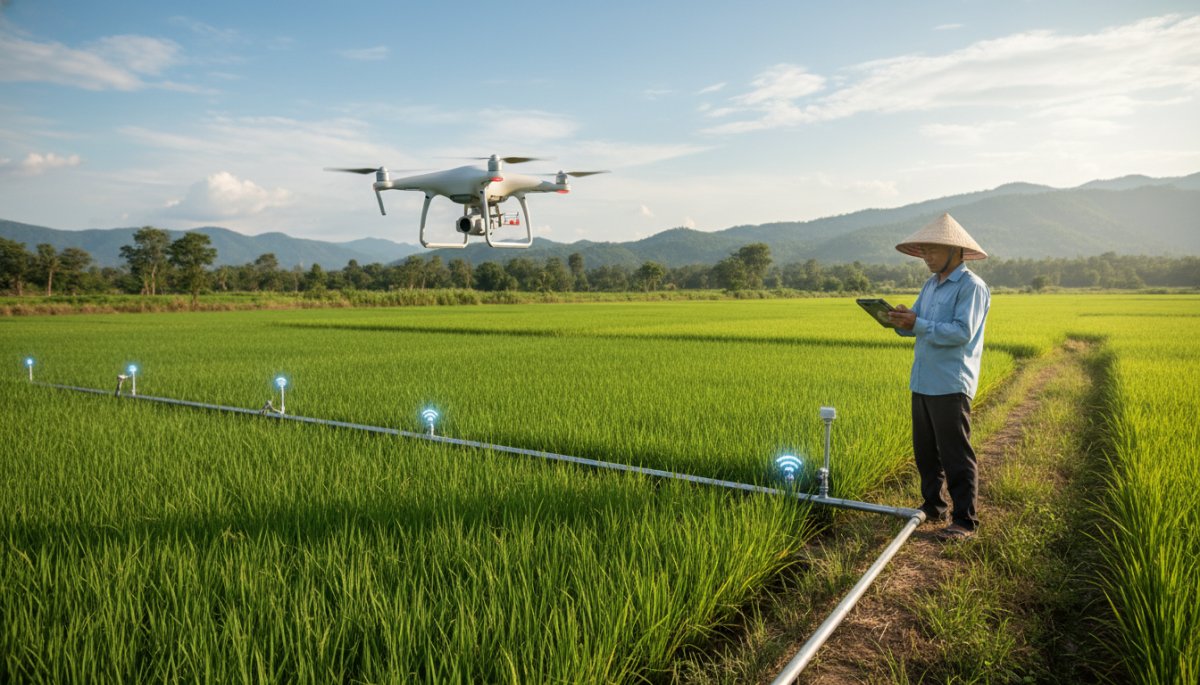
The adoption of smart farming, such as drone-based pest control and IoT irrigation, has also begun at some large farms. Its spread is limited, however, and the great majority of smallholders still farm mainly by hand.
Structural challenges: dependence on middlemen and a lack of processing capacity
Vietnamese agriculture has clear structural challenges.
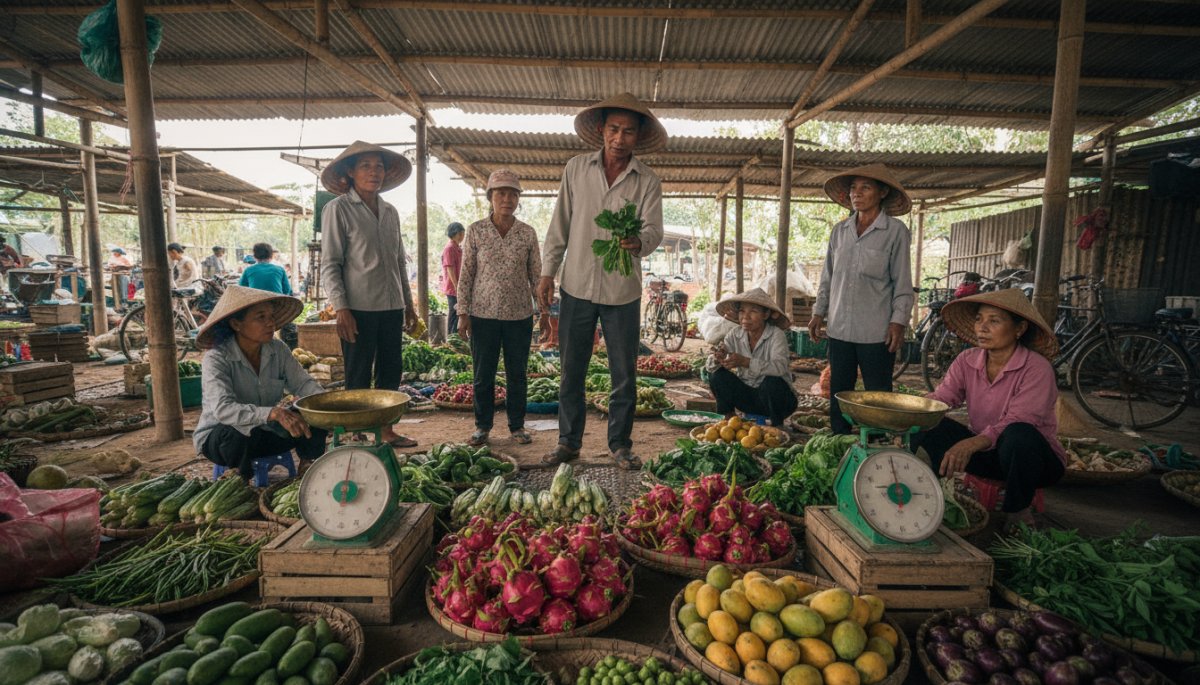
The biggest problem is dependence on middlemen
Because smallholders are scattered, collectors (brokers) hold the power to set prices, and farmers have almost no bargaining power.
Organized aggregation like Japan's agricultural-cooperative model is weak, and the structure makes it hard for farm incomes to rise. Cooperatives (cooperatives) are being fostered as a matter of policy, but effective organizations are still limited.
The limited nature of processing infrastructure
Secondary processing such as drying, milling, and extraction is still developing.
As a result, large quantities of off-spec produce and surplus crops arise. While the raw-material supply capacity for fruit, coffee, spices, and the like is strong, processing is weak, and there is wide room for drying, milling, and turning goods into ingredients.
Signs of change: smart agriculture and international certification
In recent years, signs of change can be seen in Vietnamese agriculture.
Growing acquisition of international certification
Against a backdrop of tighter regulations in importing countries, the acquisition of international certifications such as GlobalG.A.P. is advancing.
Management of pesticide residues and traceability measures are also being strengthened, and at large farms and strongly export-oriented producing areas in particular, the development of quality-control systems is advancing rapidly.
The Adoption of Smart Agriculture
The introduction of smart agriculture, such as drone-based pest control and IoT irrigation, has also begun at some large farms.
Adoption is limited, however, and the great majority of smallholders still practice labor-centered farming. The gap between the cost of adopting technology and the scale of smallholder operations is a barrier to adoption.
A Japanese company's perspective: the potential as a raw-material supplier
From a Japanese company's perspective, Vietnamese agriculture holds great potential.
Strong raw-material supply capacity
A feature is strong raw-material supply capacity for fruit, coffee, spices, and the like, weak processing, and wide room for drying, milling, and turning goods into ingredients.
Because large quantities of off-spec produce exist, the current state of 'stopping at primary products' is a structure that fits very well with the Japanese style of processing and high-value-added models. There is still plenty of room to expand into dried vegetables, fruit powders, extraction materials, functional ingredients, and the like.
Frameworks for agricultural cooperation
Agricultural cooperation between Japan and Vietnam is also advancing within intergovernmental frameworks.
On September 4, 2025, Vietnam's Minister of Agriculture and Environment and Japan's Minister of Agriculture, Forestry and Fisheries concluded the 'Medium- to Long-Term Vision for Agricultural Cooperation, Phase 3 (2025 to 2030)' in Tokyo. Within this framework, the attraction of investment in agriculture, technical cooperation, and the strengthening of digital transformation and green transformation are being advanced.
Source
Embassy of Vietnam in Japan, 'Invitation to the Investment Promotion Conference on High-Quality, Low-Carbon Rice Production Contributing to Green Growth in Vietnam's Mekong Delta Region'
Compiled from (2025)
Summary: the turning point from raw-material supplier to processing nation
Vietnamese agriculture is a practical, export-oriented agriculture built on three pillars: rice farming in the delta regions, export crops in the highlands, and aquaculture.
At the same time, it faces the challenges of small-scale fragmentation, a lack of processing capacity, and climate change, and whether it can evolve from a 'raw-material supplier' into 'an agricultural nation with processing and brands' will be the biggest fork in the road ahead.
The regional differentiation of the Mekong Delta's rich water resources and land productivity, the Central Highlands' export crops, and the north's peri-urban agriculture shows the potential for development that draws on each area's strengths. At the same time, efforts on challenges such as salt-damage countermeasures, the spread of smart agriculture, the development of processing infrastructure, and the organization of farmers will determine the next stage of Vietnamese agriculture.
For Japanese companies, opportunities for cooperation and investment are widening, not only as a source of raw materials but in areas such as transferring processing technology, introducing quality-control systems, and building sustainable farming models. A strategic approach that understands the structural features of Vietnamese agriculture and takes account of its strengths and challenges is likely to become ever more important.