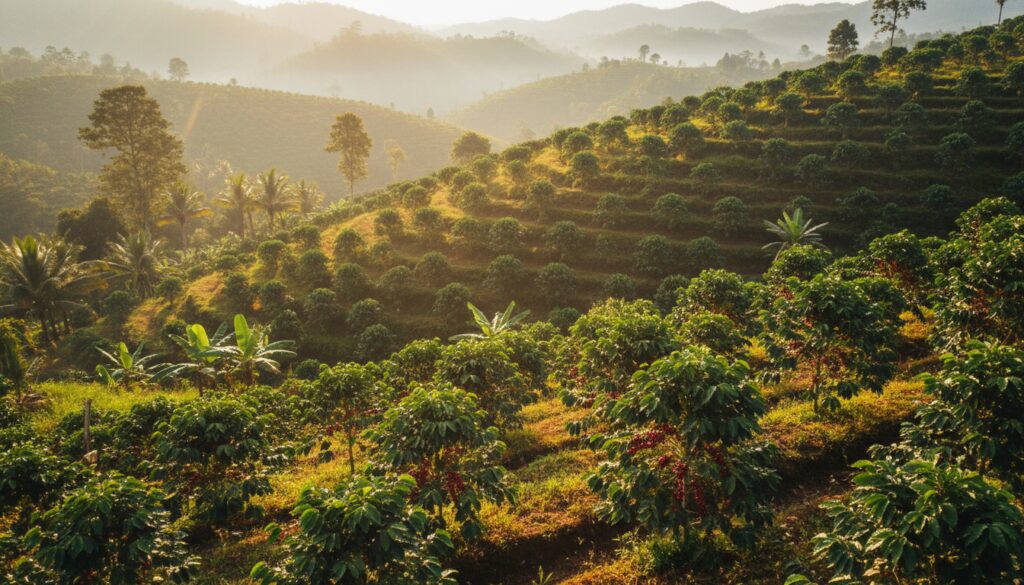
The Global Position of Robusta Coffee
About 60% of the coffee beans traded worldwide are Arabica and about 40% are Robusta (Canephora). While Arabica is known for its bright aroma and delicate acidity, Robusta is characterized by a bold bitterness and roasted flavor, along with strong disease resistance.
The name Robusta itself means "robust" or "powerful" in Latin. Since its discovery in Congo, Africa, in 1898, it has spread, true to its name, to low-altitude growing regions around the world thanks to its resistance to pests and diseases and its adaptability to hot, humid environments. Because it can be grown even in lowlands at altitudes of 300 to 800 meters, production has flourished in Asian countries considered unsuitable for Arabica.
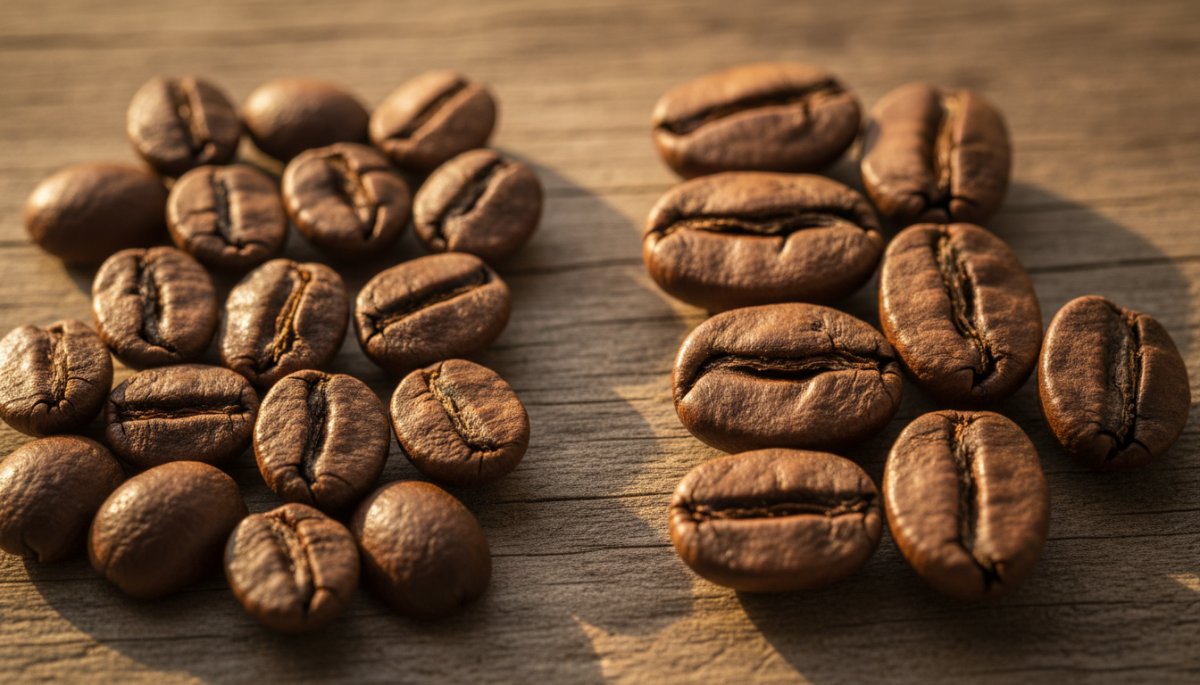
In terms of flavor, it has a strong coffee-like bitterness and astringency with restrained acidity. It has a roasted character reminiscent of barley tea and a high-impact flavor. Its caffeine content is about twice that of Arabica, so a firm flavor can be extracted even from a small amount of beans. This characteristic supports demand for processing uses such as canned coffee and instant coffee.
World No. 1: Vietnam's Production System
Vietnam is the world's second-largest coffee producer overall after Brazil, but for Robusta alone it is the world's largest producer. Nearly 95% of the coffee produced in Vietnam is Robusta, and total production in 2024 reached about 30.1 million bags (about 1.8 million tonnes). This is a scale accounting for more than half of the world's Robusta production.
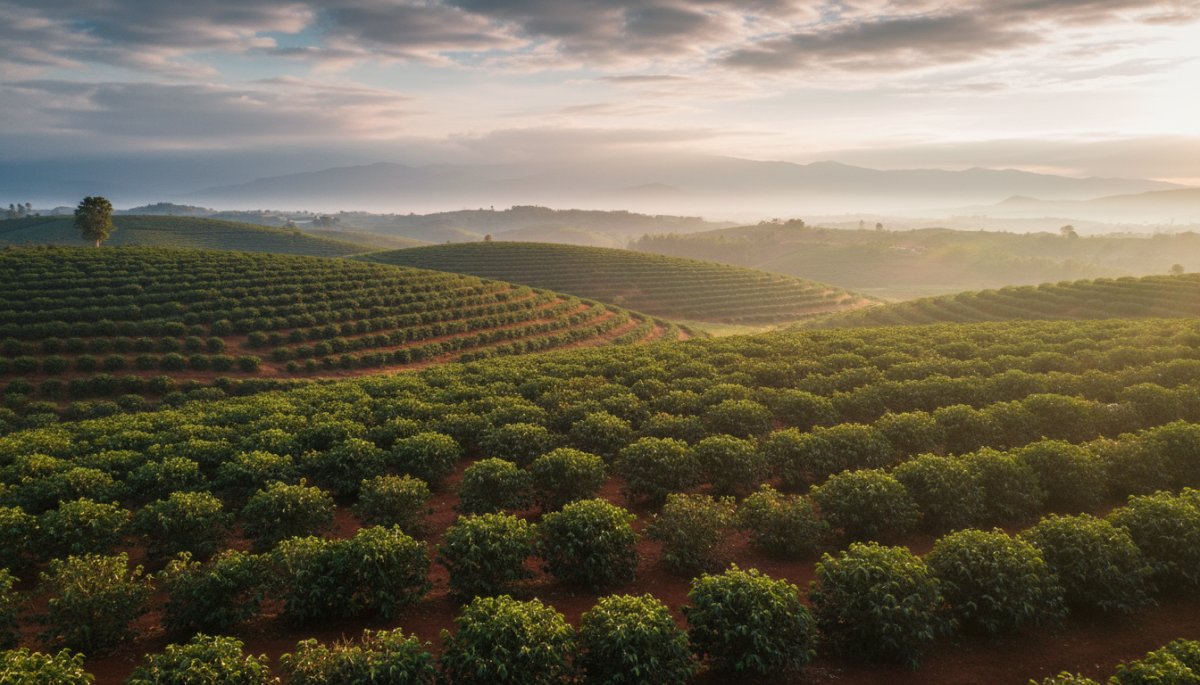
What supports Vietnam's coffee industry is the region known as the Central Highlands (Tay Nguyen). Centered on Dak Lak and Lam Dong provinces, basalt soil—volcanic red earth—spreads across the area, offering conditions well suited to Robusta cultivation. Coffee cultivation, which began in the French colonial era, coffee growing expanded rapidly from the 1986 Doi Moi(Renovation) policy onward, pushing Vietnam up to become one of the world's leading coffee producers.
Vietnam is an agricultural powerhouse with a population of about 100 million, where agriculture accounts for roughly 12% of GDP and employs more than 40% of the workforce. In 2023, total exports from agriculture, forestry, and fisheries reached about US$53 billion, accounting for more than 15% of the country's total exports. Coffee forms a core export item and an important pillar of foreign-currency earnings.
Many of Vietnam's coffee farmers are small-scale operators. The average cultivated area per farm is about 0.44 hectares, among the smallest in ASEAN, and 97% of all agricultural workers are small and medium-scale farmers. About 57% of agricultural workers are unskilled, and those aged 50 and over account for about 43%, so the sector also faces the challenges of aging and skills transfer.
Across Vietnamese agriculture as a whole, rice export rice ranks second in the world by export volume (annual production about 43.5 million tonnes), and cashew nuts and black pepper pepper rank first in the world in production, while shrimp ranks third in production and second in export. The Mekong Delta is one of the world's leading production areas, responsible for more than half of the country's rice output, demonstrating the diversity and scale of Vietnamese agriculture.
Source Coffee-zuki.com, "Arabica/Robusta Ratios and Variety Rankings of the World's Major Coffee-Producing Countries 2024 (USDA: U.S. Department of Agriculture data)" Created based on the above (2024).
World No. 2: Brazil's Diversity
Brazil leads the world in Arabica production, but it is in fact also the world's second-largest producer of Robusta. About one-sixth of the coffee produced in Brazil is Robusta, and of the 66.4 million bags of total production in 2024, the share accounted for by Robusta is by no means small. Because total coffee production is so large, even one-sixth amounts to a considerable volume.
Robusta cultivation in Brazil takes place mainly in the northern states of Espirito Santo and Rondonia. These regions have a hot, humid climate with an environment well suited to Robusta cultivation. By producing both Arabica and Robusta, Brazil's coffee industry has the flexibility to respond to diverse demand in international markets.
In the 2024 data, Robusta production fell by 400,000 bags from the previous year. This is thought to reflect the effects of climate change and a shift toward higher-value Arabica.
Source Coffee-zuki.com, "Arabica/Robusta Ratios and Variety Rankings of the World's Major Coffee-Producing Countries 2024 (USDA: U.S. Department of Agriculture data)" Created based on the above (2024).
World No. 3: Indonesia's Island Agriculture
Indonesia is the world's fourth-largest coffee producer and holds third place in the world for Robusta production.
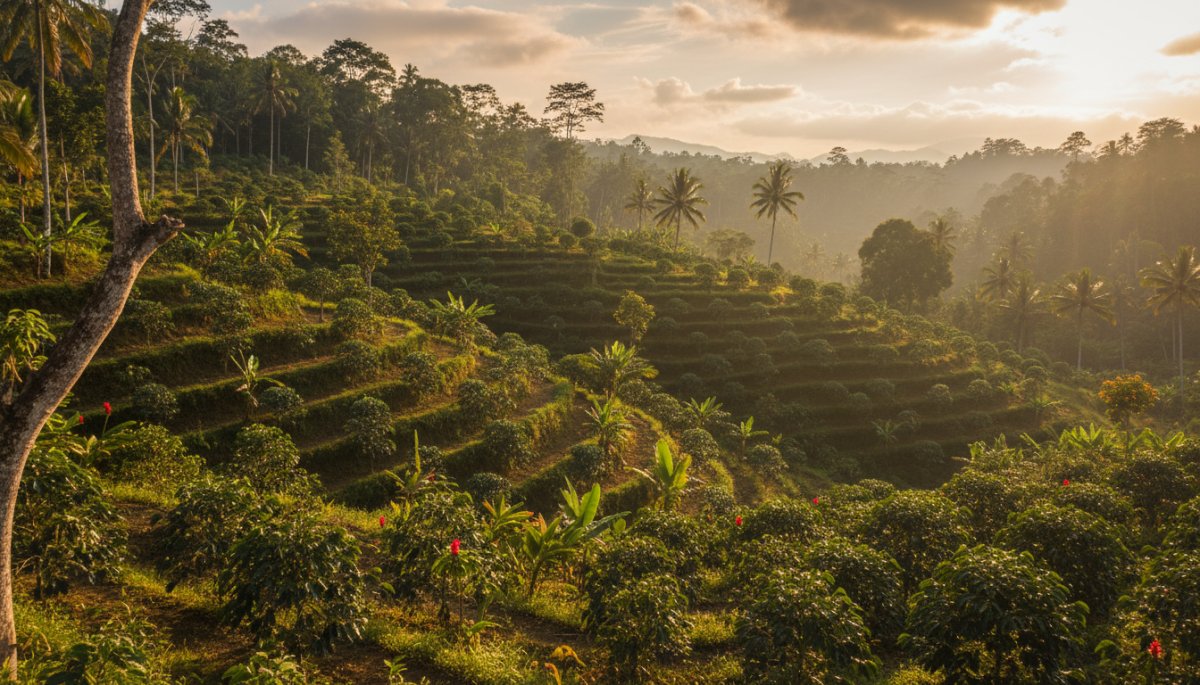
About 90% of Indonesia's coffee production is Robusta. Total production in 2024 was about 10.9 million bags, a recovery of 2.8 million bags from the previous year. Robusta in particular recorded a recovery of 2.7 million bags, rebounding from the sharp drop in 2023.
There is a historical background to how Robusta became the mainstream in Indonesia. In the 1980s, leaf rust spread and dealt a major blow to the country's Arabica coffee plantations. To overcome this crisis, the disease-resistant Robusta was introduced, and it has since become the mainstay of Indonesia's coffee industry.
More than 70% of Indonesia's coffee production takes place on Sumatra. On Sumatra, a distinctive refining method known as the "Sumatran wet-hulling process (giling basah)" is used. It is a processing method unique to Indonesia, where rain is plentiful and water is a precious resource: after the pulp is removed, the beans are dried for a time while mucilage remains, then hulled before they are fully dry, after which final drying is carried out. Green beans finished by this method characteristically turn a distinctive deep green.
In the Aceh and Lintong regions of Sumatra, the Arabica "Mandheling" is grown in addition to Robusta. On the other hand, in the Toraja and Kalosi regions of Sulawesi, Arabica cultivation is the mainstream, with Robusta accounting for only about 10%. In this way, Indonesia is a producing country where each island has different coffee growing characteristics, making it a richly diverse producing country.
Indonesia has ASEAN's largest population, about 280 million, and the largest land area, and it also has ASEAN's largest agricultural output. Palm oil is the world's largest producer, and together with Malaysia accounts for more than 85% of global production.
Source Created based on the above (2019). BASE COFFEE, "Let's Learn About Production Areas! Indonesia Edition"
World No. 4 and Below: Uganda, India, Cote d'Ivoire, and Thailand
After the top three Robusta producers—Vietnam, Brazil, and Indonesia—come African and Asian countries such as Uganda, India, Cote d'Ivoire, and Thailand.
Uganda: Africa's Robusta Base
Uganda is Africa's largest Robusta producer. Its total coffee production is about 6.4 million bags, most of which is Robusta. Uganda's coffee industry is supported by smallholders and is an important source of foreign-currency earnings for the country. Being close to the Congo Basin in Africa, the birthplace of Robusta, it is a region where Robusta cultivation has traditionally flourished.
India: A Balanced Producer
India's coffee output production is about 6.06 million bags, of which Arabica accounts for about 1.4 million bags and Robusta about 4.66 million bags. In India, coffee is grown mainly in the southern states of Karnataka, Kerala, and Tamil Nadu, and the country is also known for its distinctive "monsooned coffee," which takes advantage of the monsoon climate.
Cote d'Ivoire: West Africa's Rising Force
Cote d'Ivoire is a leading Robusta producer in West Africa. Though the country is globally known for cacao production, coffee cultivation is also one of its important agricultural sectors. Production of "Arabusta," a hybrid variety of Arabica and Robusta, is increasing, aiming to balance disease resistance with improved quality.
Thailand: The Multifaceted Agriculture of the "Kitchen of the World"
Thailand is an agricultural and food export powerhouse known as the "kitchen of the world." Agriculture accounts for about 8 to 9% of GDP, and roughly 30% of the population is engaged in agriculture-related work. The average farmland area per household is about 3 hectares, and jasmine rice has earned a high reputation in international markets. Its natural rubber production and exports are among the largest in the world, and processed chicken it is also world-class in the export of such products.
Source Coffee-zuki.com, "Arabica/Robusta Ratios and Variety Rankings of the World's Major Coffee-Producing Countries 2023 (USDA: U.S. Department of Agriculture data)" Created based on the above (2023).
The Growing Conditions and Characteristics of Robusta
The reason Robusta is widely grown in Asia lies in its growing conditions. While Arabica prefers highlands above 1,000 meters and a relatively cool climate, Robusta can be grown even in lowlands at altitudes of 300 to 800 meters. It adapts to hot, humid environments and has high resistance to pests and diseases. This characteristic makes cultivation possible in the lowland-rich countries of Southeast Asia.
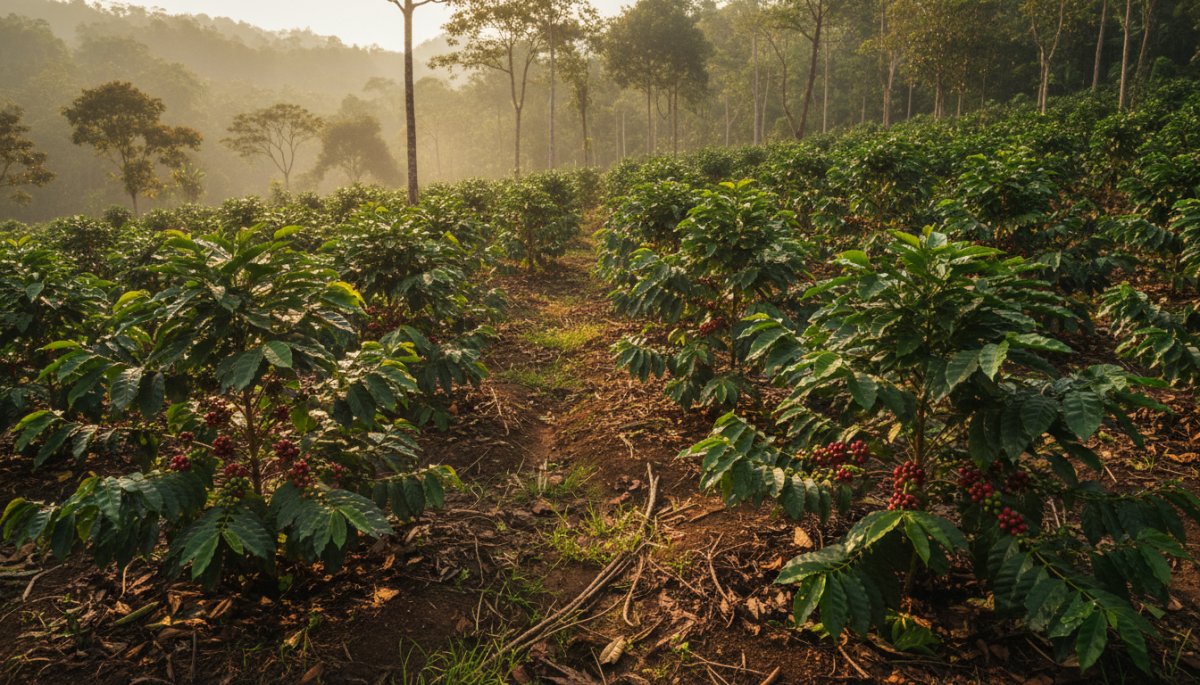
Robusta grows quickly and requires little effort to cultivate. It sets many fruits and bears them rapidly, producing a viable harvest in the third year after planting. Compared with Arabica, which takes 4 to 5 years to harvest, it allows for earlier returns. Yields are also high, and because a single tree yields many beans, production efficiency is high.
Its strength against disease is also a major advantage. It has resistance to leaf rust, coffee's great enemy, allowing the amount of pesticide used to be reduced. This also leads to lower environmental impact and is valued from the standpoint of sustainable agriculture. Indonesia's shift from Arabica to Robusta was also decided by this disease resistance.
That said, it is often considered inferior to Arabica in flavor. When roasted, it has a flavor like scorched barley, with strong bitterness and astringency and no acidity—a distinctive characteristic. Because of this flavor, it is used mainly for instant coffee and to give blended coffee deep body and punch.
Source Coffee Mecca, "Characteristics and Production Areas of Robusta Coffee Beans" prepared from
The Uses and Market Trends of Robusta
The largest use of Robusta is instant coffee. Robusta can extract a firm flavor even from a small amount of beans and has a high caffeine content, making it ideal as a raw material for instant coffee. Robusta is also used in much of the canned coffee consumed around the world.
It is also used in blends for espresso. In Italy and elsewhere, a small amount of Robusta is blended into espresso beans to create a strong, characterful bitterness. The abundance of oil (coffee oil) in Robusta also has the effect of enriching the crema (foam) characteristic of espresso.

There is also a growing movement to reappraise Robusta. Although its bitterness and astringency tend to draw attention, characteristics such as a roasted, barley-like aroma, restrained acidity, and a good match with sweet desserts give it an appeal different from Arabica. It also has the power to bring out the deliciousness of iced coffee and cafe au lait, drawing attention as a new way to enjoy coffee.
Looking at market trends, China's coffee consumption has grown by about 150% over the past decade, reaching 6.3 million bags in 2024. In this growing market, demand for instant coffee and canned coffee is high, and growth in demand for Robusta is anticipated. As the world's coffee consumption diversifies, the role of Robusta is also changing.
Source Coffee-zuki.com, "Arabica/Robusta Ratios and Variety Rankings of the World's Major Coffee-Producing Countries 2024 (USDA: U.S. Department of Agriculture data)" Created based on the above (2024).
Hybrid Varieties of Robusta and Arabica
Coffee variety improvement has made great progress.
In 1927, in what was then Portuguese East Timor, a single rust-resistant coffee tree was discovered. It was an interspecific hybrid born from the natural crossing of a mutated Robusta and Arabica, and it was named the "Hibrido de Timor." This discovery brought coffee variety improvement into a new phase.
A representative hybrid variety is "Catimor." Created by crossing Hibrido de Timor with Caturra, a mutant of the Arabica variety Bourbon, it offers high yields and strong disease resistance. However, it is sometimes considered inferior to other varieties in flavor, making the balance between quality and productivity a challenge.
"Variedad Colombia," developed in Colombia, was created by back-crossing Catimor with Caturra to bring it closer to the characteristics of Arabica. A high-yielding variety with strong resistance to pests and diseases, it has become one of the mainstay varieties of coffee produced in Colombia. "Castillo," further improved from it, offers a higher-quality flavor than Variedad Colombia, the pioneer of hybrid cultivars, and is now Colombia's mainstay.
In West Africa, production of "Arabusta," developed by a Brazilian research institute, is increasing. A cultivar crossing Canephora and Arabica, it is disease-resistant and yields well. These hybrid varieties aim to combine the rich flavor of Arabica with the disease resistance and ease of cultivation of Robusta.
Source Coffee Mecca, "Characteristics and Production Areas of Robusta Coffee Beans" prepared from
Challenges Facing Robusta-Producing Countries
The major Robusta-producing countries share several common challenges.
First is low added value. Robusta is exported mainly as an unprocessed primary commodity, and exports of value-added processed products remain limited. Although Vietnam is the world's largest Robusta producer, a high proportion is exported as green beans, and its brand value as a roasted, processed finished product lags behind other countries.
Second is the underdevelopment of the cold chain (low-temperature logistics). Harvested produce is often not properly stored or transported and deteriorates or is discarded, and post-harvest losses weigh heavily on the revenue of agriculture as a whole. In tropical regions in particular, a shortage of refrigeration and freezing facilities hinders improvements in export competitiveness.
Third is the low productivity of smallholders and the aging of agricultural workers. 97% of all of Vietnam's agricultural workers are small and medium-scale farmers, and mechanization and smart farming technologies have made little progress. With young people continuing to migrate to cities, securing the next generation of farmers is an urgent issue.
Fourth is vulnerability to climate change. Rising sea levels, the growing frequency of extreme weather, and changes in rainfall patterns directly hit agriculture that depends on low-lying delta regions. In Vietnam's Mekong Delta, the risk of saltwater intrusion and flooding is increasing year by year, raising concerns about the impact on agricultural production.
In response to these challenges, the Vietnamese government has set out its "Strategy for Sustainable Agriculture and Rural Development to 2030, with a Vision to 2050," positioning the adoption of smart agriculture as a national priority. The "Japan-ASEAN Green Cooperation Plan," adopted at the Japan-ASEAN Ministerial Meeting on Agriculture and Forestry in May 2023, is a comprehensive framework of cooperation for building sustainable agriculture and food systems in the Asian monsoon region.
Conclusion: The Future of the Coffee Industry Supported by Robusta
Robusta is an important presence in the world's coffee industry.
Led by Vietnam, countries such as Brazil, Indonesia, Uganda, India, Cote d'Ivoire, and Thailand support the world's Robusta production. Taking advantage of geographical conditions such as a hot, humid climate and lowlands, these countries have developed the cultivation of disease-resistant, high-yielding Robusta.
Robusta's strengths lie in its ease of cultivation and high production efficiency. Characteristics such as resistance to pests and diseases, early harvest, and high yields make it a crop that even smallholders can take on with relative ease. It is delivered to consumers around the world in a variety of uses, including instant coffee, canned coffee, and espresso blends.
New value in Robusta is also being discovered. Ways of enjoying it that differ from Arabica are drawing attention, such as its roasted aroma, its match with sweet desserts, and its appeal in iced coffee and cafe au lait. The development of hybrid varieties is also advancing, with efforts continuing to balance quality and productivity.
At the same time, challenges remain plentiful, including raising added value, developing the cold chain, supporting smallholders, and responding to climate change. By tackling these challenges, agriculture in Robusta-producing countries has the potential to achieve a shift from quantity to quality.
Southeast Asian agriculture, led by Vietnam, supplies the world not only with coffee but also with rice, cashew nuts, black pepper shrimp, Palm oil natural rubber, and other diverse agricultural products. Robusta coffee shows one facet of the potential this rich agricultural region holds. As the world's coffee consumption diversifies, the role of Robusta will become increasingly important.
You May Also Like
- A Guide to Asia's Coffee-Producing Regions: The Characteristics of the Main Producing Countries and 7 Ways to Raise Quality
- What Is Vietnam's Coffee Output? The Strength Behind the World's No. 2 and 8 Factors Supporting Production Growth
- What Is Coffee Growing in Vietnam's Central Highlands? 7 Secrets Behind the World's No. 2 Output

