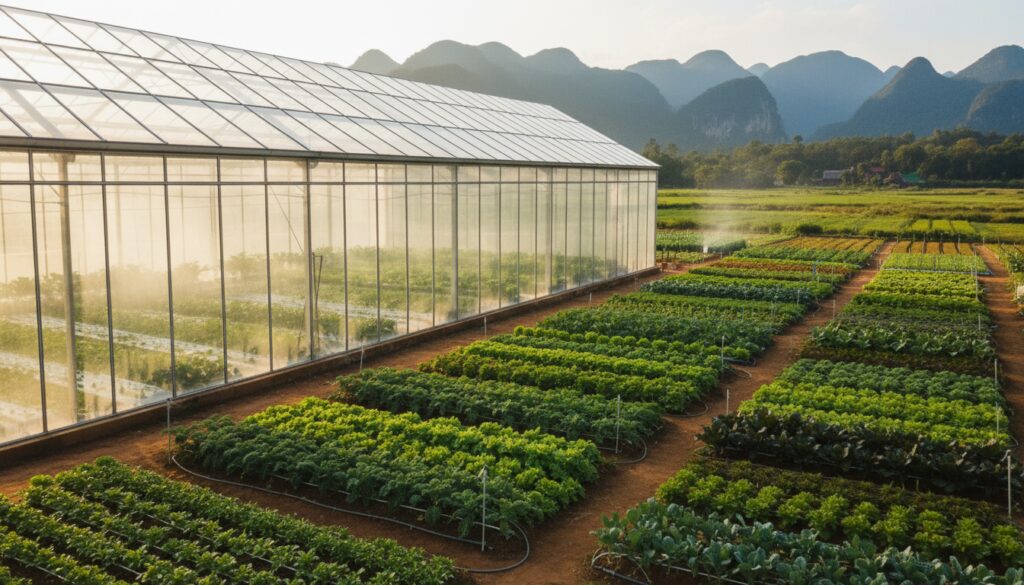
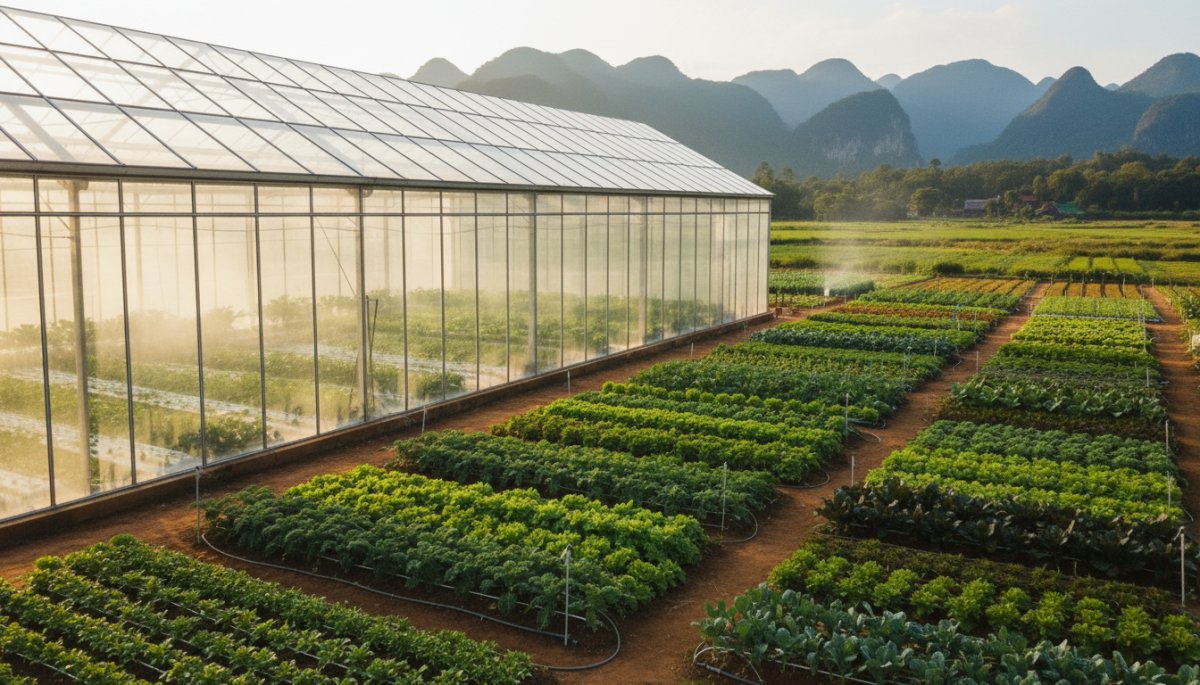
The current state of Vietnamese agriculture and expectations for protected horticulture
Vietnam is one of Southeast Asia's foremost, with a population of about 100 million, agricultural power of organic jasmine rice.
About 12% of GDP and more than 40% of the working population are engaged in agriculture, and rice export ranks second in the world by volume, coffee output is second in the world, and Cashew nuts and black pepper boasts first in the world. In 2023, total exports of agriculture, forestry, and fisheries reached about US$53 billion, coming to account for more than 15% of the country's total exports.
However, behind these brilliant results lie serious structural challenges. The average farmland area of a farm is about 0.44 hectares, among the smallest in ASEAN countries, 97% of all agricultural workers are small- and mid-scale farmers, about 57% of agricultural laborers are unskilled, and those aged 50 and over reach about 43%.
Low added value, an underdeveloped cold chain, the low productivity of small-scale farmers, and vulnerability to climate change—as the key to solving these challenges, protected horticulture is now drawing attention.
Source
Policy Research Institute, Ministry of Agriculture, Forestry and Fisheries, "Vietnam's Agriculture, Rice Farming, and Land System"
(November 2023), adapted
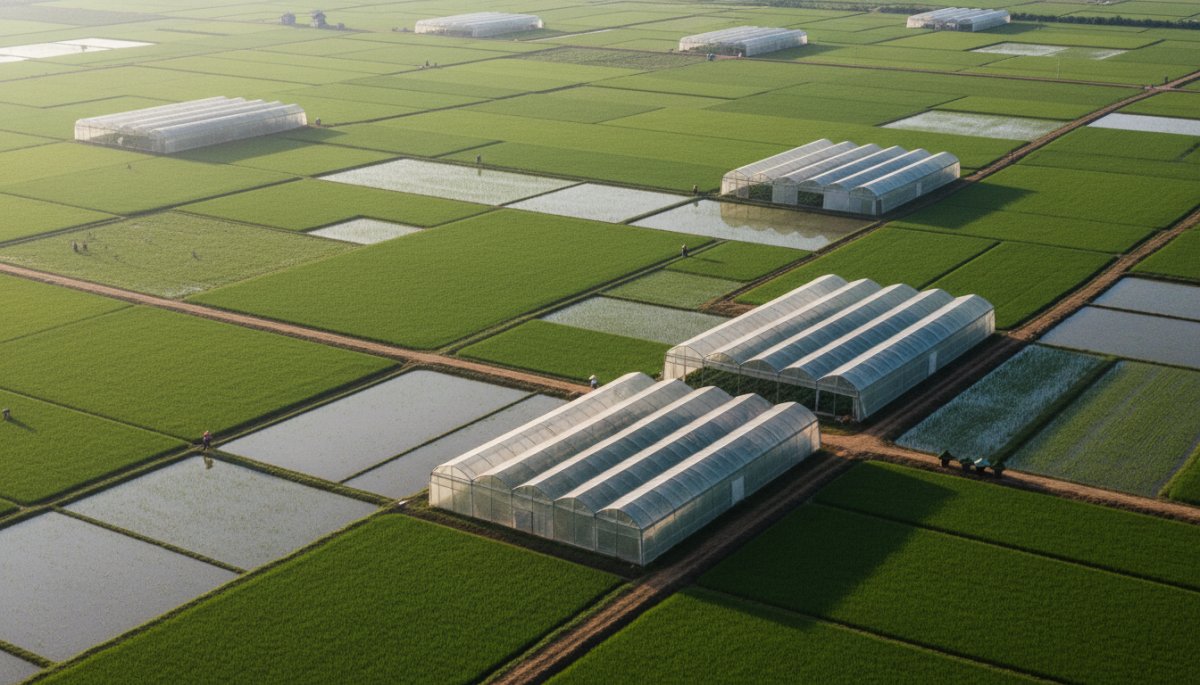
Five benefits protected horticulture brings to Vietnamese agriculture
Release from climate-change risk
Vietnamese agriculture is extremely vulnerable to climate change.
In the Mekong Delta, saltwater intrusion from rising sea levels, intensifying floods, and water shortages in the dry season grow more serious year by year. In the northern Red River Delta, too, yield fluctuations from abnormal weather squeeze farmers' management.
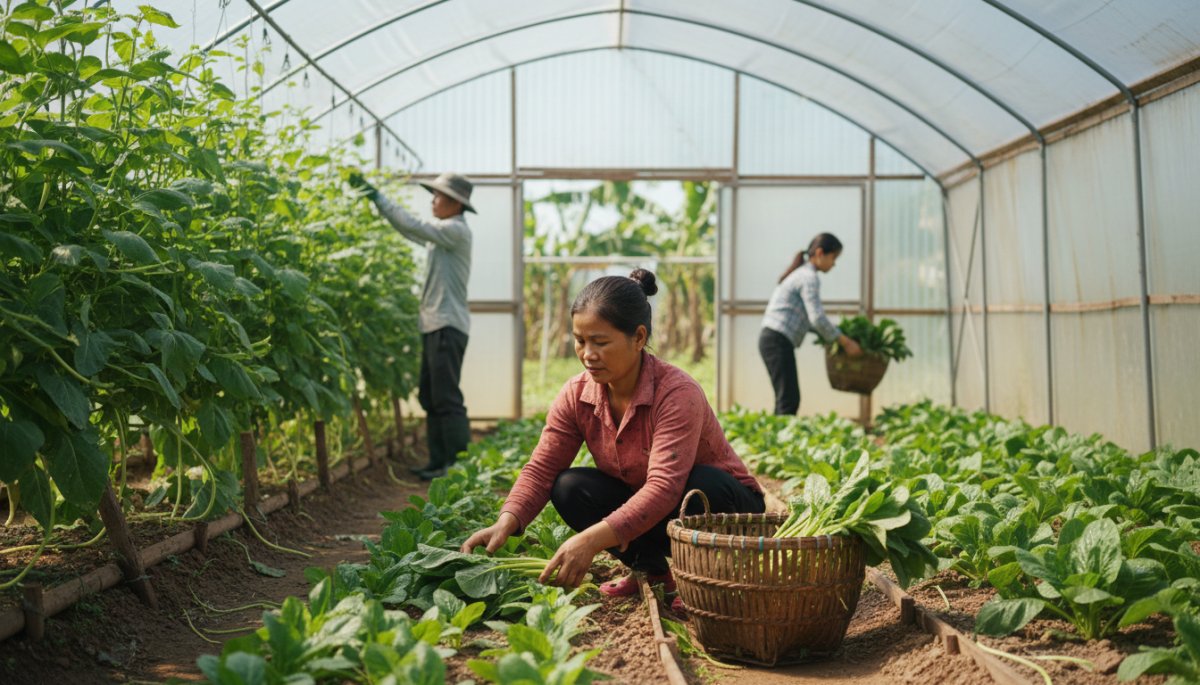
Protected horticulture can minimize the influence of such external environments. Inside greenhouses and plastic houses, temperature, humidity, and sunlight can be controlled, and crops can also be protected from the direct damage of typhoons and heavy rain. The ability to maintain stable production even in a year when an El Nino occurs can be called a major strength.
Stable supply of high-quality crops
Vietnam's farm-produce exports have long had unevenness in quality as a challenge.
In protected horticulture, through environmental control, crop quality can be kept uniform. It becomes easier to clear the strict quality standards and residual-pesticide standards demanded by major export destinations such as the EU, Japan, and the United States, and competitiveness in international markets rises dramatically.
Around Da Lat in Lam Dong province, greenhouse systems for vegetable cultivation have already been introduced, and high-quality vegetables are produced stably. These vegetables are exported not only to high-end domestic supermarkets but also to overseas markets.
Improved profitability per unit area
One of the greatest challenges facing Vietnamese farmers is the small farmland area.
To generate returns on the limited land of an average 0.44 hectares, it is necessary to maximize productivity per unit area. In protected horticulture, by introducing vertical cultivation and hydroponics, yields several times those of open-field cultivation can be achieved.
Furthermore, multiple plantings a year become possible, and the land-utilization rate improves dramatically. Initial investment is necessary, but over the medium to long term a profit structure in which investment recovery is sufficiently feasible can be built.
Reducing pesticide use and the path to organic cultivation
Vietnamese agriculture has had soil degradation and water pollution from excessive use of pesticides and chemical fertilizers viewed as problems.
In protected horticulture, because the intrusion of pests can be physically prevented, pesticide use can be greatly reduced. Introducing IPM (integrated pest management) and biopesticides also becomes easy, and the transition to organic agriculture can be advanced smoothly.
Farm produce that has obtained organic certification trades at high prices in international markets. The Vietnamese government, too, has set expanding organic agriculture as a policy goal, and protected horticulture is becoming an important means of supporting the transition to sustainable agriculture.
Affinity with smart-agriculture technology
The Vietnamese government has set out its "Strategy for Sustainable Agriculture and Rural Development to 2030, with a Vision to 2050," positioning the adoption of smart agriculture as a national priority.
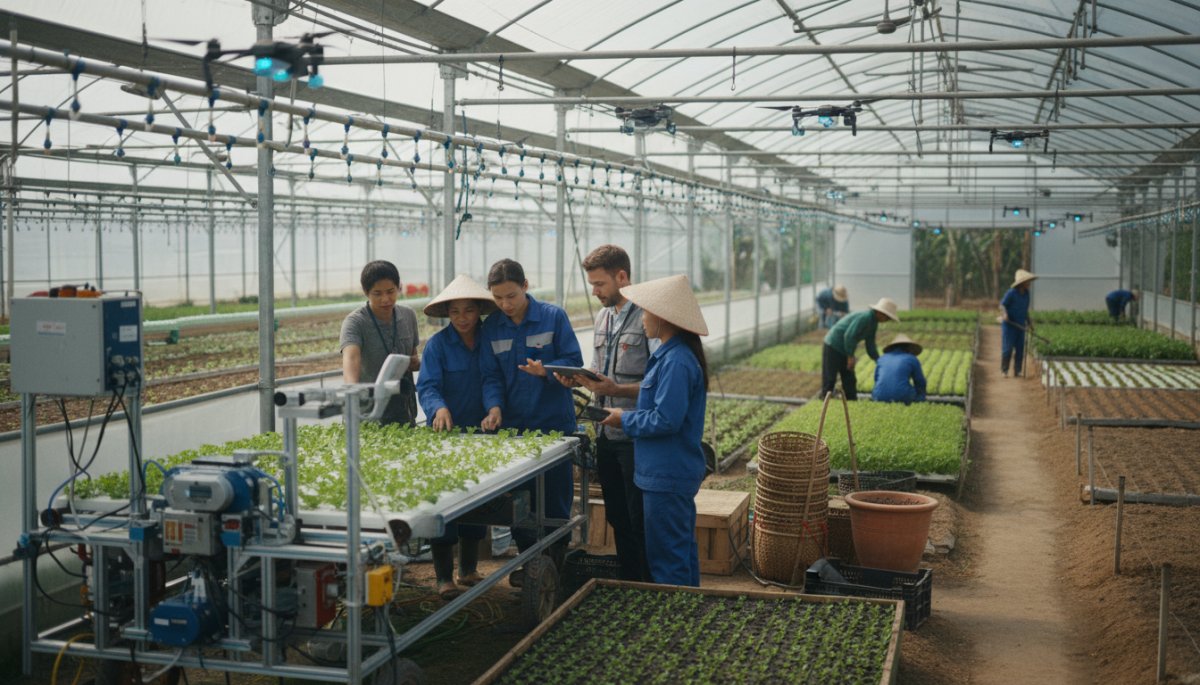
Protected horticulture has outstanding compatibility with the latest technologies, such as environmental monitoring with IoT sensors, automatic irrigation systems, and AI-based pest and disease forecasting. Demonstration projects of remote-cultivation support solutions by Japanese companies are also being rolled out, and the hurdle to adopting technology is lowering year by year.
Through precise cultivation management based on data, even inexperienced young farmers become able to produce high-quality crops. This holds extremely important meaning for Vietnam, where the aging of agricultural workers is advancing.
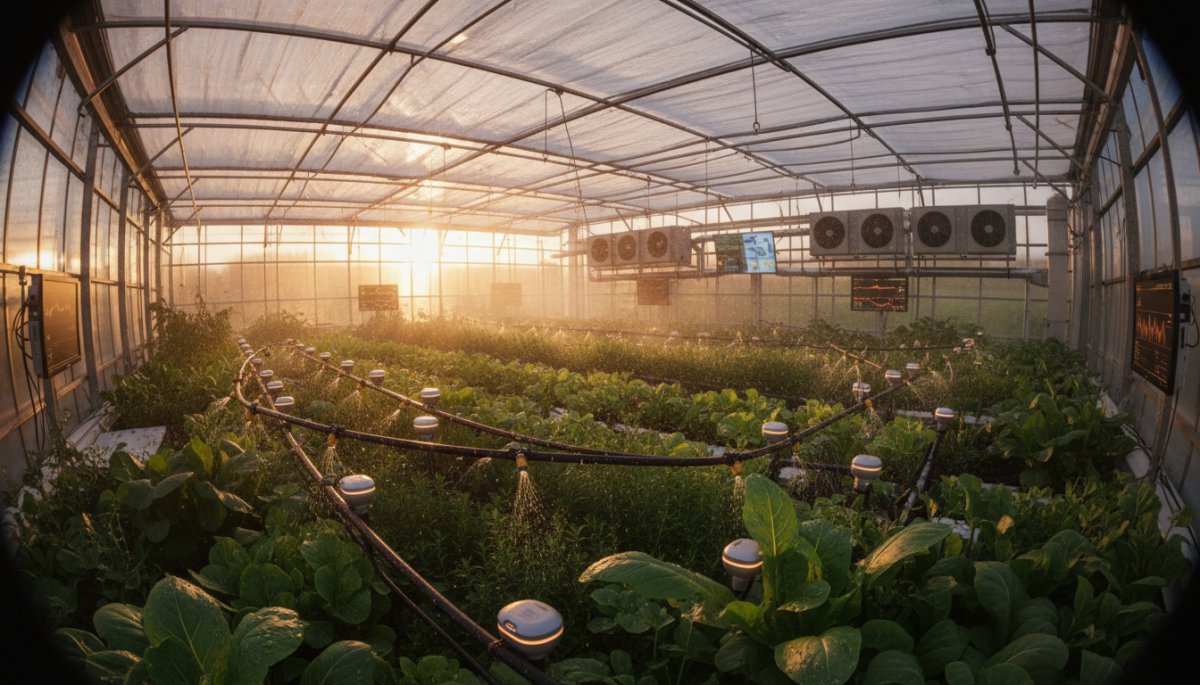
Seven practical points for success in protected horticulture
1. Selecting a facility type suited to the climatic conditions
Vietnam has a long, narrow territory stretching north to south, and the climate differs greatly by region.
The north has a subtropical climate with temperatures that fall in winter, so facilities with high heat retention are needed. The central highlands are suited to cultivating high-value crops that make use of the cool climate. The southern Mekong Delta is hot and humid, so facility designs that emphasize ventilation and shading are required.
If you want to hold down initial investment, it is also possible to start with a simple plastic house. On the other hand, if you aim for high-quality crops for export, investment in a modern greenhouse equipped with environmental-control functions becomes necessary.
2. Strategic selection of crops to cultivate
What to cultivate in protected horticulture is the most important factor determining success.
For the domestic market, high-quality vegetables and organic vegetables targeting the urban wealthy are promising. In high-end supermarkets in Hanoi and Ho Chi Minh City, demand for safe, high-quality vegetables is expanding rapidly.
If aiming at export markets, it is essential to thoroughly research the needs of markets such as Japan, the EU, and the United States. High-value crops such as tomatoes, bell peppers, and strawberries trade at high prices if quality control is thorough.
3. Optimizing the water-management system
In the Mekong Delta, water shortages in the dry season are growing serious.
In protected horticulture, by introducing drip irrigation or automatic irrigation systems, water use can be held to less than half that of open-field cultivation. Efficient use of water resources leads not only to cost reduction but also to reducing environmental impact.
If a rainwater-storage system is installed alongside, the abundant rainfall of the rainy season can be used effectively, further easing the risk of water shortage in the dry season.
4. Phased technology adoption and human-resource development
Even if you suddenly introduce cutting-edge smart-agriculture technology, it is meaningless if you cannot use it well.
A realistic approach is to start from basic environmental-control technology and introduce advanced technology in stages while accumulating data. The solutions for small- and mid-scale greenhouses offered by Japanese companies are designed to be easy for Vietnam's small-scale farmers to adopt as well.
At the same time, developing human resources with know-how in cultivation technology and facility management is indispensable. Make active use of training programs offered by the government and international organizations.
5. Fundraising and cost management
The greatest hurdle in protected horticulture is the initial investment.
The Vietnamese government has developed loan programs to support agricultural modernization, and the World Bank and the Asian Development Bank also provide funding to agricultural projects. It is important to make the most of this public support.
In addition, by having multiple farmers organize a cooperatives and jointly build and operate facilities, there is also an effective method of lightening the burden on each individual. It becomes possible to hold down initial investment while running operations efficiently with economies of scale.
6. Developing sales channels and branding
Even if you produce high-quality crops, it is meaningless if you cannot sell them at an appropriate price.
In the domestic market, by concluding direct-trade contracts with high-end supermarkets and restaurants, you can cut intermediary margins and secure high profit margins. By introducing a traceability system and making the production history clear, you can gain the trust of consumers.
In export markets, obtaining GAP (good agricultural practices) certification and organic certification is essential. Make active use of international cooperation frameworks as well, such as the "Japan-ASEAN Midori Cooperation Plan" adopted at the Japan-ASEAN agriculture and forestry ministers' meeting in May 2023.
7. Building in climate-change adaptation measures
Protected horticulture is a measure to adapt to climate change, but the facilities themselves are also affected by climate change.
Thorough risk management—a robust structural design that withstands typhoons and heavy rain, backup power for outages, and siting with low flood risk—leads to long-term success.
It is also important to incorporate the latest research results, such as the flood-tolerant and salt-tolerant varieties developed by the International Rice Research Institute.
The possibilities brought by cooperation with Japanese companies
Agricultural cooperation between Japan and Vietnam is entering a new stage.
Japan positions the international rollout of the environmental-impact-reduction technologies set out in its "Strategy for Sustainable Food Systems (MIDORI)" with ASEAN, including Vietnam, as its most important partner. Japan's strength lies in having technologies and know-how suited to small- and mid-scale farmers.
Unlike the smart-agriculture solutions of the Netherlands and South Korea, which assume large-scale farming, Japanese agricultural technology has a high possibility of fitting the realities of Vietnam's small-scale farmers. The pillars are the transfer of precision-agriculture technology, support for promoting organic agriculture, introduction of paddy-management technology to reduce greenhouse-gas emissions, and support for upgrading farm-produce value chains.
Demonstration projects of remote-cultivation support solutions by Japanese companies are also being rolled out in various places, and the hurdle to technology transfer is lowering year by year. For Vietnamese farmers, cooperation with Japanese companies is a strategic option that goes beyond mere technology adoption to lead to access to international markets and improved brand value.
Protected horticulture opens up the future of Vietnamese agriculture
Vietnamese agriculture now stands at a major turning point.
From an era of quantitative expansion to an era that emphasizes quality, safety, and environmental sustainability. Protected horticulture is the most promising means of achieving this shift. Adaptation to climate change, stable supply of high-quality crops, improved profitability per unit area, reduced pesticide use, and fusion with smart-agriculture technology—it is protected horticulture that makes all of these possible.
The hurdle of initial investment certainly exists, but fundraising options are broadening, such as government support programs, financing from international organizations, and cooperatives joint operation through. Through cooperation with Japanese companies, the hurdle to technology adoption is also lowering year by year.
For Vietnamese agriculture to have true competitiveness in world markets, raising added value is indispensable. Protected horticulture can be called the shortest route to achieving that.
Won't your agribusiness, too, advance to the next stage with protected horticulture?
Start from a small facility and expand in stages while accumulating data. That very process is the sure path to sustainable, highly profitable agricultural management. The future of Vietnamese agriculture lies with protected horticulture.

