The Structural Characteristics of Southeast Asian Agriculture and Each Country's Position
As one of the world's leading agricultural production regions, Southeast Asia plays an important role in the global food supply.
Agriculture in this region, supported by abundant water resources from the monsoon climate and fertile soil, produces diverse crops such as rice, Palm oil coffee, rubber, and more. In particular, the three countries of Vietnam, Thailand, and Indonesia, each with different strengths, form the core of the region's agriculture.
Vietnam is an agricultural powerhouse with a population of about 100 million, where about 30% of the working population is engaged in agriculture-related work. The 1986 Doi Moi policy economic opening, through the individual distribution of land-use rights and the introduction of a market economy, caused productivity to surge. Since the 1990s, rice export it has ranked among the world's top rice-exporting countries, and coffee boasts the world's second-largest export volume.
Thailand is an agricultural country blessed with a rich natural environment, as symbolized by the saying "there are fish in the water and rice in the fields."
However, it faces unexpected challenges in terms of agricultural productivity. According to 2019 data, the rice yield per unit area in Thailand trails Indonesia and Vietnam and is at a lower level than Myanmar. Thailand's rice yield averages just over 3 tonnes per hectare.
Indonesia is the world's largest Palm oil producer, and its production structure differs greatly from the other two countries.
The Production Structure and Regional Characteristics of Vietnamese Agriculture
The Smallholder Structure and the Primary-Commodity Export Model
The greatest feature of Vietnamese agriculture lies in its extremely small-scale farming structure.
The average cultivated area is mostly under 1 ha, and many farmers hold only about 0.3 to 0.5 ha. This small-scale, dispersed structure creates a situation of large quality variation and difficulty in standardizing specifications and negotiating prices.
The export model is centered on primary commodities, with most products—rice, coffee, pepper, seafood, and the like—exported as raw materials or in a simply processed state. The added value is often captured on the overseas side, making the improvement of farm income a challenge.
The Mekong Delta: The Country's Largest Granary
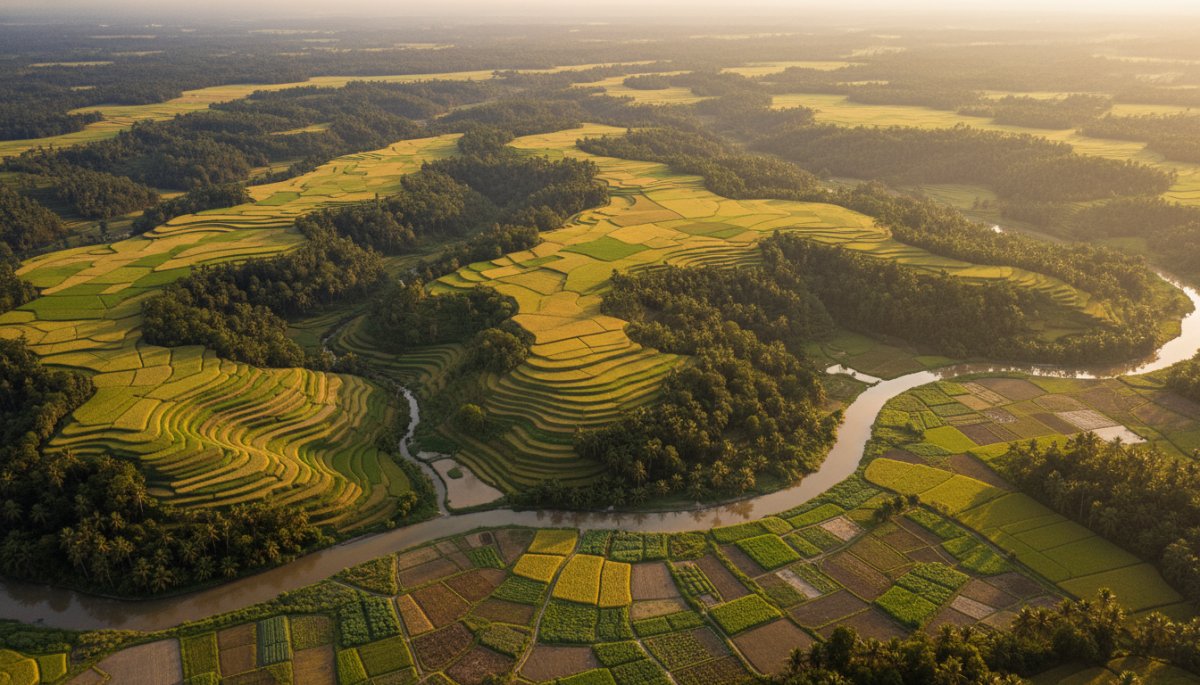
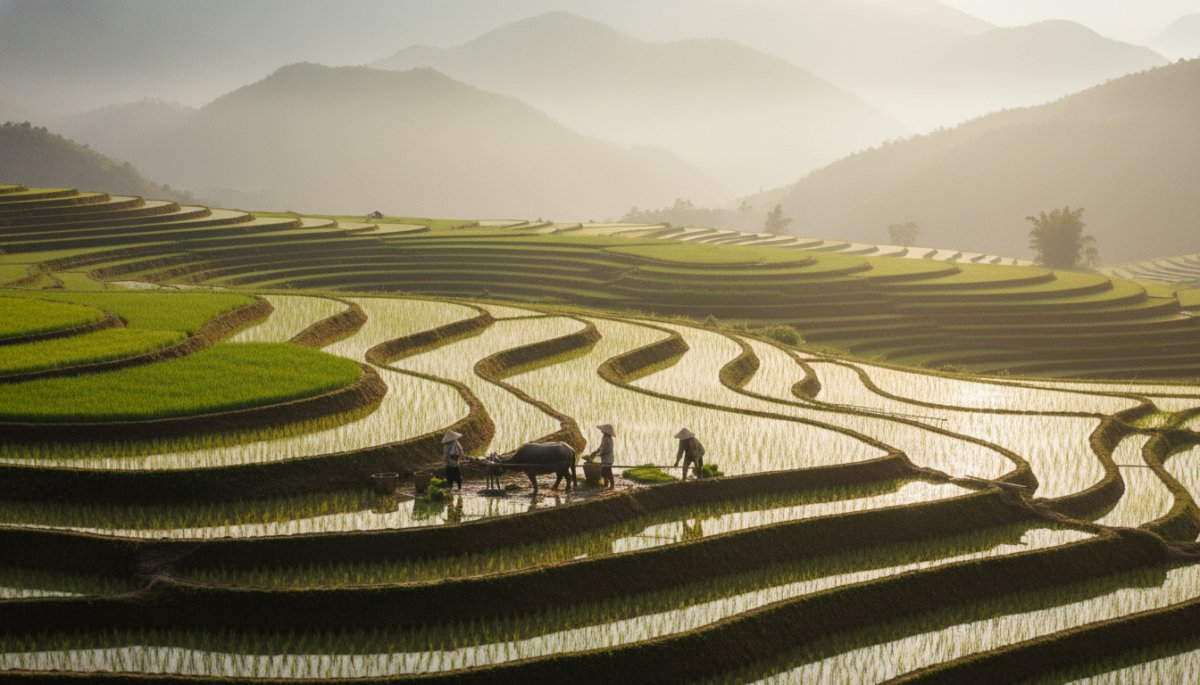
The Mekong Delta in the south is the country's largest granary, responsible for about half of Vietnam's rice output and nearly 90% of its rice exports. The alluvial soil and abundant water of the Mekong River allow 2 to 3 crops per year, and it boasts land productivity that is among the highest in the world.
In addition to rice, tropical fruit trees such as coconut, mango, and dragon fruit, as well as freshwater fish and shrimp farming shrimp farming, are also thriving. In recent years, salt damage has made rice monoculture difficult, and integrated management such as "rice + shrimp" and "conversion to fruit trees" is increasing.
In the Mekong Delta, shrimp aquaculture and pangasius (catfish) aquaculture are carried out on a large scale, forming a pillar of exports to Japan, the EU, and the United States. A value chain linked to frozen-processing plants has been built, establishing a model that earns foreign currency through "production plus simple processing."
The Central Highlands: The Core Region for Export Crops
The Central Highlands (Dak Lak Province and others) is the core region for export crops, producing coffee, black pepper, Cashew nuts and others as a main production area.
Coffee in particular boasts the world's second-largest export volume, most of it Robusta. The volcanic soil and the climatic conditions at an altitude of 500 to 800 m are well suited to these crops.
However, dependence on a single crop is strong, carrying the vulnerability of being directly affected by international market prices and drought.
Structural Challenges and Recent Changes
The biggest problem is dependence on intermediaries. Because smallholders are dispersed, collection agents (brokers) hold the power to set prices, and farmers have almost no bargaining power. Organized consolidation like Japan's agricultural cooperative model is weak, creating a structure in which farm incomes are hard to raise.
Processing infrastructure is also limited, and secondary processing such as drying, milling, and extraction is still developing. As a result, large amounts of non-standard produce and surplus crops are generated.
Recent years have also seen changes. Against the backdrop of tighter regulations in importing countries, the acquisition of international certifications such as GlobalG.A.P., pesticide-residue management, and traceability compliance are advancing. The adoption of smart agriculture such as drone pest control and IoT irrigation has also begun at some large-scale farms, but its spread is limited, and the majority of smallholders still rely on labor-intensive agriculture.
The Productivity Challenges and Regional Structure of Thai Agriculture
The Background to Low Agricultural Productivity
Thai agriculture's low productivity is not a matter of technological level; rather, conditions in a particular region are dragging it down.
That region is the northeast of Thailand, the so-called "Isan." Northeastern Thailand has almost no mountains, scarce water sources, and an irrigation rate of just under 10%, so it must rely on unstable rainwater.
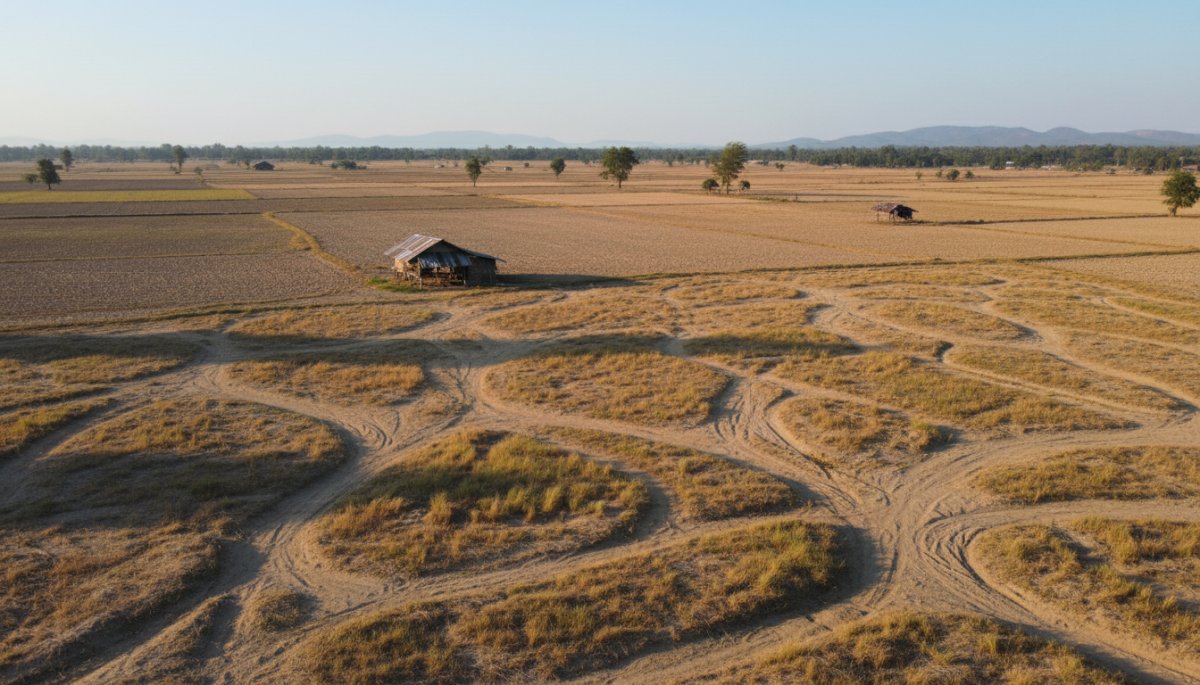
Most of the soil is sandy and low in nutrients; because sand has no water-retention capacity and does not adsorb chemical fertilizer, fertilizer washes away when it rains, making fertilization inefficient. Nitrogen fertilizer in particular is absorbed at less than 30% in northeastern Thailand, with 70% going to waste.
Many young people in northeastern Thailand go away to work, forming a structure in which fertilizer is purchased with the money they send home.
Irrigated Rice Cultivation and Horticulture in the Chao Phraya Delta
Thailand's Chao Phraya Delta traditionally practiced "rainfed rice cultivation," growing "floating rice" and "deepwater rice." After 1960, irrigation facilities were developed, making "irrigated rice cultivation" possible. In areas where water is abundant year-round, peri-urban horticulture has also developed.
The population of the metropolitan area including Bangkok and surrounding provinces reaches 16 million, and the focus of agriculture in this region is shifting from rice cultivation to horticulture. Freshwater shrimp farming has also begun in the areas surrounding the Bangkok metropolitan region; according to farmers, "horticulture is 10 times more profitable than rice cultivation, and shrimp farming is dozens of times more profitable than horticulture."
However, because saltwater was put into paddy fields converted to shrimp farming, salt and chemicals such as antibiotics used in aquaculture leaked into surrounding farmland and caused environmental damage, so some inland aquaculture has moved to the brackish-water zones along the coast of the Gulf of Thailand.
The BCG Economic Model and Adding Value in Agriculture
In 2021, the Thai government placed the "Bio-Circular-Green (BCG) economic model" at the heart of its national strategy.
Although about 30% of Thailand's working population is engaged in the agriculture and food industry, its contribution to GDP is only 6.1%. For this reason, through the BCG economic model, the country is promoting improved agricultural productivity and the development of high-value products (e.g., functional foods), which it needs to connect to raising farmers'raising incomes incomes and correcting social disparities.
Although Thailand is a major producer of sugarcane, cassava, and the like, these resources are not fully utilized, and more than 60% of the nation's energy is imported. For this reason, it plans to develop biorefinery technology to raise added value, such as converting biomass into energy and chemicals.
Source Japan External Trade Organization (JETRO), "The BCG Economy: Leveraging Strengths for an Economy Resilient to External Factors (Thailand)" Created based on the above (April 2023).
The Characteristics and Industrial Structure of Indonesian Agriculture
The Overwhelming Presence of the Palm Oil Industry
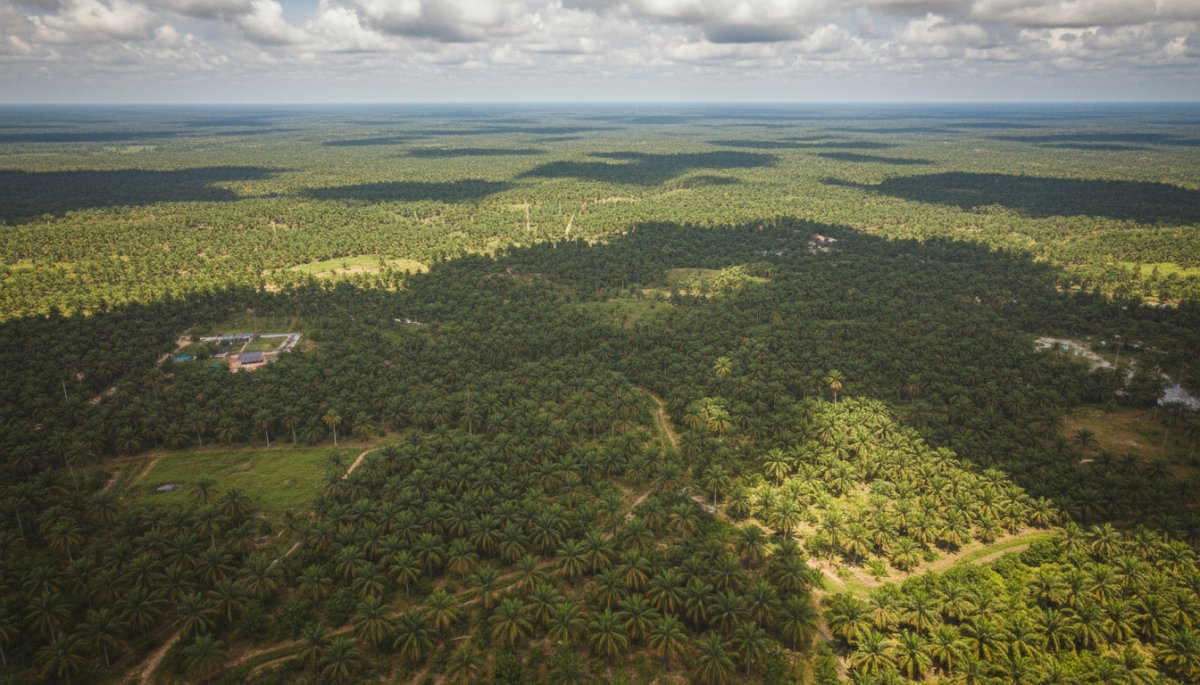
As the world's largest palm oil producer, Indonesia shows an overwhelming presence in the global edible-oil market.
Palm oil is a major export item for Indonesia and an important industry supporting the national economy. Vast plantations are developed, and a large-scale production system has been built.
Agricultural Challenges Unique to an Archipelagic Nation
Because Indonesia is an archipelagic nation, it faces distinctive challenges in inter-regional logistics and the supply of agricultural materials. The climatic conditions and soil characteristics of each island also differ, and crops suited to each region are grown accordingly.
Java is densely populated and has developed peri-urban agriculture, while on the outer islands large-scale plantation agriculture is the mainstream.
The Coexistence of Smallholders and Large-Scale Plantations
Indonesian agriculture has a dual structure in which traditional farming by smallholders coexists with commercial agriculture on large-scale plantations.
Smallholders grow mainly food crops and carry the region's food security. Large-scale plantations, on the other hand, produce export crops such as palm oil, rubber, and coffee, contributing to foreign-currency earnings.
A Comparative Analysis of the Three Countries' Agricultural Production Capacity
Production Capacity by Major Crop
In rice production, Vietnam and Thailand compete as global exporters. Using the high land productivity of the Mekong Delta as its weapon, Vietnam has achieved 2 to 3 crops per year and expanded its export volume.
Thailand is a traditional rice export rice-exporting country, but due to productivity challenges in the northeast, its yield per unit area trails other countries. Indonesia is centered on domestic consumption, with limited export capacity.
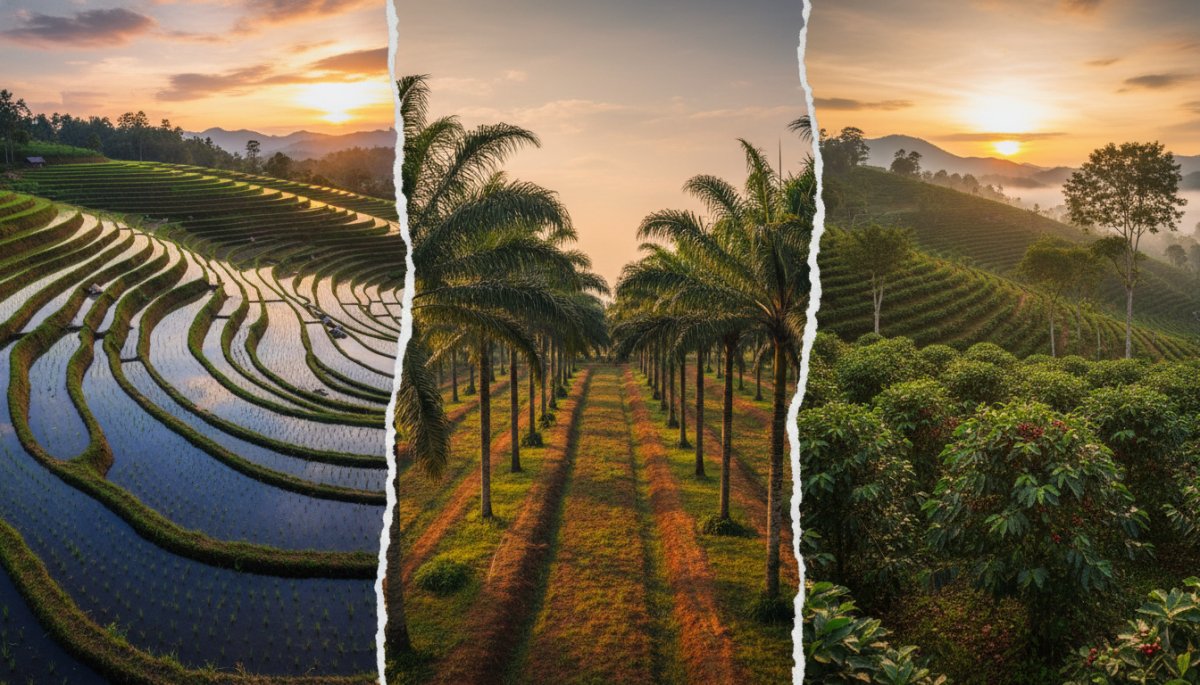
In coffee production, Vietnam boasts the world's second-largest export volume and is a major supplier of Robusta. Indonesia is also known as a coffee producer, and the Arabica of Sumatra in particular is valued for its high quality. Thailand's coffee production is relatively small-scale.
In palm oil production, Indonesia holds an overwhelming global share and, together with Malaysia, is one of the two major producers. Palm oil production in Vietnam and Thailand is limited.
Differences in Technological Level and Productivity
In terms of agricultural technology level, the three countries are each at a different stage of development.
Although Vietnam has many smallholders, its efforts toward modernization are advancing, such as obtaining international certifications and adopting smart agriculture. Thailand aims to add value through the BCG economic model, but structural challenges in the northeast are a barrier to improving productivity.
Indonesia achieves high production efficiency on its large-scale plantations, but raising the technical level of smallholder farmers remains a challenge.
Comparing export competitiveness
In terms of export competitiveness, each country has different strengths. Through its primary-commodity export model, Vietnam has achieved strong export results in rice, coffee, and seafood. Thailand is advancing value creation in horticultural crops and processed foods.
With its overwhelming palm oil output, Indonesia wields significant influence over price formation in the global market.
Business opportunities and key points for selecting investment destinations
Investment opportunities in Vietnam
The current state of Vietnamese agriculture, where it stops at primary commodities, fits very well with the Japanese model of processing and high-value creation.
It is characterized by strong supply capacity for raw materials such as fruit, coffee, and spices, weak processing stages, large room for drying, grinding, and turning crops into ingredients, and the presence of large volumes of off-grade produce. Considerable room remains for expansion into dried vegetables, fruit powders, extract ingredients, and functional ingredients.
In the aquaculture sector of the Mekong Delta, a value chain linked to frozen-processing plants has already been built, offering abundant opportunities for collaboration with Japanese companies.
Investment opportunities in Thailand
Thailand is promoting the BCG economic model as a national strategy, with substantial policy support for adding high value to agriculture.
New business fields are opening up, such as biorefinery technology, functional food development, and collaboration with the medical and wellness industries. Horticulture and freshwater shrimp farming on the outskirts of the Bangkok metropolitan area have the potential to become a model for high-value agriculture aimed at urban consumers.
The Thai government regards improving agricultural productivity and raising farmers' incomes as important priorities, and is actively seeking cooperation with foreign companies.
Investment opportunities in Indonesia
Indonesia has a huge domestic market with a population of about 270 million, and demand for food is expected to expand.
There is great potential in downstream development within the palm oil industry (processed foods, cosmetics ingredients, biofuels, and so on). In addition, business opportunities also exist in infrastructure and technical support, such as building cold chains that solve the logistics challenges specific to an island nation, and supporting productivity improvements for smallholder farmers.
Criteria for selecting investment destinations
When selecting an investment destination, it is important to evaluate the following factors comprehensively.
- The stability of raw-material procurement and quality control systems
- The state of processing infrastructure and its scalability
- The efficiency of logistics networks and export procedures
- Trends in government agricultural policy and foreign-investment regulations
- The potential to secure labor and develop human resources
- The status of international certification and the level of quality control
- The state of compliance with environmental regulations
Vietnam's main appeal lies in its raw-material supply capacity and the large room for processing, Thailand's in its policy support and appetite for adding high value, and Indonesia's in its market size and resource volume.
Summary: Making strategic use of Southeast Asian agricultural nations
The three countries of Vietnam, Thailand, and Indonesia each have different agricultural structures and strengths.
Vietnam is built on a primary-commodity export model run by smallholder farmers, characterized by the high land productivity of the Mekong Delta and its export competitiveness in coffee and seafood. Its weak processing infrastructure represents an entry opportunity for Japanese companies.
Thailand, while facing productivity challenges in its northeast, is promoting a high-value strategy through the BCG economic model, and growth is expected in fields such as biotechnology and functional foods.
As the world's largest palm oil producer, Indonesia holds the potential for downstream development, backed by the efficiency of its large-scale plantation agriculture and its huge domestic market.
When considering investment or business expansion into these three countries, the key to success is to accurately grasp each country's agricultural structure, policy trends, and state of infrastructure, and to appropriately match your own strengths with local needs.
Southeast Asian agriculture is a field expected to keep growing, and strategic engagement may allow companies to capture significant business opportunities.