Why Vietnam keeps holding the world's top spot in cashew nuts
Looking across the global cashew nut market, one country stands out with overwhelming presence.
That country is Vietnam. Vietnam, in cashew nuts and black pepper pepper, boasts the world's top production, and its total agriculture, forestry and fishery exports reached about US$53 billion in 2023. As an agricultural powerhouse accounting for more than 15% of the country's total exports, it embodies a success model for Southeast Asian agriculture.
Why has Vietnam been so successful in the cashew nut industry?
Behind this lies not only an advantage in natural conditions, but strategic industry development by the government, the introduction of advanced processing technology, and the building of a quality-control system with the international market in mind. This article explains in detail, with the latest data and local initiatives, seven reasons why Vietnam continues to hold the world's top position in cashew production.
Reason 1: An optimal growing environment and strategic formation of production areas
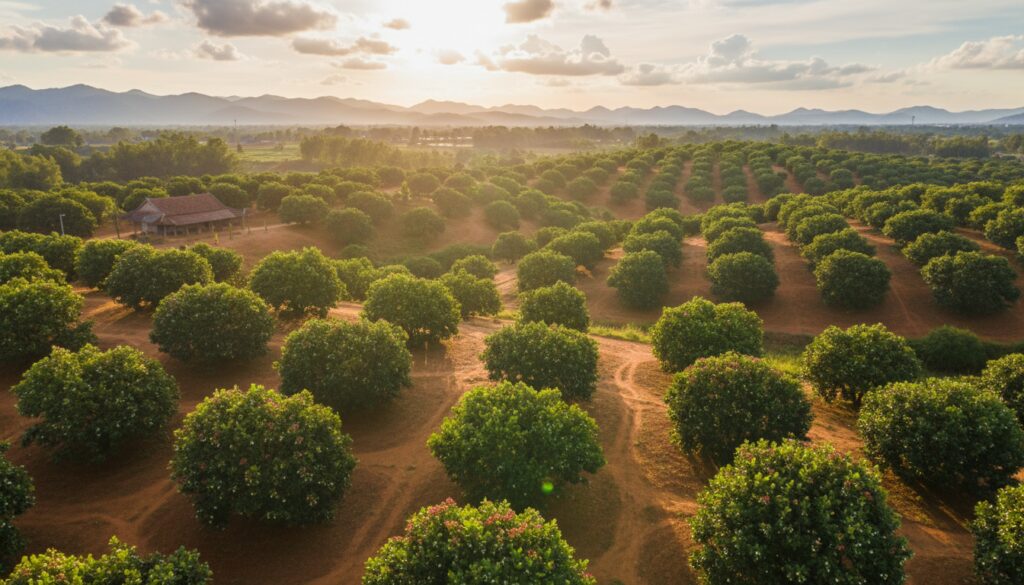
The cashew is a tropical crop native to South America that prefers a hot, humid climate and red soil. Southern Vietnam, especially Binh Phuoc province, is an ideal growing area that meets exactly these conditions.
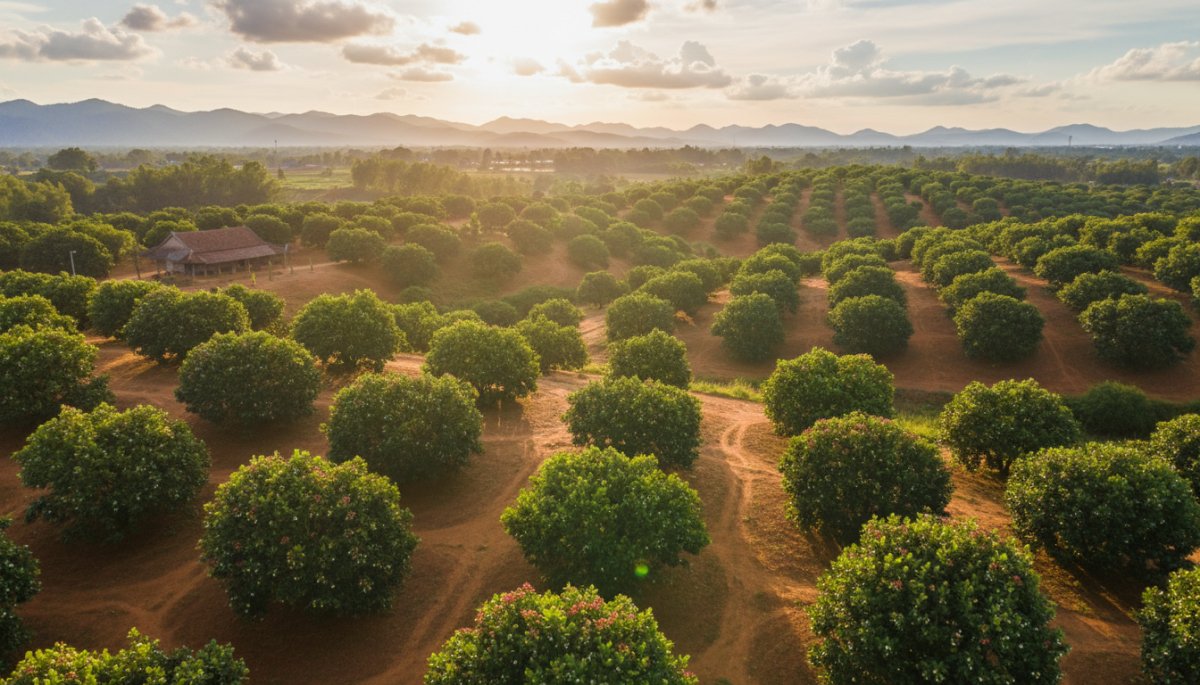
Located north of Ho Chi Minh City and bordering Cambodia to the west, Binh Phuoc province has large-scale cashew plantations and is even called the "cashew capital." The region's red soil has properties similar to volcanic basalt soil, well suited to letting cashew roots spread deep. Its monsoon climate—warm year-round with a clear rainy season and dry season—also matches the cashew's growth cycle.
A government-led strategy to expand production areas
Since the early 1980s, the Vietnamese government has promoted the cashew industry as a national effort. Binh Phuoc and Dong Nai provinces were designated as production-promotion areas, and farmers received active support, such as the distribution of seeds and fertilizer and training courses teaching cultivation techniques learned abroad.
Through this strategic formation of production areas, Vietnam established a reputation as a land that yields the world's best-quality cashew nuts. When the 1986 Doi Moi policy reforms granted land-use rights to individual farmers and introduced a market economy, agricultural production expanded dramatically.
Source
The Nikkei, "Cashew nuts: the country that has been No. 1 in the world for 17 years running is one familiar to Japan"
Compiled from the above (April 2020)
Reason 2: Developing and spreading high-yield varieties
To raise output dramatically, simply increasing the planted area is not enough.
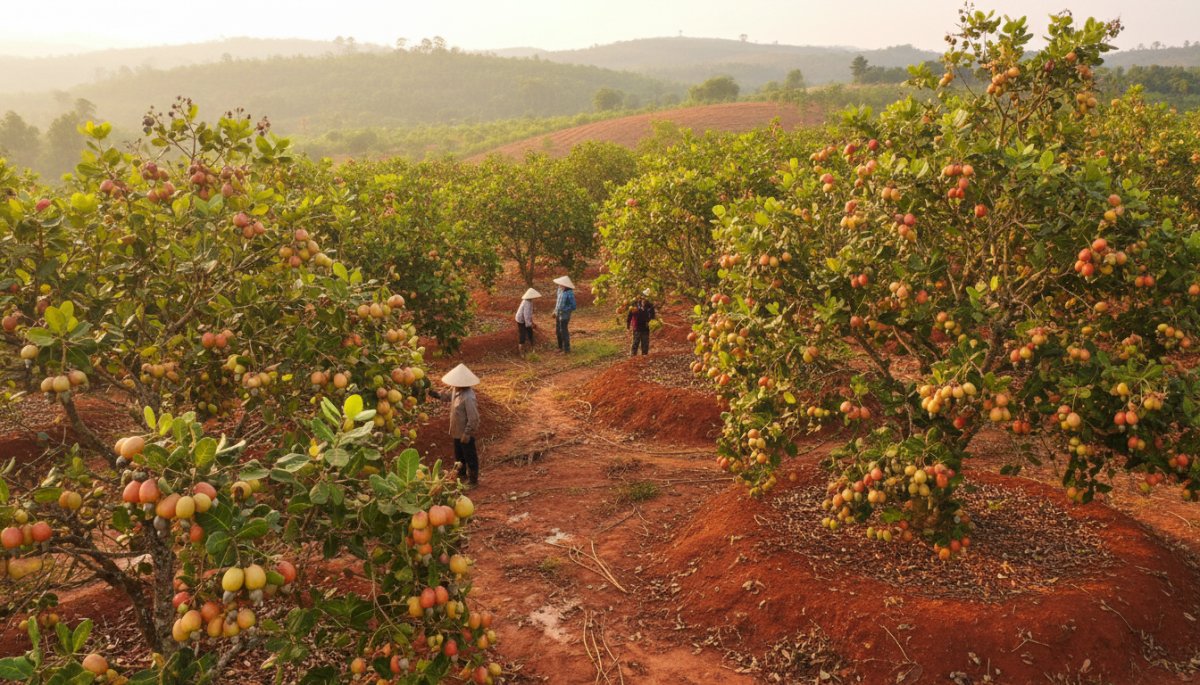
Vietnam has also put effort into variety improvement. The Agricultural Science Institute for Southern Coastal Central Vietnam (ASISOV) has trial-grown a wide range of cashew varieties and succeeded in developing ones that deliver high productivity. These varieties have been formally certified by the Ministry of Agriculture and Rural Development (MARD) and have entered mass production.
Introducing high-density planting and commercial cultivation
To secure high yields, Vietnam carries out high-density planting and commercial cultivation. Shifting from traditional extensive cultivation to planned seed programs and intensive crop management has greatly improved yield per unit area.
Initiatives such as training farmers and providing seeds have also had a large positive impact on cashew production and quality. The Vietnam Cashew Association (Vincas) was set up by the government to develop domestic cashew production and continuously provides technical support to farmers.
Source
Mordor Intelligence, "Vietnam Cashew Nut Market Size and Share Analysis"
prepared from
Reason 3: World-leading processing technology and mechanization
Where Vietnam's cashew industry truly shows its strength is in the processing stage.
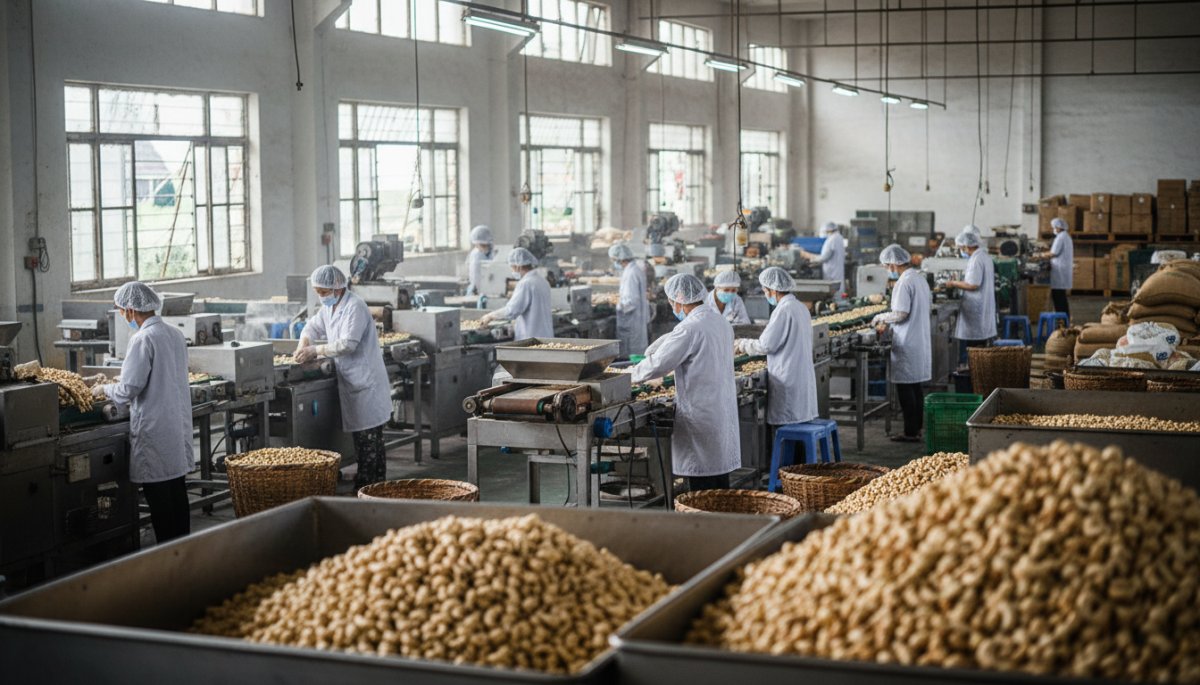
Cashews are an agricultural product with many tasks that must rely on manual labor—gathering the fruit, removing the seed part, cracking the hard shell and taking out the kernel inside. But Vietnam has focused on advanced processing technology and mechanized cashew processing as a whole, succeeding in saving labor and bringing consistency and cost competitiveness.
Competitive advantage from developing domestic technology
Vietnam's cashew industry has developed rapidly by creating domestic technology to cut production costs and ensure quality. Efforts to lower labor costs through greater efficiency continue.
Lafooco (Long An province), a major cashew company founded in 1985, is one of the firms that worked with the government in the early days to industrialize cashews. organic cultivation of fields, and operates processing facilities that meet the United States' and the European Union's (EU)Sanitary management standards.
Source
Mordor Intelligence, "Vietnam Cashew Nut Market Size and Share Analysis"
prepared from
Reason 4: Developing and diversifying value-added products
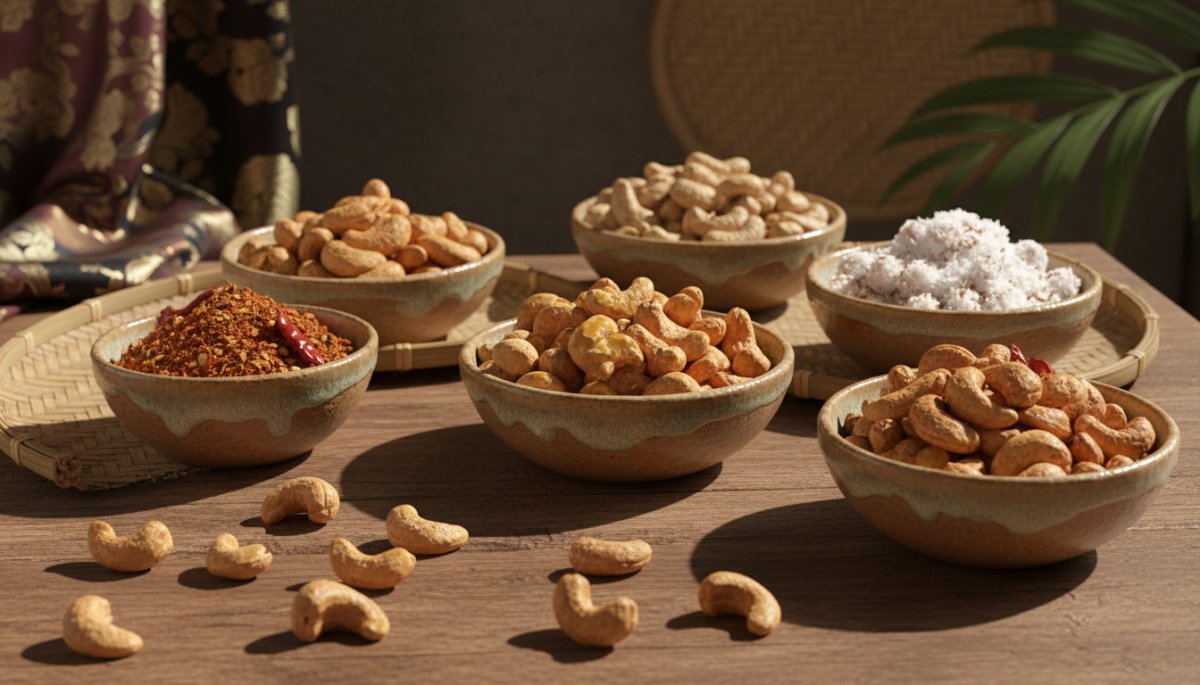
In recent years, Vietnam has been increasing the number of flavored products.
Honey, coconut and chili flavors are popular, helping differentiate the country in the international market. In 2023, cashew milk made from Vietnam's own cashews also went on sale, pointing to a new possibility for raising added value.
Efforts toward organic cultivation
A Japanese agricultural technician–led organic cultivation dissemination project is also underway. With the cooperation of the Binh Phuoc Farmers' Union, farmers are taught—through lectures and one-on-one guidance—how to use organic fertilizer and build soil, how to make chemical-free organic repellents, and methods for controlling mold and fungi and keeping pests away.
Cashews grown with Japanese fermented chicken-manure fertilizer are rich in much-discussed components found in the thin skin, such as polyphenols, oleic acid and vitamin E. Roasted nuts in particular have more polyphenols, and the zinc they contain in abundance is drawing attention as one of the essential minerals the human body needs.
Source
Makuake, "Spreading organic farming in Vietnam—fresh pepper and skin-on cashews grown with Japanese agricultural technology!"
prepared from
Reason 5: Access to international markets and export strategy
Vietnam's cashew exports have expanded to more than 85 countries.
It has become the largest supplier of cashew nuts to the United States, China, the Netherlands, Australia, Canada and New Zealand. The rising market value shows growing global demand for Vietnamese cashews.
Breakdown of the major export markets
The United States, China and the Netherlands remain Vietnam's three largest cashew import markets. Stable exports to these markets support Vietnam's cashew industry.
Making use of free trade agreements
To access Western and Chinese markets, Vietnam pursued the EU–Vietnam Free Trade Agreement (EVFTA), the UK–Vietnam FTA, and the Comprehensive and Progressive Agreement for Trans-Pacific Partnership (CPTPP). Under these agreements, tariffs are being phased out, further boosting the international competitiveness of Vietnamese cashews.
Source
Mordor Intelligence, "Vietnam Cashew Nut Market Size and Share Analysis"
prepared from
Reason 6: Quality control and compliance with international standards
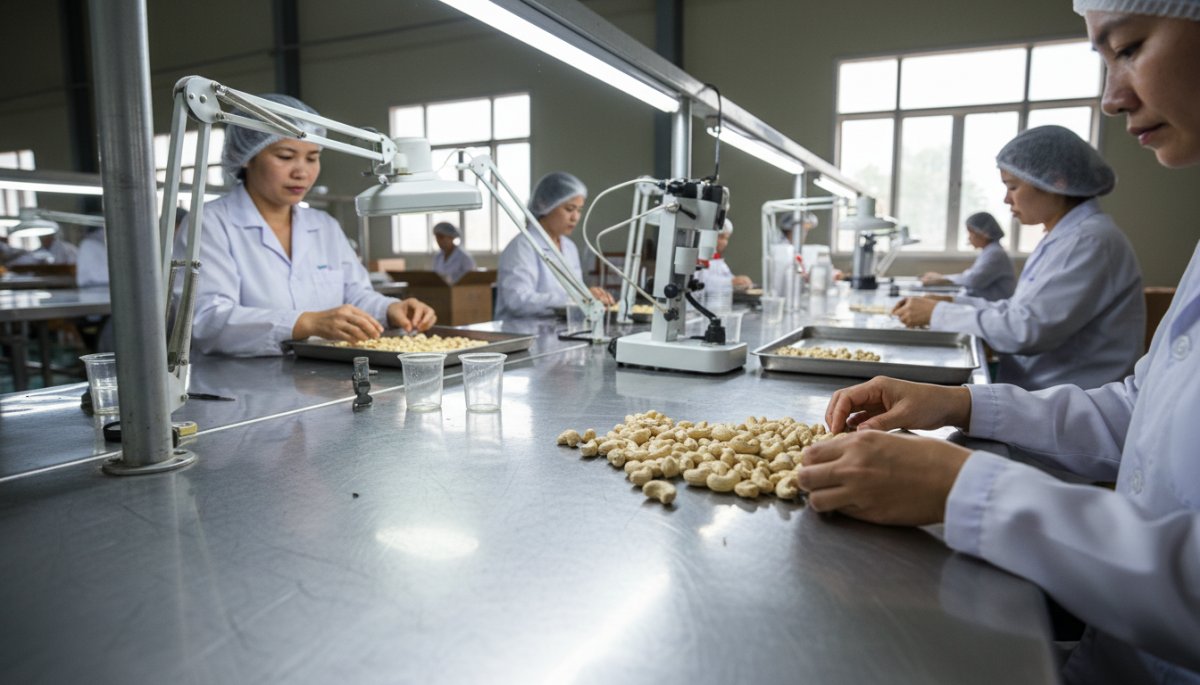
To stay competitive in international markets, quality control is essential.
Vietnam's major cashew companies have built systems that meet the United States' and the EU's Sanitary management standards. Tra My Nguyen, vice-chair of the PAN Group, Lafooco's parent company, says, "We want to raise quality and product strength and open up more of the world market."
Securing Traceability
In recent years, Vietnam has been building traceability systems for agricultural products. It is trying out origin-tracking systems using blockchain technology and spreading GAP (Good Agricultural Practices) certification, which helps improve reliability in international markets.
Source
The Nikkei, "Cashew nuts: the country that has been No. 1 in the world for 17 years running is one familiar to Japan"
Compiled from the above (April 2020)
Reason 7: Promoting international cooperation and technology transfer
The Vietnam Cashew Association (Vinacas) has signed memoranda with many trading nations, including the cashew council.
In February 2023, it signed an MoU with the Cambodia Cashew Association for the mutual development of the cashew industry. Such international cooperation strengthens the provision of technical advice to producers and trade support between countries.
Cooperation with Japan
Technology transfer in organic farming is also progressing from Japan. Shinzo Tanabe of TANABE FARM repeatedly holds seminars and visits individual farmers for guidance, with the cooperation of the Binh Phuoc Farmers' Union. Vietnamese staff are on site, and a system is in place to take questions from farmers and give feedback.
There are also opportunities for staff of the Binh Phuoc Farmers' Union to visit Japanese farms in person and learn about the look of and approach to organic farming. Such two-way technical exchange supports the further development of Vietnam's cashew industry.
Source
Makuake, "Spreading organic farming in Vietnam—fresh pepper and skin-on cashews grown with Japanese agricultural technology!"
prepared from
The future and challenges of Vietnam's cashew industry
Vietnam's cashew industry has established the world's top position, but it also faces challenges.
Efforts to cut labor costs through greater efficiency are essential. Implementing traceability systems at the smallholder level also lags behind and is, overall, still at an early stage. In Vietnam the average farm size is about 0.44 hectares, among the smallest in ASEAN countries, and 97% of all farmers are small- and medium-scale.
The shift to sustainable agriculture
The shift to organic farming often comes with a temporary drop in yield, which is a large risk for small farmers with little margin. The cost of obtaining organic certification and the complexity of production management that complies with certification standards are also barriers. There is a need to build mechanisms that support the transition from both the technical-assistance and the economic-incentive sides.
However, the Vietnamese government has set out a "Strategy for Sustainable Agriculture and Rural Development to 2030, with a Vision to 2050," positioning the adoption of smart farming as a national priority. Various technologies—environmental monitoring with IoT sensors, pesticide spraying by drone, AI-based pest and disease forecasting—are being demonstrated across the country, and these may be applied to the cashew industry as well.
Summary: Vietnam as a success model for Southeast Asian agriculture
Vietnam's continued status as the world's top cashew producer and exporter does not come down to a single factor.
An optimal growing environment, government-led strategic formation of production areas, development of high-yield varieties, world-leading processing technology, development of value-added products, access to international markets, strict quality control, and technology transfer through international cooperation—these seven elements are organically linked and underpin the competitiveness of Vietnam's cashew industry.
Vietnam is an agricultural powerhouse of about 100 million people, where agriculture accounts for about 12% of GDP and employs more than 40% of the working population. rice export output is second in the world (annual production about 43.5 million tonnes), coffee output is second in the world (Robusta is the largest in the world), and in cashews and black pepper pepper it holds the record of first in the world in output, and the Mekong Delta is one of the world's leading production regions, responsible for more than half of the country's rice output.
The 1986 Doi Moi policy made Vietnam a net rice exporter for the first time in 1989, and the country continues to contribute to global food security as a success model for Southeast Asian agriculture. The "Japan–ASEAN Green Cooperation Plan," adopted at the Japan–ASEAN agriculture and forestry ministers' meeting in May 2023, is a comprehensive cooperation framework for building sustainable agriculture and food systems in the Asian monsoon region.
By fusing Japanese technology with Vietnam's production capacity, further quality improvement and the realization of sustainable agriculture are expected.
Do keep an eye on how Vietnamese cashews develop from here, and on the growth of Southeast Asian agriculture as a whole.

