What is the Mekong Delta?
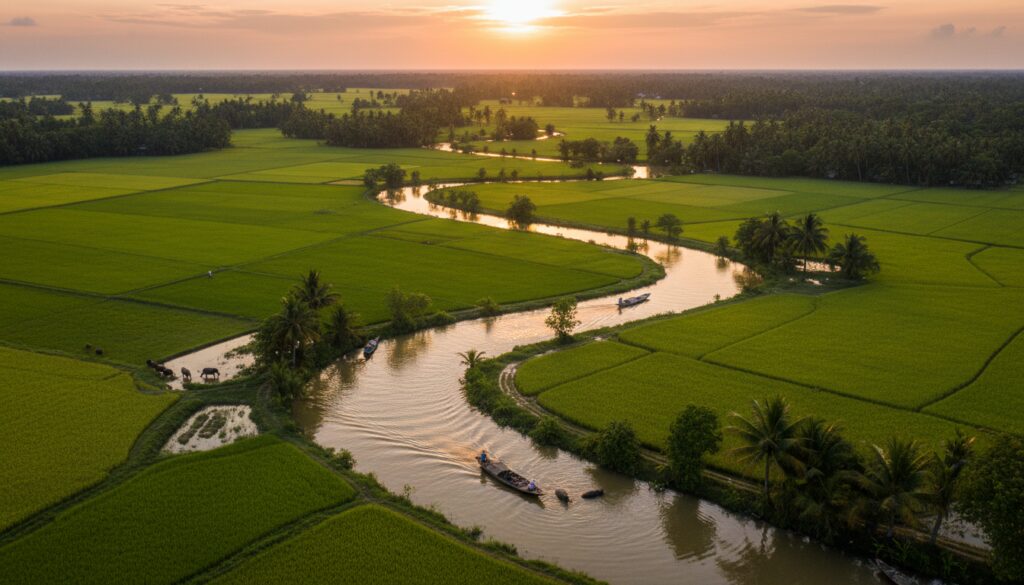
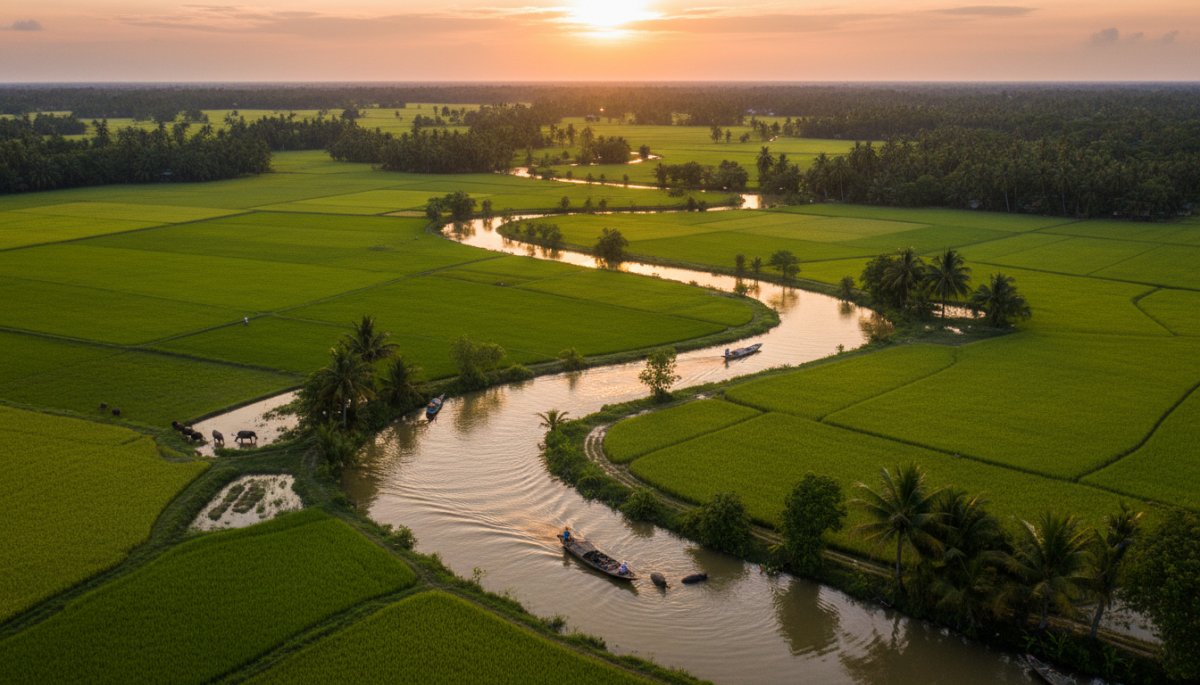
The Mekong Delta is one of the world's leading farming regions, spreading across southern Vietnam.
This vast delta, formed where the Mekong River flows into the South China Sea, accounts for more than half of Vietnam's domestic rice output and supplies most of the rice destined for export, functioning as "Vietnam's granary." In addition to large-scale rice farming that makes use of its vast, flat land, shrimp aquaculture and fruit cultivation also thrive, and the region draws international attention as the core of Vietnamese agriculture.
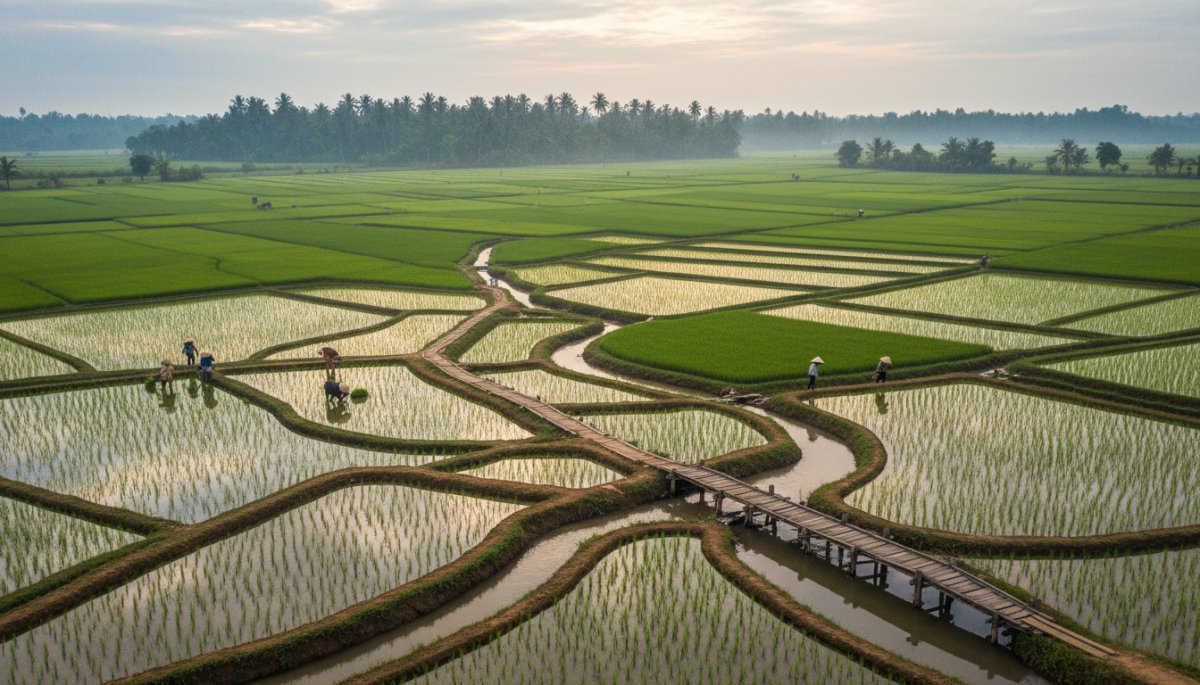
This region is blessed with fertile alluvial soil and abundant water resources, and benefits from a tropical monsoon climate that allows farm production throughout the year. In recent years, however, it has faced serious environmental challenges such as sea-level rise, saltwater intrusion, and intensifying floods driven by climate change, making the shift to sustainable agriculture an urgent issue.
The Mekong Delta's geographical features and farming environment
The formation of the delta and the richness of its soil
The Mekong Delta is an alluvial plain formed by the accumulation of sediment that the Mekong River has carried down over long ages.
This fertile soil provides an ideal environment for growing rice and other crops. Because the entire delta is low-lying, flat terrain, vast paddy fields can be laid out efficiently, yet its structure is also vulnerable to the risks of sea-level rise and flooding.
Soil properties vary by area: relatively well-draining soils spread across the upstream zones, while soils with high salinity are distributed along the coast. This geographical diversity is what gives rise to different farming styles from one area to another.
Tropical monsoon climate and water resources
The Mekong Delta has a tropical monsoon climate, with an average annual temperature of about 27 degrees and annual rainfall reaching 1,500 to 2,000 millimeters.
The rainy season (May to November) and the dry season (December to April) are clearly divided, and this seasonal variation greatly affects the farming cycle. In the rainy season, abundant rainfall and water supplied from the rivers create ideal conditions for rice growing, while in the dry season water shortages become a challenge and the development of irrigation systems plays an important role.
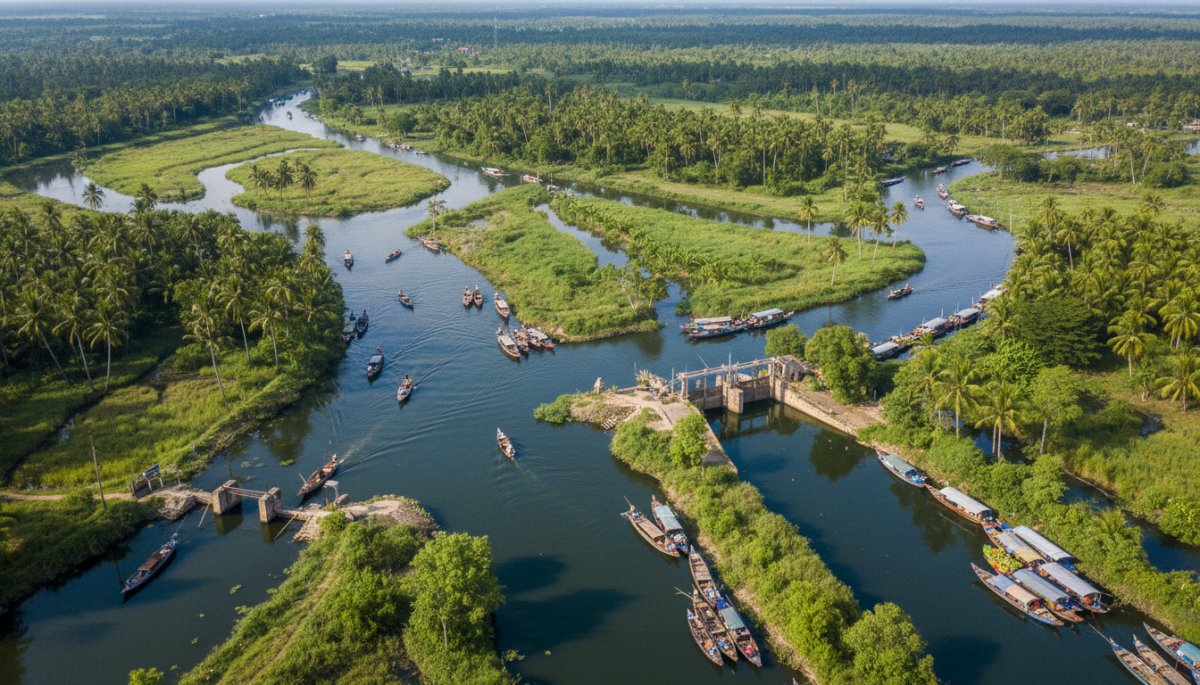
The complex network of waterways formed by the Mekong River's main channel and its tributaries serves not only to supply irrigation water but also as a means of transport for local residents. Improving water-management techniques that make use of this waterway network is essential to raising the productivity of Mekong Delta agriculture.
Eight important roles the Mekong Delta plays
1. The linchpin of Vietnam's food security
The Mekong Delta produces more than half of Vietnam's domestic rice output.
For Vietnam, with a population of about 100 million, stable food production in this region is a crucial issue directly tied to national food security. Making use of climate conditions that allow multiple plantings a year, double-cropping and triple cropping are widely practiced, achieving high production efficiency.
2. The production base supporting the world's second-largest rice exports
Vietnam holds the world's second-largest position in rice export volume, and most of its export rice is shipped from the Mekong Delta.
Of the roughly 43.5 million tonnes produced each year, a substantial amount is supplied to international markets, supporting food demand in Asian and African countries. Exports to the Philippines, Malaysia, and African nations are especially large, giving it an important place in the international food supply network. The Philippines is ASEAN's only net rice importer, and stable supply from the Mekong Delta also contributes to that country's food security.
Source Ministry of Agriculture, Forestry and Fisheries, "The Current State of Vietnamese Agriculture and Its Agricultural and Trade Policy" prepared from
3. The center of the shrimp aquaculture industry
The Mekong Delta is also the center of Vietnam's shrimp farming industry.
Vietnam boasts the world's third-largest shrimp production and second-largest exports, and of its roughly US$9 billion in annual Seafood exports value, shrimp accounts for a large share. Japan, the United States, and the EU are the main export destinations, and it functions as an important supply source meeting international demand.
Along the coast, mixed farming systems that combine rice growing and shrimp aquaculture have also developed, contributing to the diversification of farmers' incomes.
Source Policy Research Institute, Ministry of Agriculture, Forestry and Fisheries, "Vietnam's Agriculture and Economic Development" prepared from
4. A major fruit-growing region
The Mekong Delta is also a leading production area for tropical fruits such as mango, dragon fruit, rambutan, and longan.
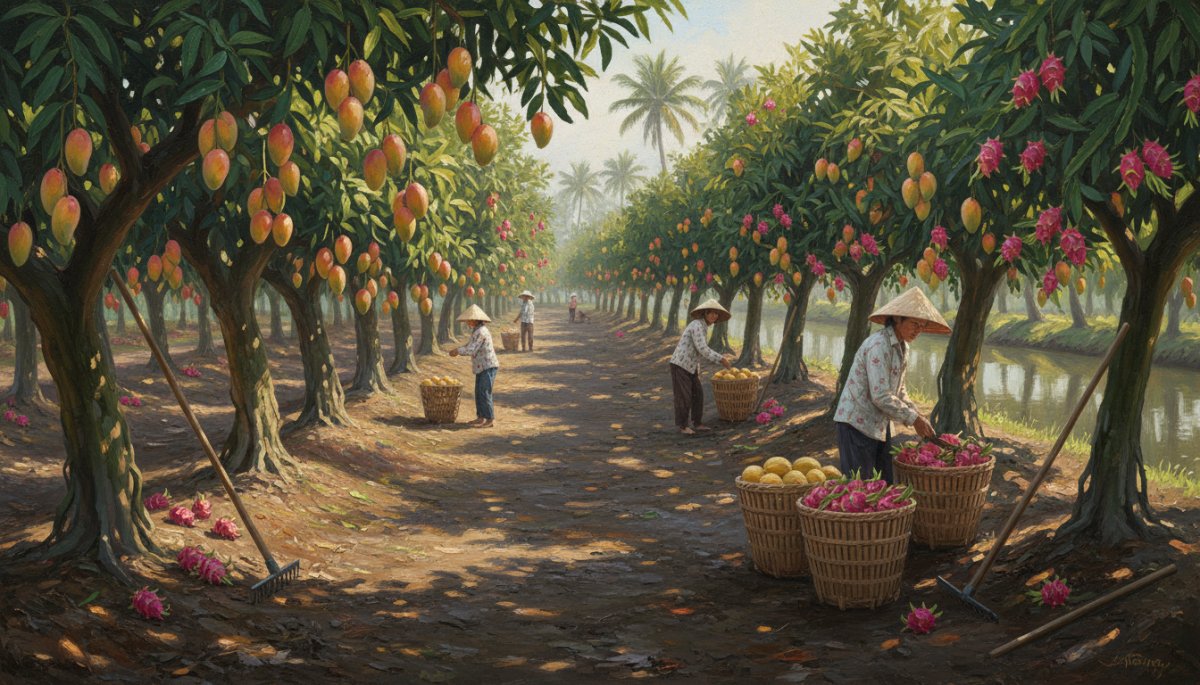
In Tien Giang and Vinh Long provinces especially, fruit growing is an important pillar of the local economy and is popular as agritourism orchards. Because fruit growing is more profitable than rice farming, it contributes greatly to farmers'raising incomes incomes.
5. Creation of farm-related employment
The Mekong Delta accounts for a large share of Vietnam's farm labor force.
A diverse range of farm-related industries unfolds here, including rice growing, aquaculture, fruit cultivation, and farm-product processing, supporting millions of jobs. Across Vietnam as a whole, more than 40% of the working population is engaged in agriculture, and the Mekong Delta, as the core of that, plays an indispensable role in sustaining rural livelihoods.
6. An important source of foreign-currency earnings
The farm and seafood products produced in the Mekong Delta are important export items for Vietnam.
In 2023, total agriculture, forestry, and fisheries exports reached about US$53 billion, accounting for more than 15% of the country's total exports. The foreign currency earned through exports of rice, shrimp, fruit, and other goods is an important source of funds supporting the growth of the Vietnamese economy.
Source Policy Research Institute, Ministry of Agriculture, Forestry and Fisheries, "Vietnam's Agriculture and Economic Development" prepared from
7. Comparative advantage within Southeast Asian agriculture
The Mekong Delta holds a distinctive position among the farming regions of Southeast Asia as a whole.
Thailand is called the "kitchen of the world," boasting some of the largest output of jasmine rice and natural rubber, with an average farm size of about 3 hectares per household, which is large. Indonesia is Palm oil the world's largest producer, and together with Malaysia accounts for more than 85% of global output. Compared with these countries, the average cultivated area per farm in Vietnam is about 0.44 hectares, among the smallest in ASEAN, yet thanks to the Mekong Delta's fertile soil and water resources, it maintains high competitiveness in productivity per unit of area.
8. A model of the Doi Moi policy's success
The Mekong Delta is, among the fruits of the 1986 Doi Moi policy the region that most symbolizes its achievements.
When land-use rights were granted to individual farms and a market economy was introduced, farm production expanded dramatically, and in 1989 the country became a net rice exporter for the first time. Through this policy shift, the Mekong Delta transformed from a "food-short region" into "one of the world's leading export bases" and became a driving force of Vietnam's economic development.
Challenges facing the Mekong Delta
Climate change and environmental risk
The Mekong Delta's greatest challenge is the environmental risk posed by climate change.
With rising sea levels, saltwater intrudes inland along the coast, and salt damage to farmland is growing more serious. Rainy-season floods intensify year after year and damage to crops is widening, while in the dry season water shortages become apparent and securing irrigation water grows difficult.
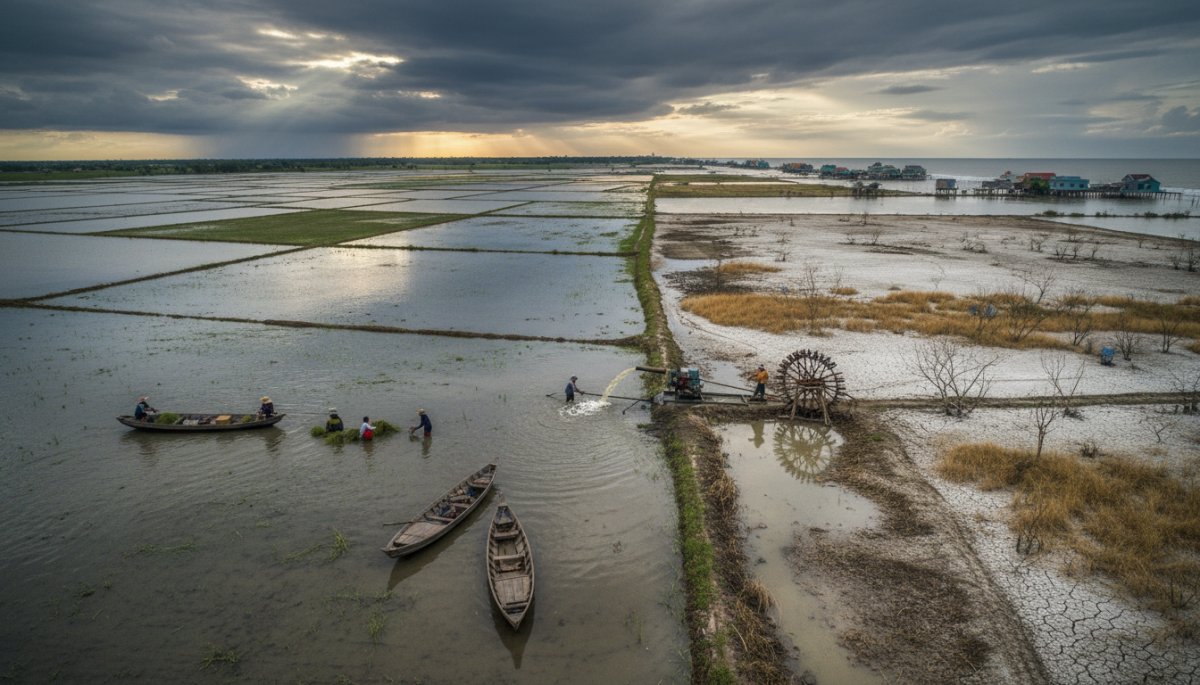
These environmental changes threaten the sustainability of conventional farming systems, and the swift implementation of adaptation measures is needed. For structural risks that varietal improvement alone cannot address, especially the loss of the delta itself to rising sea levels, the very strategy of where to locate agriculture must be rethought.
The flood-tolerant variety "Sub1" and salt-tolerant varieties developed by the International Rice Research Institute are spreading widely, starting with Vietnam, and the building of farming models adapted to climate change is advancing.
Source JICA, "Environmental Problems and Sustainable Development in the Mekong Delta" prepared from
Conservation of biodiversity
The Mekong Delta is also a region with rich biodiversity.
Diverse ecosystems such as paddy fields, wetlands, and mangrove forests exist here, and it is a habitat for many waterbirds, fish, and amphibians. As farming intensifies and urbanization advances, however, these ecosystems are under threat, and reconciling sustainable land use with biodiversity conservation has become a challenge.
The productivity and aging of smallholder farmers
The average cultivated area per farm in Vietnam is about 0.44 hectares, among the smallest in the ASEAN countries.
97% of all people engaged in farming are small and midsize farmers, and mechanization and smart-farming technology have not spread. About 57% of farm workers are unskilled, and the share aged 50 or older reaches about 43%. As young people continue to move to the cities, securing the next generation of farmers is an urgent issue.
Source Policy Research Institute, Ministry of Agriculture, Forestry and Fisheries, "Vietnam's Agriculture and Economic Development" prepared from
Low Added Value and an Underdeveloped Cold Chain
Most of the farm products produced in the Mekong Delta are exported as unprocessed primary commodities.
Exports of products whose value has been raised through processing are limited, and improving profitability is a challenge. In addition, because the cold chain (low-temperature logistics) is underdeveloped, harvested produce is often not stored or transported properly and ends up degraded or discarded, and post-harvest loss weighs on the profitability of agriculture as a whole.
Efforts toward the Mekong Delta's future
The Adoption of Smart Agriculture
The Vietnamese government has set out its "Strategy for Sustainable Agriculture and Rural Development to 2030, with a Vision to 2050," positioning the adoption of smart agriculture as a national priority.
A variety of technologies are being demonstrated across the region, including environmental monitoring with IoT sensors, pesticide spraying by drone, AI-based pest prediction, and the automation of hydroponics. In the Mekong Delta, demonstrations of water-saving rice farming through the introduction of water-management systems are advancing, and technical cooperation by Japanese companies is also becoming more active.
The shift to sustainable agriculture
The shift to lower-impact farming is also an important challenge.
To remedy the soil degradation and water pollution caused by excessive use of pesticides and chemical fertilizers, the promotion of organic farming and the spread of Good Agricultural Practices (GAP) certification are being advanced. The "Japan-ASEAN Midori Cooperation Plan," adopted at the Japan-ASEAN agriculture and forestry ministers' meeting in May 2023, is a comprehensive cooperation framework for building sustainable agriculture and food systems in the Asian monsoon region, and the Mekong Delta is one of its important target areas.
Source Policy Research Institute, Ministry of Agriculture, Forestry and Fisheries, "Vietnam's Agriculture and Economic Development" prepared from
Farm-product processing and higher added value
As Mekong Delta agriculture shifts "from quantity to quality," the processing of farm products and raising their added value is a central theme.
The Vietnamese government has set a goal of ranking among the world's top 15 in agriculture and food processing by 2030, and is pursuing a policy built on three pillars: attracting investment in processing facilities, developing the cold chain, and strengthening branding. By introducing primary-processing techniques such as drying and powdering, shelf life improves and logistics costs can be cut, so a strengthening of competitiveness in international markets is expected.
Summary
The Mekong Delta is the most important farming region supporting Vietnam's food security and economic development.
Accounting for more than half of domestic rice output, it serves as the production base that supports the world's second-largest rice export and plays an indispensable role in the international food supply network. Diverse farming forms such as shrimp aquaculture and fruit cultivation unfold here, supporting millions of jobs and about US$53 billion a year in agriculture, forestry, and fisheries exports.
However, it faces serious environmental risks such as sea-level rise, saltwater intrusion, and intensifying floods driven by climate change, making the shift to sustainable agriculture an urgent issue. Multifaceted efforts are needed, including raising smallholder productivity, adopting smart farming, developing the cold chain, and adding value to farm products.
The Vietnamese government has set out a strategy for sustainable agriculture and rural development through 2030 and is strengthening cooperation with the international community, Japan among them. The future of the Mekong Delta is the future of Vietnamese agriculture, and an important theme directly tied to world food security.
If you are interested in the sustainable development of the Mekong Delta, please check the latest trends in farming technology and international cooperation.
You May Also Like
- What is the Mekong Delta agricultural region? Eight features and challenges that support Vietnam's food production
- A thorough analysis of the characteristics of Vietnamese agriculture | Its production structure seen through the Mekong Delta
- How Mekong Delta agriculture works and its challenges: how to build a sustainable production system