Why the Mekong Delta became one of the world's leading rice-producing regions
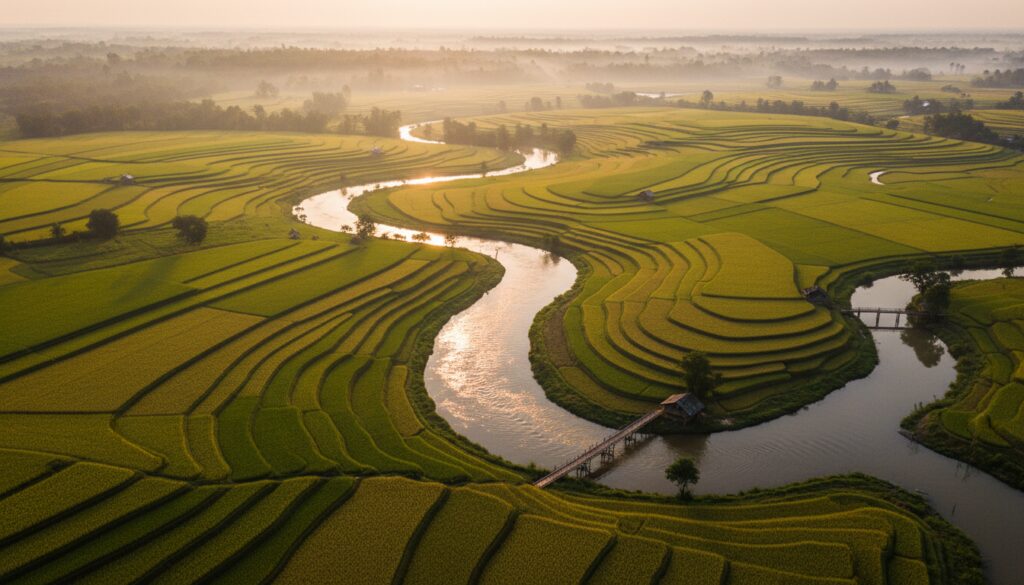
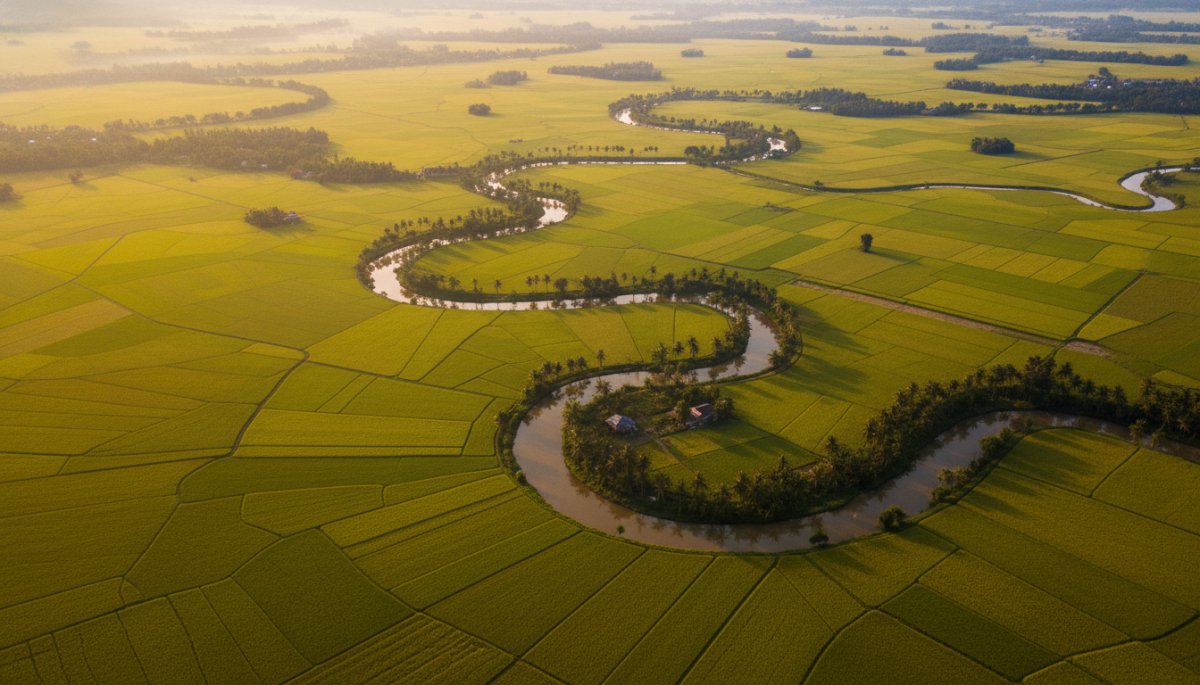
Blessed by the Mekong River, the southern Mekong Delta is the country's largest granary, responsible for about half of Vietnam's rice output and nearly 90% of its export rice.
The region's defining feature is its astonishing land productivity, with two to three crops a year. The Mekong River's alluvial soil and abundant water make possible a frequency of cultivation unmatched anywhere in the world.
On 1.8 million hectares of cultivated land, annual output was 16 million tonnes in 2001 but reached 24.5 million tonnes in 2012. Underpinning this rapid increase were mechanization and the evolution of water-management technology.
Behind this rich production system, however, lies a complex body of technology: precise water management, variety selection, and adaptation to recent environmental change.
The core of the water-management technology that makes triple-cropping possible
Indispensable to any discussion of Mekong Delta rice farming is the ring-dike system known as the full-dyke.
The strategic use of full-dykes and semi-dykes
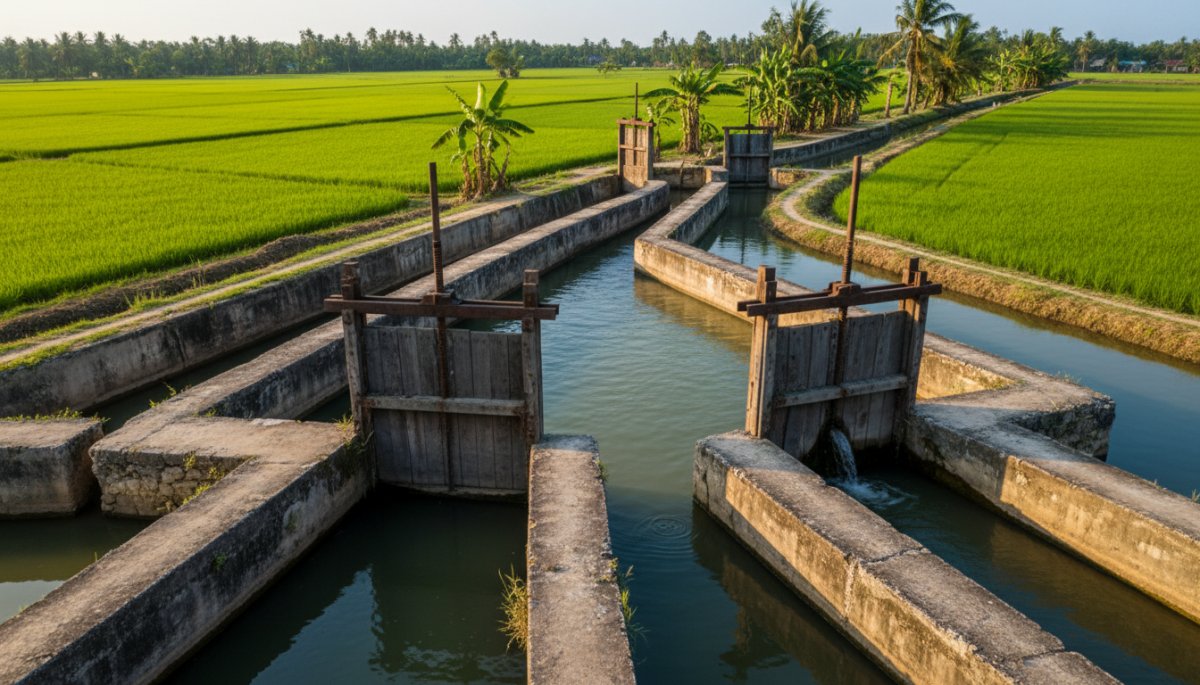
To cope with the yearly flooding, two types of embankment system have developed in this region. Full-dykes are high embankments that completely block floods, while semi-dykes are lower embankments that keep out floods until the summer-autumn crop harvest (August) and then allow floodwater into the fields after harvest.
On farmland enclosed by full-dykes, rice can be planted even during the flood period (August to November), making a third crop possible. Driven by strong demand from farmers and the policies of An Giang province and the Vietnamese government, full-dykes have spread rapidly over the past decade and triple-cropping has expanded.
Innovative water management through alternate wetting and drying (AWD)
A technique drawing attention in recent years is alternate wetting and drying (AWD).
Unlike the conventional method of keeping fields permanently flooded, this water-management approach withholds irrigation until the paddy soil dries out and then irrigates again, repeating the cycle. This supplies oxygen to the soil and makes it possible to save water while cutting methane.
A study spanning three cropping seasons found that farms using AWD could maintain yields while raising profit by 6% and cutting greenhouse-gas emissions by 38%. Production costs fell by 8.2 to 24.2%, seed volume dropped by 30 to 50%, chemical-fertilizer use fell by 30 to 70 kg/ha, the number of pesticide applications dropped by a factor of 1 to 4, and irrigation-water use fell by 30 to 40%.
Source
Japan International Research Center for Agricultural Sciences, "Alternate Wetting and Drying across Three Cropping Seasons Contributes to Higher Farmer Profits and Lower Greenhouse-Gas Emissions"
Compiled from (FY2022 research findings)
Flood risk and effects on the hydrological environment
The spread of full-dykes also brings challenges. In areas surrounding full-dyke zones, prolonged flooding and a rising trend in water levels have been observed.
Comparing the 2000 flood (a 1-in-60-year event) with the 2011 flood after full-dykes had spread (a 1-in-10-year event), areas have been confirmed where the inundated zone expanded and the inundation period lengthened beyond those of the larger 2000 flood. The rise in water levels at the Can Tho site may be caused not only by the effect of full-dykes but also by sea-level rise from warming and land subsidence in urban areas.
Optimizing variety selection and planting patterns
To make triple-cropping succeed, appropriate variety selection is essential.
A variety strategy for each cropping season
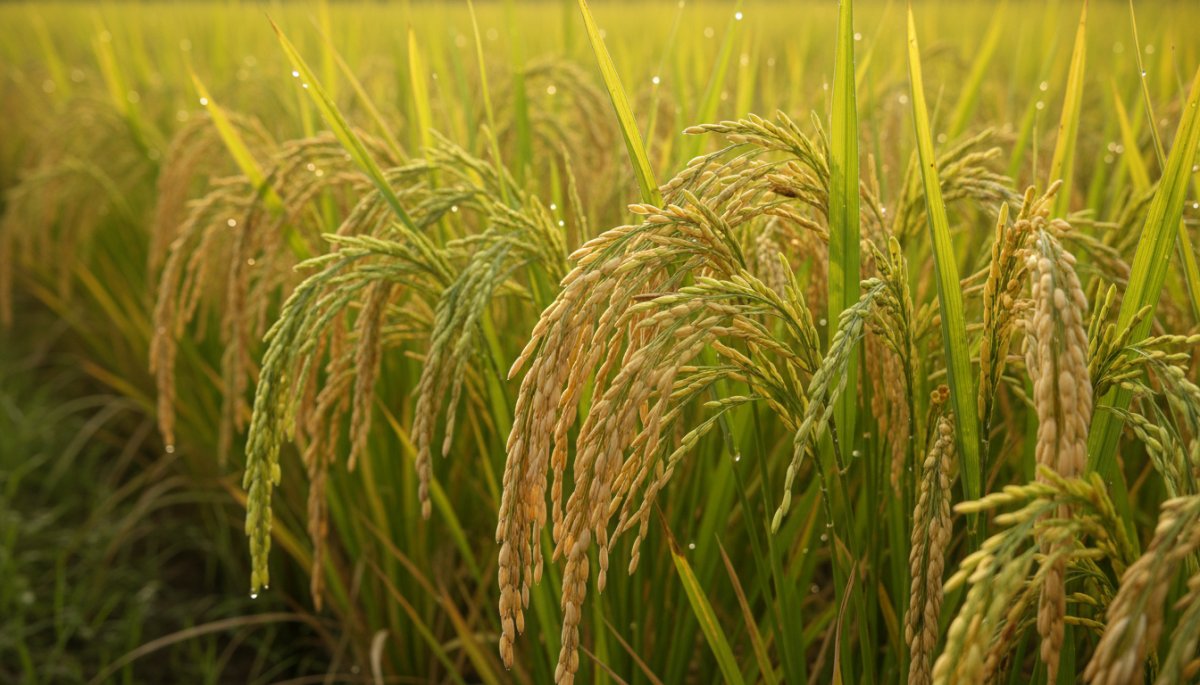
The Mekong Delta has three cropping seasons: the summer-autumn crop (growing period April to August), the autumn-winter crop (late rainy season: July to November), and the winter-spring crop (dry season: November to April), and for each, varieties suited to the different weather conditions are chosen.
The summer-autumn crop falls in the early rainy season, a period of heavy rainfall and high temperatures. The autumn-winter crop comes in the late rainy season when flood risk rises, and the winter-spring crop falls in the dry season, when irrigation management becomes important.
The shift to high-quality rice and responding to the market
In recent years, the Mekong Delta has been shifting from quantity to quality. The aim is for high-quality rice to make up 59% of the province's total production area by 2025 and to reach about 70% by 2026.
In An Giang province, 375 high-quality rice growing areas have been established, and about 700 cooperatives and about 46,000 members are taking part and working to improve quality. Productivity rose by 2.4 to 7%, and farmers' incomes increased by 12 to 50%, equivalent to a profit gain of 4 million to 7.6 million dong per hectare compared with conventional farming.
Source
Vietnam.vn, "Promoting High-Quality Rice Production While Cutting Emissions"
Compiled from (2025)
Adapting to environmental change: measures against salt damage
Salt damage is growing more serious in the Mekong Delta. Owing to sea-level rise and the effects of upstream dams, saltwater pushes inland in the dry season, and the area where rice farming is impossible is increasing.
As a result, structural changes are underway, including a switch to salt-tolerant varieties, conversion to fruit growing and to aquaculture, and greater reliance on groundwater. Traditional floating rice, though low-yielding, has the trait that its stems grow taller as floodwaters rise, and it is still grown in low-lying areas today.
A dramatic rise in production efficiency through mechanization
In any account of Mekong Delta rice production, the progress of mechanization cannot be overlooked.
The case of Long An province, which achieved a 95% mechanization rate
Long An province is regarded as a model for farm mechanization. The province's rice-growing area is 260,000 hectares, with annual output of 2.6 million tonnes, and its rice-production mechanization rate reaches 95%.
High-tech equipment and machinery have been introduced, including some machines that apply laser technology. These are seen as opening a breakthrough for rice farming, and the development of rice-farming machinery and equipment is being advanced in cooperation with universities and research institutes.
The economic effects of mechanization
Mechanization has a marked effect in cutting production costs. By the "harvest" stage in particular, savings of as much as 50% are said to be possible.
For many farmers, however, the price of machinery is still high, and not every farm can buy it. Support in both funding and technical terms is needed.
Source
VOV World, "Mechanization of Rice Production in the Mekong Delta Region"
Compiled from (June 2013)
Examples of smart-farming adoption
The adoption of smart farming, such as drone-based pest control and IoT irrigation, has also begun at some large farms. Its spread is limited, however, and the great majority of smallholders still farm mainly by hand.
The rural labor force is shrinking, and mechanization helps address this problem. Going forward, there is a need to promote awareness of mechanization while also strengthening financial support.
The supply chain from harvest to export
How does Mekong Delta rice reach the world market?
The structural challenges of smallholders
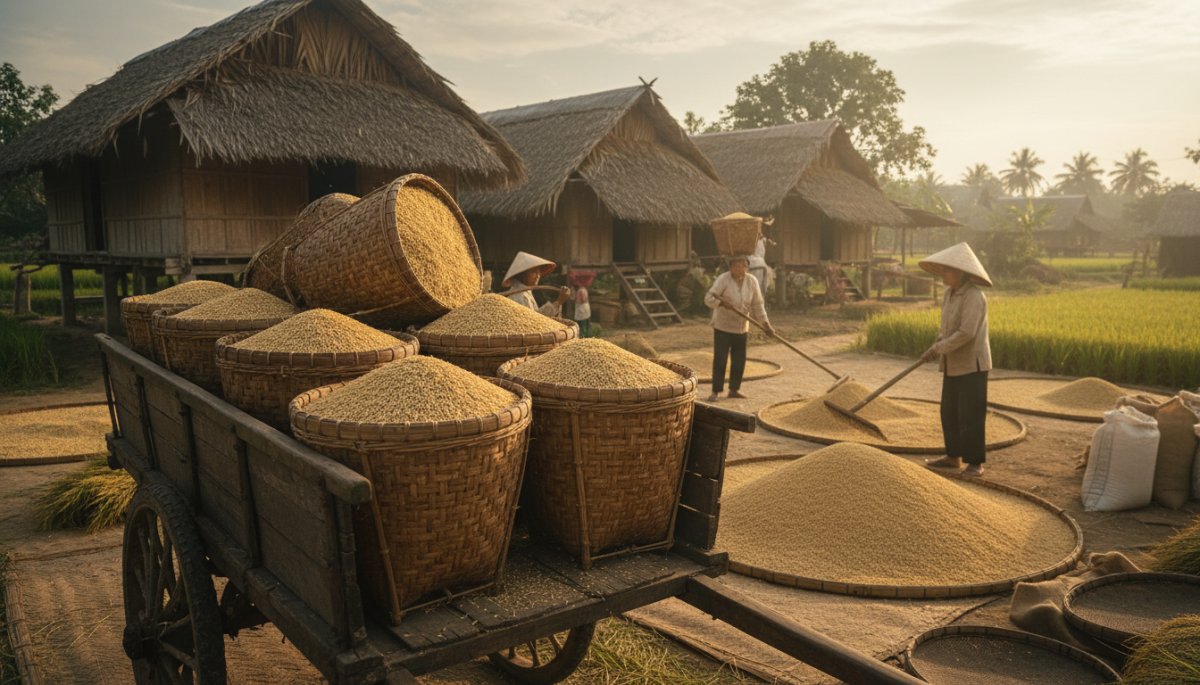
The defining feature of Vietnamese agriculture is its extremely smallholder structure. Average cultivated areas are mostly under 1 ha, and many farms hold only about 0.3 to 0.5 ha.
Because of this fragmented structure, with smallholders scattered, collectors (brokers) hold the power to set prices and farmers have almost no bargaining power. Organized aggregation like Japan's agricultural-cooperative model is weak, making it a structure in which farm incomes are hard to raise.
Quality control and obtaining international certification
Against a backdrop of tighter regulation in destination countries, the acquisition of international certifications such as GlobalG.A.P., the management of pesticide residues, and traceability compliance are advancing.
In May 2025, Vietnam became the first country to export 500 tonnes of low-emission rice to the Japanese market. Although this figure is still small compared with total rice exports, it is seen as an important milestone that offers confidence and firm proof that Vietnam can practice sustainable agriculture on a large scale.
The Vietnam Rice Industry Association (VIETRISA) developed and launched the "Low-Emission Green Vietnamese Rice" brand and obtained certification for more than 71,400 tonnes of rice as meeting the standard.
Challenges and potential of processing infrastructure
Processing infrastructure is limited, and secondary processing such as drying, milling, and extraction is still developing. As a result, large amounts of off-grade produce and surplus crops are generated.
A shift is needed from an export model centered on primary commodities to one of processing and higher added value. Ample room remains to expand into dried vegetables, fruit powders, extract ingredients, functional ingredients, and the like.
Efforts on climate change and reducing environmental impact
The Mekong Delta is feared to be one of the mega-deltas most strongly affected by climate change.
The importance of cutting greenhouse-gas emissions
In Vietnam, agriculture is the second-largest source of greenhouse-gas emissions after manufacturing, accounting for about 33% of total greenhouse-gas emissions in 2010. Rice farming and livestock in particular are the main sources.
Methane emitted from Vietnam's rice production accounts for more than 50% of the country's farm emissions. Current rice-production methods are also a major source of greenhouse gases.
Greenhouse-gas emissions are cut by an average of 2 to 12 tonnes (CO2 equivalent) per hectare, and post-harvest straw-burning practices are also greatly improved, helping to reduce air pollution and emissions of secondary pollutants.
Source
Japan International Research Center for Agricultural Sciences, "No Time to Lose on Climate Change: From the World Bank's Vietnam Economic Outlook Report"
Compiled from (February 2022)
Adaptation measures for sea-level rise and salt damage
Climate change threatens farm production through high temperatures, saltwater intrusion, drought, and floods. In the Mekong Delta especially, rice output is projected to fall by 5 to 23% by 2040, raising the risk of food insecurity, with farmers' incomes expected to decline and the food security of more vulnerable people expected to be undermined.
If sea levels rise by 100 cm, an estimated 4% of railways, more than 9% of national highways, and about 12% of local roads would be affected. It is also suggested that the makeup of farm production and the agricultural landscape may change in order to adapt to shifts in temperature, rainfall patterns, and where fresh water is available under climate change.
The shift to sustainable agriculture
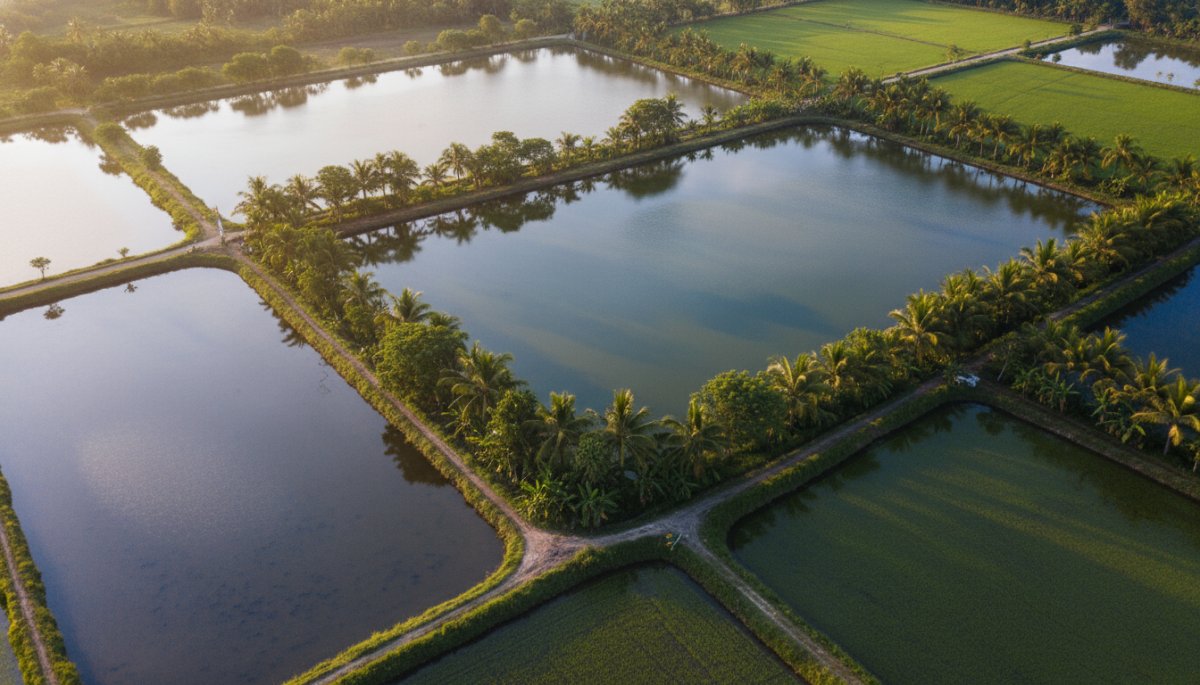
The greatest value of the One Million Hectare Rice Production Project lies not in area or yield but in a change in farmers' behavior. The mindset shifts from "doing a lot" to "doing it right," moving away from the pursuit of volume toward an emphasis on quality, efficiency, and responsibility for the environment.
Vietnamese rice is more than a mere commodity; it is also a commitment to consumers and future generations to walk the path of sustainable development, however difficult and time-consuming that may be.
Know-how for improving smallholder production efficiency and quality
It is countless smallholders who sustain Mekong Delta rice production.
The importance of organizing through cooperatives
It is difficult for smallholders to face the market on their own. Organizing through cooperatives is the key to stronger bargaining power and better quality control.
With companies playing a leading role and community agricultural extension workers down to the commune level being robustly reorganized, the project is expected to deliver greater benefits in the future. This forms an important foundation for raising awareness of the "Low-Emission Green Vietnamese Rice" brand and encouraging companies to engage more deeply in the supply chain.
Putting cost reduction and higher earnings into practice
By introducing techniques such as AWD, it is possible to maintain or raise yields while cutting production costs. Because revenue (selling price times yield) outpaces the increase in production costs, farms that adopt AWD earn 6% more profit across three cropping seasons than those that do not.
For the same unit area, production costs fall by 8.2 to 24.2%, seed volume drops by 30 to 50%, chemical-fertilizer use falls by 30 to 70 kg/ha, the number of pesticide applications drops by a factor of 1 to 4, and irrigation-water use falls by 30 to 40%. At the same time, productivity rises by 2.4 to 7% and farmers' incomes increase by 12 to 50%.
Challenges ahead and the outlook
Carrying out the project also faces many challenges: a lack of synchronized irrigation and rural transport infrastructure in some areas, the limited market-linkage capacity of cooperatives, a straw value chain that has not yet taken clear shape, and measurement, reporting, and emissions-evaluation (MRV) work that is new and short of specialized staff.
By overcoming these challenges, however, Mekong Delta rice production holds the potential to evolve from a "raw-material supplier" into "a farming nation with processing and brands."
Summary: the future of Mekong Delta rice production
The Mekong Delta's rice-production system achieves some of the world's highest land productivity, with three crops a year. Behind it lies a composite body of technology: flood control through full-dykes, optimized water management through alternate wetting and drying (AWD), variety selection for each cropping season, and efficiency gains through mechanization.
In recent years the shift from quantity to quality has progressed, and the transition to sustainable agriculture is accelerating, with expanded high-quality rice growing areas, the acquisition of international certifications, and exports of low-emission rice. Farms using AWD realize the co-benefit of cutting greenhouse-gas emissions by 38% while raising profit by 6%.
At the same time, structural challenges remain, such as the fragmented structure of smallholders, a shortage of processing infrastructure, and the worsening salt damage caused by climate change. It has also been pointed out that, owing to sea-level rise and the effects of upstream dams, rice output could fall by 5 to 23% by 2040.
Against these challenges, adaptation measures are underway, including a switch to salt-tolerant varieties, mixed operations through conversion to fruit growing and aquaculture, organizing through cooperatives, and the adoption of smart farming. Mekong Delta rice production holds the potential to become a pioneering model case for the challenge that rice-growing regions worldwide face: maintaining productivity while reducing environmental impact.
From "doing a lot" to "doing it right." This change in mindset is precisely what will be the key to carrying Mekong Delta rice production to its next stage.
VN AGRI provides the latest trends and practical know-how in Vietnamese agriculture and supports sustainable agricultural development. If you would like detailed information on Mekong Delta rice-production technology, or are considering business development on the ground there, please get in touch.
You May Also Like
- How Mekong Delta agriculture works and its challenges: how to build a sustainable production system
- What is the Mekong Delta agricultural region? Eight features and challenges that support Vietnam's food production
- What Is the Mekong Delta? Features of Vietnam's Largest Agricultural Region and Its 8 Key Roles