The agricultural market of Southeast Asia is drawing attention from companies around the world.
Population growth, economic growth, and rapidly expanding food demand are opening up huge business opportunities in this region. At the same time, challenges that stand in the way of entry also exist, such as complex regulations, cultural barriers, and climate change risk.
This article explains practical information for those considering corporate entry into the Southeast Asian agricultural market, from analysis of the current market to concrete entry strategies and risk countermeasures. Drawing on the latest trends in major countries such as Vietnam, Thailand, and Indonesia, it presents eight effective strategies.
The current state and potential of the Southeast Asian agricultural market
Southeast Asia is one of the world's leading agricultural regions.
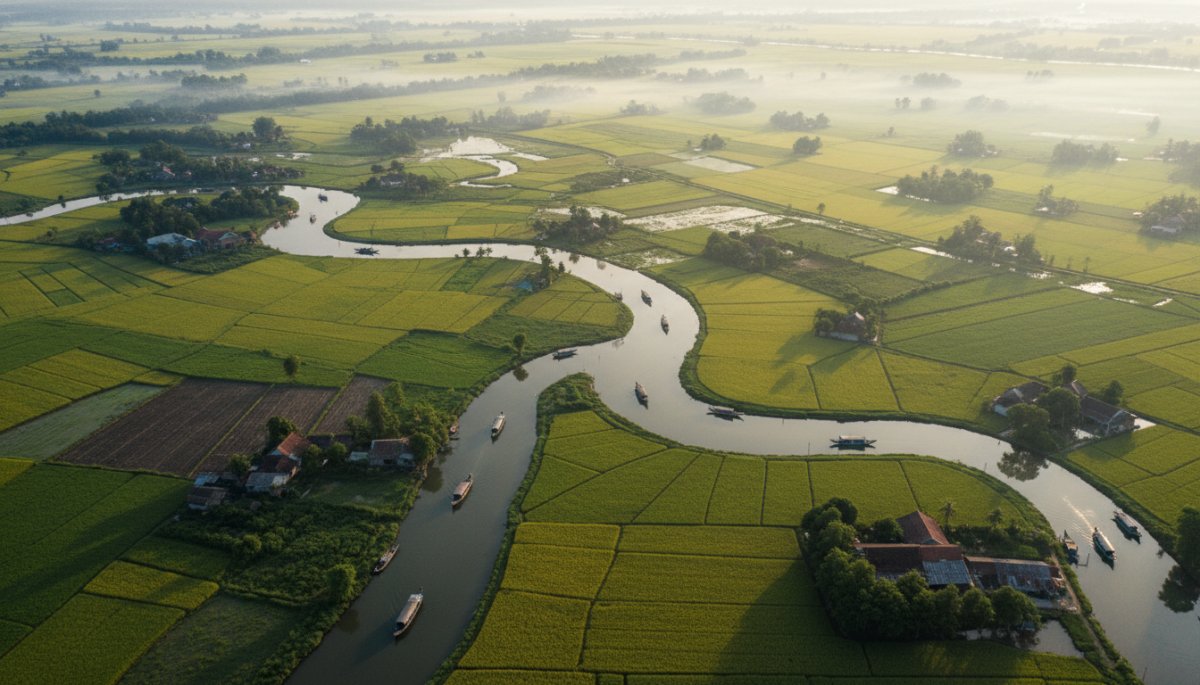
Against the backdrop of abundant rainfall and sunshine brought by the tropical monsoon climate, and the fertile delta regions formed by the Mekong and Chao Phraya rivers, this region has nurtured several thousand years of farming civilization. Even today, in many ASEAN countries agriculture is an important component of GDP and accounts for a large share of the working population.
Vietnam is an agricultural powerhouse with a population of about 100 million, where agriculture accounts for about 12% of GDP and employs more than 40% of the working population. Annual rice output is about 43.5 million tonnes and export volume is the world's second largest; coffee output is the world's second largest after Brazil, and Robusta it is the world's largest, for Cashew nuts and black pepper rank first in the world, while shrimp ranks third in production volume and second in export volume. In 2023, total exports from agriculture, forestry, and fisheries reached about US$53 billion, accounting for more than 15% of the country's total exports.
Thailand is an agricultural and food export powerhouse known as the 'kitchen of the world.' Agriculture accounts for about 8-9% of GDP, and about 30% of its people work in agriculture-related jobs. Its natural rubber output and exports are among the world's largest, and processed chicken it is also among the world's top exporters of such products. Jasmine rice is highly regarded in international markets and Thai agriculture has become its symbolic presence.
Indonesia has ASEAN's largest population, about 280 million, and the largest land area, and is also the largest in ASEAN by agricultural output value. Palm oil is the world's largest producer, and together with Malaysia accounts for more than 85% of global output. This huge market contributes greatly to earning foreign currency and creating jobs, while also facing a new challenge: sustainability.
Source Ministry of Economy, Trade and Industry, 'FY2020 International Economic Survey Project for Building an Integrated Domestic-and-Overseas Economic Growth Strategy: Report on a Fact-Finding Survey toward Realizing Asian DX Targeting Southeast Asia and the India Region' Compiled from the above (March 2021).
[Strategy 1] Market analysis and selecting the country of entry
The first step to success is accurate market analysis.
The agricultural structures of Southeast Asian countries differ greatly. In Vietnam, the average cultivated area per farm is about 0.44 hectares, among the smallest in ASEAN countries, and 97% of all agricultural workers are small- and medium-scale farmers. In Thailand, by contrast, the cultivated area per farm averages about 3 hectares, and commercial history of farming farming has a long history, and systems for cooperation with companies are also relatively well established.
When selecting a country of entry, the following factors need to be evaluated comprehensively.
- The fit between your own products and services and local needs
- The regulatory environment and the strictness of foreign-investment regulations
- The state of infrastructure development
- The presence and reliability of local partners
- Political stability and country risk
Vietnam's cooperative relationship with Japanese companies is deepening, as seen in the adoption of the 'Japan-ASEAN Midori Cooperation Plan' at the Japan-ASEAN agriculture and forestry ministers' meeting in May 2023. The government has set out its 'Strategy for Sustainable Agriculture and Rural Development to 2030, with a Vision to 2050,' positioning the introduction of smart farming as a national priority, so policy support for technology adoption can be expected.
The Philippines is the only net rice importer among the major ASEAN countries and carries vulnerabilities in food security. While there is a risk of severe damage to crops from nearly twenty typhoons approaching or making landfall each year on average, it also has strengths in specific crops, holding one of the world's leading positions in banana exports.
Source Ministry of Agriculture, Forestry and Fisheries, 'FY2019 Commissioned Project for Survey and Analysis of Overseas Agriculture and Trade/Investment Environments (Overseas Deployment of Smart Farming Technology): Report' Compiled from the above (March 2020).
[Strategy 2] Selecting local partners and building relationships
Success in Southeast Asia is determined by relationships with local partners.
In the agricultural sector, there are many elements that foreign companies cannot handle alone, such as land ownership, distribution networks, and relationships with government. The presence of a trustworthy local partner greatly reduces entry risk and accelerates the pace of business development.

In selecting a partner, what matters is not only financial soundness but also relationships with the local community, the breadth of the partner's farmer network, pipelines to government agencies, and shared values. What is required is an attitude of building long-term trust rather than pursuing short-term profit.
In Vietnam, about 57% of agricultural workers are unskilled, and the share aged 50 or older reaches about 43%. Within such a labor structure, an attitude of contributing locally through technology transfer and human-resource development leads directly to winning partners' trust. The key to success is building a partnership that grows together, rather than a mere transactional relationship.
In drafting contracts, it is essential to involve local legal experts and clearly define dispute-resolution clauses, protection of intellectual property, and exit clauses. To prevent misunderstandings arising from cultural differences, regular communication and ensuring transparency are also important.
[Strategy 3] Regulatory compliance and legal risk management
The agriculture-related regulations of Southeast Asian countries are complex.
Compliance is required with wide-ranging laws and regulations, including foreign-investment rules, land ownership, labor law, environmental regulations, and food safety standards. The agricultural sector in particular tends to attract protective policies from each country in the interest of food security, and in many cases certain restrictions are placed on foreign entry.
In Vietnam, the 1986 Doi Moi policy granted land-use rights to individual farmers and introduced a market economy, but land ownership still belongs to the state. Foreign companies cannot directly own farmland, so long-term leases or joint ventures with local corporations are the common form. Contract terms, renewal conditions, and compensation clauses must be carefully examined.
In Thailand, the Foreign Business Act places certain restrictions on foreign entry into the agricultural sector. However, for industries that the Thai government promotes or for projects involving technology transfer, investment-incentive measures may apply. By using the incentive scheme of the Thailand Board of Investment (BOI), companies may receive tax benefits and eased foreign-investment restrictions.
In Indonesia, Palm oil in response to international criticism of environmental destruction in that industry, obtaining sustainable palm oil certification (RSPO, ISPO) is becoming a de facto requirement for entry. Complying with environmental regulations is not a mere formality but a strategic factor that determines brand value and market access.
Source Norinchukin Research Institute, 'Nolin Kinyu, June 2010: Considering Corporate Entry into Agriculture after the Reform of the Farmland System' Compiled from the above (June 2010).
[Strategy 4] Building value chains and raising added value
One major challenge for Southeast Asian agriculture is low added value.
The bulk of agricultural exports are unprocessed primary commodities, and exports of products whose value has been raised through processing remain limited. Taking coffee as an example, although Vietnam has the world's second-largest output, a high proportion is exported as green beans, and its brand value as roasted, processed finished products lags behind competitor countries such as Colombia and Ethiopia.
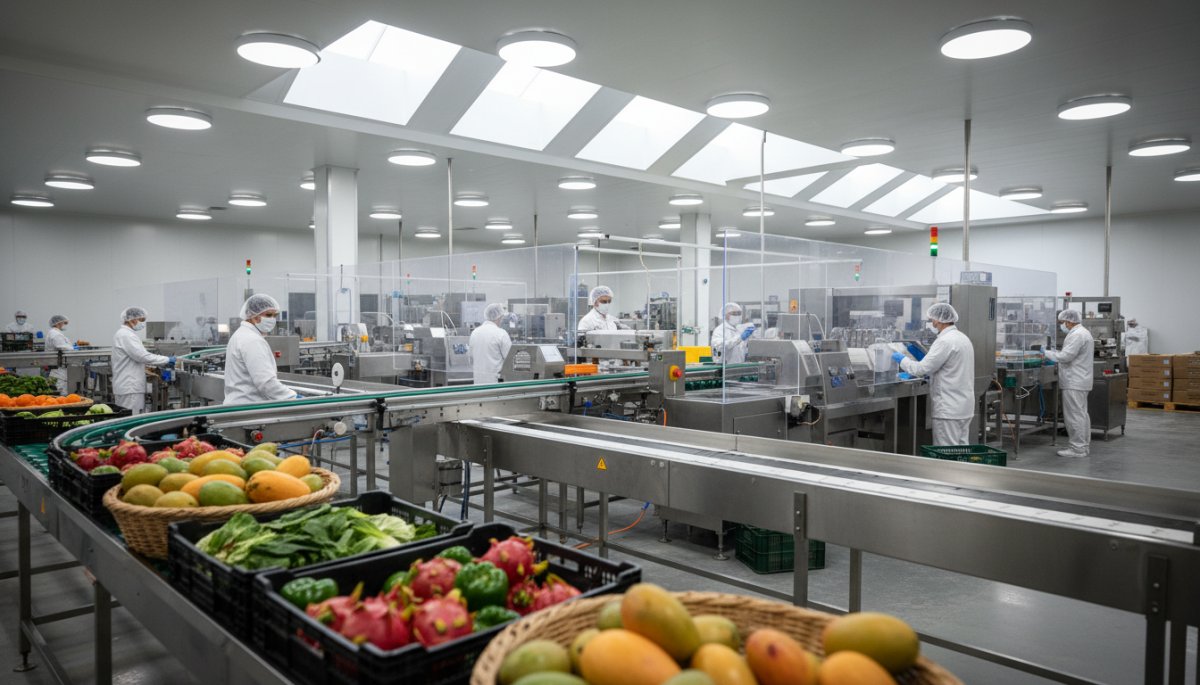
Here lies an opportunity for corporate entry. By introducing primary processing techniques such as drying and powdering, the shelf life of tropical produce improves dramatically and logistics costs can be reduced. Dried vegetables, dried fruit, and freeze-dried products are seeing growing demand in developed-country markets amid rising health consciousness, and become a powerful means of delivering Southeast Asian produce to developed countries with added value.
Developing cold chains (low-temperature logistics) is also an important area for investment. There are many cases where harvested produce deteriorates and is discarded because it is not properly stored and transported, and post-harvest losses squeeze the profitability of agriculture as a whole. Particularly for perishable items such as fruit and seafood, a shortage of refrigeration and freezing facilities hinders improvements in export competitiveness.
The Vietnamese government has set a goal of entering the world's top 15 in agriculture and food processing by 2030, and is promoting a policy built on three pillars: attracting investment in processing facilities, developing cold chains, and strengthening branding. Taking advantage of this policy tailwind, business development that keeps the entire value chain in view is called for.
[Strategy 5] Introducing and adapting smart farming technology
Technological innovation holds the potential to change the future of Southeast Asian agriculture.
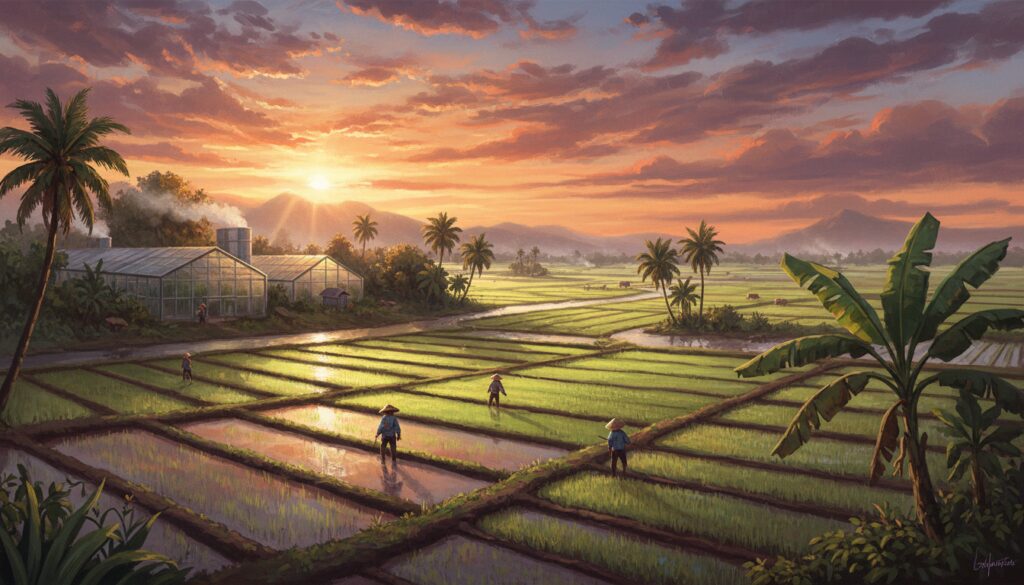
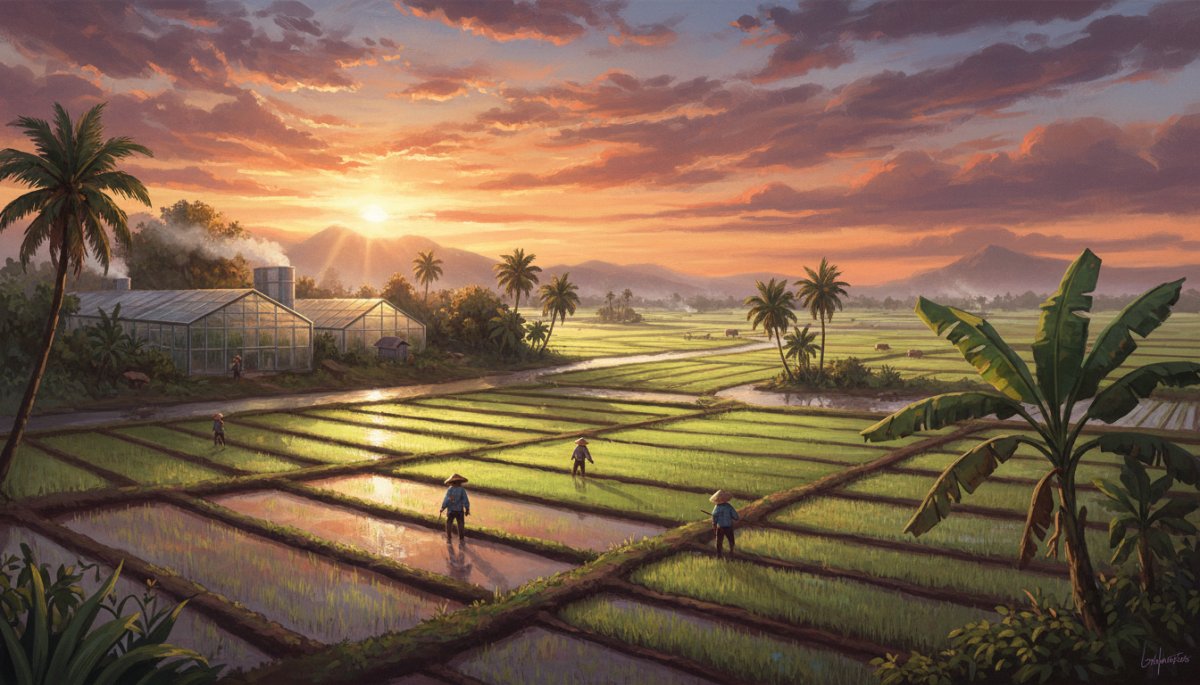
Various technologies are being demonstrated across the country, such as environmental monitoring with IoT sensors, pesticide spraying by drone, AI-based pest and disease forecasting, and the automation of hydroponic cultivation. Lam Dong province (around Da Lat) is a leading region for smart agriculture in Vietnam, where greenhouse systems and automatic irrigation systems for vegetable growing have been introduced.
What matters is not the sophistication of the technology but its adaptability to local conditions. Given that 97% of all agricultural workers in Vietnam are small- and medium-scale farmers, developing a low-cost smart farming model that does not presuppose expensive equipment is essential. Japan's strength lies in having technology and know-how suited to small- and medium-scale farmers. Unlike the smart farming solutions of the Netherlands or South Korea, which presuppose large-scale agriculture, Japanese agricultural technology is highly likely to fit the realities of Southeast Asia's smallholder farmers.
In the Mekong Delta, demonstrations of water-saving rice cultivation through the introduction of water management systems are advancing. As water shortages from climate change grow more serious, technology that efficiently uses limited water resources is a pressing need for local farmers. When introducing technology, it is important to build mechanisms that ensure sustainability, such as measures to ease the burden of initial investment, ease of operation, and the establishment of maintenance systems.
Source Ministry of Agriculture, Forestry and Fisheries, 'FY2019 Commissioned Project for Survey and Analysis of Overseas Agriculture and Trade/Investment Environments (Overseas Deployment of Smart Farming Technology): Report' Compiled from the above (March 2020).
[Strategy 6] Responding to climate change risk
One major threat facing Southeast Asian agriculture is climate change.
Rising sea levels, the increasing frequency of extreme weather, and changes in rainfall patterns are affecting rice cultivation, which depends on low-lying delta regions. Vietnam's Mekong Delta, Myanmar's Irrawaddy Delta, and Thailand's Chao Phraya Delta are all low in elevation, and the risks of saltwater intrusion and flooding are increasing year by year. Drought is also serious, and in years when El Nino occurs, water shortages affect the entire Mekong basin, impacting millions of farmers.
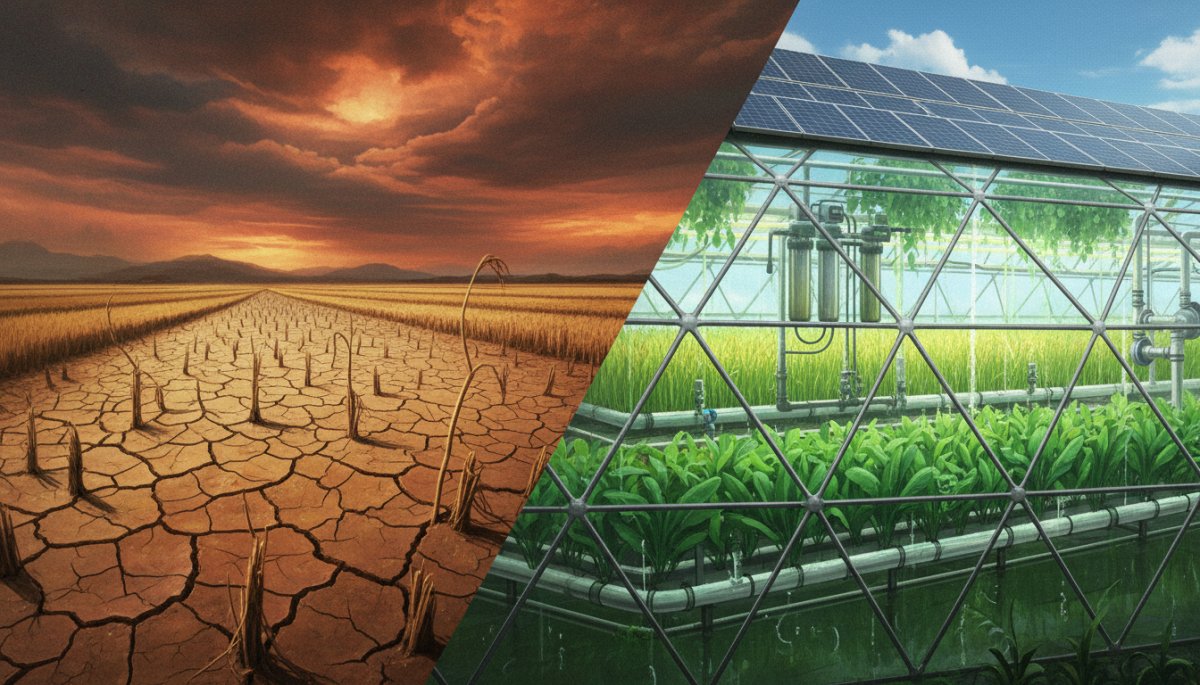
In corporate entry, this climate change risk must be factored into business plans. Flood-tolerant varieties such as 'Sub1' developed by the International Rice Research Institute (IRRI) and salt-tolerant varieties are spreading widely across Vietnam, Bangladesh, India, and other areas. Supporting the development of such climate-adaptive varieties and the introduction of cultivation techniques is a business opportunity that meets the needs of local farmers.
Supporting the development of agricultural insurance systems is also an important area. As the risk of yield fluctuations from climate change rises, risk-hedging mechanisms are essential to create an environment where farmers can invest with confidence. Developing insurance products, providing risk-assessment technology, and streamlining damage assessment are also entry opportunities for companies in the finance and insurance sectors.
Reviewing location strategy should also be considered. Variety improvement alone cannot address the risk of losing the delta regions themselves to rising sea levels. A long-term strategy is required, such as expanding agriculture to more inland or higher-elevation areas and introducing land-independent production methods like hydroponics.
[Strategy 7] Sustainability and obtaining certification
Sustainability has now become an important factor.
Major export destinations such as the EU, Japan, and the United States are tightening pesticide-residue standards and hygiene standards year by year, and produce that cannot meet them is shut out of the market. The 'Japan-ASEAN Midori Cooperation Plan,' adopted at the Japan-ASEAN agriculture and forestry ministers' meeting in 2023, is a comprehensive cooperation framework aimed at building sustainable agriculture and food systems in the Asian monsoon region, and the international rollout of environmental-impact-reducing technologies is accelerating.
Supporting the shift to organic farming is effective as a differentiation strategy. Thailand is one of the countries in Southeast Asia where the institutional framework for organic farming is most developed, operating a certification system under the 'Thai Organic Agriculture Standard.' The Thai government positions organic rice exports as a growth strategy, and jasmine rice's organic cultivation is actively promoting.
However, shifting to organic farming is often accompanied by a temporary drop in yields, which is a significant risk for smallholder farmers with little margin. The cost of obtaining organic certification and the complexity of production management that complies with certification standards are also barriers. Mechanisms that support the transition from both technical and economic-incentive angles are needed.
Ensuring traceability (the ability to trace production history) is also important. The introduction of origin-tracking systems using blockchain technology and the spread of GAP (Good Agricultural Practices) certification are being attempted, but implementation at the smallholder level lags behind. Here lies an entry opportunity for technology-providing companies.
Source Ministry of Agriculture, Forestry and Fisheries, 'FY2019 Commissioned Project for Survey and Analysis of Overseas Agriculture and Trade/Investment Environments (Overseas Deployment of Smart Farming Technology): Report' Compiled from the above (March 2020).
[Strategy 8] Human-resource development and technology transfer
Sustainable business begins with investment in people.
A structural challenge common to Southeast Asian countries is the income gap between the agricultural sector and the industrial and service sectors. In the CLMV countries (Vietnam, Laos, Myanmar, Cambodia), the gap is widening amid rapid industrialization, accelerating the outflow of labor from rural to urban areas. Young people migrate to cities seeking jobs in manufacturing and services, leaving the elderly behind in the countryside.
The solution to this challenge is improving the profitability of agriculture and creating attractive employment opportunities. In corporate entry, it is important to take the view of developing local human resources and transferring technology to turn agriculture into an attractive industry, rather than simply using cheap labor.
Human-resource exchange that uses the system for accepting specified-skilled foreign workers is also effective. When people who have learned agricultural techniques in Japan return home and take on central roles locally, the rooting of technology and the sustainability of the business increase. A long-term human-resource strategy is required, including designing training programs, developing training facilities, and clearly presenting career paths.
Collaboration with local universities and research institutions is also important. Efforts to develop the next generation of agricultural leaders through joint research with agricultural universities, accepting interns, and providing scholarship programs fulfill a company's social responsibility while also helping secure excellent talent.
Source National Chamber of Agriculture, 'FY2021 Edition: Collection of Good Practices for Accepting Specified-Skilled Foreign Workers in the Agricultural Sector' Compiled from the above (March 2022).
Summary: The path to success
Corporate entry into the Southeast Asian agricultural market involves great potential and complex challenges at the same time.
The keys to success are thorough market analysis, building relationships with trustworthy local partners, appropriate regulatory compliance, a strategy that keeps the entire value chain in view, the introduction of technology adapted to local conditions, preparation for climate change risk, the pursuit of sustainability, and investment in people. By executing these eight strategies in an integrated way, risk can be minimized and sustainable business development becomes possible.
Southeast Asian countries are accelerating a shift in mindset from 'agricultural production' to 'agricultural economy.' The move from an era of pursuing quantity to an era that values quality, safety, environmental sustainability, and brand value represents a business opportunity for companies in Japan and other developed countries.
Vietnam, with 100 million stomachs to feed; Indonesia, with 280 million; Thailand, with 70 million. The process by which these countries' agriculture advances and becomes deeply embedded in global value chains is an essential story in any account of the twenty-first-century Asian economy. The landscape of the Southeast Asian countryside is right now in the midst of a great transformation.
Using the eight strategies introduced in this article as a reference, please give concrete consideration to entering the Southeast Asian agricultural market.
With the right preparation and strategy, your business may be able to achieve sustainable growth while contributing to the development of local agriculture.
You May Also Like
- A thorough explanation of Southeast Asian agricultural business opportunities | Investment strategy for 2026
- A Comparison of Agricultural Investment in Southeast Asia: A Thorough Look at 5 Countries
- What Is the Future Potential of Southeast Asian Agriculture? 8 Investment Opportunities Looking Ahead to Growth from 2026