Southeast Asia is one of the world's leading agricultural regions, having nurtured farming civilizations over thousands of years against a backdrop of a tropical monsoon climate and fertile delta areas.
Vietnam in particular is an agricultural power with a population of about 100 million, where agriculture accounts for about 12% of GDP and more than 40% of the workforce. Its annual rice production is about 43.5 million tonnes, its export volume ranks second in the world, its coffee production is the world's second-largest after Brazil and the largest for Robusta, and cashew nuts and black pepper rank first in the world, while shrimp ranks third in production volume and second in export volume. In 2023, total exports from agriculture, forestry, and fisheries reached about US$53 billion, accounting for more than 15% of the country's total exports.
However, Vietnamese agriculture faces serious structural challenges: low added value, an underdeveloped cold chain, and the low productivity and aging of small-scale farmers.
In this article, by analyzing the competitive strengths of the chicken industry of Thailand, a fellow ASEAN country, success stories we explore solutions to the challenges facing Vietnamese agriculture. We explain in detail the seven competitiveness factors behind Thailand's success as a world-class chicken exporter, and draw out implications for Vietnamese agriculture.
The current state and challenges of Vietnamese agriculture: the potential of the Mekong Delta
Vietnamese agriculture is supported by the Red River Delta in the north and the Mekong Delta in the south; the Mekong Delta accounts for more than half of the country's rice output and is one of the world's leading production regions.
The Central Highlands are a major production area for plantation crops such as coffee, tea, cacao, and pepper, and this region's contribution looms large behind Vietnam's rise as a coffee power. The 1986 Doi Moi policy reforms granted land-use rights to individual farmers and introduced a market economy, agricultural production expanded dramatically, and in 1989 the country became a net rice exporter for the first time.
Serious structural challenges
The average cultivated area per farm is about 0.44 hectares, among the smallest in the ASEAN countries, and 97% of all farm workers are small and medium-scale farmers. About 57% of agricultural laborers are unskilled, and the share aged 50 and over has reached about 43%, meaning the workforce is aging rapidly.
Low added value is also a serious problem. Although rice and coffee are exported in large volumes, their low degree of processing leaves Vietnam with weak price-negotiating power on the international market. The underdeveloped cold chain causes large losses of fresh produce during transport, and responses to food-safety and environmental problems also lag.
A comparison with Thai agriculture
Thailand, by contrast, is an agricultural and food export power known as the "kitchen of the world," where agriculture accounts for about 8 to 9% of GDP and some 30% of its people work in agriculture-related jobs. Its farmland averages about 3 hectares per household, roughly seven times that of Vietnam. Jasmine rice is highly regarded on the international market, its natural rubber production and exports are among the world's largest, and it has built a world-class position in processed-chicken exports as well.
Although Thailand and Vietnam are both ASEAN countries, there is a large gap in agricultural value addition and export competitiveness. We can learn the factors behind this gap from the success stories of Thailand's chicken industry.
Thai chicken industry success story 1: efficiency through an integrated production system
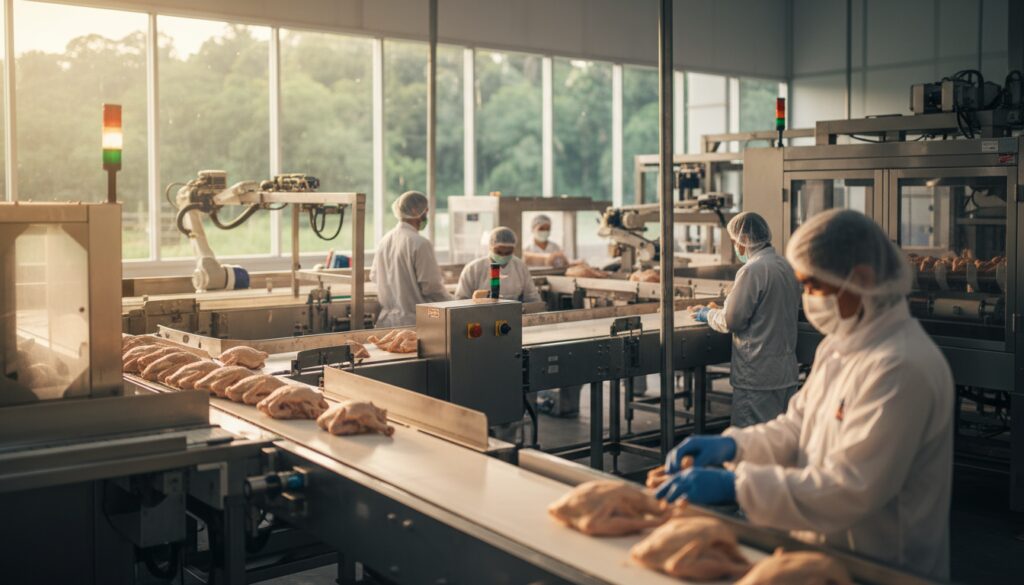
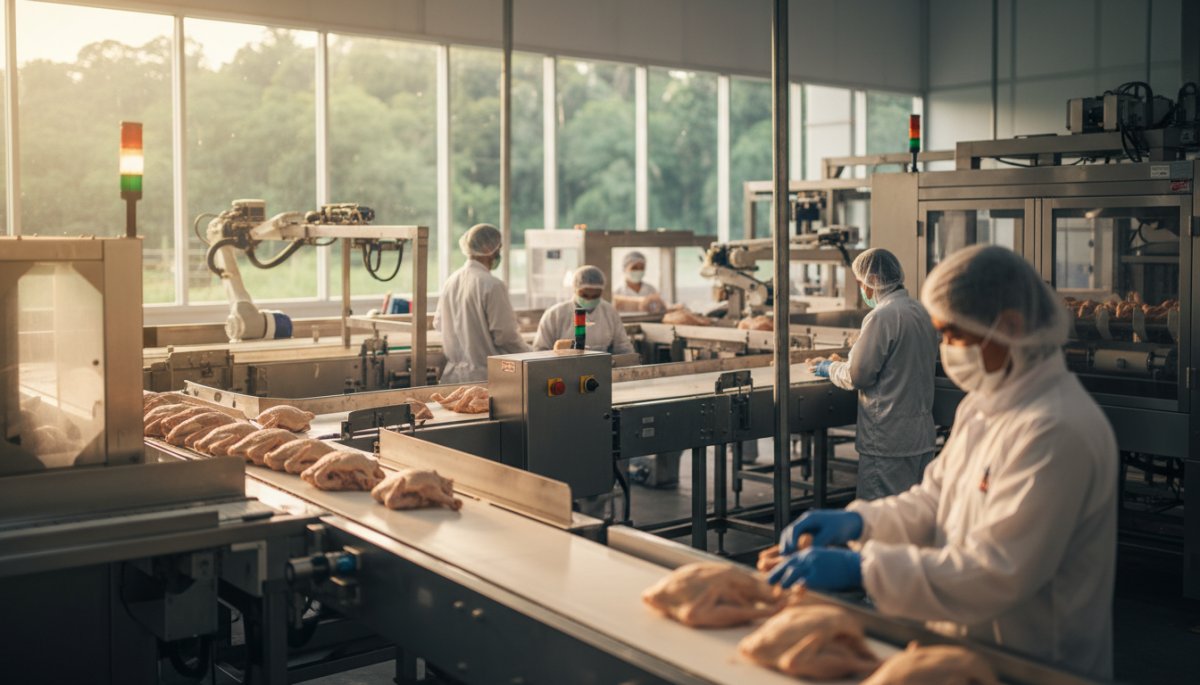
The biggest reason Thailand's chicken industry is competitive on the global market is its vertically integrated production system.
Integrated management from feed to processing
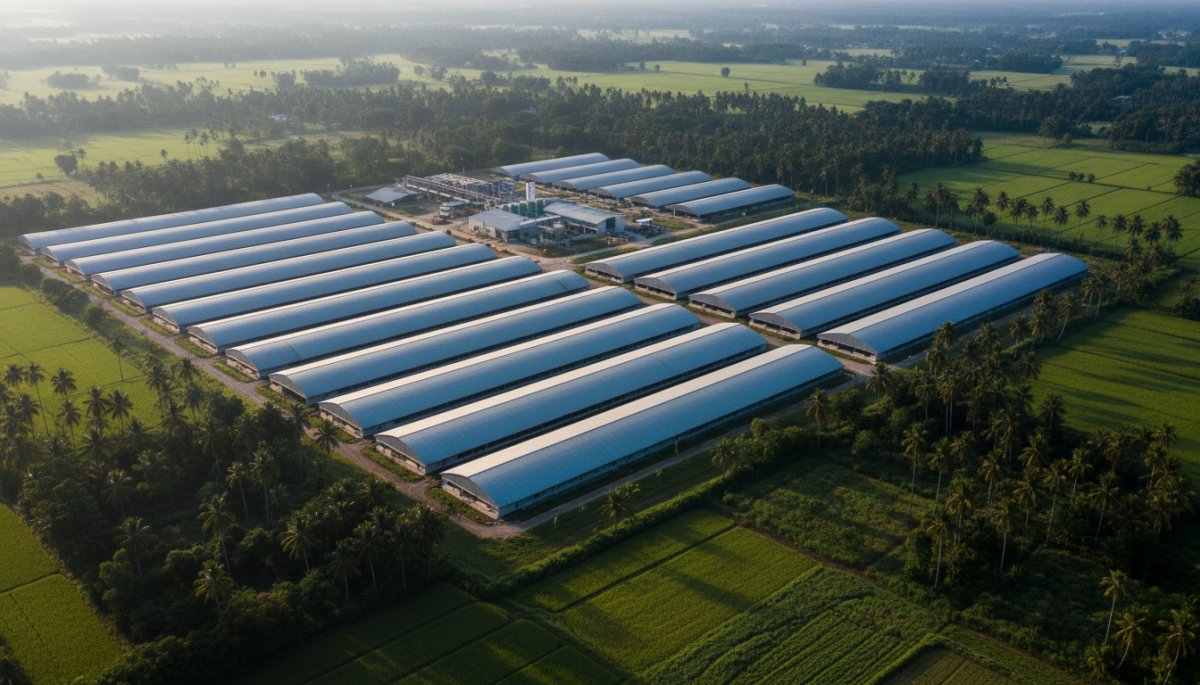
Major companies own the entire supply chain in-house, from feed mills, breeder farms, and hatcheries to broiler farms, slaughterhouses, processing plants, chilled and frozen facilities, and logistics networks. This integration achieves thorough quality control, cost reduction, and stable supply. For example, the Charoen Pokphand Group (CP Group) can complete every step within its own group, from procuring feed ingredients to exporting the final product.
Low-cost production through economies of scale
Large-scale production makes it possible to cut feed costs, labor costs, and capital-investment costs substantially. Companies with the capacity to process several hundred million birds a year achieve price competitiveness that small-scale producers cannot match. Improved production efficiency has also optimized the feed conversion ratio (the amount of feed needed to produce 1 kg of meat).
Implications for Vietnamese agriculture
Vietnam's small-scale farmers (averaging 0.44 hectares) cannot achieve economies of scale on their own. However, by introducing a vertically integrated model through agricultural cooperatives or contract farming, they may be able to achieve Thai-style efficiency. Building an integrated management system that extends to processing and distribution, especially in Mekong Delta rice production and Central Highlands coffee production, will be the key to raising added value.
Thai chicken industry success story 2: advanced processing technology and product-development capability
Thailand's chicken industry is not merely a supplier of raw materials.
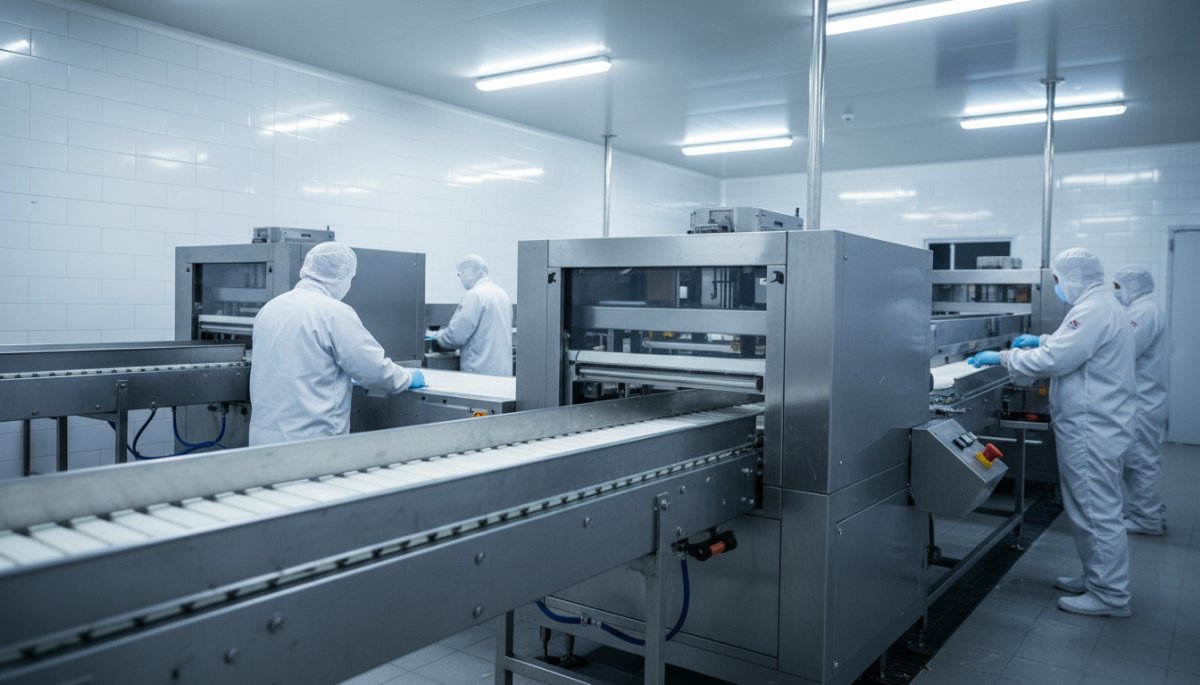
With advanced processing technology and product-development capability, it supplies high-value-added products to the world market. It offers a diverse product lineup, including cooked chicken products, seasoned processed goods, and frozen foods, responding in fine detail to consumer needs.
Products customized for the Japanese market
For exports to Japan, detailed product development is carried out to match Japanese consumers' tastes. Products optimized by use are supplied, such as cuts for yakitori, seasoned coatings for karaage, and processing for oyakodon. Many of the chicken products sold in Japanese convenience stores and supermarkets are processed in Thailand.
The expansion of ready-to-eat products
In recent years, demand for ready-to-eat chicken products has risen worldwide. Seizing this market opportunity, Thai companies are developing a wide range of ready-to-eat products such as retort-pouch products, frozen prepared dishes, and vacuum-packed products. These products match modern consumers' need to cut cooking time and have become a driving force behind export growth.
Implications for Vietnamese agriculture
Vietnam's rice, coffee, cashew nuts, black pepper, and shrimp are all exported mainly as raw materials or primary processed goods. As in Thailand's chicken industry, a shift toward high-value-added products for the final consumer is the key to increasing export value and raising farmers' incomes. Coffee in particular can be developed into a variety of processed products, such as instant coffee, drip bags, and products for cafe chains.
Thai chicken industry success story 3: the proactive acquisition of international certifications
Behind the trust the Thai chicken industry has won on the world market lies its proactive acquisition of international food-safety certifications.
Major certification schemes
Thailand's leading chicken-processing companies hold multiple international certifications, such as HACCP (Hazard Analysis and Critical Control Points), ISO 22000 (food-safety management systems), GMP (Good Manufacturing Practice), BRC (British Retail Consortium standard), and IFS (International Featured Standards). These certifications are essential for clearing the strict food-safety standards of destination countries.
Certification requirements for exports to Japan
Exporting chicken to Japan requires meeting the hygiene standards set by Japan's Ministry of Health, Labour and Welfare. Thailand's certified export facilities have put in place facility designs conforming to Japanese standards, Sanitary management, and inspection systems, and undergo regular inspections by the Japanese side. This rigorous management system underpins the high reliability they enjoy in the Japanese market.
Implications for Vietnamese agriculture
Expanding Vietnam's agricultural exports requires obtaining international food-safety certifications. Exports to advanced-country markets such as Japan, the EU, and the United States in particular call for certifications such as HACCP and ISO 22000. The Vietnamese government has set out its "Strategy for Sustainable Agriculture and Rural Development to 2030, with a Vision to 2050," positioning the adoption of smart agriculture as a national priority, and support for obtaining international certifications is also an important policy issue.
Thai chicken industry success story 4: strategic diversification of export markets
A feature of Thailand's chicken-export strategy is that it avoids dependence on any single market and cultivates a diverse range of export destinations.
The Japanese market: the largest export destination
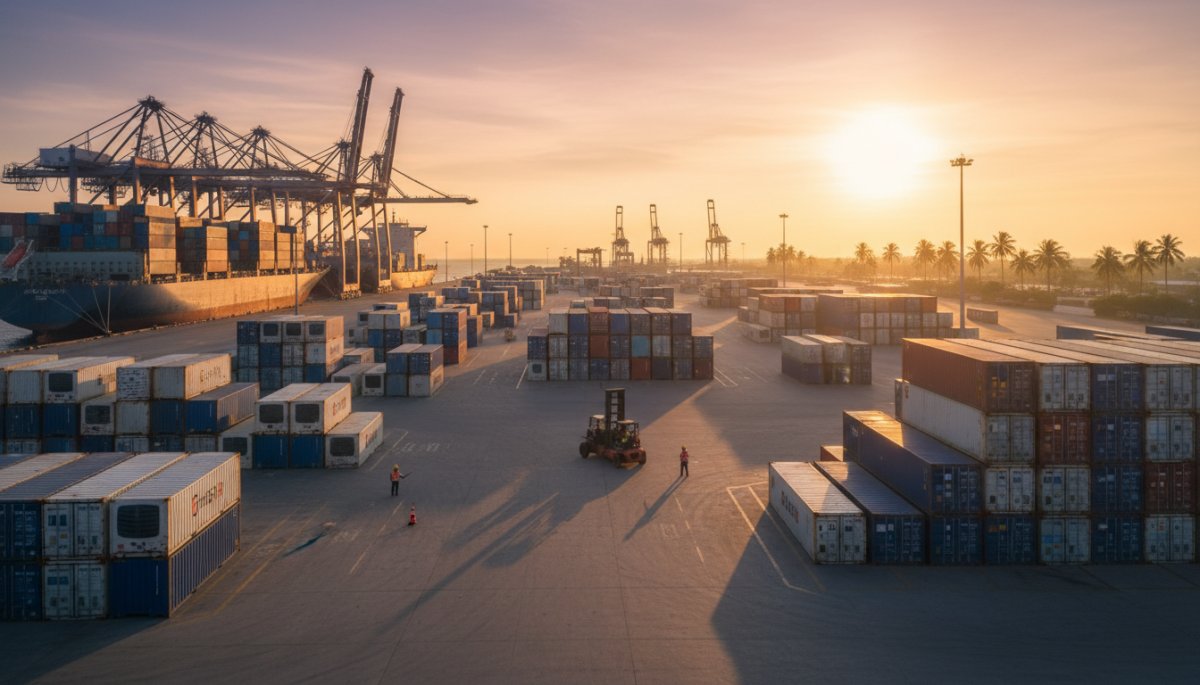
Japan is the largest market for Thailand's chicken exports, with processed chicken accounting for 80% and prepared chicken for 20% of shipments to Japan. The Japanese market has strong demand for high-quality products and stable trading relationships, making it the most important market for Thai companies.
The EU market: a destination for high-value-added products
Exports to the EU consist of 80% processed chicken and 20% prepared chicken. While the EU market demands strict food-safety standards, it allows trade at high prices, making it a high-margin market for Thai companies.
Expansion into the Asian and Middle Eastern markets
In recent years, Thailand has focused on expanding exports to China, South Korea, the Middle East, Africa, and elsewhere. The Chinese market in particular, with its population size and economic growth, is positioned as the largest future growth market. In the Middle Eastern market, demand for halal-certified products is strong, where Thai companies' strengths come to the fore.
Implications for Vietnamese agriculture
Vietnam's agricultural exports, too, need to avoid dependence on any single market and pursue diversification. rice export exports go to China, the Philippines, African countries, and others; coffee exports to Europe, the United States, Japan, China, and others; and shrimp exports to Japan, the United States, the EU, and others, so it is important to cultivate markets according to each product's characteristics. The "Japan-ASEAN Midori Cooperation Plan," adopted at the Japan-ASEAN Ministers' Meeting on Agriculture and Forestry in May 2023, is a comprehensive cooperation framework aimed at building sustainable agriculture and food systems in the Asian monsoon region, and it is an important policy tool for supporting the expansion of Vietnam's agricultural exports.
Thai chicken industry success story 5: the government's strategic support policy
The Thai government positions the chicken industry as an important national export industry and pursues proactive support policies.
Export-promotion policy
The Thai government provides chicken-export companies with tax incentives, export financing, and support for developing overseas markets. It has also put in place a comprehensive support system for expanding exports, including support for exhibiting at international trade fairs and matching with overseas buyers.
Disease control and hygiene management
Livestock diseases such as avian influenza are a fatal risk for an export industry. The Thai government invests heavily in disease control, including building early-detection and rapid-response systems, vaccination programs, and strengthening biosecurity. This minimizes the risk of export suspensions when an outbreak occurs.
Implications for Vietnamese agriculture
The Vietnamese government, too, positions agriculture as an important national industry and has set out its "Strategy for Sustainable Agriculture and Rural Development to 2030, with a Vision to 2050." Introducing a Thai-style comprehensive support policy, including the adoption of smart agriculture, development of the cold chain, support for obtaining international certifications, and export financing, will help strengthen the competitiveness of Vietnamese agriculture.
Thai chicken industry success story 6: the cold chain and logistics infrastructure
Chicken is a perishable fresh food, and thorough temperature control is essential to maintaining its quality.
Thailand's chicken industry has built an unbroken cold chain from the production area to the export port and on to the point of consumption in the destination country. Temperature-controlled logistics infrastructure, including chilled and frozen facilities, refrigerated trucks, and refrigerated containers, is in place to prevent any deterioration in product quality.
Development of port facilities
Thailand's main export ports, the Port of Bangkok and Laem Chabang Port, are equipped with large-scale chilled and frozen warehouses. This allows pre-export inventory storage and shipment adjustment to be carried out efficiently. The latest refrigerated-container technology is also used in sea transport from the ports to the destination countries.
Implications for Vietnamese agriculture
One of the biggest challenges for Vietnamese agriculture is its underdeveloped cold chain. Large losses of fresh produce during transport undermine export competitiveness. There is an urgent need to develop a chilled and frozen transport network from the Mekong Delta to the main ports, expand chilled and frozen warehouses at the ports, and build an unbroken temperature-controlled system all the way to the destination countries. Developing the cold chain is essential, especially for expanding exports of fresh produce such as shrimp, fruit, and vegetables.
Thai chicken industry success story 7: ensuring traceability
The integrated system also contributes to ensuring food safety and traceability.
From feed ingredients to the final product, every step is recorded and managed, so when a problem arises the cause can be identified and addressed quickly. This is a decisive advantage in exports to the Japanese and EU markets, which demand strict food-safety standards.
Using digital technology
Throughout the logistics process, temperature records, location information, and inventory management are digitized, enabling real-time tracking. This makes it possible to detect quality problems early and respond quickly.
Implications for Vietnamese agriculture
Ensuring food safety and traceability is also an important issue for Vietnamese agriculture. Exports to advanced-country markets such as Japan, the EU, and the United States in particular require building a traceability system that runs unbroken from production to distribution. The adoption of smart agriculture makes it possible to build a traceability system using digital technology.
The context of ASEAN agriculture as a whole: Vietnam's position
Common challenges in Southeast Asian agriculture include vulnerability to climate change, the agriculture-industry gap and the outflow of labor, and ensuring food safety and traceability.
Indonesia: the world's largest producer of palm oil
Indonesia has ASEAN's largest population, about 280 million, and the largest land area, and is also the largest in ASEAN by agricultural output value. Palm oil is the world's largest producer, and together with Malaysia accounts for more than 85% of global output.
The Philippines: a food-security vulnerability
The Philippines holds a leading position in the world in banana exports, but it faces a high risk of severe crop damage from the nearly twenty typhoons that approach or make landfall each year on average. As the only net rice importer in ASEAN, it carries a food-security vulnerability.
Cambodia, Myanmar, and Laos: a high degree of dependence on agriculture
In Cambodia, Myanmar, and Laos, agriculture still accounts for a high share of GDP and employment, making agriculture's importance to economic development stand out.
Vietnam's strengths and challenges
Vietnam boasts world-class production and export volumes in a diverse range of products such as rice, coffee, cashew nuts, black pepper, and shrimp. However, it faces structural challenges: low added value, an underdeveloped cold chain, and the low productivity and aging of small-scale farmers. Learning from the success of Thailand's chicken industry and advancing vertical integration, higher value addition, acquisition of international certifications, market diversification, government support, cold-chain development, and ensured traceability will help strengthen the competitiveness of Vietnamese agriculture.
The Japan-ASEAN Midori Cooperation Plan: a path to sustainable agriculture
The "Japan-ASEAN Midori (Green) Cooperation Plan," adopted at the Japan-ASEAN Agriculture and Forestry Ministers' Meeting in May 2023, is a comprehensive cooperation framework for building sustainable agriculture and food systems in the Asian monsoon region.
Main areas of cooperation
A wide range of cooperation areas are included, such as responding to climate change, adopting smart agriculture, strengthening agricultural value chains, ensuring food safety and traceability, and rural development and raising farmers' incomes.
Support for Vietnamese agriculture
Japan, toward resolving challenges for Vietnamese agriculture, provides technical cooperation, financial assistance, human-resource development support, and more. Priority fields in particular include climate-change response in the Mekong Delta, the adoption of smart agriculture, development of the cold chain, and support for obtaining international certifications.
Sharing Thailand's success stories
Within the framework of the "Japan-ASEAN Midori Cooperation Plan," it is important to share the success stories of Thailand's chicken industry with Vietnam and other ASEAN countries. Thailand's success factors, such as vertical integration, higher value addition, acquisition of international certifications, market diversification, government support, cold-chain development, and ensured traceability, can be applied to the agricultural development of other ASEAN countries too.
Summary: toward the future of Vietnamese agriculture
Thailand's chicken-industry success stories point to solutions for the challenges facing Vietnamese agriculture.
A vertically integrated production system, advanced processing technology and product-development capability, the proactive acquisition of international certifications, strategic diversification of export markets, government support policies, the cold chain and logistics infrastructure, and ensured traceability: these elements combine organically to create strong competitiveness.
Vietnam boasts world-class production and export volumes in a diverse range of products such as rice, coffee, cashew nuts, black pepper, and shrimp. However, it faces structural challenges: low added value, an underdeveloped cold chain, and the low productivity and aging of small-scale farmers.
The Vietnamese government has set out its "Strategy for Sustainable Agriculture and Rural Development to 2030, with a Vision to 2050," positioning the adoption of smart agriculture as a national priority. The "Japan-ASEAN Midori Cooperation Plan," adopted at the Japan-ASEAN Ministers' Meeting on Agriculture and Forestry in May 2023, is a comprehensive cooperation framework aimed at building sustainable agriculture and food systems in the Asian monsoon region, and an important policy tool for supporting the strengthening of Vietnamese agriculture's competitiveness.
By learning from Thailand's successful chicken-industry model and advancing higher value addition, cold-chain development, acquisition of international certifications, and market diversification, Vietnamese agriculture can raise its competitiveness on the world market. Taking in Thai-style success factors while making the most of Vietnamese agriculture's strengths, such as Mekong Delta rice production, Central Highlands coffee production, and coastal shrimp farming, will be the key to opening up the future of Vietnamese agriculture.
You May Also Like
- What is Vietnam's shrimp-farming business? Seven points for success and the latest technologies
- What Is the Key to Vietnam's Seafood Export Success? 7 Strategies and the Latest Trends Driving Market Expansion
- What are the features of Thai agriculture? Eight strengths explained, including major crops, export strategy, and smart agriculture