What is the Mekong Delta farming region? Southern Vietnam's vast granary
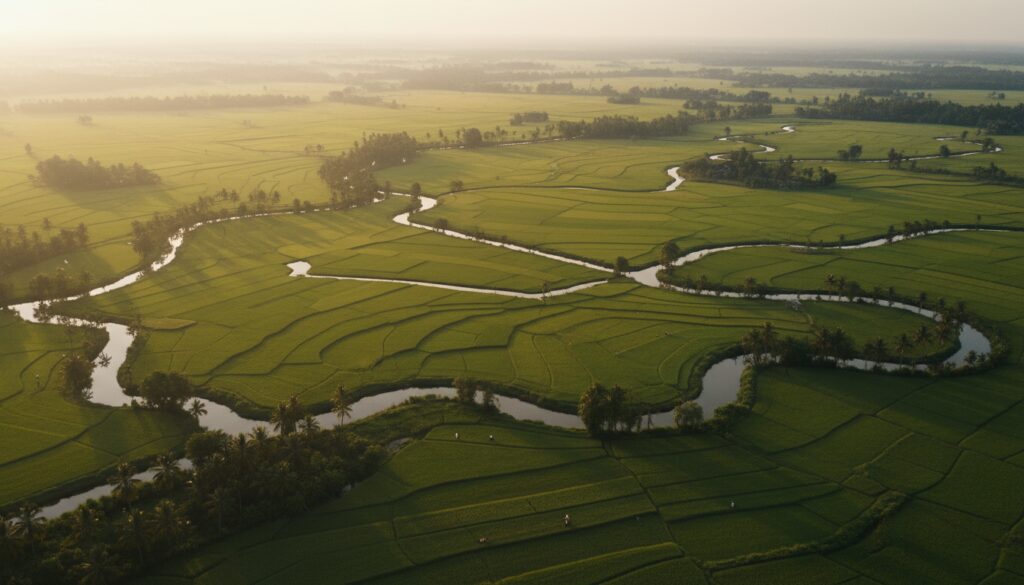
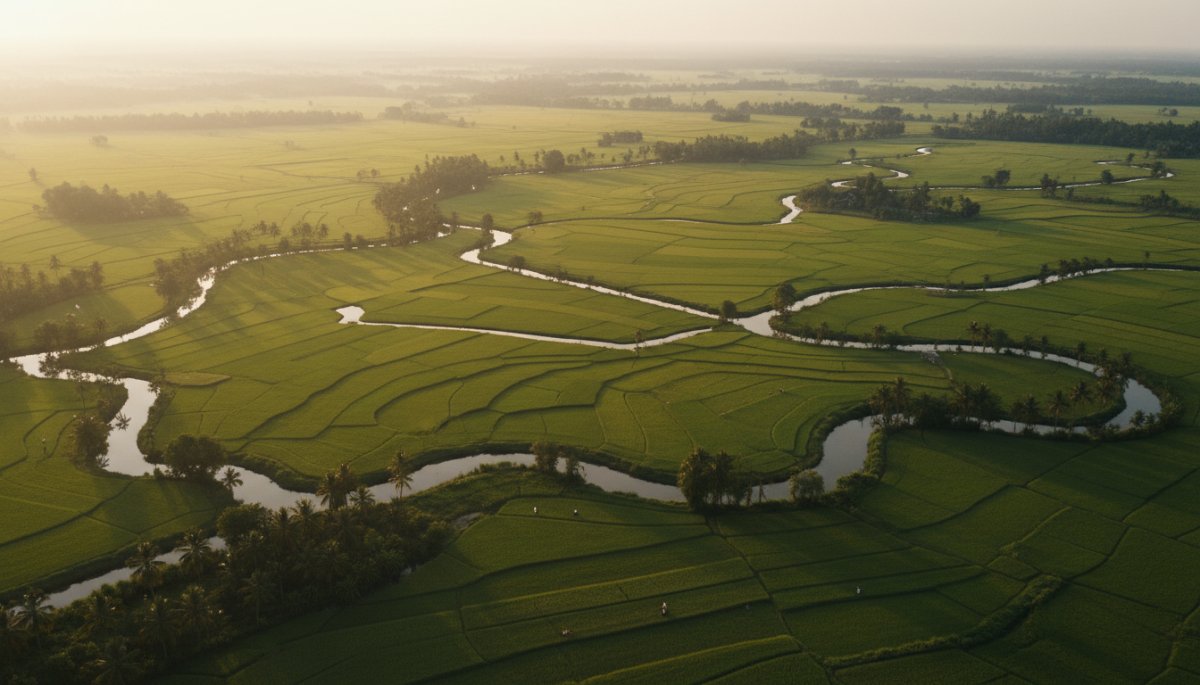
The Mekong Delta is one of the world's leading farming regions, spreading across southern Vietnam.
The vast delta formed by the Mekong River can be called Vietnam's food heartland, accounting for more than half of the country's rice output. Flat, fertile land, abundant water resources, and the warm climate brought by the tropical monsoon climate: these natural conditions give rise to the productive power that supports the world's second-largest rice export nation.
Vietnam is an agricultural power Agriculture accounts for about 12% of GDP, and more than 40% of the working population is engaged in it. Annual rice output is about 43.5 million tonnes, making the country the world's second-largest rice exporter, and its coffee output ranks second in the world after Brazil, with Robusta it is the world's largest, for Cashew nuts and black pepper rank first in the world, while shrimp ranks third in production volume and second in export volume. In 2023, total exports from agriculture, forestry, and fisheries reached about US$53 billion, accounting for more than 15% of the country's total exports.
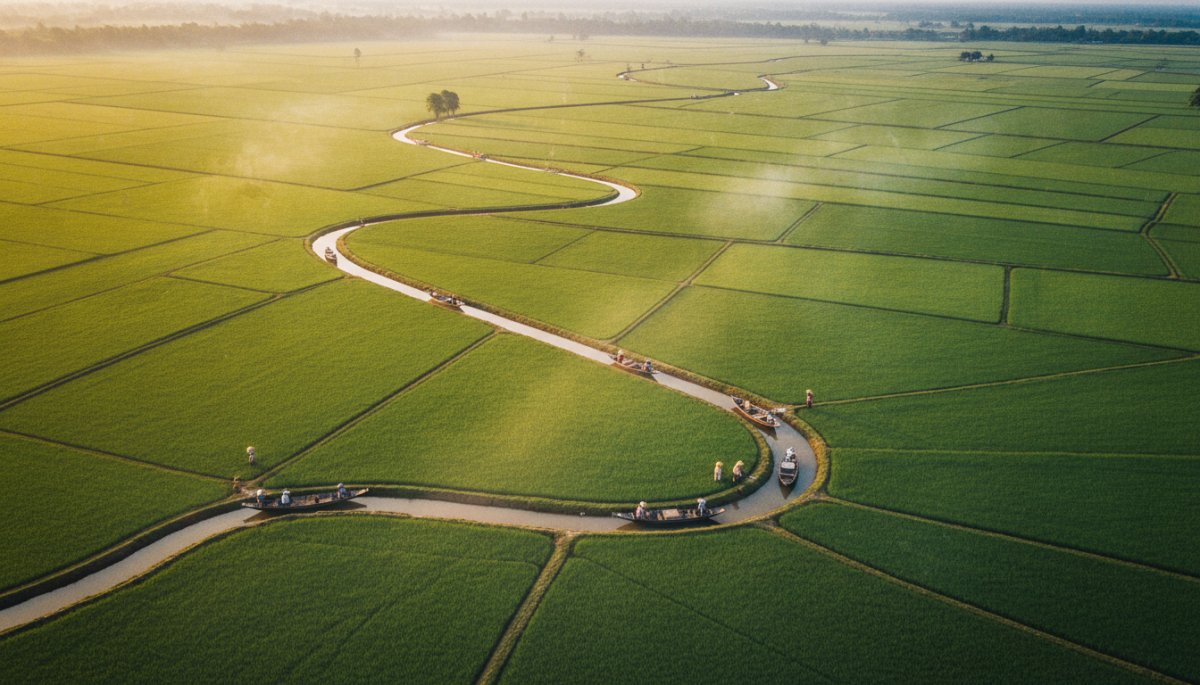
Yet the Mekong Delta now faces serious challenges. Sea-level rise and saltwater intrusion driven by climate change, intensifying floods, and water shortages in the dry season: these environmental changes are threatening the farm production that underpins the world's food supply. This article explains in detail the features of the Mekong Delta farming region and the challenges it faces on the path to a sustainable future.
Feature 1: One of the two great deltas that support Vietnam's rice production
Vietnamese agriculture is supported by two great river deltas: the Red River Delta in the north and the Mekong Delta in the south.
The Red River Delta is the granary of the north, including the capital Hanoi, and has long been an area of intensive rice farming. Although its area is relatively small, its population density is extremely high, and the cultivated area per farming household is very limited. The average cultivated area per farm across Vietnam is about 0.44 hectares, among the smallest in the ASEAN countries. In recent years the adoption of hybrid rice has advanced and yields have improved, while in the areas around Hanoi, as urbanization and industrialization progress, the conversion of paddy fields to commercial and industrial land and the outflow of farm labor have become challenges.
By contrast, the Mekong Delta is one of the world's leading rice-producing regions, spreading across southern Vietnam. It accounts for more than half of the country's rice output, and most of the rice destined for export is shipped from here. In addition to large-scale rice farming that makes use of its vast, flat land, shrimp aquaculture and fruit cultivation are also thriving.
Source
Ministry of Agriculture, Forestry and Fisheries, "The Current State of Vietnamese Agriculture and Its Agricultural and Trade Policy"
(FY2010)
Feature 2: Fertile alluvial soil and abundant water resources
The biggest factor supporting the Mekong Delta's farm productivity is its fertile alluvial soil and abundant water resources.
The nutrient-rich sediment that the Mekong River carries down from upstream has accumulated thickly across the delta, forming soil well suited to farming. This alluvial soil is rich in organic matter and strikes a good balance between water retention and drainage, giving it ideal conditions for rice growing. The warm climate and abundant rainfall throughout the year make multiple plantings possible, and there are even areas where three rice crops a year can be achieved.
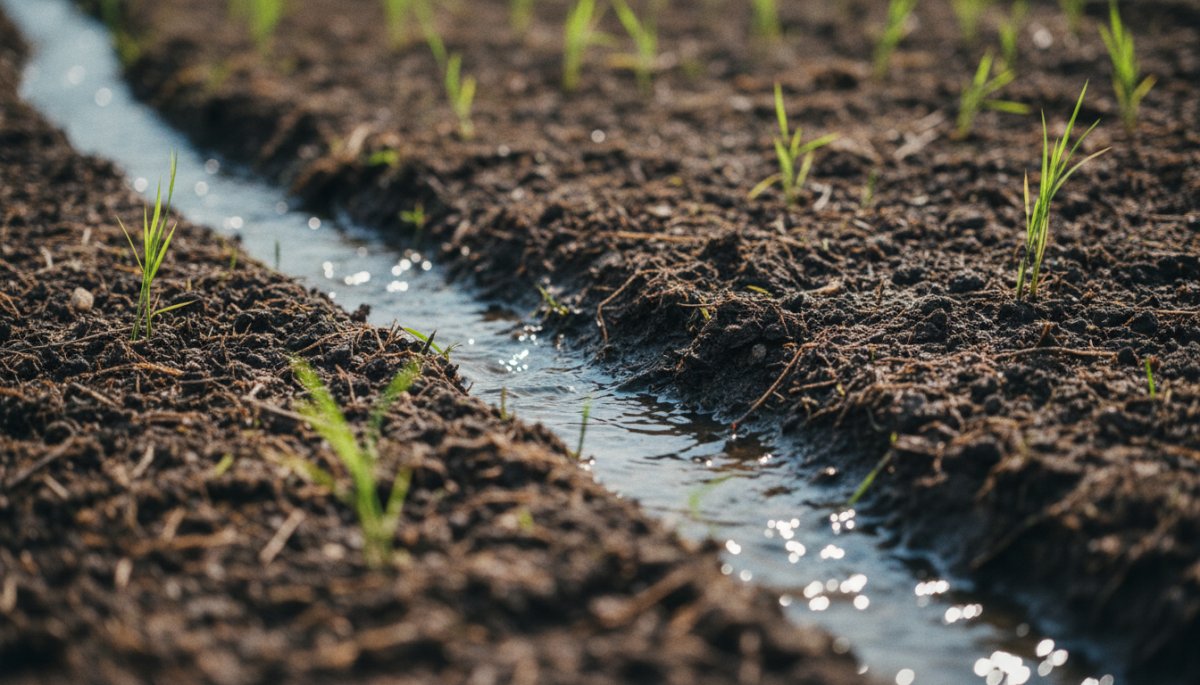
The development of irrigation infrastructure has also advanced, and improvements in water-management technology have made stable farm production possible even in the dry season. In recent years, however, the impact of climate change has intensified dry-season water shortages, raising the importance of water-resource management.
Feature 3: A diverse production system of rice, seafood, and fruit
The Mekong Delta plays an important role not only in rice but also in the production of seafood and fruit.
Large-scale rice farming that makes use of the vast, flat land is central, but shrimp aquaculture is also thriving. Vietnam ranks third in the world for shrimp production and second for exports, and the Mekong Delta is its main production area. Seafood export value reaches about US$9 billion a year, with Japan, the United States, and the EU as the main markets. The region also leads the world in farming pangasius (basa), a type of catfish, and fisheries are an important pillar of the Mekong Delta economy.
Fruit growing is also active, with thriving production of tropical fruits such as mango, dragon fruit, rambutan, and longan. These fruits earn recognition not only in domestic consumption but also in export markets.
Feature 4: The success of agricultural reform under the Doi Moi policy
To understand the Mekong Delta's agriculture today, the 1986 Doi Moi policy is an unavoidable turning point.
Under the collective farming system that preceded it, farmers had little incentive to produce, and rice output struggled even to meet domestic demand. When Doi Moi granted land-use rights to individual farms and introduced a market economy, farm production expanded dramatically. In 1989 Vietnam became a net rice exporter for the first time, and it has consistently remained one of the world's leading rice export rice-exporting countries.
Behind this success, alongside the policy shift that respected farmers' autonomy, were the development of irrigation infrastructure, the spread of high-yield varieties, and expanded access for farm products to international markets. In the Mekong Delta, the stratification of farm households has progressed markedly since 1988: while some farms rapidly expand in scale and others shrink and fall into the landless class, among the small and midsize class of under two hectares there is also a move to adopt mixed farming to stabilize their operations.
Source
Japan International Research Center for Agricultural Sciences, "Doi Moi policy Changes in the Agricultural Structure of Vietnam's Mekong Delta Under
(FY1997 research findings)
Challenge 1: Saltwater intrusion and flood risk from climate change
The Mekong Delta is one of the regions most susceptible to the effects of climate change.
Saltwater intrusion from rising sea levels is growing more serious year by year. In the low-lying delta, seawater intrudes deep inland, contaminating irrigation water and groundwater. Salt damage is expanding the areas where rice farming becomes difficult, and farmers are being forced to introduce salt-tolerant varieties or convert to shrimp farming such systems. Salt-tolerant varieties developed by the International Rice Research Institute are spreading widely across Vietnam, Bangladesh, India, and elsewhere, but structural risks remain that varietal improvement alone cannot fully address.
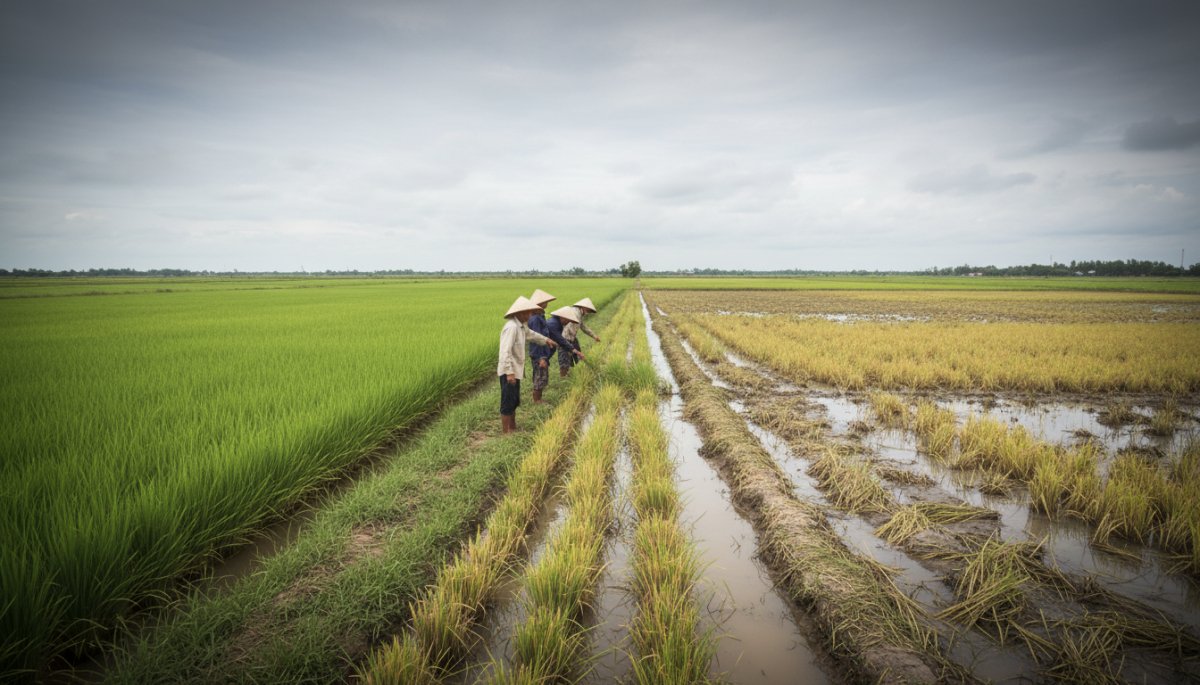
Intensifying floods are also a serious problem. In the rainy season, large-scale floods occur and cause severe damage to crops and farm infrastructure. In the dry season, meanwhile, water shortages arise and securing irrigation water becomes difficult. This extreme variability in water resources threatens the stability of farm production.
Source
JICA, "Research toward Sustainable Development in the Mekong Delta Region under Climate Change"
(July 2024)
Challenge 2: Smallholder productivity and the aging problem
In the Mekong Delta, the low productivity of smallholders and the aging of farm workers have become serious challenges.
97% of all people engaged in farming in Vietnam are small and midsize farmers, and mechanization and smart-farming technology have not spread. According to estimates by the Ministry of Agriculture and Rural Development, about 57% of farm workers are unskilled, and the share aged 50 or older reaches about 43%. As young people continue to move to the cities, securing the next generation of farmers is an urgent issue.
Large-scale farms began consolidating land after 1988 and still have an appetite to expand. These farms show several traits: a growing tendency toward rice monoculture and specialization, so that rice makes up a high share of their income; large household sizes with ample family labor; advancing adoption of farm machinery such as tractors; and low rice production costs.
Among the small and midsize class of under two hectares, meanwhile, there is a group of farms that have neither sold nor bought farmland since 1988, generate a farm-economy surplus of around 10 million dong a year, and run relatively stable operations. Such farms actively incorporate livestock, fish farming, and vegetable growing alongside rice, diversifying their operations.
Source
Policy Research Institute, Ministry of Agriculture, Forestry and Fisheries, "Vietnam's Agriculture, Rice Farming, and Land System"
(November 2023)
Challenge 3: Low added value and an underdeveloped cold chain
While the Mekong Delta's farm products boast world-class output, they carry a structural challenge of low added value.
Most farm-product exports are unprocessed primary commodities, and exports of goods whose value has been raised through processing are limited. Rice is an example: although output ranks second in the world, its brand value as a milled or processed finished product lags behind competing countries.
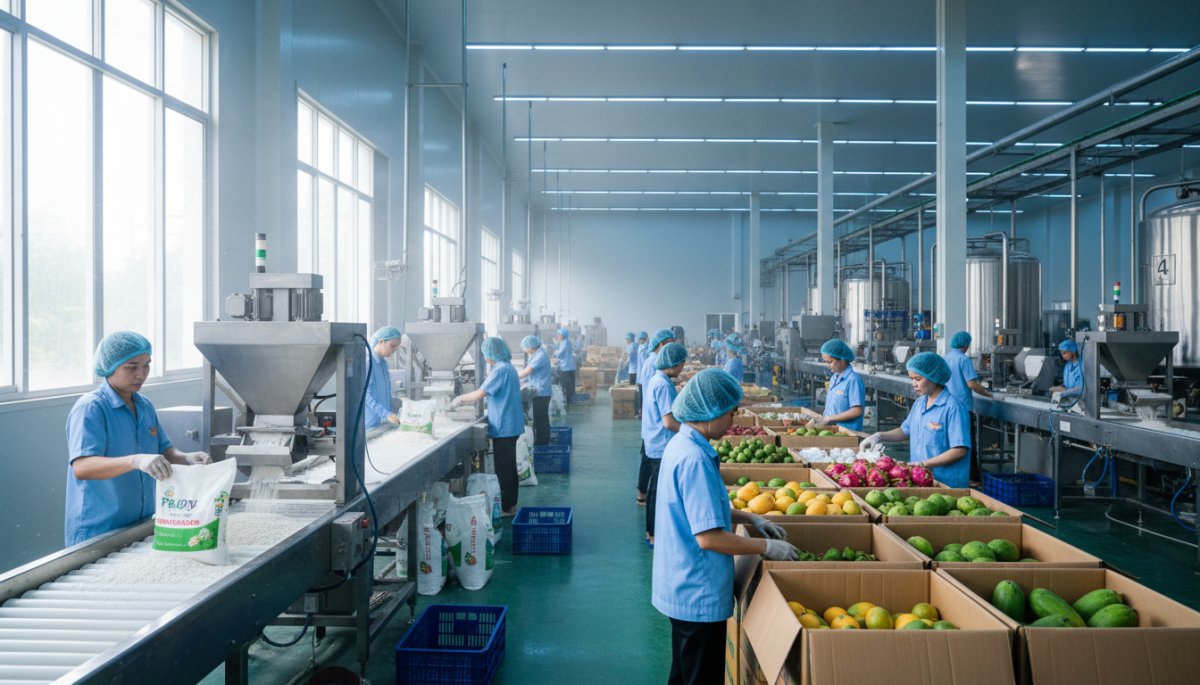
The underdeveloped cold chain (low-temperature logistics) is also a serious problem. Harvested produce is often not stored or transported properly and ends up degraded or discarded, and post-harvest loss weighs heavily on the profitability of agriculture as a whole. Especially for perishable items such as fruit and seafood, a shortage of refrigeration and freezing facilities is holding back gains in export competitiveness.
The Vietnamese government has set a goal of entering the world's top 15 in agriculture and food processing by 2030, promoting a policy built on three pillars: attracting investment in processing facilities, building out the cold chain, and strengthening branding.
Looking ahead: the shift to sustainable agriculture and smart farming
Agriculture in the Mekong Delta is now at a major turning point.
The Vietnamese government has set out its "Strategy for Sustainable Agriculture and Rural Development to 2030, with a Vision to 2050," positioning the adoption of smart farming as a national priority. A variety of technologies are being demonstrated across the country, including environmental monitoring with IoT sensors, pesticide spraying by drone, AI-based pest prediction, and the automation of hydroponics. In the Mekong Delta, demonstrations of water-saving rice farming through the introduction of water-management systems are advancing, and technical cooperation by Japanese companies is active.
The "Japan-ASEAN Midori Cooperation Plan," adopted at the Japan-ASEAN agriculture and forestry ministers' meeting in May 2023, is a comprehensive cooperation framework for building sustainable agriculture and food systems in the Asian monsoon region. Japan positions ASEAN as its most important partner for the international rollout of the environmental-impact-reducing technologies set out in its "Strategy for Sustainable Food Systems (MIDORI)." Its pillars are the transfer of precision-farming technology, support for promoting organic farming, the introduction of paddy-management techniques to cut greenhouse-gas emissions, and support for upgrading farm-product value chains.
Adopting smart farming does, however, require upfront investment, and spreading it to smallholders with limited capital is a challenge. Given that 97% of all people engaged in farming in Vietnam are small and midsize farmers, developing low-cost smart-farming models that do not presuppose expensive equipment is essential.
The challenges facing Mekong Delta agriculture are not simply Vietnam's alone. As the world's population surpasses 8 billion and climate change affects farm production everywhere, the production potential of Southeast Asia's tropical agriculture is one of the foundations supporting the global food supply. How these challenges are tackled, the shift to sustainable agriculture, adaptation to climate change, and raising smallholder productivity, will shape the future of the Mekong Delta and of world food security.
Agriculture in the Mekong Delta plays an important role in supporting the world's dinner tables. Even as it faces challenges such as climate change and aging, it is working to open up a sustainable future through smart farming and international cooperation. The development of this region's agriculture is directly connected to the future of our food.
You May Also Like
- What Is the Mekong Delta? Features of Vietnam's Largest Agricultural Region and Its 8 Key Roles
- A thorough analysis of the characteristics of Vietnamese agriculture | Its production structure seen through the Mekong Delta
- How Rice Production Works in the Mekong Delta: The Techniques Behind Triple Cropping

