The Challenges Facing Asian Agriculture and the Need for the SDGs
As one of the world's leading agricultural regions, Southeast Asia has nurtured thousands of years of farming civilization against a backdrop of tropical monsoon climate and fertile delta zones.
Vietnam is an agricultural power of about 100 million people, with agriculture accounting for about 12% of GDP and more than 40% of the labor force. Annual rice output is about 43.5 million tonnes, with export volume ranking second in the world; coffee output ranks second in the world after Brazil, and for Robusta it is the world's largest, for Cashew nuts and black pepper it ranks first in the world, and for shrimp it boasts third place in output and second in exports.
Behind these production figures, however, lie structural challenges. The average cultivated area per farm is about 0.44 hectares, among the smallest in the ASEAN countries, and 97% of all farmers are small and medium-scale. About 57% of agricultural workers are unskilled, and the share aged 50 and over reaches about 43%.
Amid challenges such as low added value, an underdeveloped cold chain, and food-safety and environmental problems, achieving the Sustainable Development Goals (SDGs) has become an important theme that will shape the future of Asian agriculture.
Effort 1: Building Climate-Resilient Agricultural Systems
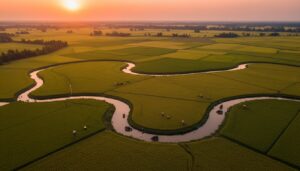
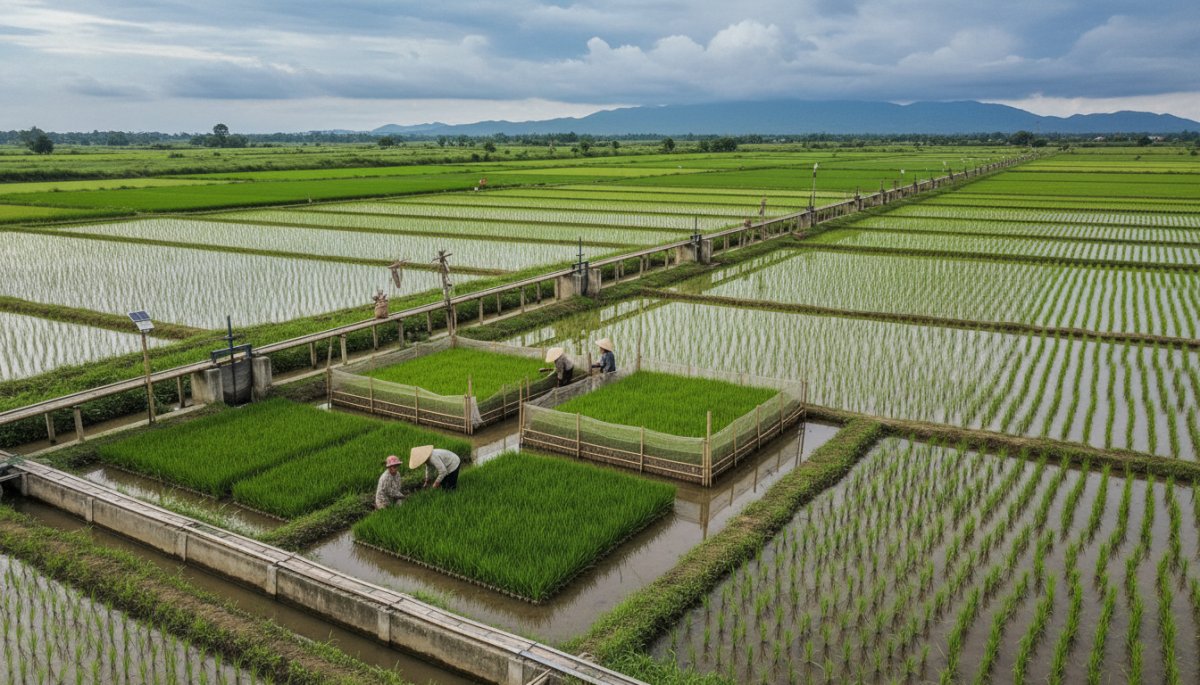
One of the major threats facing Asian agriculture is climate change. Vietnam's Mekong Delta, Myanmar's Irrawaddy Delta, and Thailand's Chao Phraya Delta all lie at low elevations, and the risks of saltwater intrusion and flooding grow greater year by year.
The Mekong Delta is one of the world's leading production zones, responsible for more than half of the country's rice output, but saltwater intrusion from rising sea levels, worsening floods, and dry-season water shortages grow more serious year by year, raising concern about the impact on agricultural production.
In response to this challenge, the International Rice Research Institute (IRRI) developed the flood-tolerant variety "Sub1" and salt-tolerant varieties. These varieties have spread widely across Vietnam, Bangladesh, India, and elsewhere, and can greatly curb yield losses from flooding and salt damage compared with conventional varieties.
Improving water-management techniques is also an important effort. In the Mekong Delta, demonstrations of water-saving rice farming through the introduction of water-management systems are advancing, and techniques for efficiently using limited water resources are being established.
Effort 2: Raising the Productivity of Smallholder Farmers and Adopting Smart Agriculture
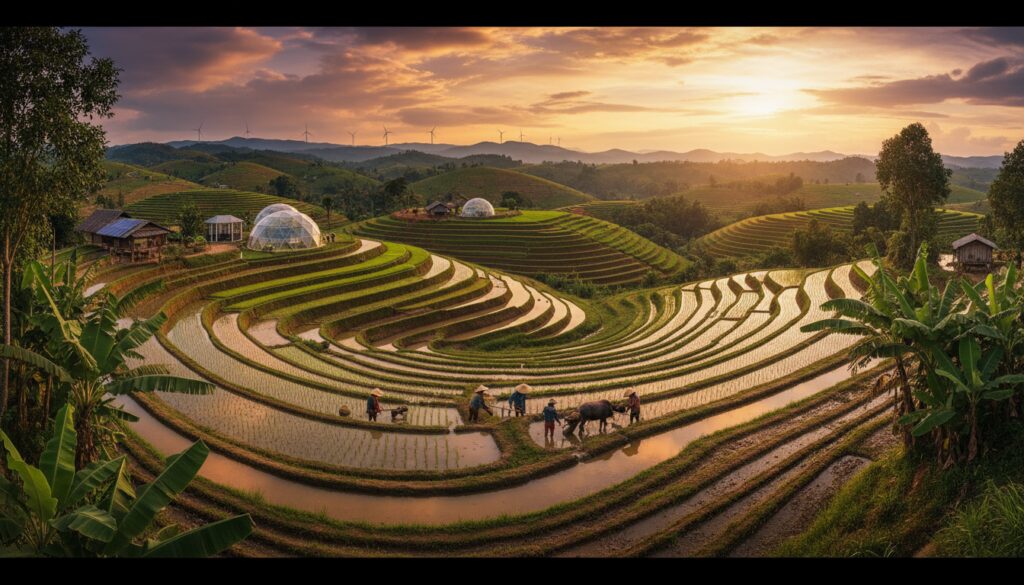
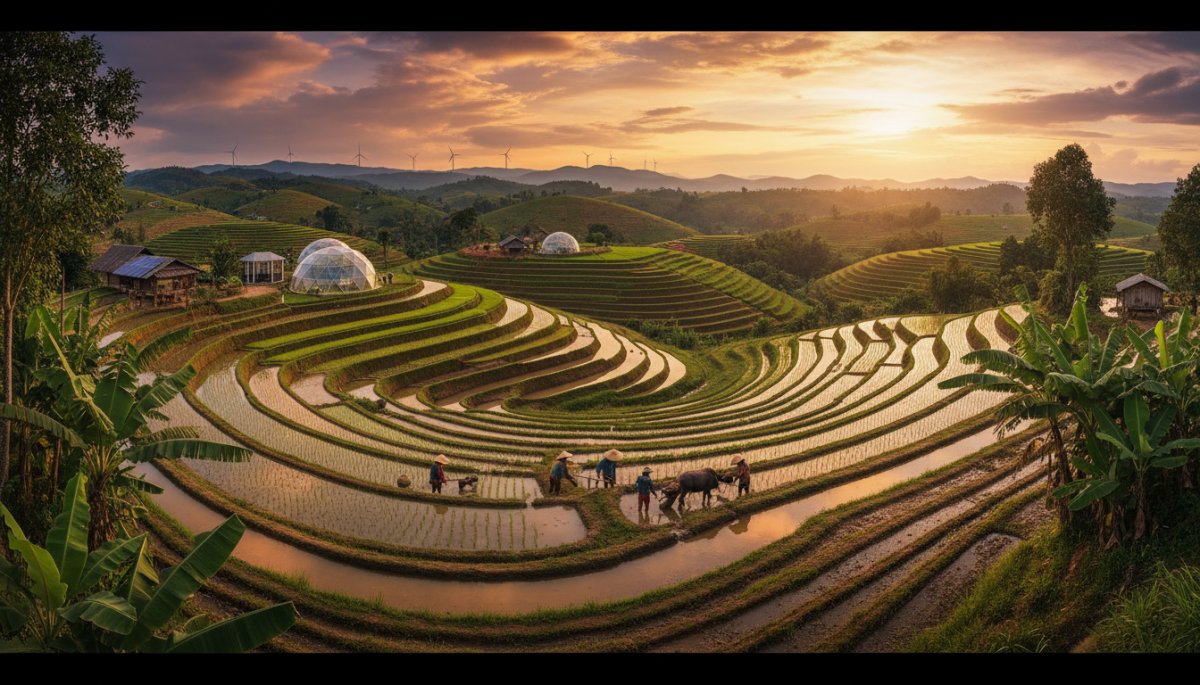
Most of those who carry Asian agriculture are smallholder farmers. In Vietnam, 97% of all farmers are small and medium-scale, and the adoption of mechanization and smart-agriculture technology has not advanced.
To improve this situation, the Vietnamese government has set out its "Strategy for Sustainable Agriculture and Rural Development to 2030, with a Vision to 2050," positioning the adoption of smart agriculture as a national priority.
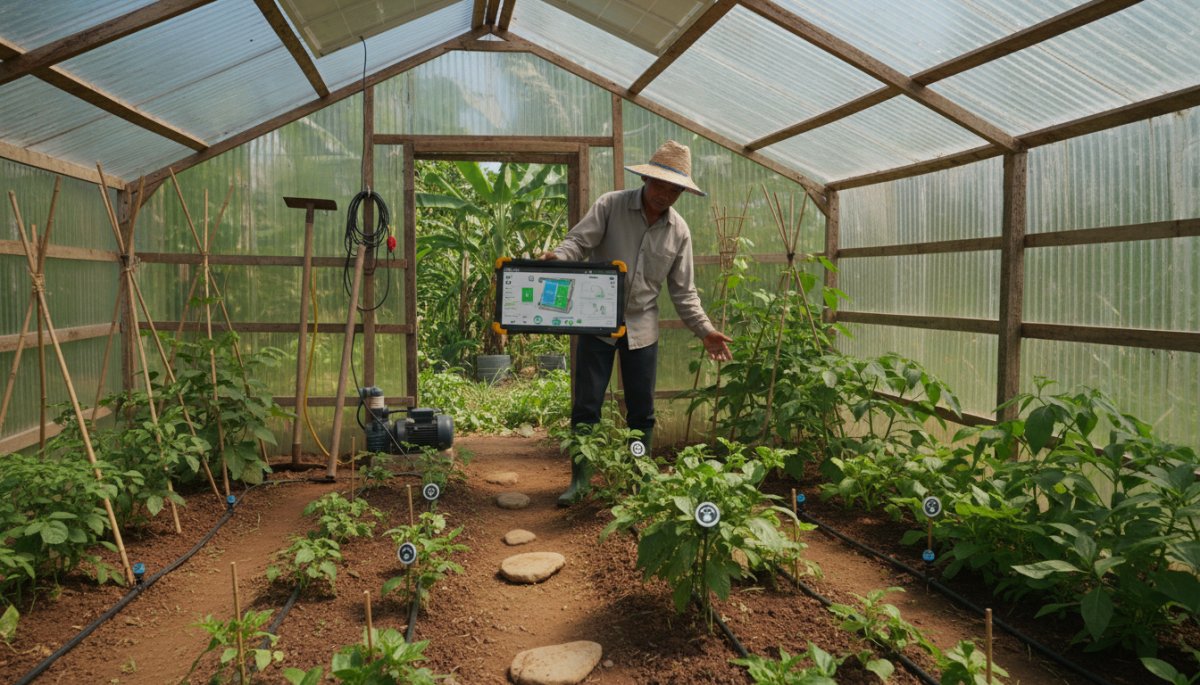
Smart agriculture includes various technologies such as environmental monitoring with IoT sensors, pesticide spraying by drone, AI-based pest and disease forecasting, and the automation of hydroponic cultivation. Lam Dong province (around Da Lat) is a leading region for smart agriculture in Vietnam, where greenhouse systems and automatic irrigation systems for vegetable growing have been introduced.
However, adopting smart agriculture requires an initial investment, and spreading it to smallholder farmers with little capital is a challenge. What becomes important here is developing low-cost smart-agriculture models that do not assume expensive equipment.
Demonstration projects by Japanese companies for introducing small and medium-scale greenhouses and remote cultivation-support solutions are being rolled out, and the development of technology that even smallholder farmers can adopt is advancing.
Effort 3: Promoting Organic Farming and Environmental-Load-Reducing Technology
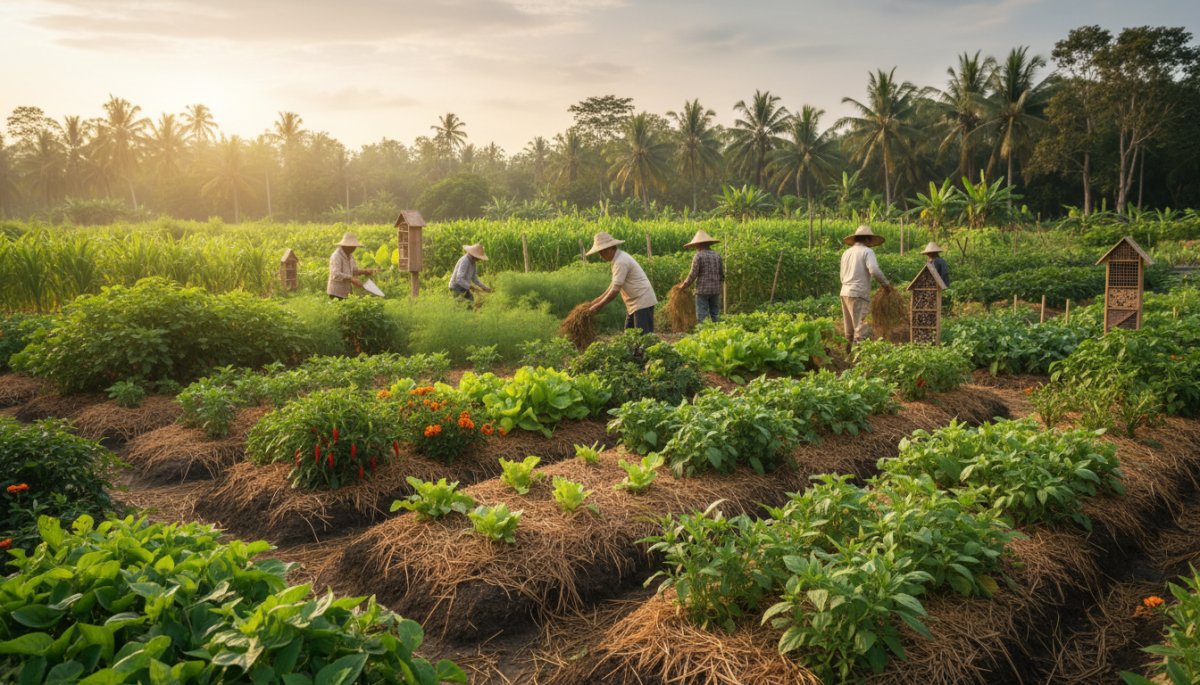
To achieve sustainable agriculture, consideration for the environment is important. Soil degradation and water pollution from the excessive use of pesticides and chemical fertilizers, and the problem of pesticide residues, pose a dual challenge: health risks for domestic consumers and compliance with the hygiene standards of destination countries.
The "Japan-ASEAN Midori (Green) Cooperation Plan," adopted at the Japan-ASEAN Agriculture and Forestry Ministers' Meeting in May 2023, is a comprehensive cooperation framework for building sustainable agriculture and food systems in the Asian monsoon region.
Thailand is one of the countries in Southeast Asia where the institutional framework for organic farming is the most developed, operating a certification system under the "Thai organic agriculture standard." The Thai government positions organic rice exports as a growth strategy and, for jasmine rice, organic cultivation is actively promoting.
In Vietnam, too, the Ministry of Agriculture and Rural Development has set the expansion of organic farming as a policy goal, but the farmland area that has obtained organic certification is still only a tiny fraction of the whole. In Cambodia and Laos, there are moves to make use of the characteristic that the use of chemical pesticides and fertilizers was originally low, putting forward organic farming as a differentiation strategy in international markets.
Japan positions the international rollout of the environmental-load-reducing technology set out in its "Strategy for Sustainable Food Systems (MIDORI)" with ASEAN as an important partner, and the transfer of precision-agriculture technology, support for promoting organic farming, and the introduction of paddy-management techniques to reduce greenhouse gas emissions are being advanced.
Effort 4: Adding Value to Agricultural Products and Building Value Chains
As Asian agriculture shifts from "quantity to quality," the processing and value-adding of agricultural products has become a central theme.
Vietnam's total agriculture, forestry, and fishery exports reached about US$53 billion in 2023, accounting for more than 15% of the country's total exports, but most agricultural exports are unprocessed primary products, and exports of products whose value has been raised through processing are limited.
Take coffee: despite being the world's second-largest producer, a high proportion is exported as green beans, and its brand value as a roasted, processed final product lags behind that of rival countries such as Colombia and Ethiopia.
The Vietnamese government has set a goal of entering the world's top 15 in agriculture and food processing by 2030, promoting a policy built on three pillars: attracting investment in processing facilities, building out the cold chain, and strengthening branding.
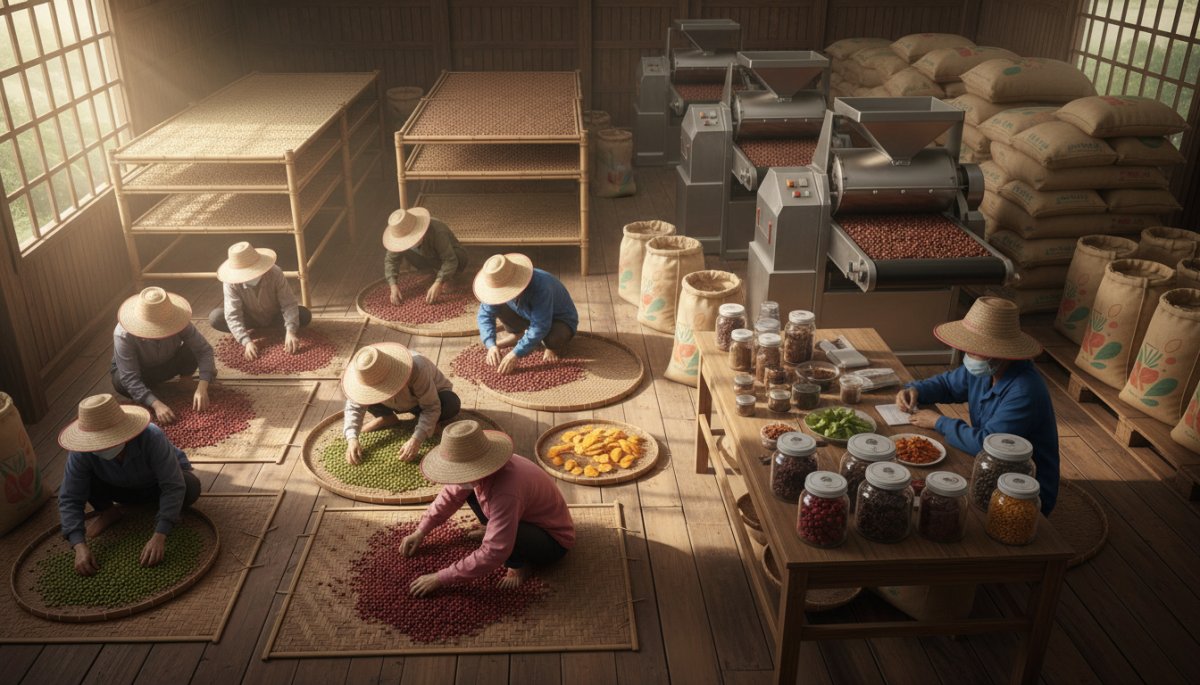
What becomes key here is primary-processing techniques such as drying and powdering. Tropical produce spoils quickly and, as is, is difficult to transport over long distances or store for long periods, but drying or powdering it dramatically raises shelf life and can also cut logistics costs.
Dried vegetables, dried fruit, and freeze-dried products are seeing growing demand in developed-country markets against the backdrop of rising health consciousness, and have become a powerful means of delivering Southeast Asian produce to developed countries with added value.
In Cambodia, the World Bank-backed "Cambodia Agriculture Sector Diversification Project" is being carried out, and efforts to build agricultural value chains using international support are advancing.
Effort 5: Ensuring Food Safety and Traceability
To raise competitiveness in international markets, ensuring food safety and traceability is important. Major destinations such as the EU, Japan, and the US tighten their pesticide-residue and hygiene standards year by year, and produce that cannot meet them is shut out of the market.
Vietnam's Seafood exports value reaches about US$9 billion a year, with Japan, the US, and the EU as the main markets, but it must meet the destinations' quality and hygiene standards, which is a barrier to entry for smallholder farmers.
In Vietnam in recent years, the building of traceability systems for agricultural products has been advancing, with the introduction of origin-tracking systems using blockchain technology and the spread of GAP (Good Agricultural Practices) certification being attempted. However, implementation at the smallholder-farmer level has lagged, and overall it is still at an early stage.
Introducing an international-standard GAP contributes to achieving several of the SDGs. Goal 2, "Zero Hunger," calls for securing sustainable food-production systems; Goal 12, "Responsible Consumption and Production," for sustainable production and consumption; and Goal 15, "Life on Land," for improving the quality of land and soil—and GAP is a means of achieving these goals in an integrated way.
Effort 6: Improving the Livelihoods of Agricultural Workers and Creating Jobs
To achieve sustainable agriculture, improving the livelihoods of agricultural workers is important. A structural challenge common to the ASEAN countries is the income gap between the agricultural sector and the industrial and service sectors.
While in the original ASEAN member countries (Thailand, Indonesia, Malaysia, the Philippines) the agriculture-industry gap has broadly narrowed over the past 30 years, in the CLMV countries (Vietnam, Laos, Myanmar, Cambodia) the gap has, if anything, widened amid the rapid advance of industrialization.
This gap is accelerating the outflow of labor from rural areas to the cities. Young people migrate to the cities in search of jobs in manufacturing and services, and the elderly are left behind in the countryside. In Vietnam, 43% of agricultural workers are aged 50 and over, and this trend is common across Southeast Asia.
The shortage of agricultural labor is not merely a quantitative problem of labor supply; it is also a qualitative problem that hinders the adoption of new technology and the modernization of management.
In response to this challenge, each country's government has set a goal of doubling the agricultural productivity and incomes of small-scale food producers. Securing reliable and equal access to land, other productive resources, inputs, knowledge, financial services, markets, and opportunities for value-adding and non-farm employment has become important.
Thailand has a farmland area per household averaging about 3 hectares, larger than Vietnam's, and its commercial history of farming is long, so the modernization of agriculture has advanced relatively far.
Effort 7: Strengthening International Cooperation and Partnerships
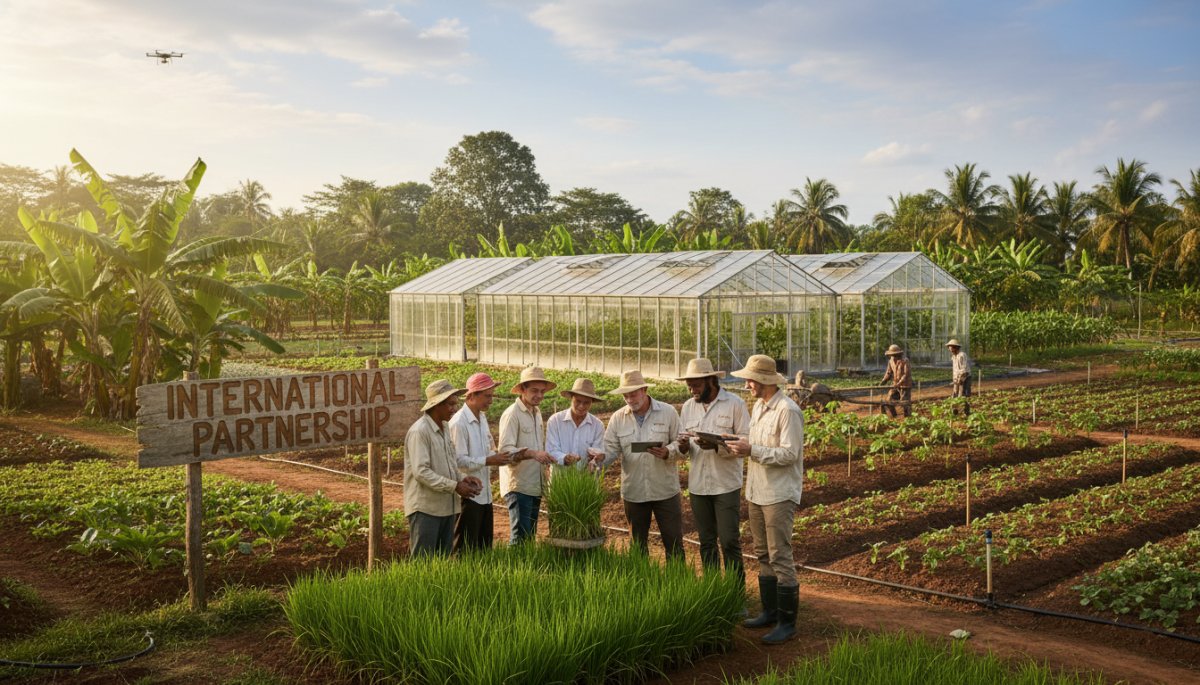
SDG Goal 17 is "Partnerships for the Goals." To achieve the sustainability of Asian agriculture, international cooperation plays an important role.
The "Japan-ASEAN Midori (Green) Cooperation Plan," adopted at the Japan-ASEAN Agriculture and Forestry Ministers' Meeting in May 2023, is a symbolic effort, providing a comprehensive cooperation framework for building sustainable agriculture and food systems in the Asian monsoon region.
Japan's strength lies in holding technology and know-how suited to small and medium-scale farmers. Unlike the smart-agriculture solutions of the Netherlands or South Korea, which assume large-scale farming, Japan's agricultural technology is highly likely to fit the realities of Southeast Asia's smallholder farmers.
Specifically, the pillars are transferring precision-agriculture technology, supporting the promotion of organic farming, introducing paddy-management techniques to reduce greenhouse gas emissions, and supporting the upgrading of agricultural value chains.
Indonesia has ASEAN's largest population (about 280 million) and the largest land area, and is also the largest in ASEAN by agricultural output value. Palm oil is the world's largest producer, and together with Malaysia it accounts for more than 85% of world output, but the destruction of tropical rainforest through plantation development, greenhouse gas emissions from the clearing of peatlands, and the loss of biodiversity have drawn international criticism.
The spread of a certification system (RSPO) for sustainable palm oil production is advancing, and the balance of environment and economy is being sought through international cooperation.
The Philippines holds one of the world's leading positions in banana exports, and much of the bananas for Japan are shipped from southern Mindanao Island, but nearly 20 typhoons approach or make landfall each year on average, bringing a high risk of severe damage to crops, so the development of disaster-resistant varieties and the expansion of agricultural insurance systems have become themes of international cooperation.
The Future of Asian Agriculture and the Path to Achieving the SDGs
Asian agriculture holds enormous potential and challenges at the same time. Although it is one of the world's leading agricultural-export regions, its structural problems are wide-ranging—low added value, vulnerability to climate change, the stagnant productivity of smallholder farmers, and an underdeveloped cold chain.
But by the same token, room for improvement is itself room for growth.
Led by Vietnam, the countries of Southeast Asia are accelerating a shift in mindset from "agricultural production" to an "agricultural economy." The transition from an era of pursuing quantity to one that prioritizes quality, safety, environmental sustainability, and brand value also means a major business opportunity for companies in developed countries, including Japan.
Raising added value through the drying and powdering of produce, rolling out smart-agriculture technology to small and medium-scale farmers, supporting organic-farming certification, supporting the building of cold chains—all are areas where Japanese companies with technology and know-how can contribute.
At the same time, the development of Southeast Asian agriculture also carries important meaning for the world's food security. As the world population exceeds 8 billion and climate change affects agricultural production in various places, the production potential of Southeast Asia's tropical agriculture has become one of the foundations supporting the global food supply.
Vietnam with its 100 million mouths to feed, Indonesia with 280 million, Thailand with 70 million. The process by which these countries' agriculture becomes more sophisticated and deeply embedded in global value chains will be an indispensable story in any account of the 21st-century Asian economy.
The rural landscape of Southeast Asia is right now in the midst of a great transformation. There is not much time left until 2030, the deadline for achieving the SDGs, but by steadily carrying out the seven efforts and strengthening international cooperation, Asian agriculture should be able to open up a sustainable future.