The Reality Facing Southeast Asia's Smallholders
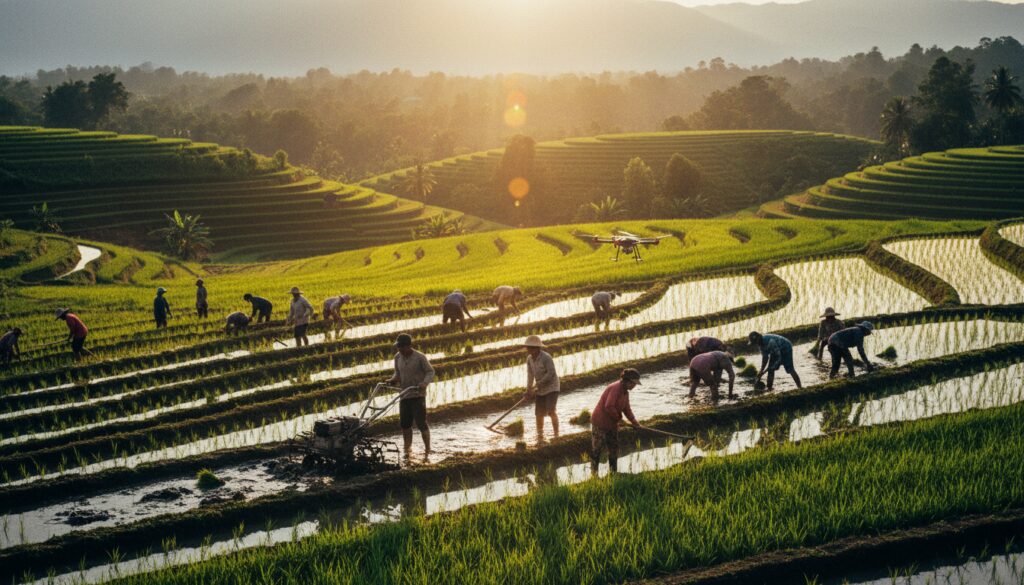
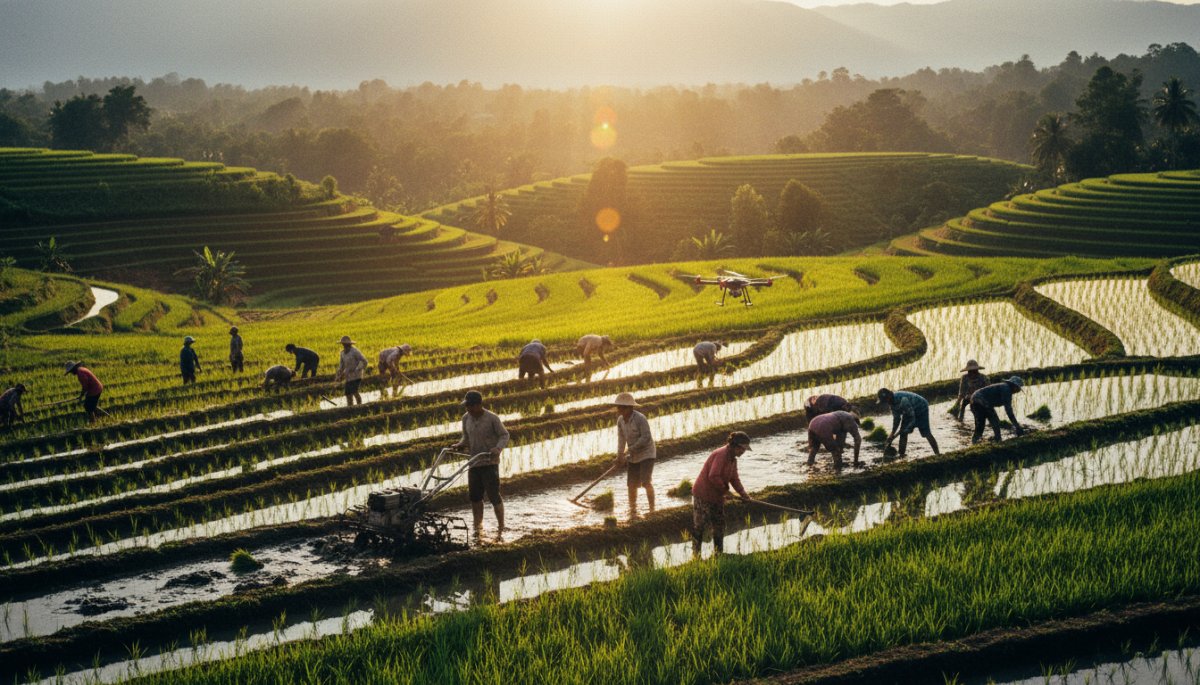
Southeast Asia is one of the world's leading agricultural regions. Backed by abundant rainfall from a tropical monsoon climate and fertile delta regions, a farming civilization spanning thousands of years has been nurtured here.
In Vietnam, more than 40% of the workforce, out of a population of about 100 million, is engaged in agriculture, and agriculture, forestry, and fisheries account for about 12% of GDP. Annual rice production is about 43.5 million tonnes with the world's second-largest export volume, and the country boasts the world's largest production of Robusta coffee.
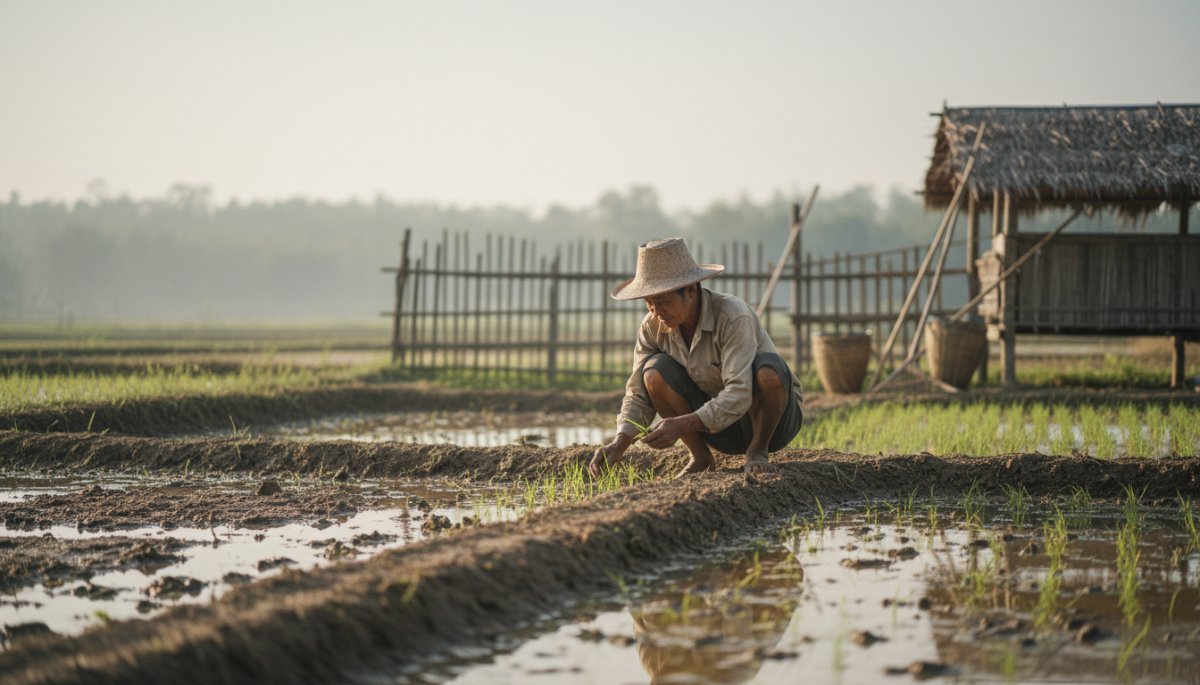
However, behind such impressive figures lie serious challenges. The average cultivated area per farm in Vietnam is about 0.44 hectares, among the smallest in ASEAN. 97% of all agricultural workers are small and medium-scale farmers, about 57% of agricultural workers are unskilled, and those aged 50 and over account for about 43%. The situation is similar in neighboring countries such as Thailand, Indonesia, the Philippines, and Cambodia, and smallholders'raising incomes is a common challenge for the entire region.
Strategy 1: Using Cooperatives to Strengthen Bargaining Power
It is difficult for smallholders to face the market on their own. cooperatives Participation in such organizations provides bargaining power and market access that individual farmers cannot obtain on their own.
When multiple farmers come together, it becomes possible to negotiate selling prices for produce and jointly purchase materials, reducing dependence on intermediaries. In Thailand, agricultural cooperatives have a long history and play a role in the quality control and export of jasmine rice.
Reducing Logistics Costs Through Joint Shipment
Joint shipment through cooperatives can reduce logistics costs compared with individual transport. In the rice-producing areas of the Mekong Delta, cooperatives operate collection centers and build efficient shipping systems. This makes it possible even for smallholders to contract directly with large buyers.
Mechanisms for Information Sharing and Technical Support
Cooperatives are not merely sales organizations. They serve as a foundation that supports farmers' capacity building, including sharing cultivation techniques, providing market-trend information, and supporting the introduction of new varieties. In Cambodia, the World Bank-supported "Agricultural Sector Diversification Project" is carried out through cooperatives, contributing to improved smallholder productivity.
Strategy 2: Overcoming the Financing Barrier with Microfinance
A lack of funds is a major barrier to the growth of smallholders. Because conventional bank loans require collateral and a credit history, they are out of reach for smallholders whose land tenure is insecure.
Microfinance These institutions provide small loans to such farmers, enabling them to purchase seeds and fertilizer and introduce irrigation equipment. Because repayment is made after harvest, the mechanism is designed with farmers' cash flow in mind.
The Spread of Digital Financial Services
With the spread of smartphones, digital financial services are permeating rural areas as well. Money transfers and loan applications via mobile banking have become possible, improving financial access even in areas with no physical bank branches. In the Philippines, money-transfer services using mobile phones have become infrastructure that supports the rural economy.

Strategy 3: Reducing Price-Fluctuation Risk with Contract Farming
Fluctuations in market prices make smallholders' incomes unstable. Contract farming is a mechanism that fixes the purchase price and quantity before sowing.
Because farmers can expect stable income, planned investment becomes possible. Buyers can also secure the quality and quantity they need, so there are benefits for both sides. Vietnam's coffee-producing regions have seen contract farming with major exporters spread, contributing to the stability of farmers' incomes.
Clarifying Quality Standards and Technical Support
In contract farming, the quality standards buyers require are clearly stated. Because farmers can receive technical guidance to meet those standards, it also leads to improved production techniques. Indonesia's Palm oil industry has seen contract farming that complies with sustainable Palm oil certification (RSPO) advance, contributing to strengthened competitiveness in international markets.
Strategy 4: Shifting to High-Value Crops
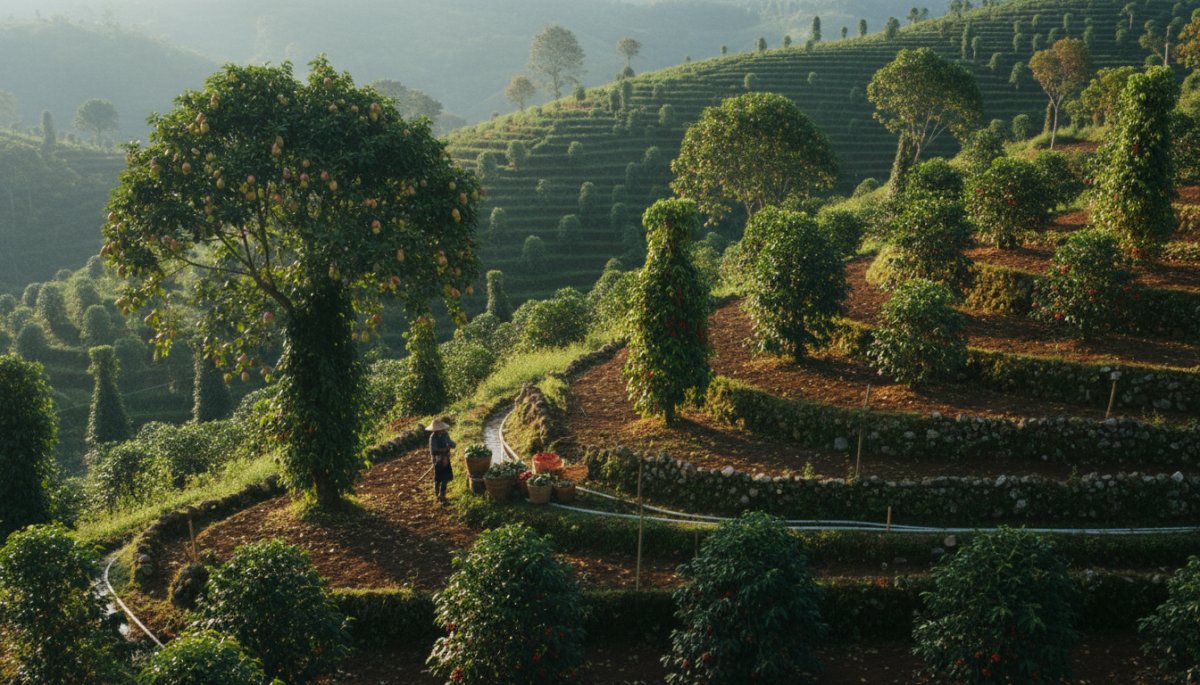
The move away from rice-only cultivation is accelerating. Shifting to high-value crops such as vegetables, fruit trees, spices, and medicinal plants holds the potential to increase the revenue obtained from limited farmland.
In Vietnam's Central Highlands, coffee, pepper, Cashew nuts and such crops are actively cultivated, and these have earned high reputations in international markets. Vietnam boasts the world's largest production of cashew nuts and black pepper pepper.
Assessing Market Demand and Planning Cultivation
Shifting to high-value crops requires an accurate grasp of market demand. Growing a crop for which there is no demand carries the risk of being unable to secure sales channels and ending up holding inventory. Working with cooperatives and agricultural extension workers to draw up cultivation plans that take market trends into account is called for.
Strategy 5: Transitioning to Organic and Sustainable Farming
Low-impact farming is a point of differentiation in international markets. Organic produce is in high demand in developed markets and trades at higher prices than ordinary produce.
Thailand has a relatively advanced framework for organic farming in Southeast Asia, operating a certification system under the "Organic Agriculture Standard of Thailand." The organic cultivation of jasmine rice organic cultivation is highly regarded in international markets and directly contributes to raising farmers' incomes.
The Hurdles of Obtaining Certification and the Support System
Obtaining organic certification requires suspending the use of chemical fertilizers and pesticides for a certain period, and the drop in yields during that time is a burden on farmers. Technical support and economic compensation from governments and international organizations are the keys to getting through the transition period. In Cambodia and Laos, there are moves to leverage the "latecomer's advantage" of inherently low chemical-pesticide use and position organic farming as a differentiation strategy in international markets.
Strategy 6: Adopting Digital Technology and Smart Agriculture
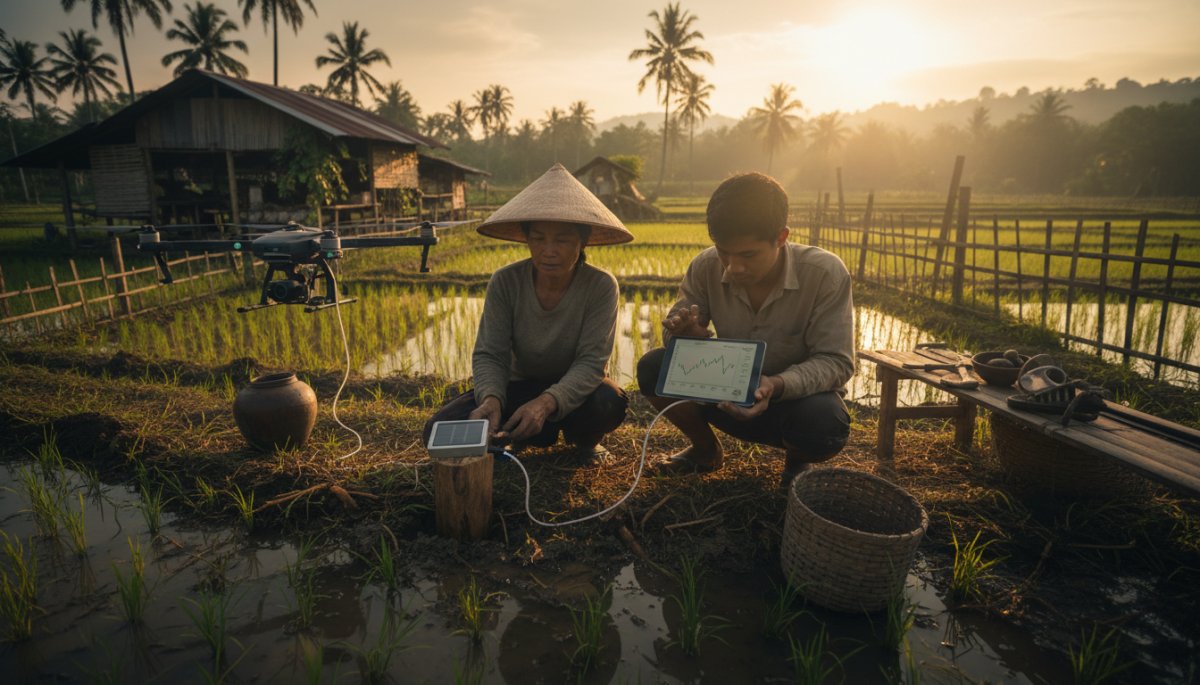
Technological innovation holds the potential to raise smallholder productivity. Smart farming technologies—environmental monitoring via IoT sensors, pesticide spraying by drones, and AI-based pest and disease prediction—are gradually being demonstrated in Southeast Asia as well.
The Vietnamese government has set out its "Strategy for Sustainable Agriculture and Rural Development to 2030, with a Vision to 2050," positioning the adoption of smart agriculture as a national priority.
Low-Cost Technology for Small and Medium-Scale Farmers
Smart agriculture premised on expensive equipment is out of reach for smallholders with limited funds. The development of low-cost technologies is advancing, such as cultivation-management apps that use smartphones and water-management systems that use inexpensive sensors. Japanese companies are also carrying out demonstration projects introducing small and medium-scale greenhouses and remote cultivation-support solutions.
Strategy 7: Raising Added Value Through Processing Produce
Rather than shipping produce fresh, applying processing can raise added value. Drying and powdering improve shelf life, reduce logistics costs, and make long-distance transport possible.
The Vietnamese government has set a goal of entering the world's top 15 in agriculture and food processing by 2030, promoting a policy built on three pillars: attracting investment in processing facilities, building out the cold chain, and strengthening branding.
Building Regional Brands
By establishing the produce of a particular region as a regional brand, differentiation in the market becomes possible. Thailand's jasmine rice and Vietnam's Da Lat vegetables are recognized internationally as regional brands, achieving trade at high prices.
Strategy 8: Leveraging International Cooperation and Technology Transfer
Cooperation with developed countries, including Japan, promotes the transfer of technology and knowledge. The "Japan-ASEAN Green Cooperation Plan," adopted at the Japan-ASEAN Ministerial Meeting on Agriculture and Forestry in May 2023, is a comprehensive framework of cooperation for building sustainable agriculture and food systems in the Asian monsoon region.
Japan positions ASEAN as its most important partner for the international rollout of the environmental-impact-reduction technologies set out in its Strategy for Sustainable Food Systems (MIDORI).
Technology Transfer Suited to Small and Medium-Scale Farmers
Unlike solutions from the Netherlands or South Korea that are premised on large-scale agriculture, Japanese agricultural technology is considered highly likely to fit the realities of small and medium-scale farmers. The concrete areas of cooperation are the transfer of precision farming technology, support for promoting organic farming, the introduction of paddy-field management techniques to reduce greenhouse gas emissions, and support for upgrading agricultural value chains.
Conclusion: A Path to Sustainable Income Improvement
For Asia's smallholders to raise their earnings, combining multiple approaches rather than a single measure is called for. Using cooperatives, financing through microfinance, price stability through contract farming, shifting to high-value crops, transitioning to organic farming, adopting digital technology, processing produce, and leveraging international cooperation—these 8 strategies complement one another and support smallholder income improvement from many angles.
Southeast Asian agriculture is entering a period of transition from quantity to quality. To obtain maximum revenue from limited farmland, an attitude of actively taking in new technologies and market opportunities—rather than being bound by conventional cultivation methods—is called for. Structural challenges such as climate change, aging, and the farm-industry gap still exist, but with appropriate support and farmers' own efforts, sustainable income improvement is achievable.