
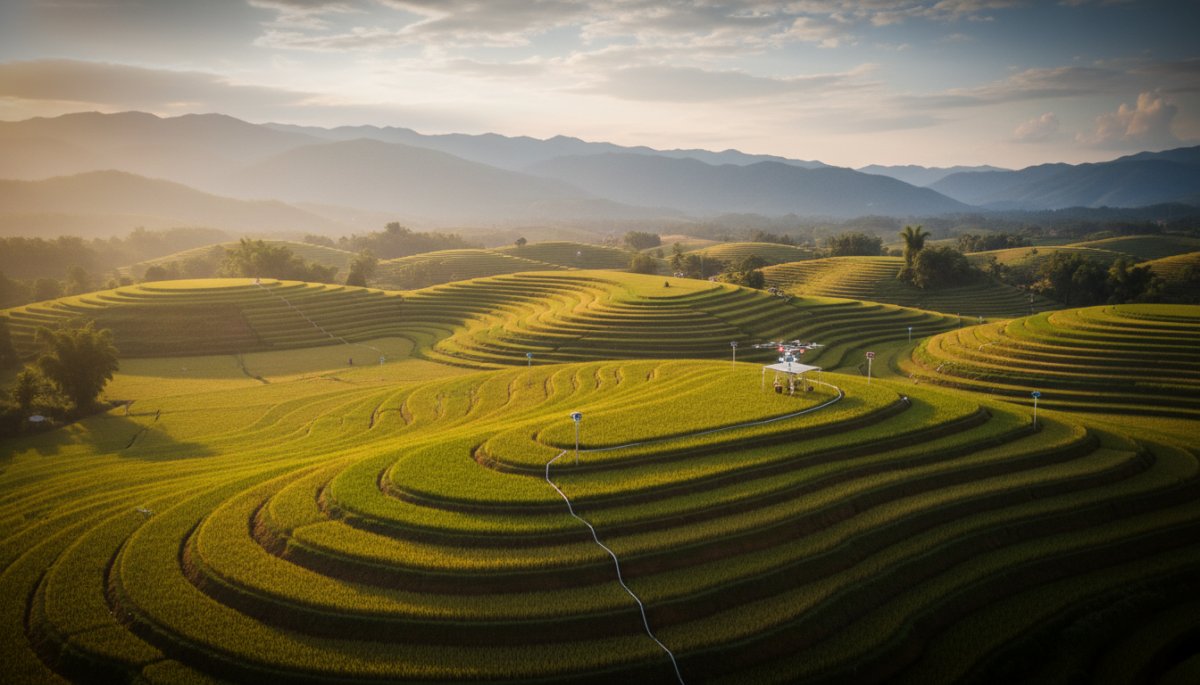
The Reality of the Labor Shortage Facing Southeast Asian Agriculture
Southeast Asia is known as an agricultural region of global importance.
Supported by a tropical monsoon climate and fertile delta regions, it has a farming civilization spanning thousands of years. In Vietnam, more than 40% of the workforce, out of a population of about 100 million, is engaged in agriculture, accounting for about 12% of GDP. Thailand is known as the "kitchen of the world," with about 30% of the population engaged in agriculture-related work.
At present, however, agriculture in this region faces structural challenges.
In Vietnam, about 57% of agricultural workers are unskilled, and those aged 50 and over account for about 43%. Young people migrate to urban manufacturing and service industries, and the structure in which elderly people remain in rural areas is becoming entrenched. A similar trend is seen in Thailand, and amid the challenge of farmers' debt problems, securing the next generation of successors is called for.
An Overview of Automation Technologies for Resolving Labor Shortages
Automation in Southeast Asian agriculture is not mere mechanization.
An integrated approach combining multiple cutting-edge technologies—robotics, IoT sensors, AI, drones—is called for. According to the definition of smart agriculture promoted by Japan's Ministry of Agriculture, Forestry and Fisheries, its essence is "a new form of agriculture that uses robotics and ICT to achieve ultra-labor-saving, high-quality production."
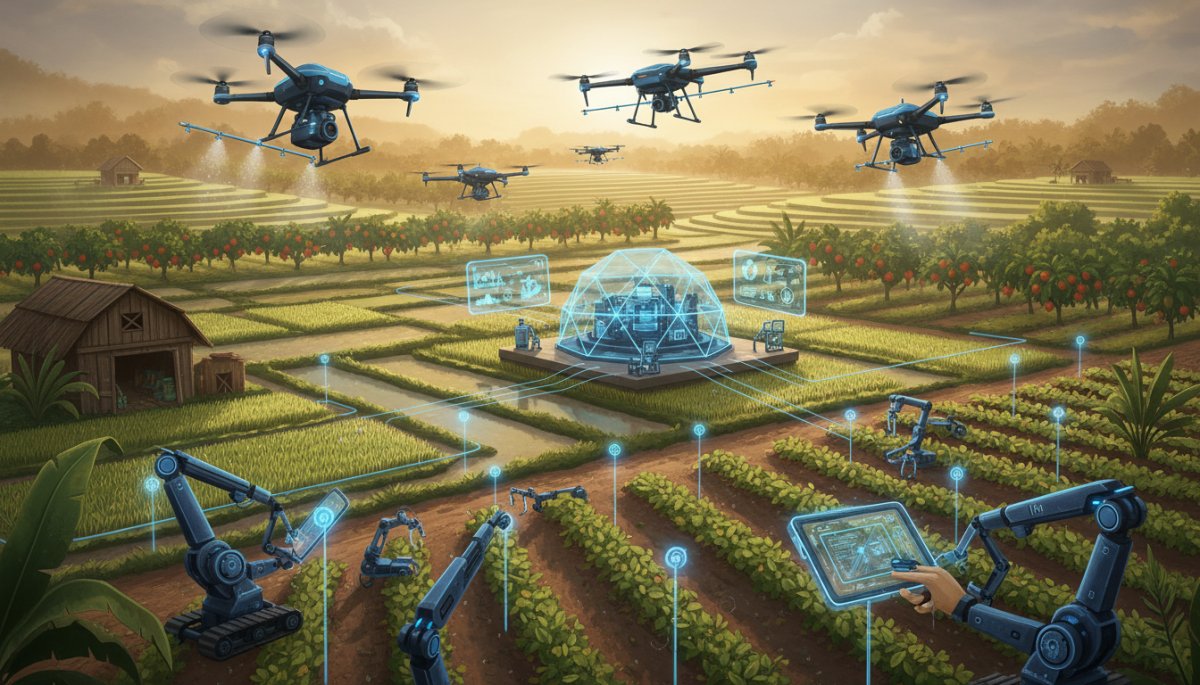
A distinctive feature of Southeast Asia is that small and medium-scale farmers make up the overwhelming majority. In Vietnam, 97% of all agricultural workers are small and medium-scale farmers, and the average cultivated area per farm is about 0.44 hectares, among the smallest in ASEAN. For this reason, it is difficult to introduce Western-style automation technologies premised on large-scale agriculture as is, and the key is the spread of low-cost, practical technologies suited to smallholders.
Japan has a track record in smart farming technology for small and medium-scale farmers, and this expertise is increasingly being applied to its rollout in Southeast Asia.
Technology 1: Labor-Saving Cultivation with Self-Driving Tractors
Self-driving tractors are a leading example of precision farming, combining GPS and sensor technology.
They travel unmanned along a preset route, automatically performing work such as tilling and puddling. In Japan, "Guidelines for Ensuring the Safety of Autonomous Travel of Agricultural Machinery" have been established, and as of March 2026, practical use is advancing. In Southeast Asia, too, adoption is beginning, centered on large-scale farmers in Thailand and Vietnam.
Applicability to Small and Medium-Scale Farmers
The challenge is the high initial investment.
Because large self-driving tractors cost from several million to over ten million yen, it is not realistic for smallholders to adopt them on their own. What is drawing attention is the "agricultural support service" model, in which multiple farmers share machinery. In Japan, as a next-generation agricultural support service, contracted work and leasing of drones and self-driving farm machinery is spreading, and this mechanism is being rolled out in Southeast Asia as well.
The Effects of Adoption
Cases have been reported in which the adoption of self-driving tractors reduces work time by 30 to 50% compared with conventional methods. In addition, because high-precision work becomes possible even for non-experts, effectiveness is anticipated in Southeast Asia, where there are many unskilled workers. Night work also becomes possible, and during the busy season labor shortages it is also drawing attention as a means of making up for labor shortages.
Technology 2: Drone-Based Pesticide Spraying and Field Monitoring
Agricultural drones are one of the automation technologies whose adoption is advancing in Southeast Asia.
Japan's Ministry of Agriculture, Forestry and Fisheries has drawn up a "Plan for Expanding the Spread of Agricultural Drones" and established a public-private council to advance the standardization of technology and the securing of safety. In Southeast Asia, too, government-led adoption support is being carried out, centered on Thailand and Taiwan.
Making Pesticide Spraying More Efficient
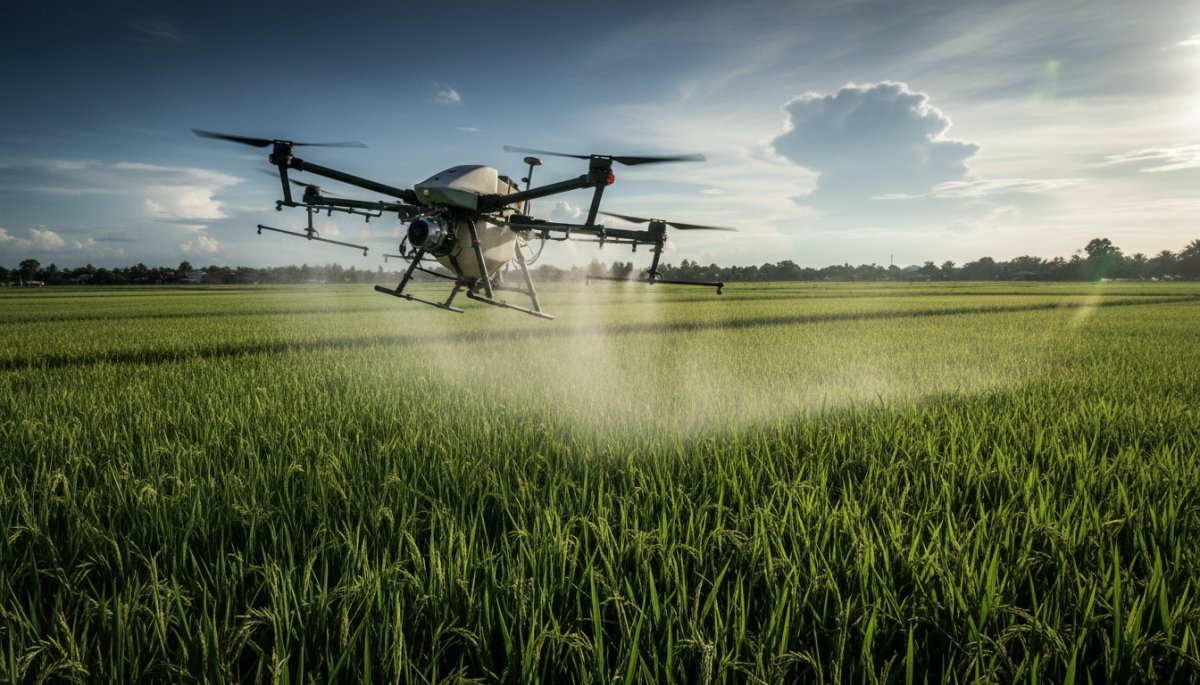
Compared with conventional manual work or ground-based spraying machines, drones shorten work time. Spraying is completed in about 10 to 15 minutes per hectare, helping to ease labor shortages. They also reduce the burden of work during hot periods and bad weather, improving working conditions.
Field Monitoring and Precision Farming
With multispectral and thermal cameras mounted on drones, the growth status of crops and the outbreak of pests and diseases can be detected early. Combined with AI-based image analysis, "variable-rate fertilization"—applying pesticides or fertilizer only where needed—becomes possible, achieving cost reduction and lower environmental impact at the same time.
Technology 3: Environmental Monitoring and Automated Irrigation with IoT Sensors
IoT sensor technology measures soil moisture, temperature, humidity, sunlight, and the like in real time and sends the data to the cloud.
Systems that automatically irrigate and fertilize based on this data are being introduced in Southeast Asia's paddy fields and Protected horticulture other farmland. Automatic irrigation-and-fertilization systems such as "ZeroAgri," developed in Japan, are offered at a price range even small and medium-scale farmers find easy to adopt.
Optimizing Water-Resource Management
In Southeast Asia, water shortages in the dry season and flooding in the rainy season are challenges due to the effects of climate change. In Vietnam's Mekong Delta, saltwater intrusion is advancing, and conventional water-management methods are becoming hard to apply. Precise water management via IoT sensors is drawing attention as a means of efficiently using limited water resources.
The Labor-Time Reduction Effect
There are reports that the adoption of automated irrigation systems has reduced the labor time spent on watering by more than 80%. Protected horticulture In such operations, being freed from nighttime and early-morning watering reduces the labor burden.
Technology 4: Cultivation-Support Systems Using AI and Big Data
Cultivation-support systems combining AI and satellite imagery are bringing change to Southeast Asian agriculture.
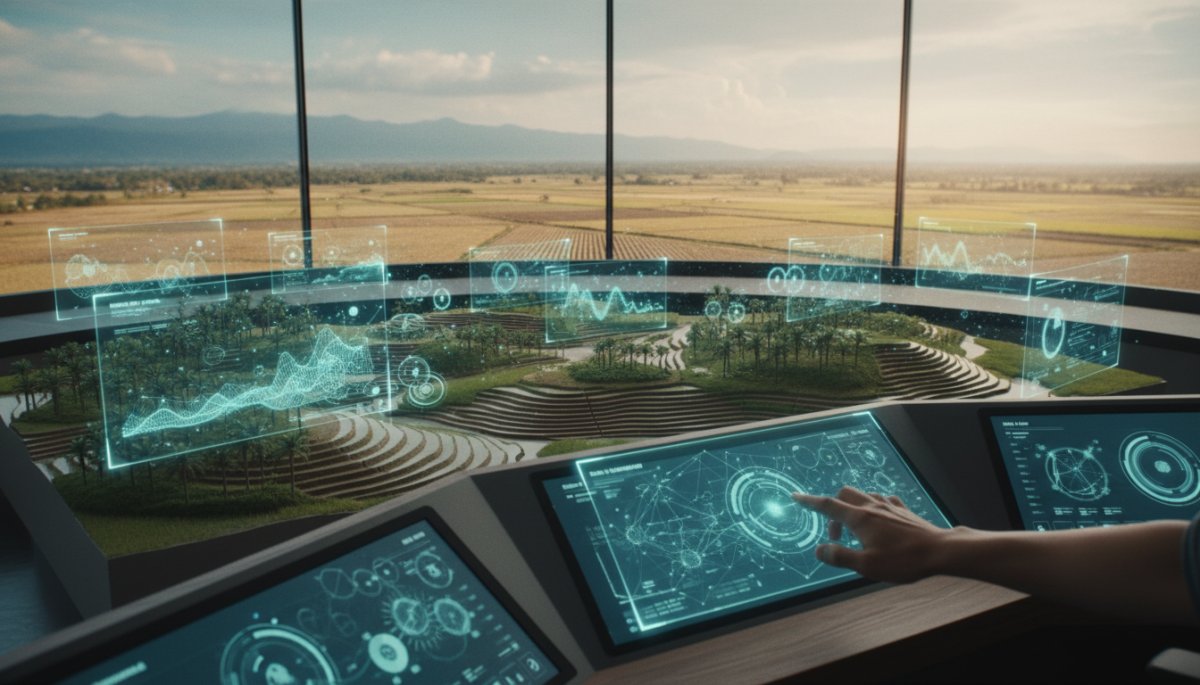
A representative system is "Xarvio," which is widely used in Japan. Using satellite imagery and AI analysis, it visualizes the growth status of each field and suggests the optimal timing for fertilization and pesticide spraying. Because it can be used on a smartphone, it is easy to use even for elderly people and beginners.
Pest and Disease Prediction and Early Response
AI-based pest and disease prediction systems analyze weather data and past outbreak history to warn in advance of the risk of pest and disease outbreaks. This makes preventive pesticide spraying possible and helps limit damage. In Southeast Asia, where the hot, humid climate leads to many pest and disease outbreaks, the effect of adopting this technology is anticipated.
Yield Prediction and Sales Planning
AI-based yield prediction combines growth data and weather forecasts to predict harvest timing and yield. This makes it possible to draw up sales plans in advance and reduce the risk of market-price fluctuations.
Technology 5: Automating Harvest Work with Harvesting Robots
Harvest work is one of the labor-intensive processes in agriculture.
In Japan, vegetable harvesters for cabbage, lettuce, and the like have been developed, achieving harvesting that features on-board sorting and preparation and collection into large containers. In Southeast Asia, too, the adoption of robotics for harvesting fruit such as bananas and pineapples is being considered.
The Potential of Fruit-Harvesting Robots
Fruit harvesting was a field difficult to fully automate because it requires judgments of shape and ripeness. In recent years, however, harvesting robots combining image-recognition AI and robotic arms have been developed and have succeeded in harvesting strawberries, tomatoes, and the like. Application to bananas and pineapples, major Southeast Asian export products, is also anticipated.
Adoption Challenges and the Sharing Model
The initial investment in harvesting robots is high, but a sharing model that rents them only during the harvest period is effective. By using them jointly among multiple farmers, the effects of adoption can be gained while spreading out the cost.
Technology 6: Farm-Work Records and Management via Smartphone Apps
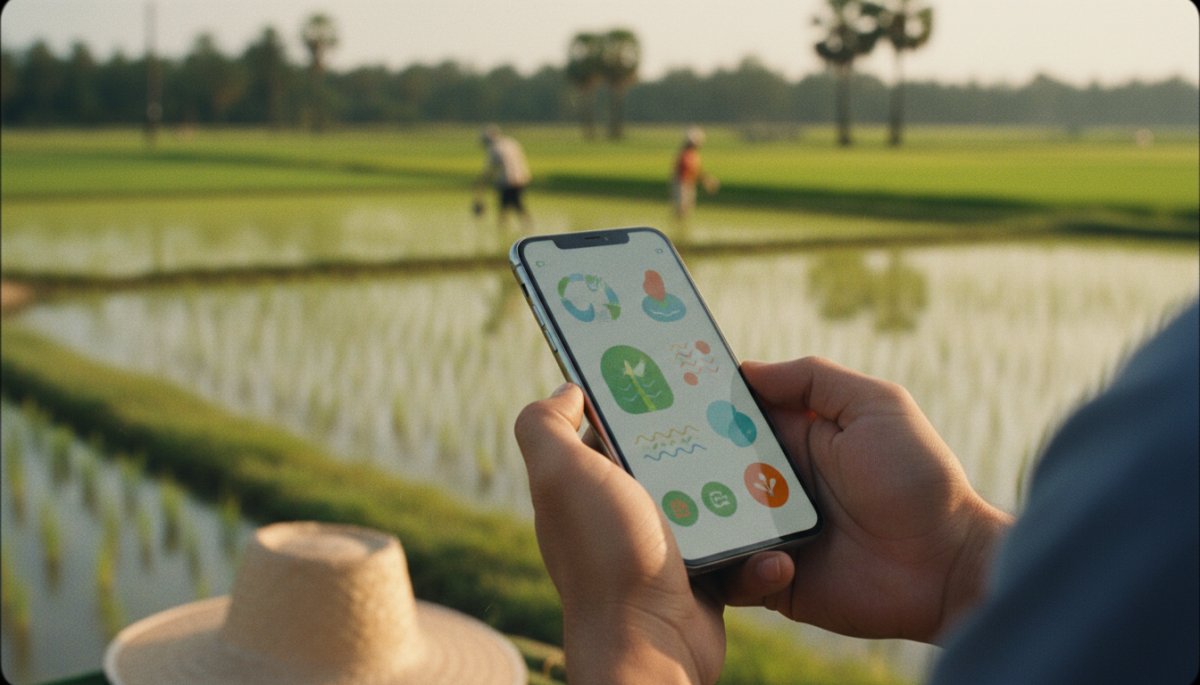
Smartphone penetration is high in Southeast Asia, and ICT agriculture using apps is spreading in the agricultural sector as well.
Record-keeping apps developed in Japan, such as "AgriNote" and "AgriHub," make it easy to record farm work, manage materials, and calculate income and expenses. In Thailand and Taiwan, government-led traceability apps have been introduced, developing mechanisms to disclose produce production history to consumers.
Traceability and Food Safety
Traceability systems using blockchain technology make it possible to track the history of produce from production to distribution. This makes export to markets with strict food safety standards, such as the EU and export to Japan easier, leading to improved revenue for farmers.
Visualizing Management Data
Visualizing management data through apps supports farmers' decision-making. Because it is possible to grasp in figures which crops are more profitable and which materials are more effective, it can be used to improve management.
Technology 7: AR-Based Farm-Work Support and Skills Transfer
Farm-work support apps using AR (augmented reality) technology are helping to solve the challenge of skills transfer.
Even beginners and elderly people can visually learn the work procedures of skilled farmers through AR glasses or smartphones. In Japan, systems that teach techniques such as pruning and grafting with AR have been developed, and their rollout in Southeast Asia is also being considered.
Remote Guidance and Human-Resource Development
With AR technology, it becomes possible to receive real-time guidance from experts in remote locations. This allows agricultural techniques to be learned even in regions where specialists are in short supply.
Technology 8: Environmental-Impact-Reduction Technology Through Precision Farming
Automation in Southeast Asian agriculture is also closely linked to reducing environmental impact.
The "Japan-ASEAN Green Cooperation Plan," adopted at the Japan-ASEAN Ministerial Meeting on Agriculture and Forestry in May 2023, is a comprehensive framework of cooperation aiming to build sustainable agriculture and food systems in the Asian monsoon region. The international rollout of the environmental-impact-reduction technologies set out in Japan's Strategy for Sustainable Food Systems (MIDORI) positions ASEAN as its most important partner.
Reducing Methane Emissions from Paddy Fields
Paddy fields are a major source of methane, a greenhouse gas. By introducing precise water management via IoT sensors and alternate wetting and drying (intermittent irrigation), methane emissions can be reduced. Japanese technology is increasingly being applied to paddy-field management in Southeast Asia.
Supporting the Transition to Organic Farming
Reducing the use of chemical pesticides and fertilizers is important both for lowering environmental impact and for raising added value. Thailand has a relatively advanced framework for organic farming in Southeast Asia, operating a certification system under the "Organic Agriculture Standard of Thailand." Automation technology is expanding the potential to maintain productivity even in organic farming.
Source Ministry of Agriculture, Forestry and Fisheries, "On the Situation Surrounding Smart Agriculture" Created based on the above (March 2026).
Steps for Adopting Automation Technology and Keys to Success
When small and medium-scale farmers in Southeast Asia adopt automation technology, a phased approach is important.
Step 1: Analyze the Current Situation and Clarify the Challenges
First, analyze which work on your own farm is the most labor-intensive and where the bottlenecks are. Is it harvesting, watering, or pesticide spraying? Clarifying the challenges reveals the priority order of the technologies to adopt.
Step 2: Start by Adopting Low-Cost Technology
To keep initial investment down, it is realistic to start with relatively low-cost technologies such as smartphone apps and IoT sensors. After accumulating data with these technologies and experiencing their effects, consider introducing more expensive machinery and robots.
Step 3: Joint Use and Sharing
Expensive machinery can have its cost spread out by purchasing it jointly among multiple farmers or using agricultural support services. In Japan, the Farmland Intermediary Management Organization supports farmland consolidation, and similar mechanisms are taking shape in Southeast Asia as well.
Step 4: Leverage Government Support and International Cooperation
The Vietnamese government has set out its "Strategy for Sustainable Agriculture and Rural Development to 2030, with a Vision to 2050," positioning the adoption of smart agriculture as a national priority. Adoption costs can be reduced by using each country's subsidy programs and international cooperation programs, including those with Japan.
Step 5: Continuous Learning and Improvement
Adopting automation technology is not the end of the story. Effects are realized by continuing to analyze data and improve operations. An attitude of continuously learning the technology and improving management—using AR technology and remote guidance—is the key to success.
The Future Brought by the Automation of Southeast Asian Agriculture
Automation in Southeast Asian agriculture labor shortages does not stop at resolving labor shortages.
A stable supply of high-quality produce, reduced environmental impact, farmers'raising incomes income improvement, encouraging young people to enter farming, and other multifaceted effects are anticipated. Vietnam has set a goal of entering the world's top 15 in agriculture and food processing by 2030, and automation technology holds the key to realizing it.
Japan's smart farming technology for small and medium-scale farmers has the potential to fit the realities of Southeast Asia, and its rollout ahead is drawing attention. Through technology transfer and human-resource development via the "Japan-ASEAN Green Cooperation Plan," the building of sustainable agricultural systems is likely to advance.
Vietnam with 100 million mouths to feed, Indonesia with 280 million, Thailand with 70 million. The process by which these countries' agriculture advances and becomes deeply integrated into global value chains is an important element in discussing the Asian economy of the twenty-first century.
The landscape of Southeast Asia's rural areas is now in the midst of transformation. The adoption of automation technology will be a driving force that accelerates that change.
There is a first step toward automation you can take on your own farm starting today. Why not begin by analyzing your current situation and considering adoption from small-scale technologies?
You May Also Like
- Why Is AI Adoption Advancing in Southeast Asian Agriculture? 7 Methods for Boosting Productivity
- How to Make Southeast Asian Agriculture More Efficient? 9 Practical Methods for Boosting Productivity
- How to Solve the Labor Shortage in Southeast Asian Agriculture? 8 Effective Measures and Case Studies

