The astonishing advance of Vietnamese coffee
Vietnam produces as much as about 1.88 million tonnes of coffee beans a year, an agricultural powerhouse boasting the world's second-largest production after Brazil. Why has a Southeast Asian country been so successful in the coffee industry? Behind it were the blessings of the natural environment, strategic policy, and the efforts of producers.
This article explains in detail the whole picture of Vietnam's coffee industry, from the current state of production, to the eight factors that built its second-place position in the world, to the latest trends. It is suggestive content not only for coffee lovers but also for those interested in agricultural business and international trade.
The numbers behind the world's second-largest production
Vietnam's coffee production is a presence that cannot be ignored in the world coffee market. Vietnam holds the world's largest position in Robusta production and plays an important role in the international market.
Until just a few decades ago, Vietnam was not a major coffee producer. But since the 1986 Doi Moi policy reforms, production increased dramatically, and in 2000 it won the world's second-place position.
Vietnam's total agriculture, forestry and fishery exports reached about US$53 billion in 2023, accounting for more than 15% of the country's total exports. Coffee, alongside rice, cashews, black pepper and shrimp, is a major export item and has become an important pillar supporting the Vietnamese economy.
Source Aizawa Investment University "Learn from Zero," "Latest Vietnam Information: No. 2 in the World for Coffee Production"(March 2025)
A production structure where Robusta makes up more than 90%
A feature of Vietnam's coffee production is that Robusta makes up the overwhelming majority. More than 90% of production is Robusta, and Arabica production is limited.
Robusta is strong against pests and disease, can be grown even in lowlands, and has high yields. On the other hand, compared with Arabica it is more bitter and less acidic, so some people feel its character is too strong to drink on its own. However, it is ideal as a raw material for blended coffee and instant coffee, and major coffee makers around the world buy Vietnamese Robusta.
Switzerland's Nestle is one of the major buyers of Vietnamese coffee beans, and these beans are processed and turned to domestic sale and export.
Source Institute of Developing Economies, "Challenges of Vietnam's Coffee Industry" Compiled from the above (February 2019)
Eight factors behind the expansion of Vietnamese coffee production
Why was Vietnam able to become a coffee powerhouse in a short time? Its success involves several intertwined factors.
Factor 1: The ideal growing environment of the Central Highlands
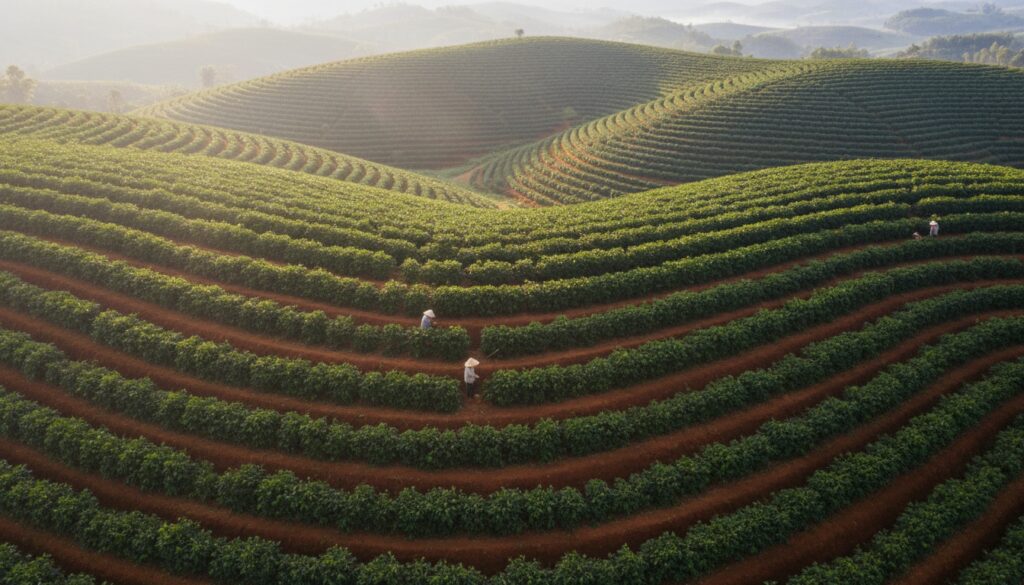
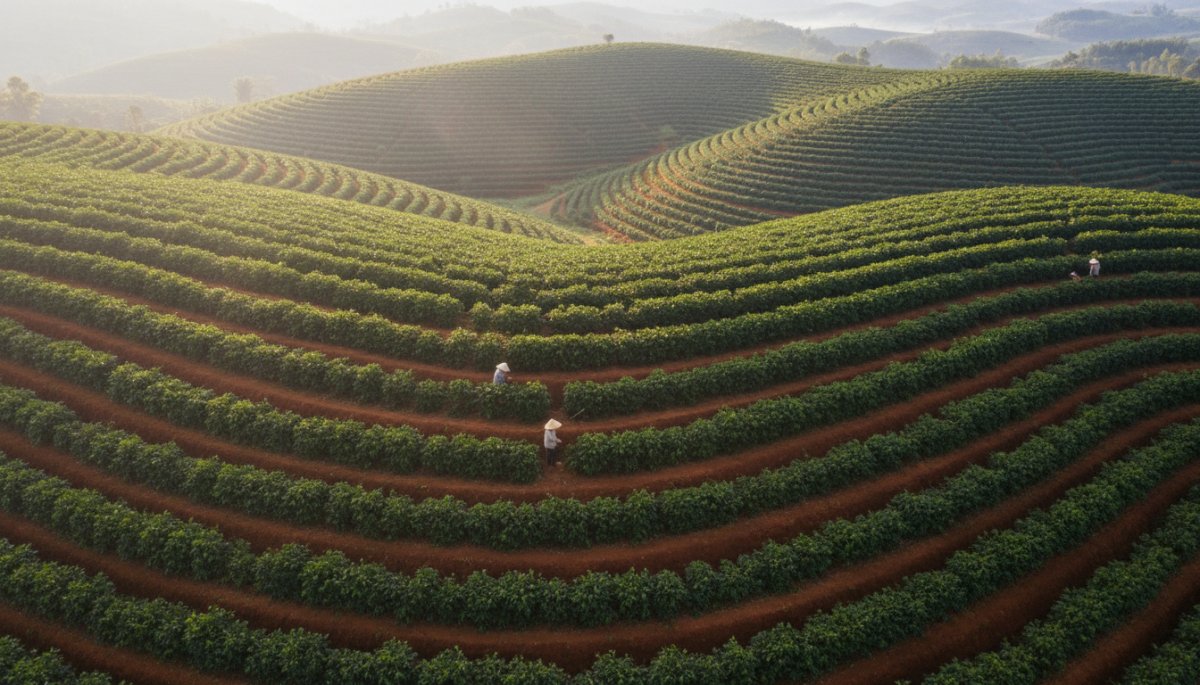
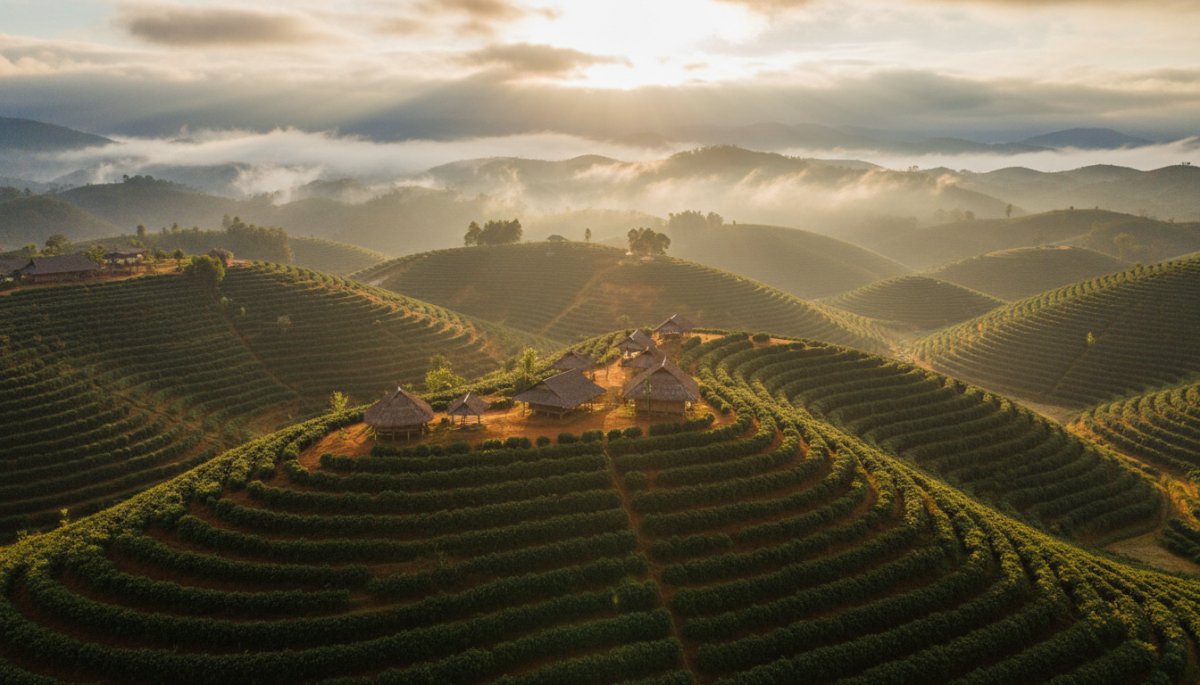
Most of Vietnam's coffee is grown in the Central Highlands zone. This region ranges from lowlands at 200 meters altitude to highlands and uplands of around 2,500 meters, and is one of the few growing areas where both Robusta and Arabica can be grown.
Especially in the region centered on Dak Lak and Lam Dong provinces, volcanic red soil called basalt soil spreads, and for coffee growing it holds conditions extremely well suited. Abundant rainfall, moderate sunshine and a warm climate make it possible to grow high-quality coffee beans.
Factor 2: Agricultural reform under the 1986 Doi Moi policy
What became the turning point for Vietnam's coffee industry was the 1986 Doi Moi policy. Under the earlier collective-farming system, farmers had low motivation to produce, and even rice production could not meet domestic demand.
When Doi Moi granted land-use rights to individual farmers and introduced a market economy, agricultural production expanded dramatically. In 1989 Vietnam turned into a net rice exporter for the first time, and coffee production also increased rapidly. The government led the promotion of Robusta cultivation, and in about 20 years it grew into the world's second-largest producer.
Factor 3: The strategic choice of Robusta
What the Vietnamese government, in its 1980s coffee growing plan chose was Robusta, strong against pests and disease. This choice determined the success of Vietnam's coffee industry.
Robusta is relatively easy to grow, has high yields, and was suited to large plantations. It also went well with the climate conditions of the Central Highlands, and production increased year by year. Today Vietnam holds the world's largest position in Robusta production.
Factor 4: Quality improvement through better sorting technology
In the early 2000s, Vietnam introduced machinery into the sorting that removes foreign matter such as stones and twigs, and defective beans such as broken and immature ones, from green coffee, greatly improving sorting accuracy.
The main criterion that determines the value of green coffee is the degree of foreign matter and defective beans mixed in. Better sorting technology improved the quality of Vietnamese coffee beans and raised their reputation in the international market. This led to a dramatic increase in export volume.
Source Institute of Developing Economies, "Challenges of Vietnam's Coffee Industry" Compiled from the above (February 2019)
Factor 5: The development of large-scale plantations
In Vietnam, large-scale coffee plantations were developed centered on the Central Highlands. An efficient production system making use of vast land has contributed to improving cost competitiveness.
Coffee cultivation, which began in the French colonial era, expanded rapidly after the Doi Moi policy and developed into large-scale commercial production. This economy of scale is one of the important factors that pushed Vietnam up to the world's No. 2 producer.
However, in Vietnamese agriculture as a whole, small farmers are the mainstream, and the average farm size is about 0.44 hectares, among the smallest in ASEAN countries. 97% of all farmers are small- and medium-scale, about 57% of farm workers are unskilled, and the share aged 50 or over reaches about 43%—it also faces challenges of aging and productivity.
Factor 6: Expanding access to international markets
Vietnam has strengthened trade relations with major coffee-consuming countries such as those in Europe and the United States and Japan. Most of the beans produced are exported as green coffee and roasted and processed in countries such as Germany and the United States.
As access to international markets expanded, stable sales channels were secured, and producers could expand cultivation with peace of mind. This underpins the sustained increase in production.
Factor 7: Responding to global coffee-price volatility
In recent years, world coffee-bean prices have become more volatile. Cases where the climate conditions of major producing countries, such as drought in Brazil, affect supply are increasing.
By maintaining a stable production system, Vietnam has established its position as an important supply source in the world market. Even amid price volatility, its quality and the stability of its supply are valued.
Source Aizawa Investment University "Learn from Zero," "Latest Vietnam Information: No. 2 in the World for Coffee Production"(March 2025)
Factor 8: Rising global demand for Robusta
As demand for instant coffee and blended coffee rises worldwide, demand for Robusta is also increasing. As the largest Robusta producer, Vietnam benefits from this rising demand.
In particular, expanding coffee consumption in emerging markets and the worldwide spread of cafe chains are pushing up demand for Robusta. Vietnam has become an important supply source meeting this market need.
Latest trends and challenges
Vietnam's coffee industry is expected to keep growing. But at the same time, it also faces several important challenges.
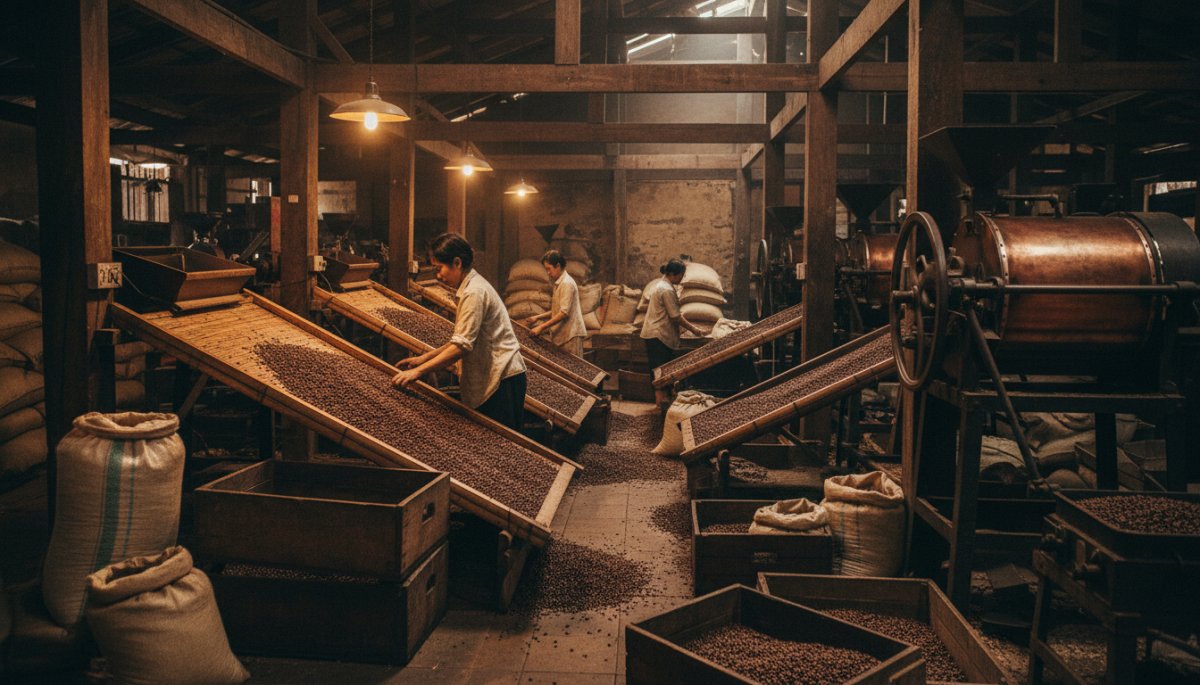
The challenge of raising added value
Currently, most of Vietnam's coffee exports are unprocessed green coffee. Exports as products with added value through processing are limited, and in the global value chain of coffee production, Vietnam remains positioned as a supplier of cheap raw material.
There are also points made that coffee-farming households are not getting enough of the profit returned to them. The Vietnamese government has set the development of the domestic processing sector as a policy goal and aims to be in the world's top 15 in agriculture and food processing by 2030.
In fact, the amount of green coffee used in domestic processing is on an increasing trend. The share of domestic processing, which was only 2.9% of total green coffee in 2000, expanded to about 14–16% by the late 2010s. In particular, the amount of green coffee used to produce regular coffee for domestic consumption and instant coffee for export has increased markedly.
Source Institute of Developing Economies, "Challenges of Vietnam's Coffee Industry" Compiled from the above (February 2019)
Expanding Arabica production
Although Robusta is the mainstream in Vietnam, in recent years it has also been putting effort into Arabica production. Da Lat (Lam Dong province), a highland town at 1,500 meters altitude about 300 kilometers northeast of Ho Chi Minh City, has become a major Arabica growing area.
With the expansion of Arabica cultivation, a style of drinking it straight has begun to draw attention within Vietnam too. In Da Lat and also in Hanoi and Ho Chi Minh City, new-wave cafes enjoying the high-quality flavor of Arabica have opened one after another, gaining popularity especially among young people.
The UCC Group has held a quality contest for Vietnamese Arabica every year since 2015, evaluating and honoring farmers who grow high-quality coffee beans, thereby encouraging growers' motivation and quality improvement.
Source UCC, "Vietnam, a Coffee Powerhouse Boasting the World's Second-Largest Production" prepared from
Responding to Climate Change
Climate change is a serious risk for Vietnam's coffee production. The increasing frequency of drought and abnormal weather may destabilize harvest volumes.
A shift to sustainable agriculture is called for, and the introduction of low-environmental-impact cultivation methods and the development of climate-resilient varieties are being advanced. To secure long-term production stability, these efforts are essential.
The "Japan–ASEAN Green Cooperation Plan," adopted at the Japan–ASEAN agriculture and forestry ministers' meeting in May 2023, is a comprehensive cooperation framework for building sustainable agriculture and food systems in the Asian monsoon region, and it may also be important support for Vietnam's coffee industry.
The growth of the domestic market
Vietnam is a producing country and at the same time growing as a consuming country. With rising incomes, advancing urbanization and the spread of cafe culture, domestic coffee consumption is increasing.
Rising domestic demand is gaining importance for producers as a new sales channel. The growth of the domestic market is a factor boosting the growth of Vietnam's coffee industry as a whole.
Source InCorp Vietnam「Vietnam Coffee Market in 2025」 prepared from
The position of Vietnamese coffee within Southeast Asian agriculture
Vietnam's coffee industry is a notable success stories. Vietnam is an agricultural powerhouse with a population of about 100 million, where agriculture accounts for about 12% of GDP and more than 40% of the working population is engaged in it.
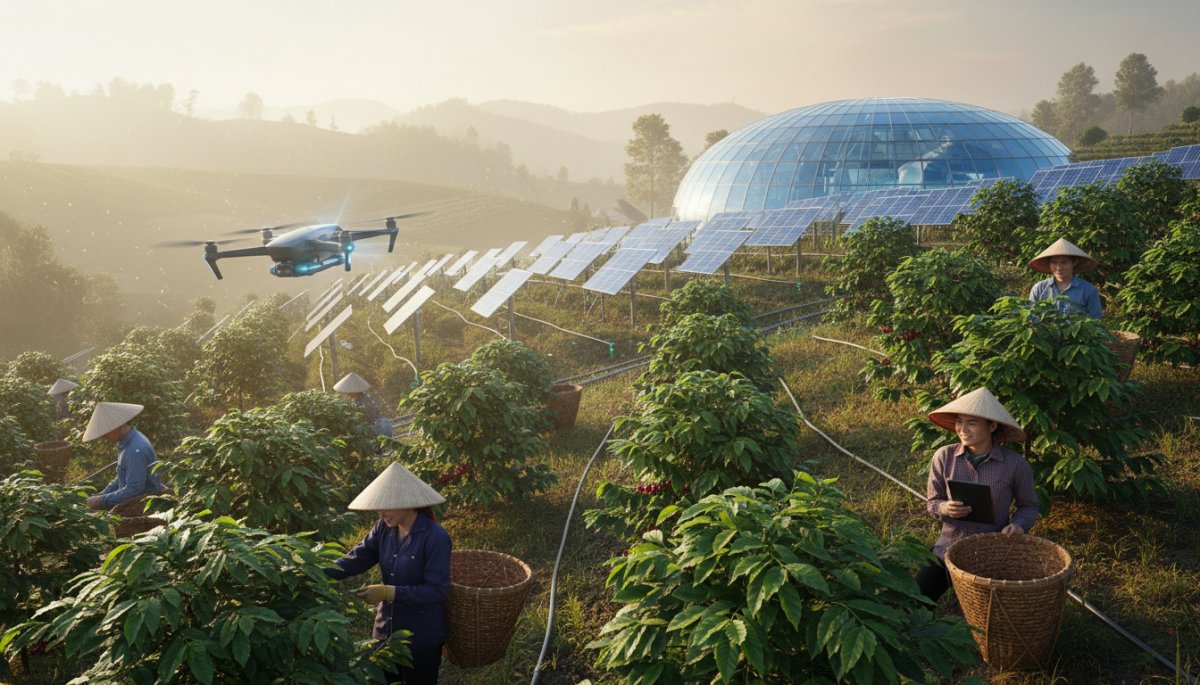
Coffee, alongside rice (annual production about 43.5 million tonnes, second in the world in exports), cashews (first in the world), black pepper(first in the world) and shrimp (third in the world in production, second in exports), is a major export item that has become an important pillar supporting the Vietnamese economy.
Looking across Southeast Asia as a whole, Thailand is an export powerhouse of agricultural products and food, called the "kitchen of the world"; its production and export of natural rubber are among the world's largest, and in processed chicken product exports too it is among the world's top class. Indonesia is Palm oil the world's largest producer of, and together with Malaysia it accounts for more than 85% of world output.
In this way, each Southeast Asian country develops agricultural production making use of its own strengths, and Vietnam's coffee industry can be said to be a representative success stories example of them.
Common challenges of Southeast Asian agriculture
On the other hand, Southeast Asian agriculture also has common challenges: vulnerability to climate change, the gap between agriculture and industry and the outflow of labor, and securing food safety and traceability, among others.
The Vietnamese government has set out a "Strategy for Sustainable Agriculture and Rural Development to 2030, with a Vision to 2050," positioning the adoption of smart farming as a national priority. In the coffee industry too, responding to these challenges is called for.
The future outlook for Vietnamese coffee
Vietnam's coffee industry has established the position of the world's second-largest production and will continue to play an important role. But true success depends not only on quantity but on raising quality and creating added value.
Expanding domestic processing, strengthening Arabica production, raising farmers' motivation through quality contests, and shifting to sustainable agriculture. If these efforts bear fruit, Vietnam holds the potential to evolve from a mere raw-material supplier into a brand country of high-quality coffee.
With global coffee demand expected to increase, Vietnam's role will become ever more important. Adapting to climate change, introducing technological innovation, and strengthening competitiveness in the international market—by tackling these challenges, Vietnam's coffee industry should advance to a new stage of growth.
Coffee lovers, too—next time you drink coffee, do imagine that the beans may have been grown in Vietnam's Central Highlands. The coffee of Vietnam, the world's second-largest producer, is deeply rooted in our daily lives.
If you want to know more about the appeal of Vietnamese coffee, or are interested in Southeast Asian agricultural business, do keep checking the latest information. The evolution of Vietnam's coffee industry remains something to watch.
You May Also Like
- What Is Coffee Growing in Vietnam's Central Highlands? 7 Secrets Behind the World's No. 2 Output
- What Are the Main Producers of Robusta Coffee? A Look at the Top 7 Countries, Including Vietnam and Indonesia
- A Guide to Asia's Coffee-Producing Regions: The Characteristics of the Main Producing Countries and 7 Ways to Raise Quality