The Current State and Potential of Vietnam's Seafood Exports
In Southeast Asia's seafood industry, Vietnam's presence is growing.
This country, with a population of about a hundred million, is the world's third-largest shrimp producer and ranks second in export volume. It also leads the world in the farming of the catfish known as pangasius (basa), achieving annual seafood exports of about US$9 billion. It has established export routes to major markets such as Japan, the United States, and the EU, becoming an important pillar of the country's overall exports.
But what lies behind this success? And for companies aiming to expand the market further, what strategies are effective?
This article provides a practical guide to succeeding in Vietnam's seafood export business. From the latest trends in major items such as shrimp and pangasius, to analysis of export-destination markets, quality control, and obtaining international certifications, we deliver comprehensive 2026-edition information.
Strategy 1: Accurately Grasp the Trends of Major Export Items
In discussing Vietnam's seafood exports, shrimp and pangasius cannot be left out.
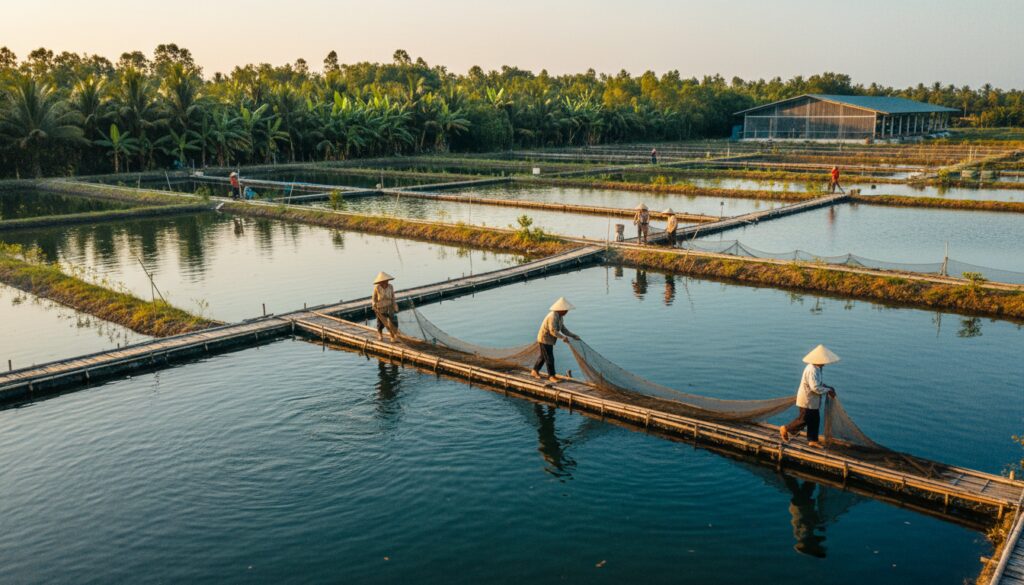
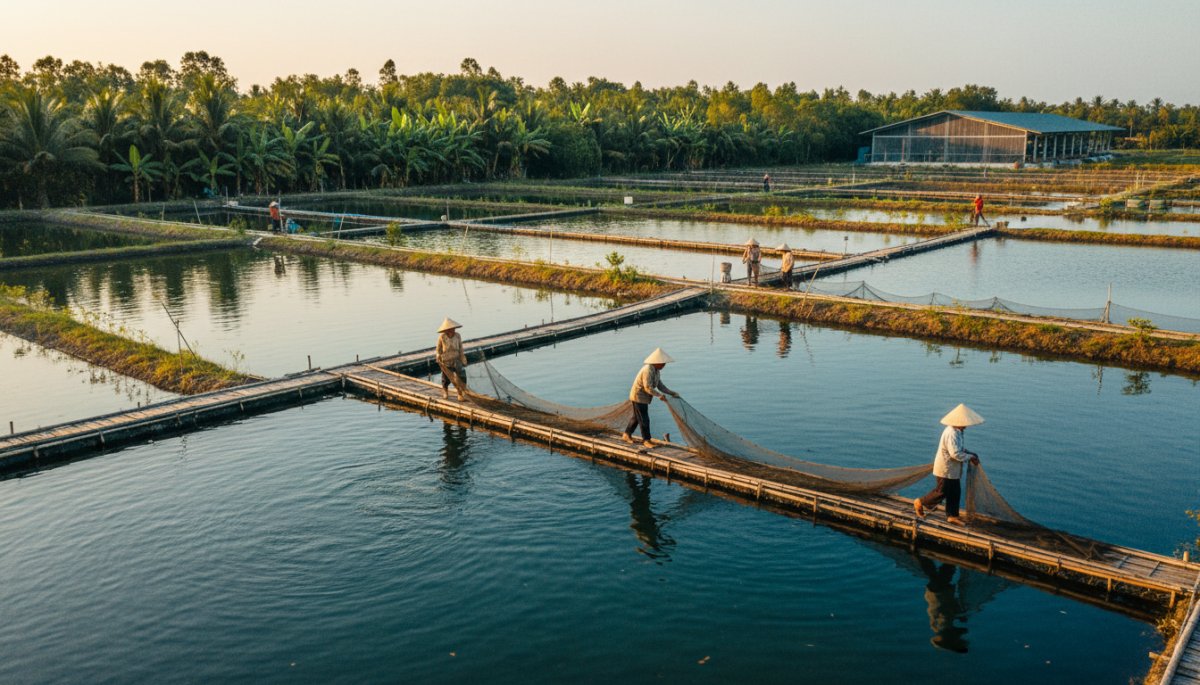
shrimp farming is carried out mainly in the Mekong Delta in southern Vietnam. This region is also one of the world's foremost granaries, accounting for more than half of domestic rice production, but it is at the same time a major hub for aquaculture. Varieties such as black tiger prawn and whiteleg shrimp are the mainstay, and they are especially highly rated in the Japanese market.
Pangasius farming also thrives in the freshwater areas of the Mekong Delta. Popular as a white fish in Western markets, its ease of processing and price competitiveness are strengths. However, out of concern over environmental burden and antibiotic use, a shift to sustainable farming methods is being called for.
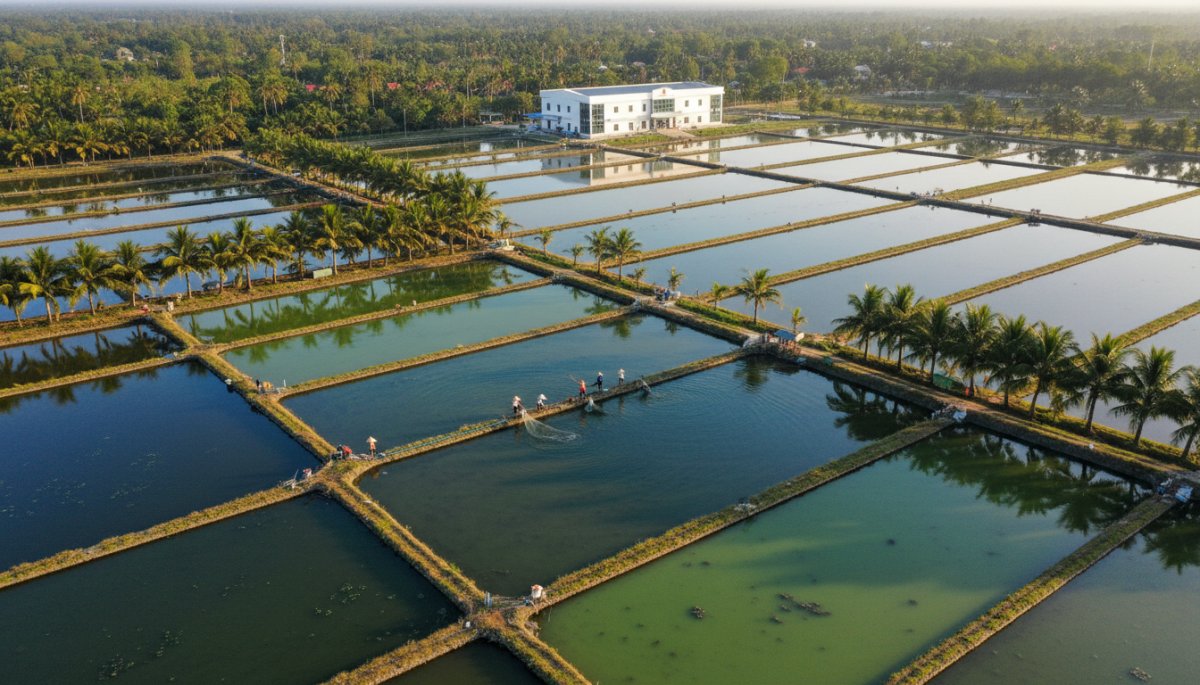
As a recent trend, a shift from merely expanding quantity to improving quality is pronounced. As the sanitary standards of export destinations grow stricter year by year, managing residual pesticides and antibiotics and ensuring traceability have become factors that determine competitiveness.
The Latest Trends in Shrimp Exports
Vietnam's shrimp industry, with the world's third-largest production and second-largest export volume. What are its strengths?
First, its high cost-performance can be cited. Compared with Thailand and Indonesia, Vietnamese shrimp has price competitiveness. Furthermore, export routes to high-value-added markets such as Japan and the United States are established, and it has earned a certain reputation on the quality front as well.
On the other hand, there are challenges: increased saltwater intrusion and flood risk from climate change, disease outbreaks, and tighter environmental regulation. The Mekong Delta lies at a low elevation and is readily affected by rising sea levels. Building a sustainable farming model is the key to maintaining competitiveness over the long term.
The International Competitiveness of Pangasius
Pangasius farming, in which Vietnam leads the world. What are the factors behind its success?
First is the geographic advantage of being able to make use of the Mekong River's abundant freshwater resources. Second is that improved farming technology and scaling up have made stable supply possible. Third is that advances in processing technology have put in place a system to export worldwide as fillets and frozen products.
However, in international markets the image of "cheap white fish" has taken hold, and raising added value is a challenge. Obtaining organic and sustainability certifications and strengthening branding will be important as a differentiation strategy going forward.
Strategy 2: Deeply Understand the Characteristics of Export-Destination Markets
To which market, what kind of product, and in what form to deliver it.
In Vietnam's seafood exports, the major destinations are the three poles of Japan, the United States, and the EU. Each market has different characteristics and required standards, and a uniform strategy will not succeed.
The Japanese Market: Thoroughgoing Attention to Quality and Safety
Japan is one of the world's foremost seafood-importing countries and, for Vietnam, one of the most important markets.
The feature of the Japanese market is its extremely high required standards for quality and safety. Residual-pesticide standards, antibiotic testing, and ensuring traceability are essential conditions. Furthermore, maintaining quality across the entire supply chain is required, including freshness management, packaging, and temperature control during distribution.
On the other hand, the Japanese market is willing to pay an appropriate price for high-value-added products. Products that have obtained organic or ASC (Aquaculture Stewardship Council) certification, or that highlight a specific growing region or farming method, can be sold at a premium price.
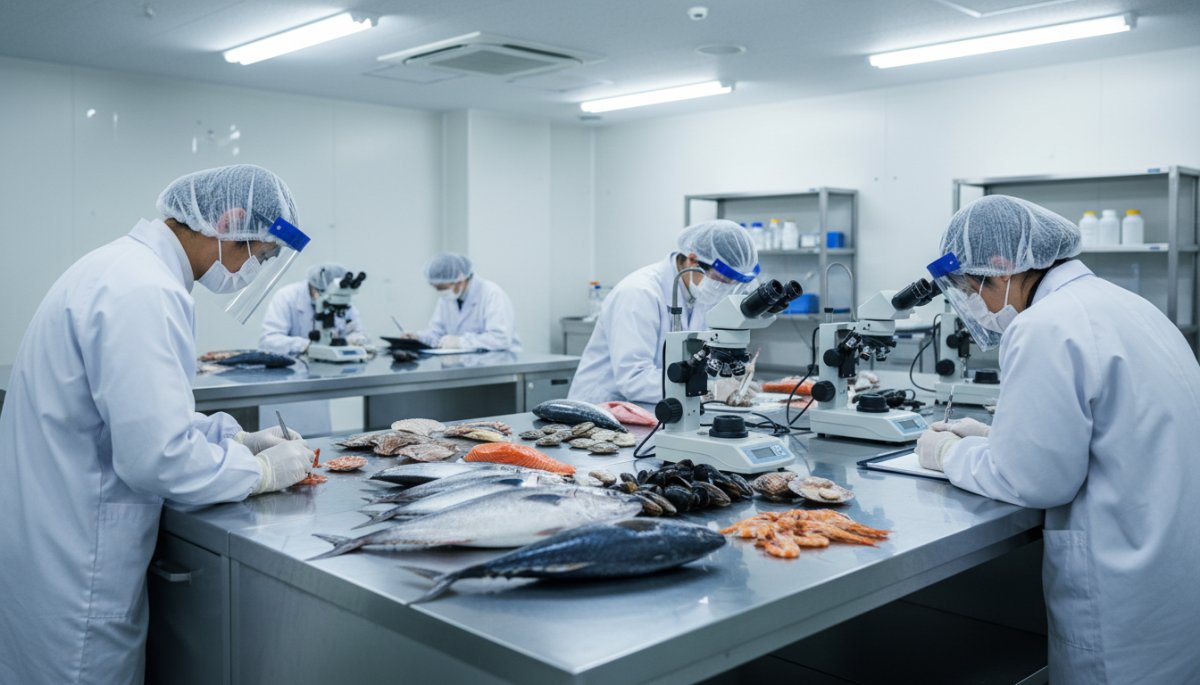
For exports to Japan, a system based on HACCP (Hazard Analysis and Critical Control Points)Sanitary management is the basis. Certifying the processing facility and obtaining sanitary certificates — reliably carrying out the necessary procedures is a precondition for continuous transactions.
The American Market: Making Use of Scale and Diversity
The United States is the world's largest seafood-importing country and has an enormous market scale.
The feature of the American market is the presence of diverse consumer segments and distribution channels. A wide range of needs exists, from high-quality products for upscale restaurants to mass-produced goods for supermarkets. The presence of ethnic markets, such as Hispanic and Asian, is also large.
Complying with FDA (US Food and Drug Administration) regulations is essential, but especially important is responding to SIMP (the Seafood Import Monitoring Program). For specific items such as shrimp and pangasius, the submission of detailed traceability information is mandated in order to prevent illegal fishing and origin fraud.
The EU Market: Sustainability and Environmental Consideration
The EU is the market with the strictest demands for environmental regulation and sustainability.
To succeed in the EU market requires not only quality and safety but also reducing environmental burden, improving the working environment, and giving consideration to social responsibility. Obtaining MSC (Marine Stewardship Council) or ASC certification is a powerful weapon for entering the EU market.
Also, the EU's standards for residual pesticides and antibiotics are extremely strict, and if a product fails inspection, harsh measures such as import suspension or fines are taken. Prior quality control and a well-developed inspection system are the keys to avoiding risk.
Strategy 3: Thoroughly Strengthen the Quality-Control System
To compete in international markets, quality control is everything.
In Vietnam's seafood exports, a lapse in quality control triggers fatal problems. Import suspension, cancellation of transactions, damage to brand image — once trust is lost, it is not easy to win back.
Implementing HACCP-Based Sanitation Management
HACCP (Hazard Analysis and Critical Control Points) is an international management method for ensuring food safety.
At Vietnam's seafood-processing facilities, the introduction of HACCP is advancing. From receiving raw materials, through processing, packaging, and shipping, hazard factors are identified at each step and critical control points are set. Detailed management is required, such as temperature control, prevention of cross-contamination, and sanitation education for employees.
For exports to Japan, certification of the processing facility is essential. The flow is to apply to the department in charge of the fishery industry in the prefecture, undergo facility registration by the Vietnamese government, and obtain a sanitary certificate issued by the exporting country's government. Reliably carrying out this procedure is the first step to entering the Japanese market.
Source
Ministry of Agriculture, Forestry and Fisheries, "Please tell me the procedures required to export seafood to Vietnam"
(as of May 1, 2024) prepared from the above
Building a Traceability System
Where, by whom, and how it was produced.
Traceability (the ability to track the production history) is the foundation of food safety and consumer trust. In Vietnam, the introduction of origin-tracking systems using blockchain technology has been attempted in recent years. It is an effort to digitally record information at each stage — from the farming pond to the processing facility and the export port — to ensure transparency.
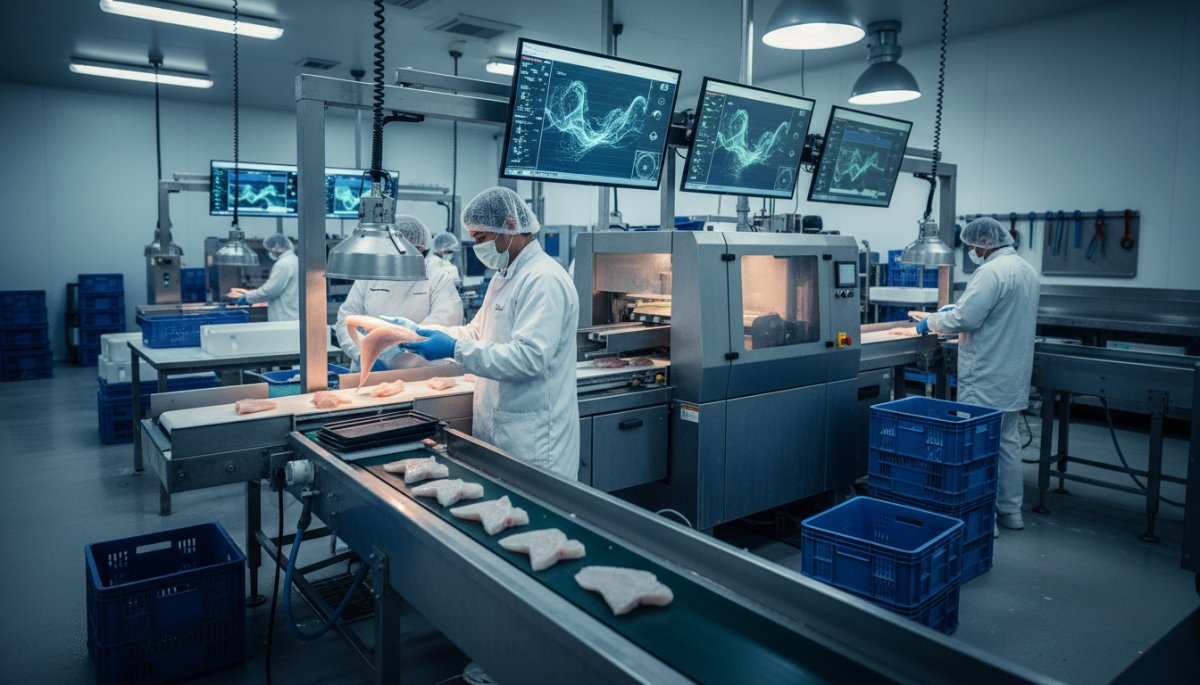
For exports to the United States in particular, submitting traceability information is mandated as part of responding to SIMP. A system to record and retain detailed information — the location of the farm, the feed used, the harvest date, the processing date, and so on — is indispensable.
Residual-Substance Testing and Quality Analysis
To meet the standards of export destinations, self-inspection is indispensable.
Pre-shipment inspection must be carried out thoroughly so that residual pesticides, antibiotics, heavy metals, and the like do not exceed the standard values set by each country. Vietnam has several domestic inspection bodies that provide analysis services conforming to international standards.
For exports to the EU in particular, the standards are extremely strict. Conducting inspection in advance and confirming that values are below the standard before shipping can minimize the risk of failing inspection at the time of import.
Strategy 4: Obtain International Certifications Strategically
Certification is proof of quality and the key to market entry.
Obtaining international seafood certifications raises product credibility and makes access to high-value-added markets possible. Especially in EU-market and upscale-restaurant transactions, the presence or absence of certification often becomes a condition of the deal.
ASC Certification: Proof of Sustainable Aquaculture
ASC (Aquaculture Stewardship Council) certification is an international certification proving aquaculture that gives consideration to the environment and society.
To obtain ASC certification, strict standards must be met, such as reducing environmental burden, the sustainability of feed, improving the working environment, and consideration for the local community. Obtaining the certification takes time and cost, but in the EU market and at high-end supermarkets in North America, demand for ASC-certified products is rising.
In Vietnam, too, obtaining ASC certification is advancing at shrimp and pangasius farms. Obtaining the certification makes sales at a premium price possible and leads to strengthened competitiveness over the long term.
GAP Certification: Practicing Good Aquaculture Practices
GAP (Good Aquaculture Practices) is a standard for practicing safe and sustainable aquaculture.
The Vietnamese government also promotes the spread of GAP certification, encouraging the obtaining of the international standard (GlobalGAP) in addition to the domestic standard (VietGAP). GAP certification proves proper management in each aspect of aquaculture, such as feed management, water-quality management, disease countermeasures, and record keeping.
In the Japanese market in particular, products that have obtained GAP certification are highly rated. Trust in safety and quality leads to building continuous trading relationships.
Organic Certification: A Challenge for the Premium Market
Organic seafood is the market segment with the highest added value.
To obtain organic certification, extremely strict standards must be met, such as not using synthetic pesticides or antibiotics, using organic feed, and giving consideration to the environment. The hurdle for obtaining certification is high, but demand from the health-conscious consumer segment in Europe and North America certainly exists.
In Vietnam, the production of organic shrimp and organic pangasius has begun on a trial basis. The market scale is still small, but the potential as a differentiation strategy is large.
Strategy 5: Establish a Cold Chain
Seafood, for which freshness is everything. What preserves its value is the cold chain.
In Vietnam's seafood exports, the undeveloped cold chain (low-temperature logistics) has become a major challenge. If proper temperature control is not carried out after harvest, quality deterioration and discard occur, greatly squeezing profits.
Rapid Processing After Harvest
The time from harvest to processing determines quality.
Shrimp and pangasius need to be stored and transported at an appropriate temperature immediately after harvest. When the distance from the farm to the processing facility is long, mobile refrigerated trucks and the use of ice are indispensable. Especially in Vietnam's tropical climate, leaving them at room temperature rapidly advances quality deterioration.
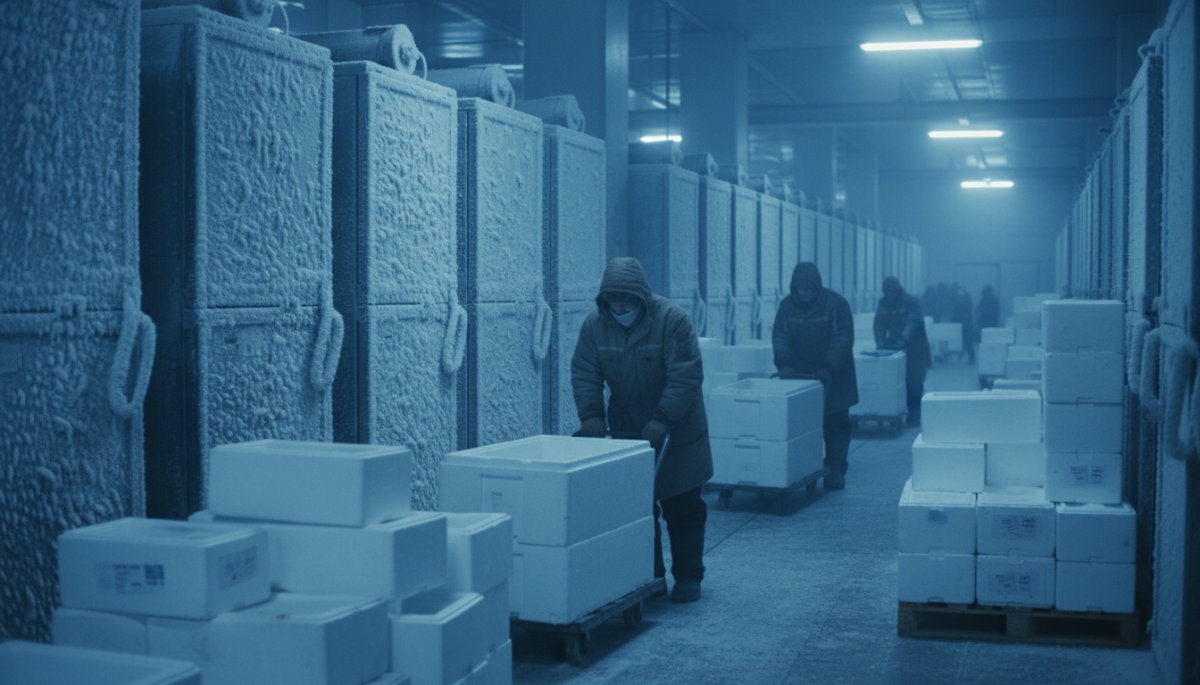
At the Mekong Delta's farms, a system is being put in place to pack the catch in ice immediately after harvest and bring it into the processing facility within a few hours. This rapid processing makes the supply of high-quality products possible.
Refrigeration and Freezing Equipment at Processing Facilities
Temperature control at the processing stage is also important.
At HACCP-compliant processing facilities, appropriate temperature control is carried out at each step, from receiving raw materials through processing, packaging, and storage. By introducing quick-freezing equipment, cell destruction can be minimized and post-thaw quality maintained.
For high-quality products bound for the Japanese market in particular, ultra-low-temperature freezing of minus 60 degrees or below is sometimes required. Capital investment is necessary, but investment recovery is possible through sales at a premium price.
Temperature Control in Transport and Storage
From the processing facility to the export port, and then to the importing country.
For sea transport in refrigerated containers, a temperature of minus 18 degrees or below must be maintained. Installing temperature-recording devices and monitoring temperature fluctuations during transport makes quality assurance possible.
Even during customs clearance, storage, and delivery in the importing country, continuing the cold chain is indispensable. Exporters and importers cooperating to build a temperature-control system across the entire supply chain leads to the stable supply of high-quality products.
Strategy 6: Introduce Processing Technology That Raises Added Value
From quantity to quality. This is a turning point for Vietnam's seafood industry.
The Vietnamese government has set a goal of entering the world's top 15 in agriculture and food processing by 2030. For seafood too, a shift from the mere export of primary products to the export of high-value-added products that have undergone processing is called for.
Improving Shelf Life Through Drying and Powdering
Tropical seafood spoils quickly. What solves that challenge is drying.
Products such as dried shrimp, dried fish, and fish meal have a high shelf life, making long-distance transport and long-term storage possible. It also leads to reduced logistics costs, bringing exports to landlocked countries and remote areas into view.
Powdering is also drawing attention. Fish meal is rich in protein and is in high demand as a raw material for feed and health foods. Shrimp powder is popular in the Asian market as a raw material for seasonings and processed foods.
Making Use of Freeze-Drying Technology
Freeze-drying is a technology that raises shelf life while preserving nutritional value and flavor.
Freeze-dried shrimp and freeze-dried fish are lightweight and have a high shelf life, and demand is expanding as a raw material for camping foods and instant foods. In developed-country markets, against the backdrop of growing health-consciousness, interest in additive-free freeze-dried products is rising.
Capital investment is necessary, but because they can be sold as high-value-added products, improved profitability can be expected.
Developing Ready-to-Eat and Retort Products
Developing products that pursue consumer convenience is also important.
Ready-to-eat products such as fried shrimp, fried fish, and retort curry meet the needs of busy modern consumers. In the Japanese market in particular, demand for frozen and retort foods is high, and much of Vietnam's processed seafood is imported.
By devising branding and packaging, sales at supermarkets and convenience stores become possible. Beyond B2B (business-to-business), entry into the B2C (consumer) market should also be brought into view.
Strategy 7: Make Maximum Use of International Cooperation and Government Support
The era of fighting alone is over. Cooperation creates strength.
International cooperation programs and government support measures that support Vietnam's seafood exports are well developed. By making strategic use of these, improving technology, opening up markets, and raising funds become possible.
Making Use of the Japan-ASEAN Midori Cooperation Plan
The "Japan-ASEAN Midori Cooperation Plan," adopted at the Japan-ASEAN agriculture and forestry ministers' meeting in May 2023, is a comprehensive cooperation framework aiming to build sustainable agriculture and food systems.
Japan positions ASEAN as its most important partner in the international rollout of the environmental-burden-reducing technologies set out in its "Strategy for Sustainable Food Systems (MIDORI)." For Vietnam's seafood businesses, it is a prime opportunity to introduce Japanese technology and know-how.
Concrete fields of cooperation are indicated, such as precision aquaculture technology, support for promoting organic aquaculture, and management technology for reducing greenhouse gas emissions. By making use of this support, improved international competitiveness can be expected.
Source
JETRO, "Vietnam | Agriculture, Forestry, Fisheries and Food Export Support Platform"
Created based on the above (2024).
The Vietnamese Government's Export Support Measures
The Vietnamese government positions expanding seafood exports as a national strategy.
The Ministry of Agriculture and Rural Development (MARD) provides a wide range of support programs, such as improving aquaculture technology, modernizing processing facilities, and supporting the obtaining of international certifications. Technical guidance and financial assistance for small and medium-scale aquaculture and processing businesses in particular are well developed.
Also, trade missions for export promotion, support for participating in international trade fairs, and matching support with buyers are carried out. By making use of these opportunities, opening up new markets and expanding the client base become possible.
Support Programs from the World Bank and International Organizations
International organizations such as the World Bank and the Asian Development Bank also support the development of Vietnam's seafood industry.
Support programs from a long-term perspective are being carried out, such as adaptation to climate change, promotion of sustainable aquaculture, and upgrading of value chains. By participating in these programs, you can not only access the latest knowledge and technology but also build international networks.
Summary: Opening Up the Future of Vietnam's Seafood Exports
Vietnam's seafood exports hold great potential and challenges at the same time.
As the world's third-largest shrimp producer and a leader in pangasius farming, it has already built a firm position. Annual exports of about US$9 billion are an important pillar supporting the country's economy. However, the era of quantitative expansion is ending. From here on, improving quality, creating added value, and ensuring sustainability will determine competitiveness.
The seven strategies introduced in this article — grasping the trends of major items, understanding export-destination markets, strengthening quality control, obtaining international certifications, establishing a cold chain, introducing processing technology, and making use of international cooperation — are all interrelated. One strategy alone is not enough; a comprehensive approach is necessary.
The external environment is changing moment by moment, with climate change, tighter environmental regulation, and shifts in consumer awareness. Responding flexibly to this change and executing strategies that always look a step ahead lead to long-term success.
Vietnam's seafood industry still has great room for growth. Through technological innovation, human-resource development, and international cooperation, it should be able to raise its presence in world markets even further.
Now is the time to take action.
We hope your business will become a new success stories of Vietnam's seafood exports.

