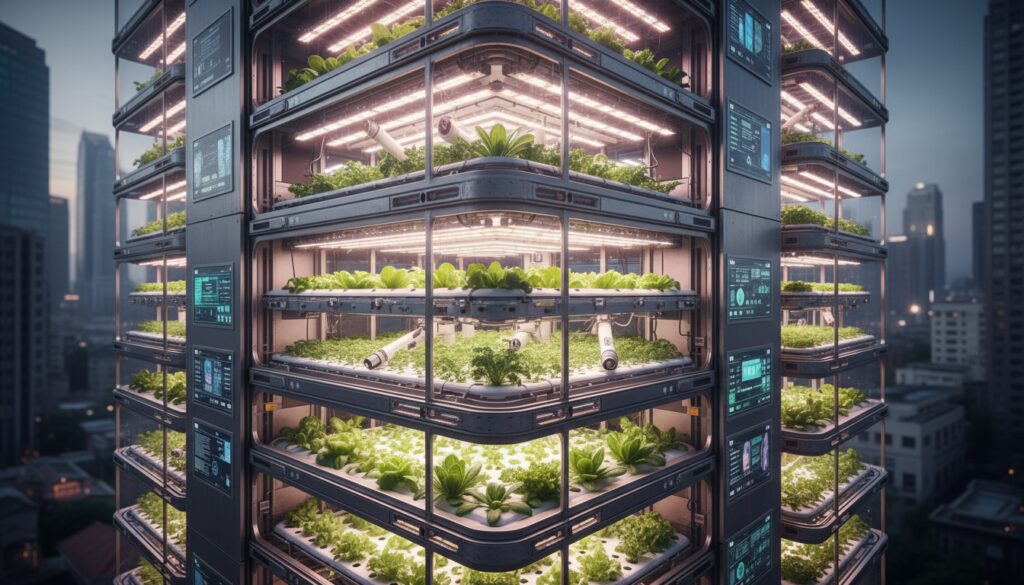
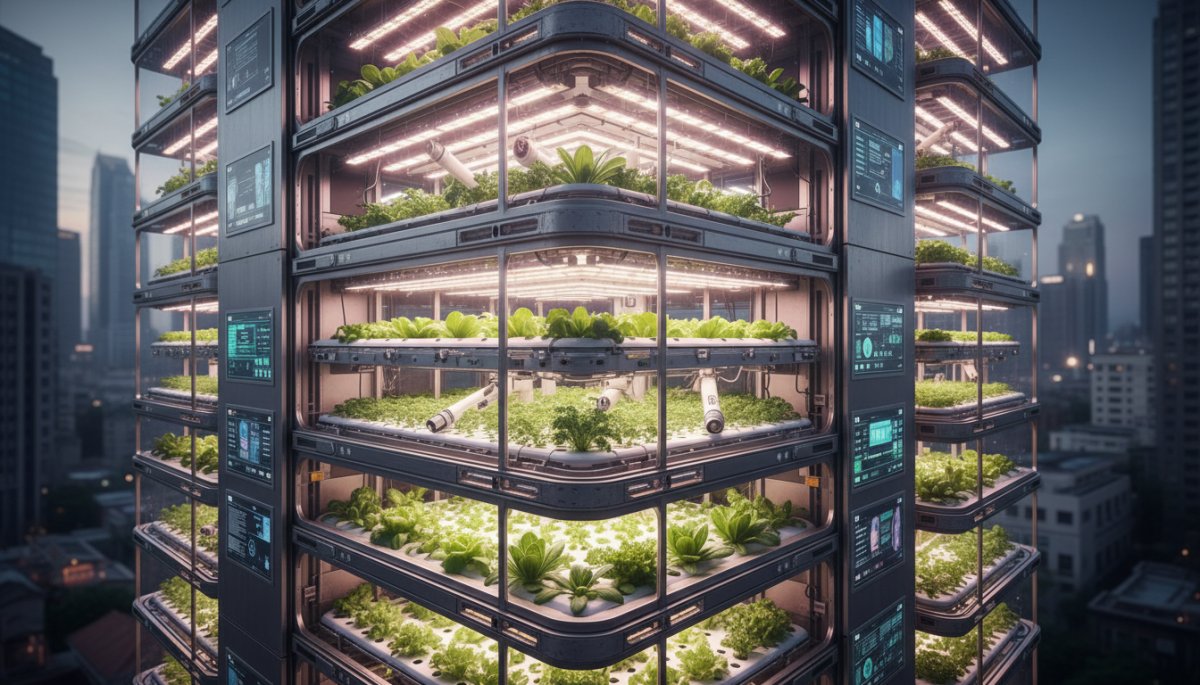
The Challenges Facing Asian Agriculture and New Possibilities
Southeast Asia is known as one of the world's leading agricultural regions. Vietnam is rice export second in the world by output, and coffee output an agricultural power that boasts second place in the world in agricultural power with more than 40% of its labor force working in agriculture. Thailand is dubbed the "kitchen of the world," and Indonesia is Palm oil.
However, these countries now face serious structural challenges. The increasing frequency of extreme weather due to climate change, the aging of agricultural workers, the low productivity of smallholder farmers, and compliance with food-safety standards are all required.
In response to these challenges, environment-controlled agricultural systems are drawing attention. These are advanced farming technologies that precisely control temperature, humidity, light, CO2 concentration, and the like, and grow plants in a nutrient solution without using soil. In Japan they have undergone unique development, and many fully artificial-light systems have been introduced.
What Is Environment-Controlled Agriculture: The Difference from Conventional Farming
Environment-controlled agriculture takes a different approach from conventional farming. Conventional farming was the work of tilling the land and growing crops with the help of nature's power. Environment-controlled agriculture, by contrast, uses a nutrient solution in place of soil, sometimes uses LED lighting in place of sunlight, and controls environmental factors by computer.
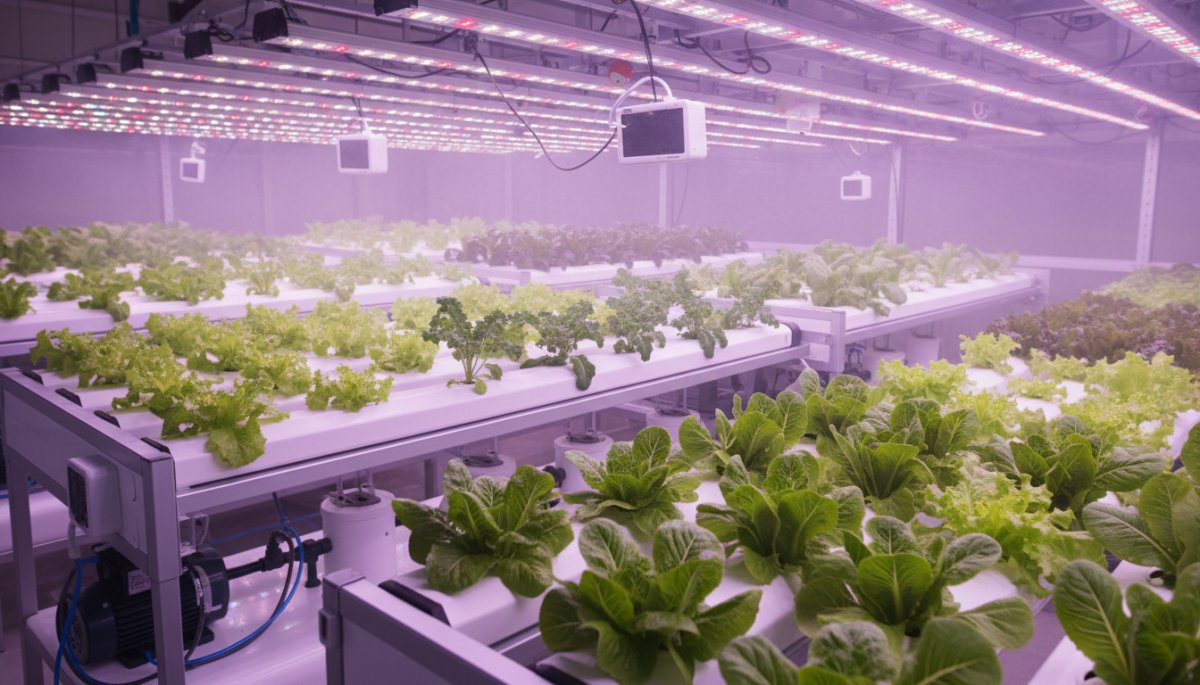
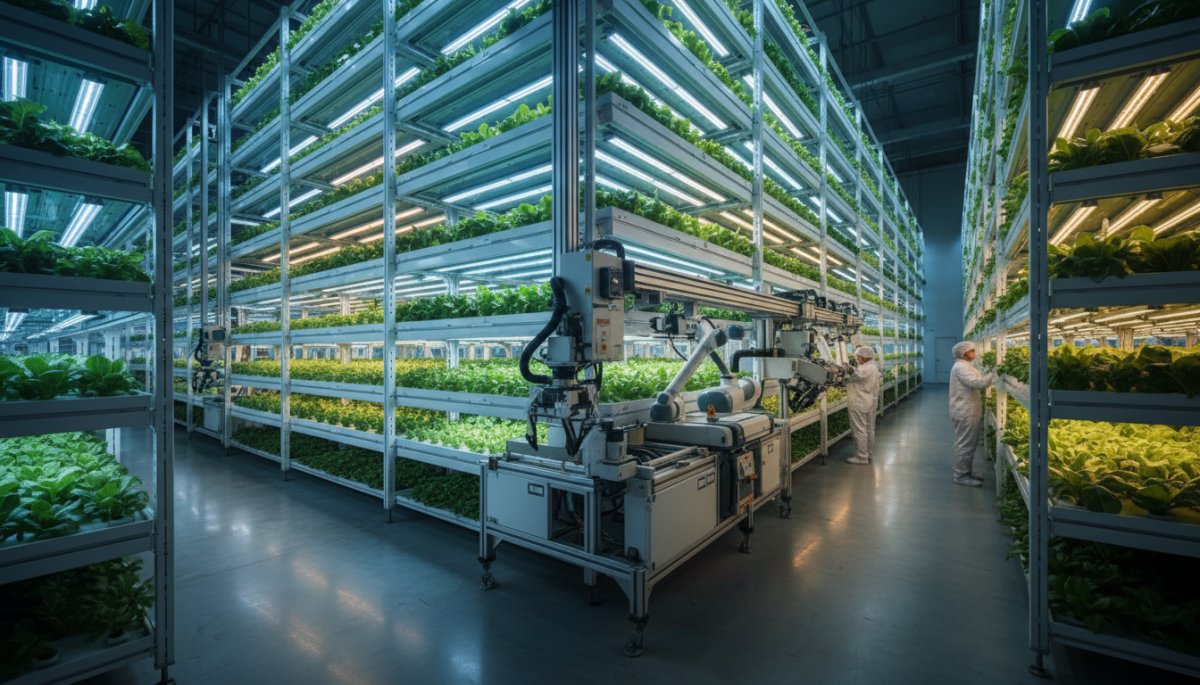
This system has two main types. The solar-light type, used in the Netherlands' large-scale greenhouse cultivation, combines natural light with supplemental light. The fully artificial-light type, by contrast, is widely adopted in Japan and grows crops using LED lighting only. The fully artificial-light type keeps temperature and humidity almost constant, and the items to be controlled are limited to "light intensity," "wavelength," "carbon dioxide," and the like, which makes it easy to manage.
The light plants need to grow differs by variety and growth stage. The optimal light wavelength differs between lettuce and herbs, and the light needed also changes with the seed or seedling state, the growth period, and the harvest period. Environment-controlled agriculture can optimize these based on data.
The Main Technologies Introduced
At the core of environment-controlled agriculture are IoT technology and AI control. Temperature, humidity, and CO2 concentration are monitored with multiple sensors, and the environment is adjusted in real time. LED lighting can finely control wavelength, raising the efficiency of plant photosynthesis. Nutrient-solution cultivation systems supply the needed nutrients precisely and reduce water use.
Through these technologies, it is expected that yields per unit area can be improved compared with conventional open-field cultivation. In addition, pesticide use can be limited, allowing the production of crops with little concern over pesticide residues.
Why Asian Agriculture Needs Environment-Controlled Farming
For Southeast Asian agriculture, climate change is a major challenge. Vietnam's Mekong Delta is one of the world's leading production zones, responsible for more than half of the country's rice output, but it suffers from saltwater intrusion driven by rising sea levels and from worsening floods. The Philippines sees nearly 20 typhoons approach each year on average, with severe damage to crops repeated. Thailand's Chao Phraya Delta, too, faces growing risks of drought and flooding year by year.
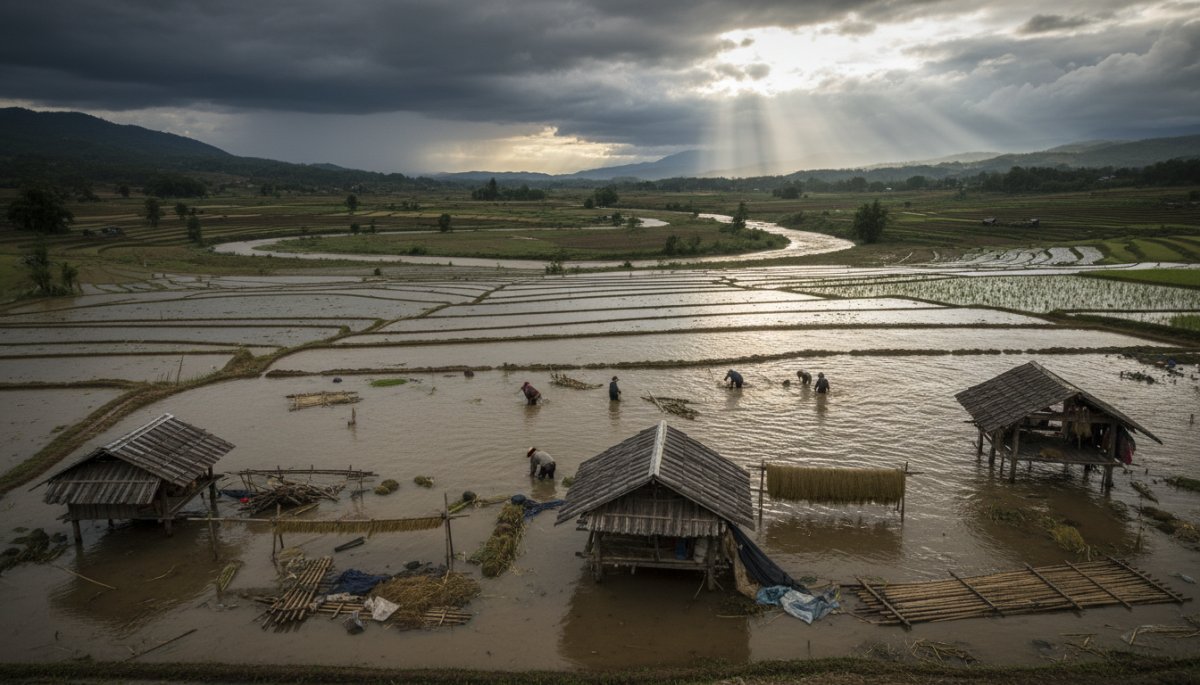
Environment-controlled agriculture provides a production system independent of these climate risks. Even if a typhoon comes, a drought continues, or the sea level rises, crops inside the closed environment are less affected. This "climate independence" holds great value for Asian agriculture.
Contributing to Higher Productivity for Smallholder Farmers
The average cultivated area per farm in Vietnam is about 0.44 hectares, among the smallest in the ASEAN countries. Some 97% of all farmers are small and medium-scale, about 57% of agricultural workers are unskilled, and the share aged 50 and over reaches about 43%.
Environment-controlled agriculture achieves high yields on limited land. By adopting vertical farming, a greater output than before can be expected on the same area. Furthermore, through automation and AI control, there is potential to produce high-quality crops stably even without skilled farming expertise. This offers great hope to smallholder farmers troubled by aging and a lack of skills.
Meeting Food-Safety Standards
Major destinations such as the EU, Japan, and the US tighten their pesticide-residue and hygiene standards year by year. With conventional open-field cultivation, meeting these standards can be difficult.
Because environment-controlled agriculture grows crops in a closed environment, it prevents the intrusion of pests and disease and keeps pesticide use to a minimum. Furthermore, because the growing environment is recorded as data, ensuring traceability (the ability to trace the production history) is also easy. This makes it easier to clear the strict food-safety standards demanded in international markets.
The 8 Steps to Adopting Environment-Controlled Agriculture: A Concrete Path to Success
In adopting environment-controlled agriculture, careful planning and phased execution are the keys to success.
Step 1: Clarify the Purpose and Scale
First, clarify for what purpose you are adopting environment-controlled agriculture. Stable supply to your own stores, production of high-value-added crops for export, or contributing to regional food security—the optimal scale and crops to grow change with the purpose.
Some companies adopt it for the purpose of stable supply to their own stores, achieving year-round supply of high-quality vegetables unaffected by weather. There are also companies that specialize in growing medicinal plants used as cosmetics ingredients, achieving in-house procurement of high-quality raw materials.
Step 2: Select the Crops to Grow
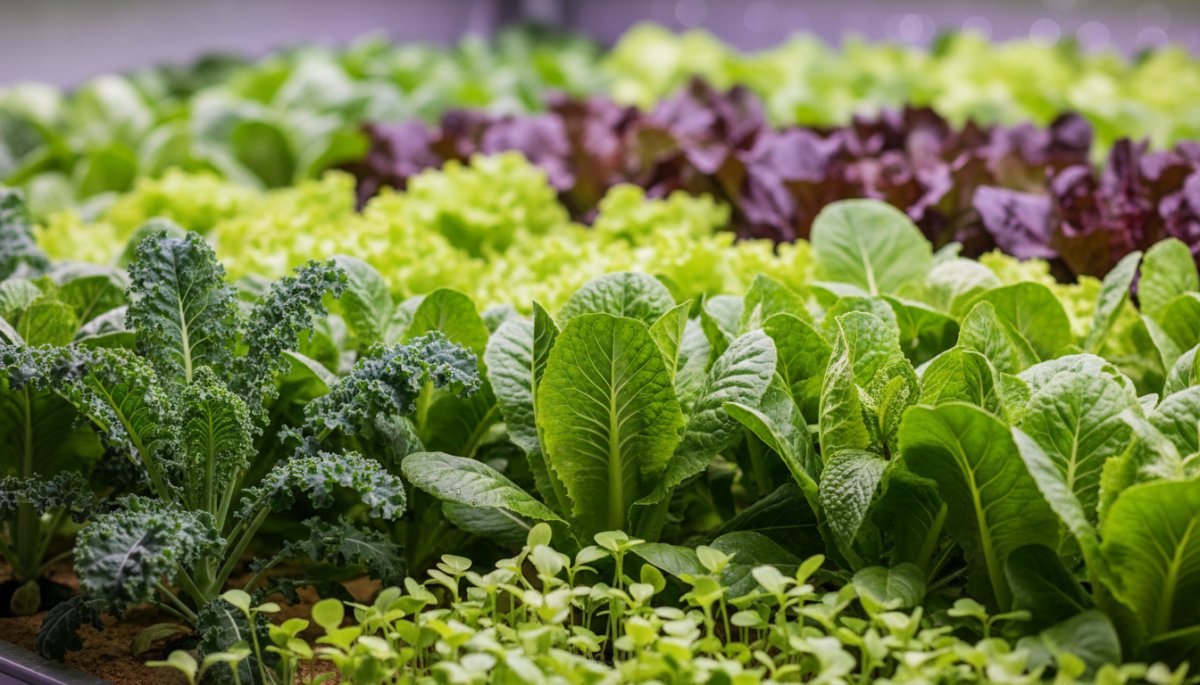
The crops that can be grown with environment-controlled agriculture are, at present, mainly leafy vegetables (lettuce, herbs, spinach, and the like). Fruit vegetables (tomatoes, strawberries, and the like) can also be grown, but they tend to have higher initial investment and operating costs.
To succeed in this growth market, it is important to choose items that are in high demand and easy to add value to. Conduct market research and select crops that match the region's needs.
Step 3: Select a Technology Partner
Adopting environment-controlled agriculture requires advanced technology and know-how. Working with a technology partner that has a track record is the shortcut to success.
Among Japanese companies, there is a case of building a solar-light-type facility in Okinawa, fusing Japan's advanced farming technology with industrial technology. There are also companies that have developed artificial-light, closed-type seedling-production equipment and provide systems that let anyone easily produce sturdy seedlings.
Step 4: Plan the Initial Investment and Raise Funds
One of the environment-controlled challenges for Vietnamese agriculture is the initial investment. For the fully artificial-light type, LED lighting, air-conditioning equipment, nutrient-solution cultivation systems, control systems, and the like can require an investment ranging from tens of millions to hundreds of millions of yen.
However, by making use of government subsidy programs and private-sector lending schemes, the hurdle of raising funds can be lowered. In Japan there are support programs such as the "Technology Development and Demonstration Project for Realizing the Strategy for Sustainable Food Systems (MIDORI)," and similar schemes are being put in place in Asian countries as well.
Step 5: Select a Location and Develop Infrastructure
Environment-controlled agriculture needs to be located where the power supply is stable. Because LED lighting and air-conditioning equipment consume large amounts of electricity, power costs greatly affect profitability. Choosing a location with good logistics access also lets you deliver produce to market while keeping its post-harvest freshness.
Some companies set up small facilities inside train stations, developing a model that supplies fresh vegetables directly to urban consumers. By choosing a location close to the point of consumption in this way, you can cut logistics costs and raise the added value of freshness.
Step 6: Acquire Cultivation Techniques and Develop Human Resources
Operating environment-controlled agriculture requires knowledge and skills different from conventional farming. You need to acquire a wide range of techniques, including operating IoT systems, data analysis, nutrient-solution management, and LED-lighting control.
It is important to make use of the training programs provided by technology partners and to invest in developing staff. Study tours to learn from Japan's advanced cases and information exchange in online communities are also effective.
Step 7: Trial Cultivation and Optimization
Before full-scale operation, carry out small-scale trial cultivation and optimize the growing environment. Adjust many parameters—light wavelength, irradiation time, temperature, humidity, nutrient-solution composition—and find the conditions under which high-quality crops can be produced stably.
The data collected at this stage ties directly to higher productivity after full-scale operation. An environment-control system that makes use of AI learns from the trial-cultivation data and becomes able to automatically maintain the optimal growing environment.
Step 8: Develop Sales Channels and Branding
Even if you produce high-quality crops, earnings will not rise unless you can sell them at an appropriate price. Crops produced with environment-controlled agriculture carry the added value of "limited pesticide use," "year-round stable supply," and "high food safety." It is important to convey these values to consumers and clients and to achieve sales at a fair price.
Measures that raise trust are also effective, such as obtaining organic certification, obtaining GAP (Good Agricultural Practices) certification, and introducing a traceability system that makes use of blockchain. In addition, you can spread risk by developing diverse sales channels—direct contracts with restaurants and high-end supermarkets, making use of online sales, and so on.
Success Stories in Environment-Controlled Agriculture: Learning from Companies' Strategies
Companies succeeding in environment-controlled agriculture share common strategies.
The "Technology Fusion" Strategy
There is a case of applying an electronics maker's technological strength to agriculture. Combining sensing technology, communication technology, and measurement technology, it built a system that numerically manages and controls every environmental factor inside the greenhouse by computer.
Especially noteworthy is a moisture sensor that can measure the activity of tomato photosynthesis non-destructively and without contact. Through such proprietary technology, it achieves cultivation under optimal conditions and stably supplies high-quality crops.
The "System Provision" Strategy
There are also companies that not only run their own facilities but provide their cultivation systems to other operators. This system automatically handles temperature control, lighting, irrigation, and carbon-dioxide supply, letting anyone easily produce sturdy seedlings.
Through the business model of system provision, it recovers its initial investment while also contributing to the spread of environment-controlled agriculture. This strategy could potentially be applied to expansion in Asian countries as well.
The "Vertical Integration" Strategy
There is also a case where a retailer adopted it for the purpose of stable supply to its own stores. This made it possible to supply vegetables of the same quality year-round, unaffected by the weather.
By vertically integrating from production to sales, a retailer can cut out middleman margins and offer consumers high-quality vegetables at reasonable prices. This strategy is also effective in Asian markets, where interest in food safety is rising.
The "Self-Sufficient Raw Materials" Strategy
There are also companies that make use of environment-controlled agriculture to grow medicinal plants used as cosmetics ingredients. By stably procuring high-quality raw materials in-house, they reduce supply-chain risk and guarantee product quality.
This strategy can be applied to industries that need high-value-added raw materials, such as pharmaceuticals, health foods, and cosmetics. Asia has an abundance of traditional medicinal plants, and growing them with environment-controlled agriculture can be expected to standardize quality and ensure stable supply.
The Benefits of Environment-Controlled Agriculture: Why You Should Consider Adopting It Now
Environment-controlled agriculture has clear benefits that conventional farming lacks.
Planned Cultivation and Stable Supply
A major benefit of environment-controlled agriculture is stable supply through year-round production. Unaffected by season or weather, you can produce crops of the same quality in a planned way throughout the year. This makes long-term contracts with clients easier to achieve and secures stable earnings.
In addition, because harvest volumes can be predicted accurately, inventory management and logistics planning are also made more efficient. This also leads to reduced food loss and contributes to lowering environmental impact.
You Can Add Value to Crops
Crops produced with environment-controlled agriculture carry the added value of "limited pesticide use," "high food safety," and "optimized nutritional value." These values are valued by health-conscious consumers and by export markets that demand strict food-safety standards.
Furthermore, the production of crops enhanced in functional components can also be expected. For example, it is being researched that irradiating with light of specific wavelengths can increase nutrients such as vitamin C and polyphenols. Such "designer foods" may be sold at high prices in premium markets.
Efficient Use of Water Resources
The nutrient-solution cultivation system of environment-controlled agriculture can potentially reduce water use significantly compared with conventional open-field cultivation. In Asian regions where water shortages are growing more serious, this high water efficiency is a major advantage.
In addition, because the nutrient solution used is recirculated and reused, the risk of water pollution is also reduced. As a low-environmental-impact, sustainable farming model, it is earning higher international regard.
The Drawbacks and Challenges of Environment-Controlled Agriculture: A Realistic View
While environment-controlled agriculture has clear benefits, challenges to overcome also exist.
Adoption and Operating Costs
One of the environment-controlled challenges for Vietnamese agriculture is the initial investment and operating costs. On top of capital investment in LED lighting, air-conditioning equipment, and control systems, power costs can squeeze profitability.
To turn a profit, growing high-value-added crops, efficiently developing sales channels, and thorough cost management are essential. However, thanks to technological progress, the power efficiency of LED lighting improves year by year, and the initial investment is also gradually falling. Making use of government subsidy programs can also ease the burden of the initial investment.
The Range of Crops That Can Be Grown Is Limited
At present, the crops that can be grown economically with environment-controlled agriculture are mainly leafy vegetables. Major grains such as rice, wheat, and corn are hard to make commercially viable, because growing costs greatly exceed market prices.
That said, research and development is advancing, and the cultivation of a more diverse range of crops is expected in the future. A strategy of securing profitability by specializing in niche markets—such as high-value-added medicinal plants and functional vegetables—is also effective.
Japan-Asia Cooperation: The Significance of the "Japan-ASEAN Midori (Green) Cooperation Plan"
The "Japan-ASEAN Midori (Green) Cooperation Plan," adopted at the Japan-ASEAN Agriculture and Forestry Ministers' Meeting in May 2023, is an important framework that will shape the future of Asian agriculture.
Japan positions the international rollout of the environmental-load-reducing technology set out in its "Strategy for Sustainable Food Systems (MIDORI)" with ASEAN as its most important partner. The pillars are transferring precision-agriculture technology, supporting the promotion of organic farming, introducing paddy-management techniques to reduce greenhouse gas emissions, and supporting the upgrading of agricultural value chains.
Japan's strength lies in holding technology and know-how suited to small and medium-scale farmers. Given that 97% of all of Vietnam's farmers are small and medium-scale, technology for small and medium-scale farmers has the potential to fit.
The transfer of environment-controlled agriculture technology is an important element of this cooperation plan. Through technical cooperation, joint demonstration projects, and human-resource development programs by Japanese companies, the spread of environment-controlled agriculture in Asian countries is expected.
Conclusion: The Future of Asian Agriculture That Environment-Controlled Farming Brings
Environment-controlled agriculture is one promising option for the many challenges facing Asian agriculture.
Vulnerability to climate change, the low productivity of smallholder farmers, meeting food-safety standards, the aging of agricultural workers—these challenges are difficult to solve with conventional farming methods alone. Through its features of climate independence, year-round stable supply, high food safety, and labor saving, environment-controlled agriculture holds the potential to overcome these challenges.
Of course, challenges to overcome also exist, such as the initial investment and the limits on the crops that can be grown. However, through technological progress, government support programs, and international cooperation frameworks, these challenges are gradually being resolved.
Vietnam is rice export second in the world by output, and coffee output second in the world, and Cashew nuts and black pepper an agricultural powerhouse that boasts the world's largest production of this crop. By combining this solid agricultural foundation with the advanced technology of environmentally controlled agriculture, Asian agriculture may be able to achieve a shift "from quantity to quality."
Introducing environmentally controlled agriculture is not merely a technological innovation. It is an important option for Asian agriculture to evolve into an industry that is sustainable, resilient to climate change, and capable of generating high added value.
Now is the time to consider environmentally controlled agriculture as an innovative farming system and open up the future of Asian agriculture. For more details, please see our information on agriculture in Asia.
You May Also Like
- What is the automation of Southeast Asian agriculture? Eight latest technologies that solve labor shortages, and how to adopt them
- Southeast Asia Agriculture Trends 2026 | 10 Key Developments and Business Opportunities to Watch
- Why Is AI Adoption Advancing in Southeast Asian Agriculture? 7 Methods for Boosting Productivity

