The current state and structural characteristics of Mekong Delta agriculture
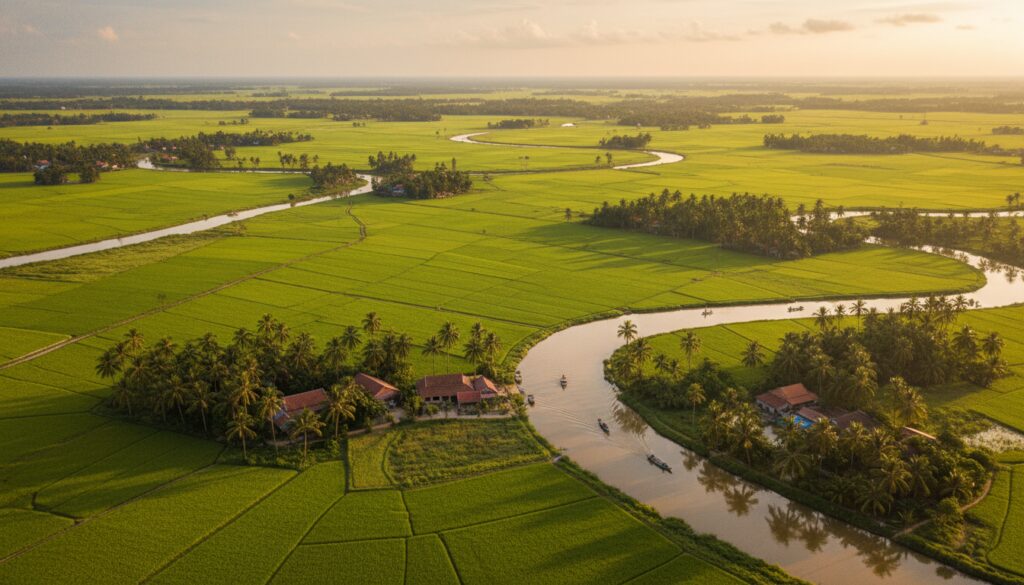
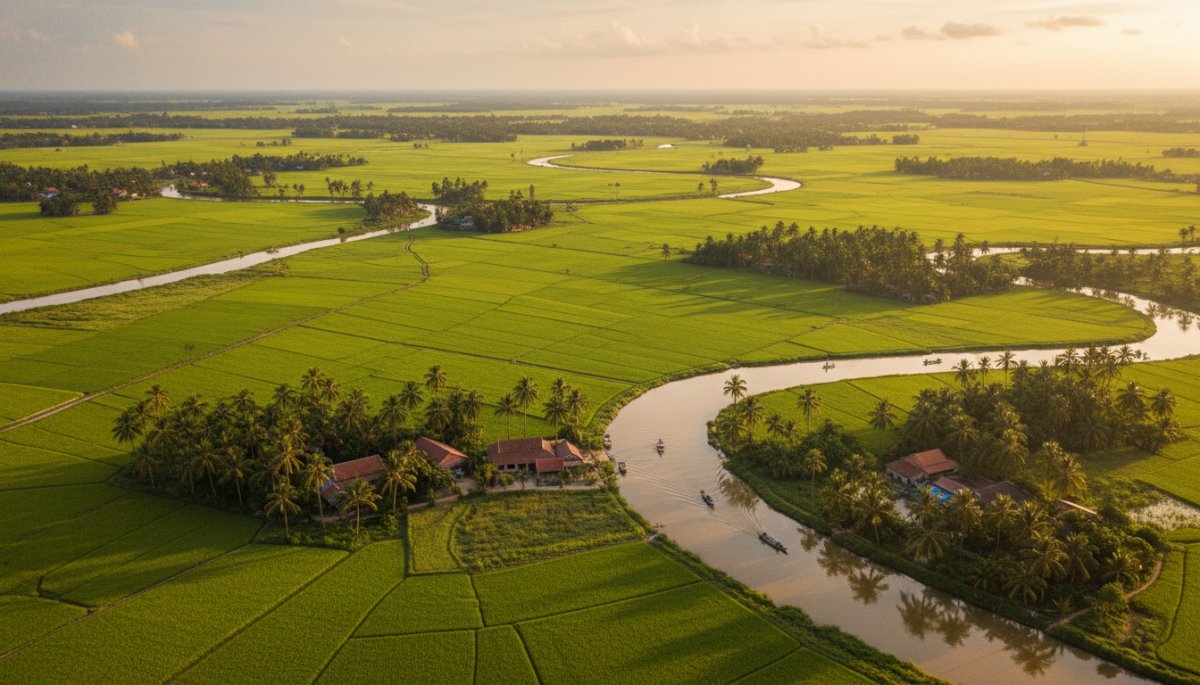
The Mekong Delta spreads across southern Vietnam.
This region handles about half of Vietnam's rice output and nearly 90% of its export rice—it is truly the country's largest grain-producing region. Thanks to the Mekong River's alluvial soil and abundant water volume, two to three crops a year are possible, and it boasts land productivity among the highest in the world.
However, this rich agricultural zone is now facing a major turning point. Complex challenges are intertwined, such as the deepening of salt damage from climate change, the lack of price-bargaining power due to the small-scale-farmer structure, and the shortage of processing infrastructure.
This article thoroughly explains, based on the latest research results and local realities, how Mekong Delta agriculture works, the challenges it faces, and concrete methods toward building a sustainable production system.
The Mekong Delta's geographic characteristics and agricultural system
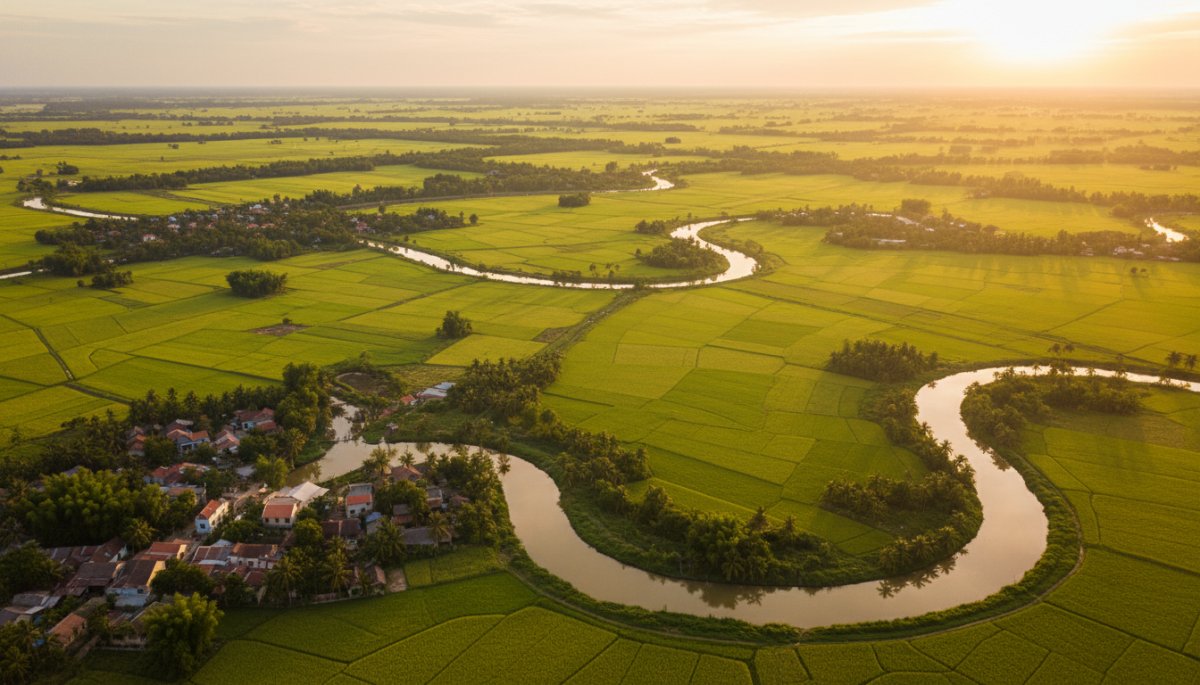
The Mekong Delta is a vast alluvial plain formed at the estuary where the Mekong River flows into the South China Sea. This region's agricultural system is closely tied to its geographic characteristics.
A hydrological environment that makes two to three crops a year possible
The Mekong Delta's greatest characteristic is its abundant water resources. Tributaries of the Mekong River are laid out like a net, making stable water supply possible throughout the year. This hydrological environment realizes the high land productivity of two to three crops a year.
That said, even this blessed environment is showing signs of change in recent years. Under the influence of upstream dam construction and rising sea levels, saltwater moves upstream inland in the dry season, and areas unable to grow rice are increasing—that is the reality.
Unique agricultural techniques in flood-prone areas
In the Mekong Delta's flood-prone areas, unique agricultural techniques adapted to the annual flooding have developed. The two kinds of dyke system, full dyke and semi dyke, are representative examples.
A full dyke is a high-crested dyke that completely prevents flooding, and in the enclosed farmland rice can be planted even during the flood period (August–November), making three crops possible. A semi dyke, on the other hand, is a low-crested dyke that prevents flooding up to the harvest period of the summer-autumn crop (August) and, after harvest, allows floodwater to flow into the farmland.
In recent years, based on strong farmer demand and the policy of An Giang province and the Vietnamese government, full dykes have spread rapidly and three-crop farming has expanded. However, it has also been pointed out that this spread is affecting the hydrological environment of surrounding areas.
Source
Japan International Research Center for Agricultural Sciences, "The Spread of Full Dykes and Their Impact on the Hydrological Environment in the Flood-Prone Rice-Farming Region of the Mekong Delta"
(2013), adapted
The challenges and realities brought about by the small-scale-farmer structure
The greatest structural challenge of Mekong Delta agriculture lies in the extremely small-scale-farmer structure.
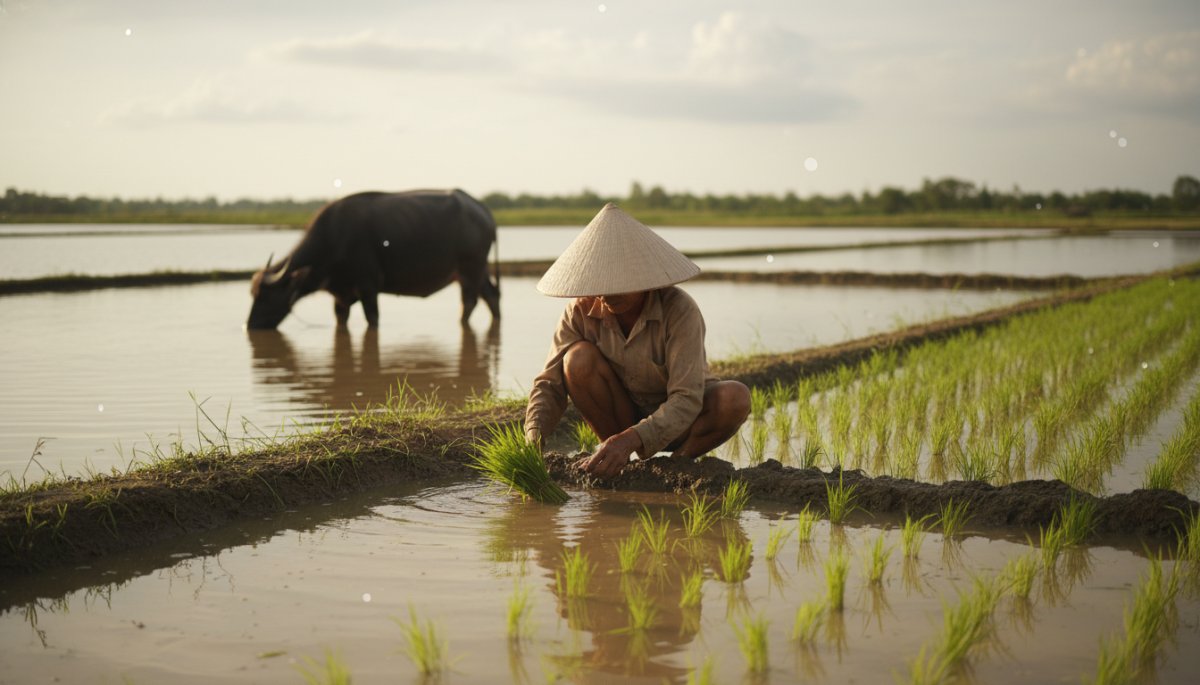
The average cultivated area is mostly under 1 ha, with many farmers holding only around 0.3–0.5 ha. This small-scale, dispersed structure is causing various problems.
Lack of price-bargaining power due to dependence on middlemen
Because small-scale farmers are dispersed, collectors (brokers) hold the power to set prices, and farmers have almost no bargaining power. Organized aggregation like Japan's agricultural-cooperative model is weak, forming a structure in which farmers' incomes are hard to raise.
This problem does not stop at mere economic disadvantage. Because farmers cannot obtain appropriate returns, their motivation to invest in quality improvement declines, and as a result it leads to a decline in the competitiveness of agriculture as a whole.
The stratification of farmers and the diversification of management strategies
Under the introduction of a market economy through the Doi Moi policy since 1988, the stratification of farmers has advanced markedly. While there are farmers who rapidly expand their scale, there are also no few farmers who shrink their scale and fall into the landless class.
What is interesting is that within the small- and mid-scale class of under 2 ha, moves to incorporate mixed management and seek management stability can be observed. There are farmers who actively incorporate livestock, fish farming, and vegetable growing in addition to rice farming, advancing the diversification of their management.
Large-scale-class farmers are strengthening a tendency toward monocropping and specialization in rice farming, are rich in family labor, and have advanced in introducing farm machinery such as tractors. On the other hand, the landless class is at the lowest household-expenditure level and, moreover, their farm-household economic surplus is negative, forcing them to borrow living funds and use natural resources.
Source
Japan International Research Center for Agricultural Sciences, "Doi Moi policy Changes in the Agricultural Structure of Vietnam's Mekong Delta Under
(1997), adapted
Salt-damage countermeasures and the structural change in land use
Salt damage in the Mekong Delta has already become an unavoidable reality.
Under the influence of rising sea levels and upstream dams, saltwater moves upstream inland in the dry season, and areas unable to grow rice are increasing. To respond to this environmental change, structural change in land use is advancing rapidly.
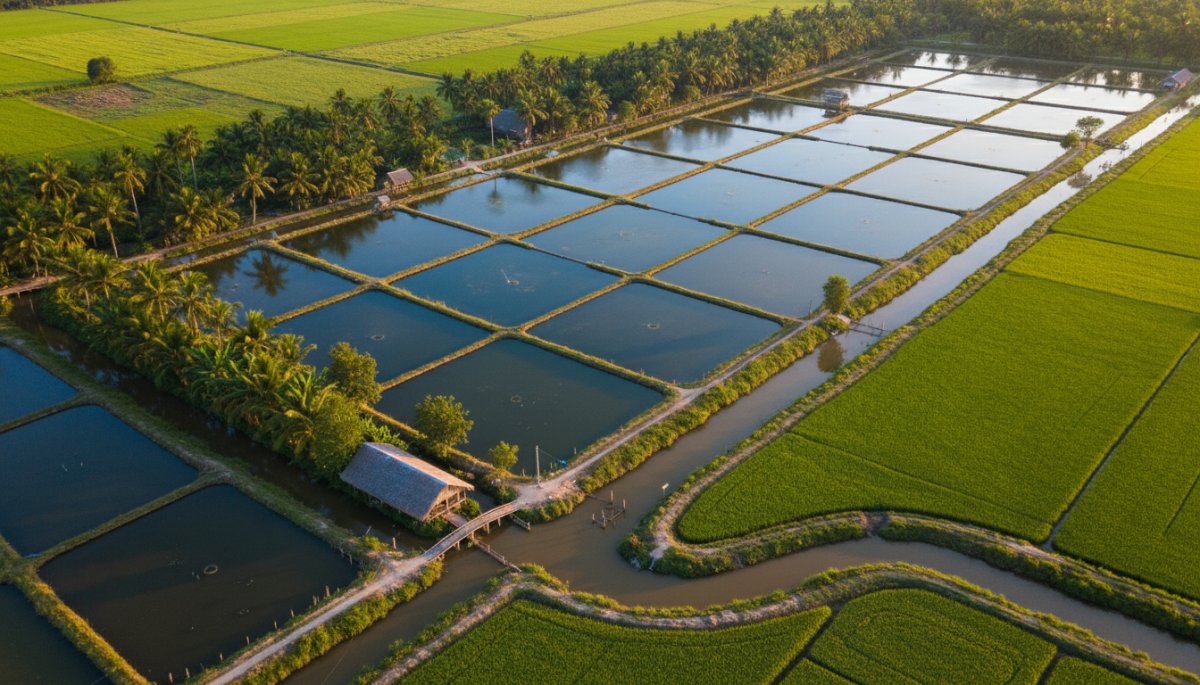
Cases of conversion from rice farming to shrimp farming
In areas with access to saltwater, conversion from rice farming to shrimp farming is advancing. Especially in the coastal areas of Ca Mau province at the southernmost tip of the Mekong Delta, a low-environmental-impact technique of alternating shrimp farming and rice farming according to the season has been established.
In this method, shrimp farming supplies the soil with the nutrients needed for rice farming, while rice farming purifies the soil so that shrimp farming can achieve sufficient yields—a mutually complementary cycle is established.
However, not all regions adopt such a sustainable method. In the coastal areas of Ben Tre province in the eastern Mekong Delta, where the history of reclamation is short, agricultural production cannot be called sustainable either technically or managerially, with the heavy application of fast-acting chemical fertilizers and rampant illegal shrimp farming in areas where rice farming is mandatory.
Conversion to cash crops and market response
In response to falling international rice prices, conversion to cash crops is also advancing. Cases have been confirmed of Bac Lieu province beginning to cultivate dragon fruit, and Soc Trang province cultivating onions and longan.
In addition, in Hau Giang province, adjacent to urban areas, multiple households have been confirmed carrying out hydroponic vegetable cultivation and organic cultivation in state-of-the-art facilities that manage room temperature and humidity in plastic houses. Such households make "safe vegetables," grown without using pesticides or chemical fertilizers in the cultivation process, their selling point, supplying fresh vegetables at high unit prices to the urban wealthy.
Source
Kyoto University, "Changes in Agricultural Land Use in Vietnam's Mekong Delta"
(fieldwork report), adapted
The possibility of improving productivity by introducing smart agriculture
One key to raising the sustainability of Mekong Delta agriculture is the introduction of smart agriculture.
In recent years, the introduction of smart-agriculture technologies such as drone pest control and IoT irrigation has begun at some large plantations, but the spread is limited, and the great majority of small-scale farmers still continue labor-centered agriculture.
The current state and challenges of agricultural mechanization
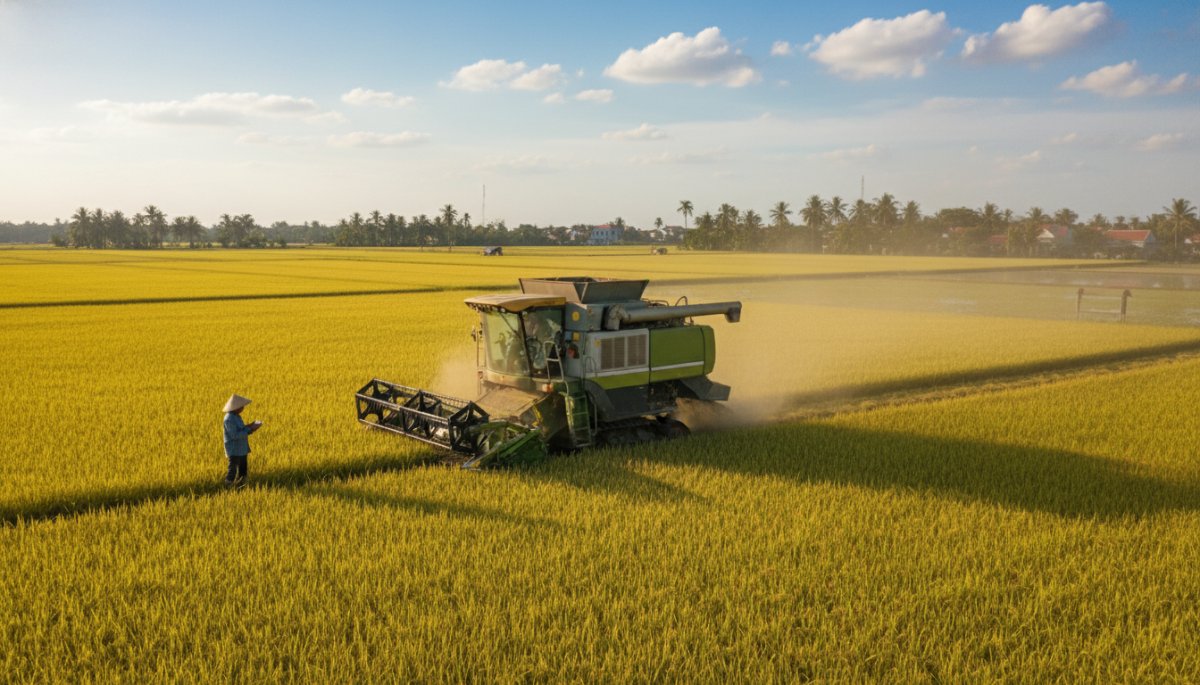
In the Mekong Delta region, the spread of farm machinery is gradually advancing. Among large-scale-class farmers in particular, the introduction of farm machinery such as tractors has advanced, succeeding in reducing production costs.
However, for small-scale farmers, investment in expensive farm machinery is a major hurdle. How to strike a balance between efficiency through mechanization and the economic constraints of small-scale farmers will be an important challenge going forward.
Water-resource management using digital technology
Making water-resource management more efficient is extremely important for the sustainability of Mekong Delta agriculture. Irrigation systems using IoT technology hold the potential to optimize water use and reduce salt-damage risk.
In addition, through field monitoring using satellite imagery and drones, it is thought it will become possible to grasp crop growth and the occurrence of pests and diseases in real time and take appropriate measures.
Obtaining international certification and upgrading quality control
Against the backdrop of tighter regulations in export-destination countries, obtaining international certification such as GlobalG.A.P., residual-pesticide management, and traceability compliance are advancing. These efforts not only satisfy export requirements but also lead to improving the quality of agricultural production as a whole.
A system for recording and managing production history using digital technology functions not only to ensure traceability but also as a tool for farmers themselves to review and improve their production processes.
Concrete approaches toward building a sustainable production system
To realize the sustainability of Mekong Delta agriculture, a multifaceted approach is necessary.
For complex challenges that cannot be addressed by a single solution, comprehensive efforts from technical, economic, and social aspects are called for.
Strengthening collective bargaining power through farmer organization
To raise the price-bargaining power of small-scale farmers, farmer organization is indispensable. Although policy expectations for farmer organizations such as cooperatives and collaboration groups are high, the reality is that organized aggregation capacity is weak.
Over the long term, building an organizational structure that consistently supports everything from production to sales, like Japan's agricultural-cooperative model, will be necessary. However, developing a unique model that takes Vietnam's socio-cultural background into account is required.
Raising added value through developing processing infrastructure
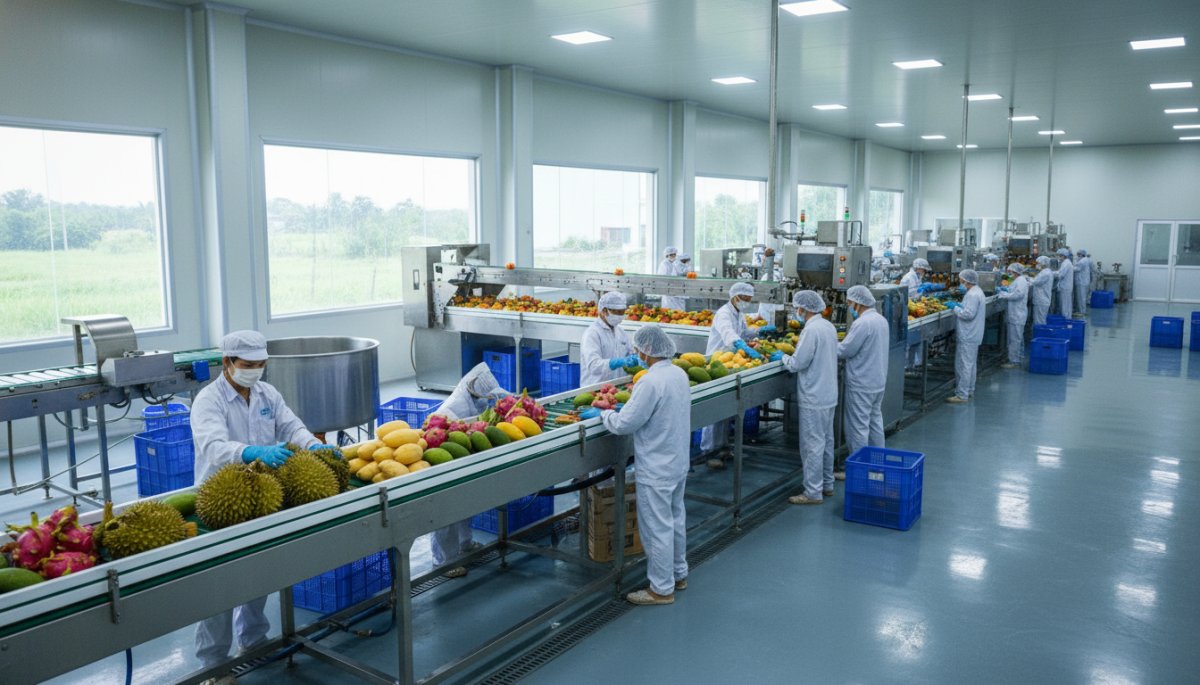
One of the greatest challenges of Mekong Delta agriculture is the shortage of processing infrastructure. Because secondary processing such as drying, grinding, and extraction is still developing, large quantities of out-of-spec farm produce and surplus crops are generated.
From the current state of dependence on exports of primary products, advancing processing and higher added value can be expected to improve farmers' incomes and develop the local economy. Much room remains for expansion into dried vegetables, fruit powders, extract materials, functional ingredients, and the like.
Developing and spreading climate-change-adaptive agricultural technology
To respond to the deepening of salt damage, structural changes such as conversion to salt-tolerant varieties, conversion to fruit trees, and conversion to aquaculture are advancing. To promote these changes in a sustainable form, technology development based on scientific research and its effective spread are necessary.
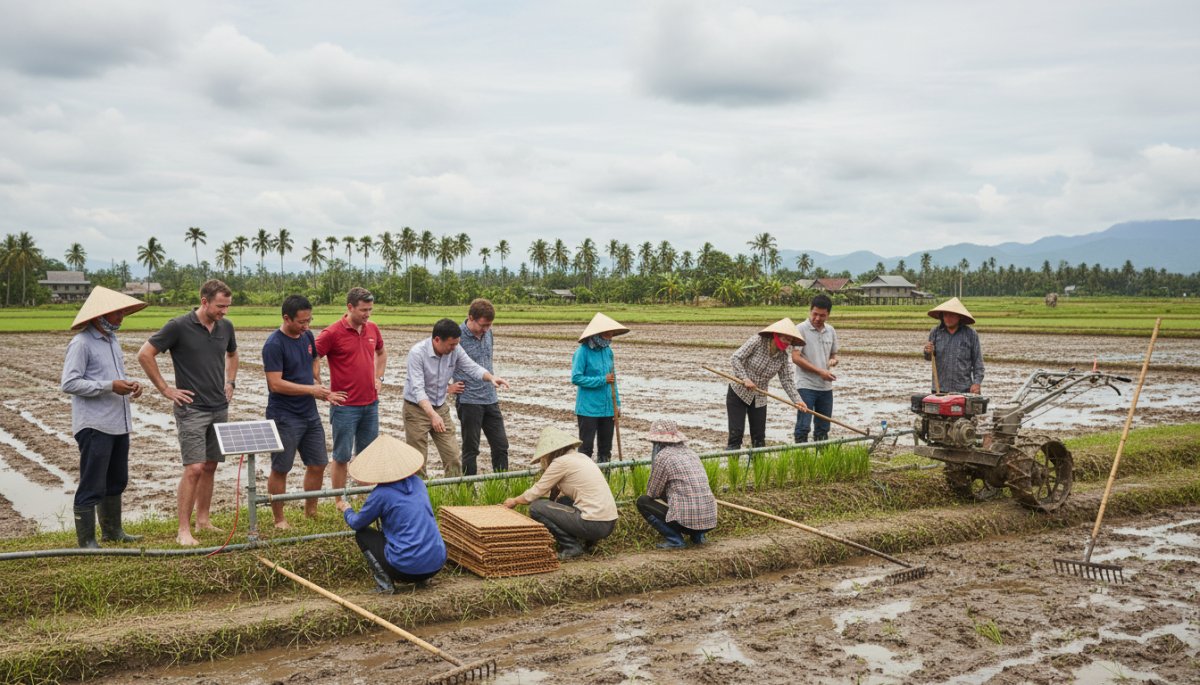
Efforts through industry-government-academia collaboration centered on Can Tho University are being advanced, aiming at the sustainable development of agriculture and aquaculture adapted to climate change. Through building regional collaboration networks and carrying out practical education and training, the social implementation of research results is expected.
Source
JICA, "Industry-Government-Academia Collaboration Project for Sustainable Development in the Mekong Delta Region Under Climate Change"
(2022–2027), adapted
The role of international cooperation and technology transfer
International cooperation and technology transfer play an important role in improving the sustainability of Mekong Delta agriculture.
By applying the knowledge and technology of advanced countries, including Japan, in line with Vietnam's socio-cultural background, effective agricultural development can be expected.
The applicability of Japan's agricultural technology and know-how
Japanese agriculture has a history of achieving high productivity on limited land. Many elements applicable to Mekong Delta agriculture exist, such as precision-agriculture technology, quality-control systems, and the agricultural-cooperative model.
However, rather than simple technology transfer, customization that takes into account local climatic conditions, social structure, and economic circumstances is indispensable. The development of a technology package that small-scale farmers can actually adopt and that is also economically sustainable is called for.
Rolling out a low-emission rice-farming project
The Vietnamese government is promoting the "One Million Hectare Project," which aims to spread high-quality, low-environmental-impact rice farming across a total paddy area of 1 million ha in the Mekong Delta region by 2030.
This project calls for the introduction of AWD (alternate wetting and drying), the reorganization of production systems, and the introduction of sustainable agricultural technologies. In particular, the spread of AWD is expected to improve agricultural productivity while reducing environmental impact, and to realize improved farmer returns.
Through cooperation with international organizations and development partners, it aims to reduce greenhouse-gas emissions while promoting the introduction of sustainable agricultural technology and improving productivity, thereby reconciling environmental protection with the development of the local economy.
Source
Green Carbon Inc., "Officially Joining the Vietnamese-Government-Led 'One Million Hectare Project'"
Created based on the above (2023).
Summary: toward the future of Mekong Delta agriculture
Mekong Delta agriculture is right now at a major turning point.
Blessed with abundant water resources and fertile soil, this region has played an important role supporting Vietnam's food security and economic development. However, structural challenges such as climate change, the small-scale-farmer structure, and the shortage of processing infrastructure threaten its sustainability.
Building a sustainable production system requires a multifaceted approach. Strengthening collective bargaining power through farmer organization, raising added value through developing processing infrastructure, developing and spreading climate-change-adaptive agricultural technology, and the effective use of international cooperation and technology transfer. By comprehensively advancing these efforts, Mekong Delta agriculture can move to a new stage of development.
From a "raw-material-supplying country" to an "agricultural country with processing and brands." Whether this evolution can be realized will determine the future of Mekong Delta agriculture. Building internationally competitive agriculture while reconciling the improvement of small-scale farmers' livelihoods with environmental conservation. That challenge is not easy, but by developing a unique model that makes use of the region's characteristics, it should be possible to show the world a new form of sustainable agriculture.
The future of Mekong Delta agriculture will be opened up through the cooperation of local farmers, the government, research institutions, and the international community, pooling their wisdom.
You May Also Like
- What Is the Mekong Delta? Features of Vietnam's Largest Agricultural Region and Its 8 Key Roles
- A thorough analysis of the characteristics of Vietnamese agriculture | Its production structure seen through the Mekong Delta
- How Rice Production Works in the Mekong Delta: The Techniques Behind Triple Cropping

