The Backdrop Behind the Call to Brand Southeast Asian Agriculture
As one of the world's leading agricultural regions, Southeast Asia has nurtured thousands of years of farming civilization against a backdrop of tropical monsoon climate and fertile delta zones. Vietnam is the world's second-largest exporter of rice, coffee output also ranks second in the world, and in Cashew nuts and black pepper it records the world's largest output. Thailand's natural rubber output and exports are among the largest in the world, and Indonesia is the world's largest producer of Palm oil.
However, high output volume alone makes sustainable growth difficult. Vietnam's total agriculture, forestry, and fishery exports reached about US$53 billion in 2023, but most of that was unprocessed primary products. Take coffee: despite being the world's second-largest producer, a high proportion is exported as green beans, and its brand value as a roasted, processed final product does not match that of rival countries such as Colombia and Ethiopia.
On top of this, the low productivity of smallholder farmers and the aging of the agricultural workforce are serious challenges. Some 97% of all of Vietnam's farmers are small and medium-scale, about 57% of agricultural workers are unskilled, and the share aged 50 and over reaches about 43%.
To overcome these structural challenges, the branding of agricultural products is drawing attention. Branding means creating agricultural products differentiated by meeting certain quality standards, carrying a story, and reflecting regional characteristics. By avoiding being drawn into price competition and targeting consumers who prioritize quality, sustainable management becomes possible.
Strategy 1: Making use of the geographical indication (GI) protection system
As a first step in branding, making use of official certification systems can be cited. The geographical indication (GI) protection system is a scheme for protecting, as intellectual property, agricultural products that have a strong connection to the history and natural features of their production area and that have earned social recognition as valuable specialty goods.
Once a product is registered under this system, operated by Japan's Ministry of Agriculture, Forestry and Fisheries, it may display the GI mark, which can be expected to strengthen its brand power. Specialty products from across Japan are registered, such as Hokkaido's "Tokachigawa Nishi Chinese yam," Akita Prefecture's "Matsudate shibori daikon," Yamagata Prefecture's "Yamagata celery," and Gunma Prefecture's "Takayama cucumber."
However, an application to register a product under the GI protection system cannot be made by an individual producer; it requires organizing a group such as a "brand council" made up of multiple producers. The whole region is required to cooperate, set unified quality standards, and share a brand image.
Source Prepared from BASF minorasu, "What is the definition of brand vegetables? MAFF's list of registered products and success stories of branding"(March 2025)
Strategy 2: Differentiation through quality certification and sugar-content measurement
To differentiate from competing products, it is important to put forward figures and points. Showing easy-to-understand points that tie directly to taste—such as "the specially grown daikon of a certain farm" or "a honey-sweet apple with a sugar content of 15 degrees or more"—is effective.
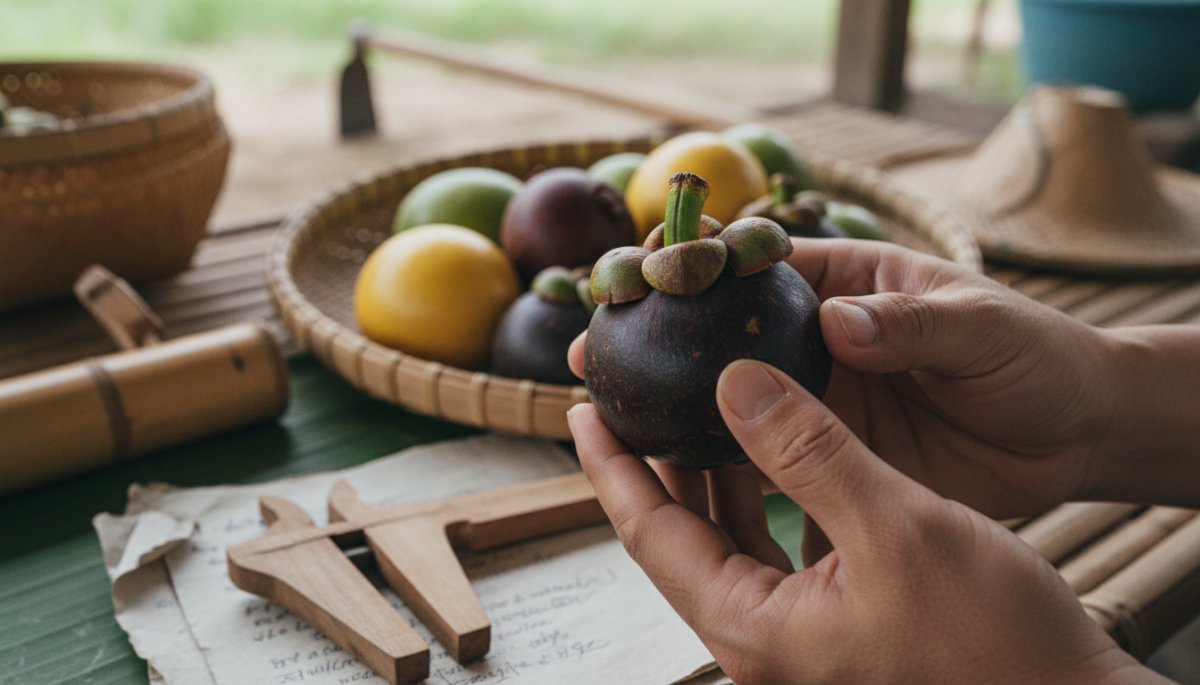
At "Denden Village," a next-generation farm in Kariya City, Aichi Prefecture, the mini tomato "Urutsuya Tomato" is sold as a food with functional claims. It was promoted as containing lycopene, which helps protect the skin from UV stimulation, and GABA, which eases stress and fatigue.
Furthermore, by installing an optical-sensor sorting machine that measures sugar content, the farm became able to prove a sugar content of 8 degrees or more, which allowed it to sell with confidence. As a result, its products came to be sold at local supermarkets and as hometown-tax (furusato nozei) return gifts.
Uniform quality is the basis for building a sense of "security" and "trust" among consumers. Because there are limits to checking and sorting by hand when consistently shipping produce above a set quality level, installing optical-sensor sorting machines and the like makes it possible to detect defective items efficiently and to evaluate sugar content and internal quality objectively.
Source Prepared from Sortling Machine Osusume Navi, "The thinking needed to brand agricultural products, and success stories" prepared from
Strategy 3: Storytelling and putting a face to the producer
A recommended way to gain name recognition is to make yourself as the producer, or your farm, into a tool for branding. It is important to increase the chances for produce to come into consumers' view—by showing your face as the producer who grew it when selling, or by conveying the harvest and your dedication through a blog or social media.
Vietnam's Mekong Delta is known as one of the world's leading production zones, responsible for more than half of the country's rice output. In addition to large-scale rice farming that makes use of its vast, flat land, shrimp farming and fruit cultivation also thrive.
The story of producers who keep farming amid difficult conditions resonates with consumers. By conveying such background—what thoughts drive them to grow their produce, what ingenuity they apply—the value rises so that it becomes not a mere product but "produce with a story."
Strategy 4: Digital marketing and making use of social media
In the digital age, social media has become a powerful branding tool. Using Instagram, Facebook, YouTube, and the like, you can convey the appeal of produce visually.

By putting out diverse content—the harvest, cooking methods, the producer's daily life—it is possible to deepen the connection with consumers. Thailand's jasmine rice (khao hom mali) is known as a brand rice that has earned high regard in international markets. The Thai government positions organic rice exports as a growth strategy and, for jasmine rice, organic cultivation is actively promoting.
Direct sales through e-commerce sites are also an effective means. By selling directly to consumers without going through middlemen, you can raise profit margins. Registering products as hometown-tax return gifts also leads to greater recognition and wider sales channels.
Strategy 5: A shift to organic farming and sustainability
As environmental awareness grows, a shift to organic and sustainable farming is being called for. The "Japan-ASEAN Midori (Green) Cooperation Plan," adopted at the Japan-ASEAN Agriculture and Forestry Ministers' Meeting in May 2023, is a comprehensive cooperation framework for building sustainable agriculture and food systems in the Asian monsoon region.
Thailand is one of the countries in Southeast Asia where the institutional framework for organic farming is the most developed, operating a certification system under the "Thai organic agriculture standard." In Vietnam, too, the Ministry of Agriculture and Rural Development has set the expansion of organic farming as a policy goal, but the farmland area that has obtained organic certification is still only a tiny fraction of the whole.
A shift to organic farming often comes with a temporary drop in yields, which carries great risk for smallholder farmers who have little margin. However, obtaining organic certification can open access to high-value-added markets and, over the long term, may lead to higher earnings.
Strategy 6: Processing agricultural products and adding value
The processing and value-adding of agricultural products has become a central theme of branding. The Vietnamese government has set a goal of entering the world's top 15 in agriculture and food processing by 2030, promoting a policy built on three pillars: attracting investment in processing facilities, building out the cold chain, and strengthening branding.
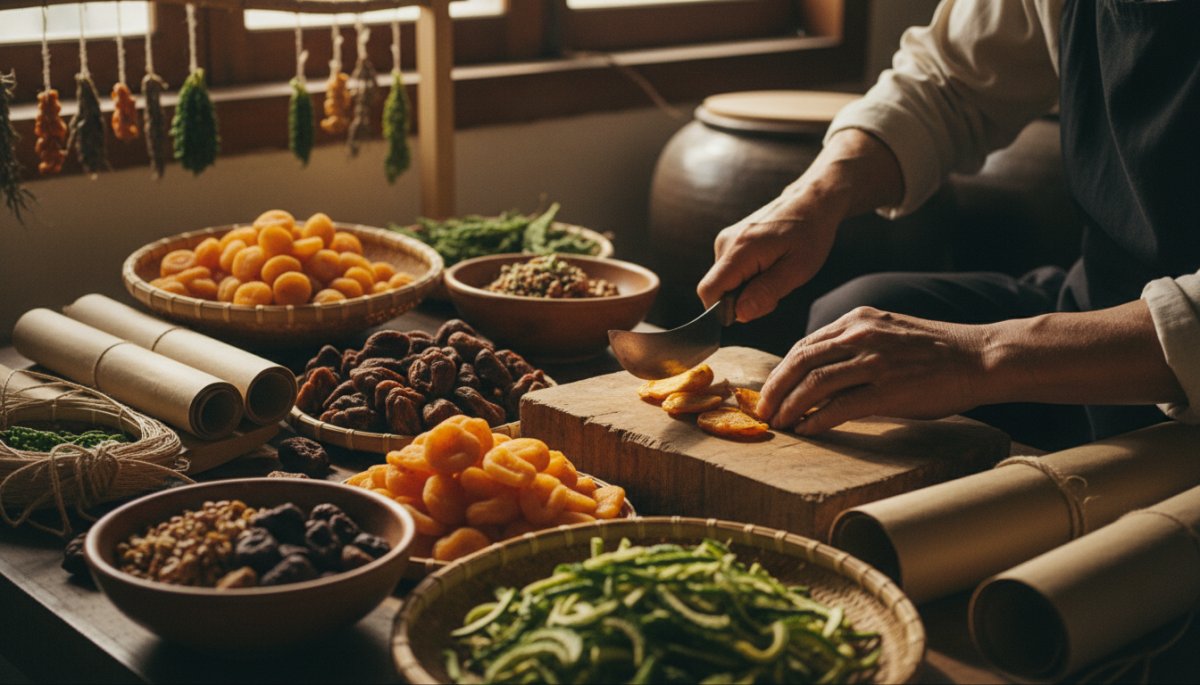
Tropical produce spoils quickly and, as is, is difficult to transport over long distances or store for long periods. However, drying or powdering it dramatically raises shelf life and can also cut logistics costs. Dried vegetables, dried fruit, and freeze-dried products are seeing growing demand in developed-country markets against the backdrop of rising health consciousness, and could become a powerful means of delivering Southeast Asian produce to developed countries with added value.
The Philippines holds one of the world's leading positions in banana exports, and much of the bananas for Japan are shipped from the southern part of Mindanao Island. By converting to processed goods such as dried banana chips, it can be expected to spread disaster risk and secure stable earnings.
Strategy 7: International cooperation and the adoption of smart agriculture
To succeed at branding, the adoption of the latest technology is also essential. The Vietnamese government has set out its "Strategy for Sustainable Agriculture and Rural Development to 2030, with a Vision to 2050," positioning the adoption of smart agriculture as a national priority.
Various technologies are being demonstrated across the country, such as environmental monitoring with IoT sensors, pesticide spraying by drone, AI-based pest and disease forecasting, and the automation of hydroponic cultivation. Lam Dong province (around Da Lat) is a leading region for smart agriculture in Vietnam, where greenhouse systems and automatic irrigation systems for vegetable growing have been introduced.
However, adopting smart agriculture requires an initial investment, and spreading it to smallholder farmers with little capital is the biggest bottleneck. Given that 97% of all of Vietnam's farmers are small and medium-scale, developing low-cost smart-agriculture models that do not assume expensive equipment is essential.
Agricultural cooperation between Japan and ASEAN has entered a new phase in recent years. The "Japan-ASEAN Midori (Green) Cooperation Plan" is built on pillars of transferring precision-agriculture technology, supporting the promotion of organic farming, introducing paddy-management techniques to reduce greenhouse gas emissions, and supporting the upgrading of agricultural value chains.
Conclusion: Opening up the future through the branding of Southeast Asian agriculture
Branding Southeast Asian agriculture is not merely a means of adding value. It is a strategy for protecting the livelihoods of smallholder farmers, revitalizing regional economies, and building sustainable agricultural systems.
Making use of the geographical indication protection system; differentiation through quality certification and sugar-content measurement; storytelling and putting a face to the producer; digital marketing and making use of social media; a shift to organic farming and sustainability; processing agricultural products and adding value; international cooperation and the adoption of smart agriculture—by combining these seven strategies, Southeast Asian produce has the potential to grow into brands that are competitive in world markets.
Led by Vietnam, the countries of Southeast Asia are accelerating a shift in mindset from "agricultural production" to an "agricultural economy." The transition from an era of pursuing quantity to one that prioritizes quality, safety, environmental sustainability, and brand value also means a major business opportunity for companies in developed countries, including Japan.
The rural landscape of Southeast Asia is right now in the midst of a great transformation. Let us open up the future of Southeast Asian agriculture through branding.
You May Also Like
- Asian Agricultural Powers Ranking 2026: The Strength of the Top 10 Countries Seen from Output and Export Value
- How Can Asia's Smallholder Farmers Raise Their Earnings? 8 Measures That Lead to Higher Incomes
- How to Succeed at Sixth-Industrialization in Vietnamese Agriculture: 8 Strategies to Add Value