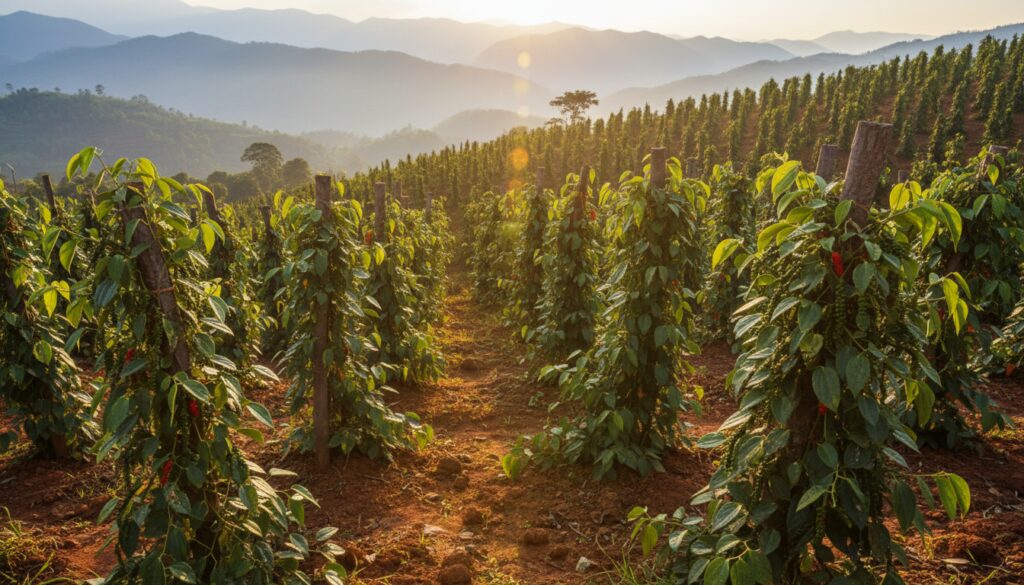
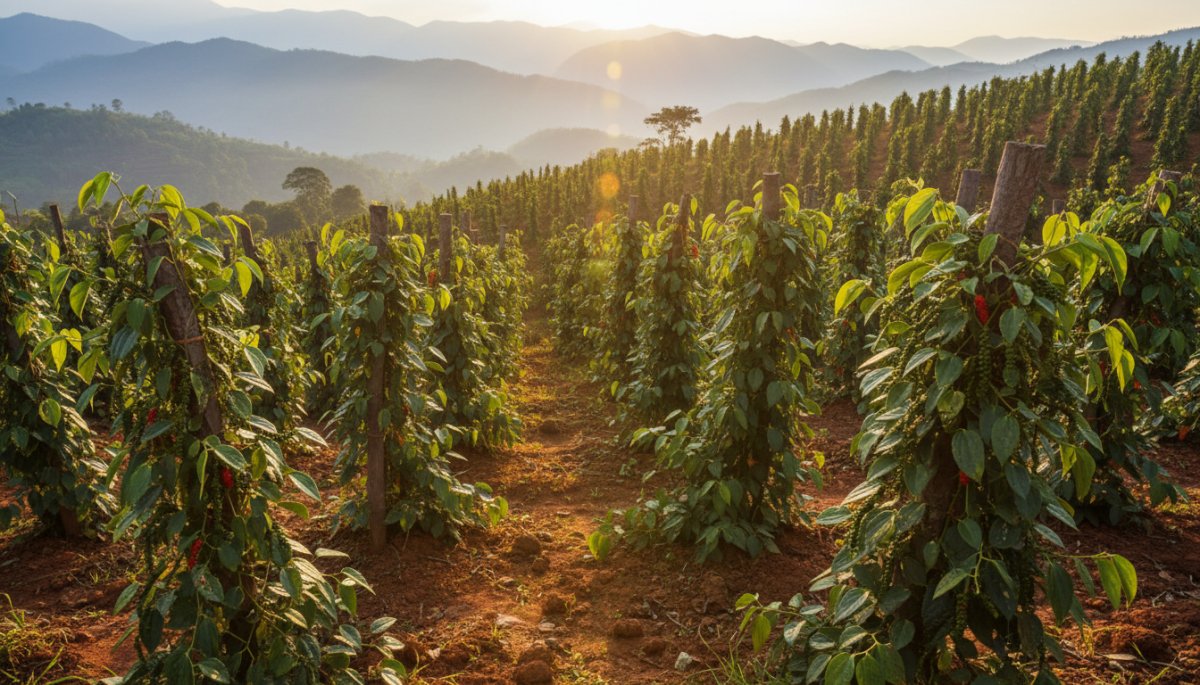
Vietnam's strength, which dominates the world black pepper market
Pepper is an indispensable spice at our tables. The country that accounts for more than about 40% of the world's black pepper output is Vietnam, and it has become a major export item alongside rice and coffee.
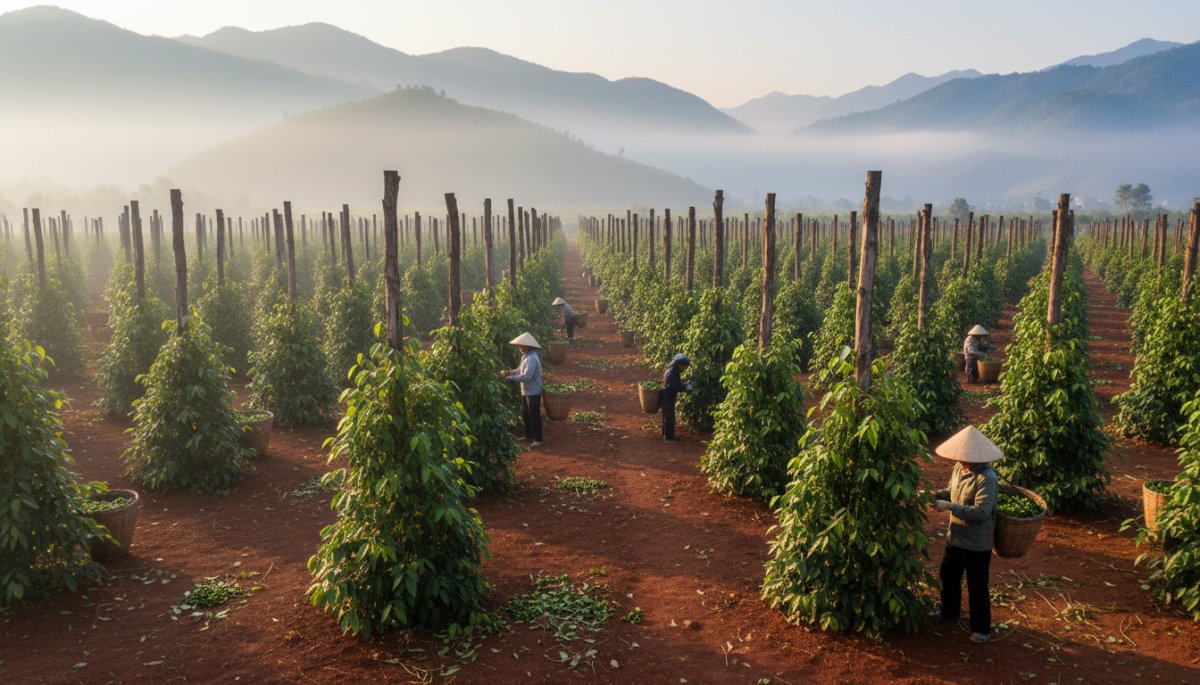
Vietnam is an agricultural power, where agriculture accounts for about 12% of GDP and more than 40% of the labor force works in it. Cashew nuts and black pepper output is the world's largest, and in 2023 total exports of agriculture, forestry, and fisheries reached about US$53 billion, making up more than 15% of the country's total exports.
This article explains in detail the seven strengths behind Vietnam becoming the world's top producer and exporter of black pepper.
[Strength 1] The ideal growing environment of the central highlands
Indispensable in discussing Vietnam's black pepper production is the central highlands region. Dak Lak province in particular is a farming belt with vast arable land, where pepper cultivation flourishes, making the most of a sub-highland climate.
A feature of this region is the spread of volcanic red soil called basalt soil. Volcanic soil is rich in minerals and drains well, with conditions suited to pepper cultivation. The clayey nature of the red soil keeps a balance of moderate water retention and drainage, providing an environment in which pepper roots grow healthily.
The blessings of a tropical monsoon climate
The central highlands belong to a tropical monsoon climate, blessed year-round with warm temperatures and abundant rainfall. Pepper is a plant that likes high heat and humidity, and Vietnam's central highlands have a natural environment that meets these conditions.
The high altitude produces a large day-night temperature swing, and this is a factor that draws out pepper's aroma and pungency. In renowned regions such as Phu Quoc Island and Dak Lak province, cultivation makes the most of these climatic conditions.
[Strength 2] Long-cultivated techniques and farmers' experience
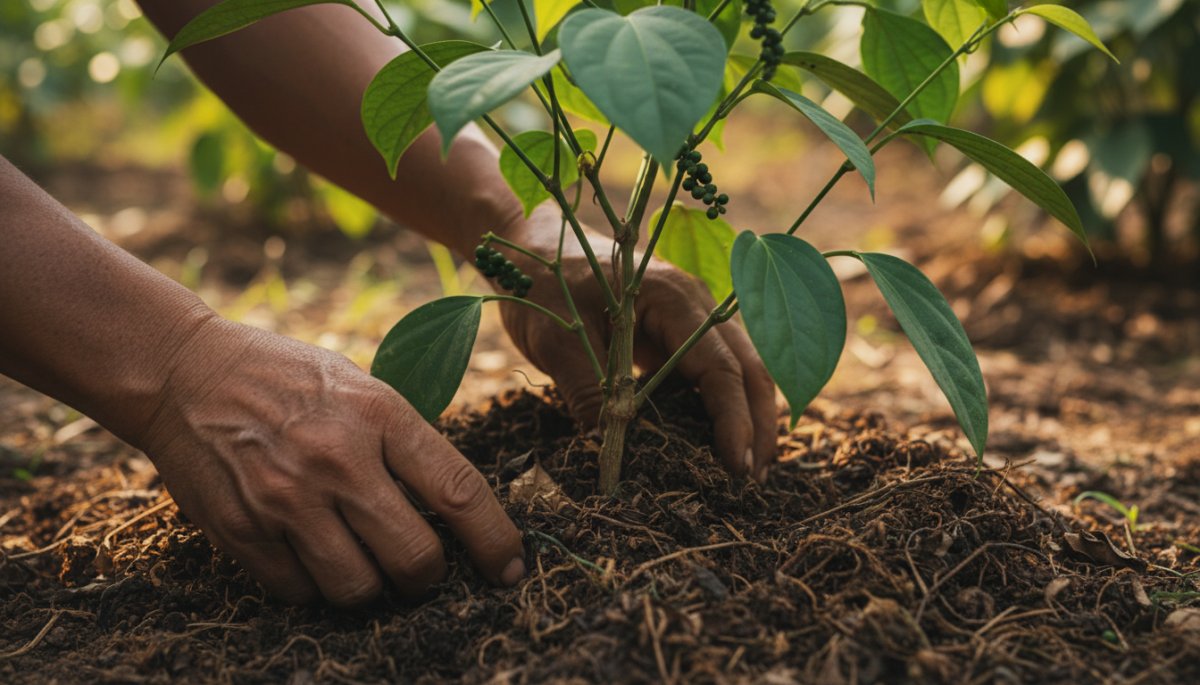
The history of pepper cultivation in Vietnam dates back to the French colonial era. Since the 1986 Doi Moi(renovation) policy, land-use rights were granted to individual farmers and a market economy was introduced, and pepper production expanded rapidly.
Sustainable farming making use of organic compost
Vietnam's pepper farmers value a traditional farming method that makes abundant use of organic compost. Pepper begins to bear fruit three years from seedling, but because it is prone to disease, giving it plenty of organic compost is important.
By not relying too much on chemical fertilizer and keeping the soil healthy, they achieve a stable harvest over the long term. Sharing knowledge and passing on techniques among farmers is also active, and cultivation know-how is handed down across generations.
In Vietnam the aging of agricultural workers is a challenge, but in pepper cultivation women farmers are actively involved, and their work supports production.
[Strength 3] World-class output and an export system
Vietnam boasts first place in the world for black pepper output. Supporting this large-scale production are vast farming belts such as the Mekong Delta and the central highlands.
An efficient export network
Vietnam has well-developed export infrastructure for farm produce, with an established system for supplying pepper to the international market. From port facilities centered on Ho Chi Minh City, it is exported swiftly to countries worldwide.
A quality-control system through partner producers and local subsidiaries is also in place, with thorough sorting and quality control of the harvested pepper. The Vietnamese government positions agricultural exports as a national strategy, setting out the "Strategy for Sustainable Agriculture and Rural Development to 2030, with a Vision to 2050" and promoting the adoption of smart agriculture.
[Strength 4] A thorough commitment to quality control and safety
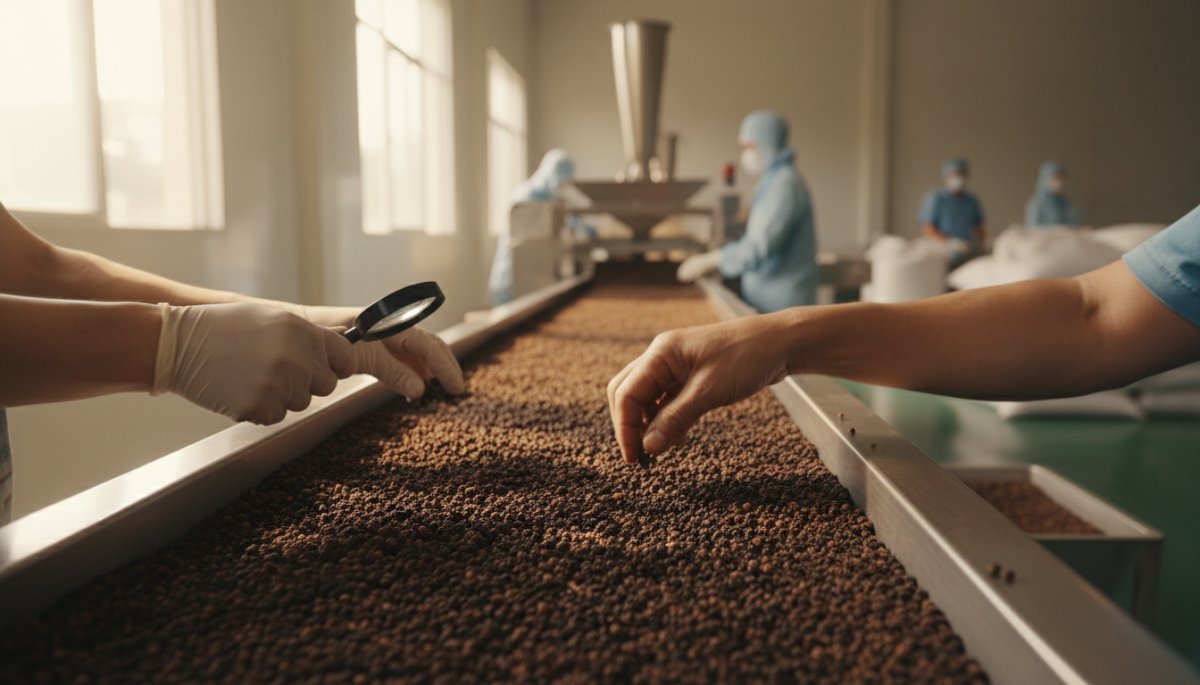
The strength of Vietnamese black pepper is not only output. A commitment to quality control and safety has won trust in the international market.
For pepper bound for Japan in particular, traceability that lets you follow the history from farm to table is established, and it is valued as pepper with "a face you can see."
Ensuring safety through airflow-type sterilization
Because spices use plant seeds and fruit skins as raw materials, contamination by adhering soil bacteria and other microbes is an issue. Some countries overseas permit sterilization by irradiation, but Japan's Food Sanitation Act sets no microbial standard for spices themselves.
For Vietnamese black pepper, a method called "airflow-type sterilization" using superheated steam is adopted. This method has a high sterilizing effect while keeping damage to color, flavor, and aroma to a minimum—a processing technique.
[Strength 5] Diverse varieties and processing techniques
In Vietnam, not only black pepper but diverse pepper varieties such as white pepper and red pepper are produced.
Types and characteristics of pepper
Black pepper is harvested before full ripeness and dried for a long time, giving a strong pungency and plenty of flavor. White pepper is harvested after full ripeness and dried, then soaked in water to soften the outer skin, which is peeled off; it has mild pungency and is richly aromatic and smooth.
Red pepper is harvested after full ripeness and dried, with light pungency and aroma and a fresh, clean character. Green pepper is fresh pepper harvested before full ripeness, with an appeal of refreshing pungency.
At the night market on Phu Quoc Island, fresh green pepper is sold in piles, and vacuum-packed ones can be had for about ¥100, a price only a production region can offer. Such a diverse lineup of varieties raises competitiveness in the international market.
[Strength 6] Promoting international cooperation and technical exchange
Vietnam actively promotes agricultural cooperation with advanced countries, including Japan. The "Japan-ASEAN Green Cooperation Plan," adopted at the Japan-ASEAN agriculture and forestry ministers' meeting in May 2023, is a comprehensive framework for cooperation toward building sustainable agriculture and food systems in the Asian monsoon region.
Technology transfer and workforce development
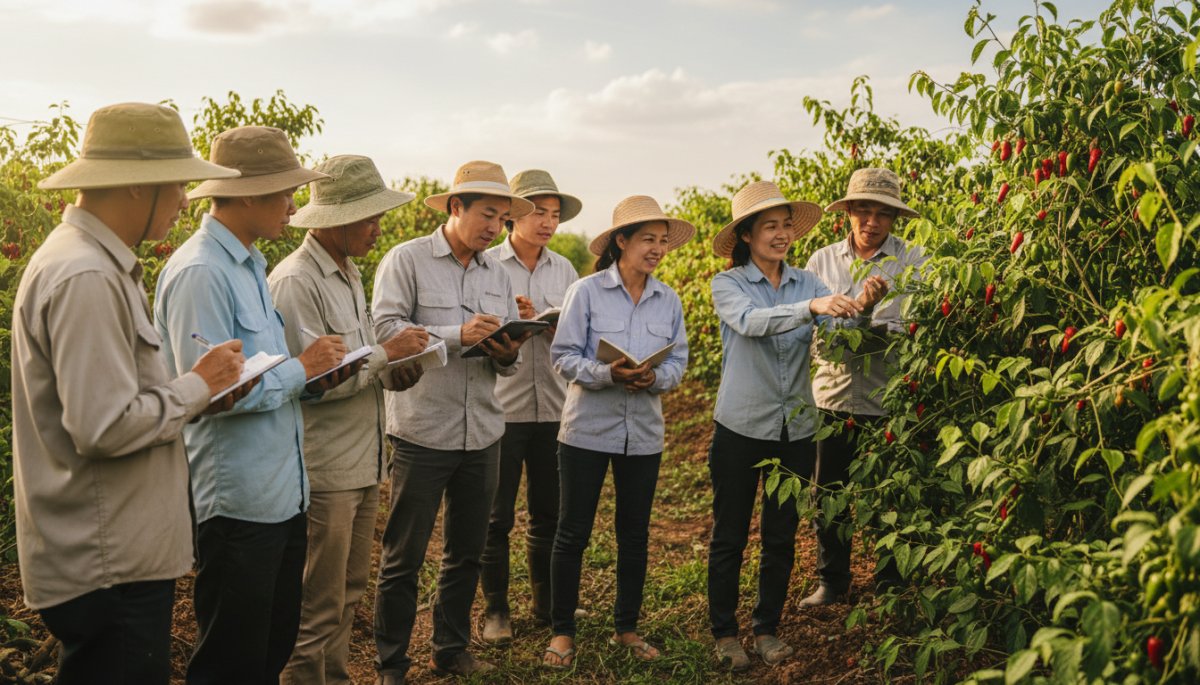
An organic-agriculture training center has been established in Buon Ma Thuot City, Vietnam, where agricultural technology is transferred. Agricultural trainees from Vietnam are hosted at Japanese farms, and after the trainees acquire agricultural techniques and return home, an agricultural production base is being built so they can put those techniques to use locally.
Through such international cooperation, Vietnam's pepper producers learn advanced cultivation techniques and quality-control methods, achieving further quality improvement. In 2014 and 2017, members of a Japanese cooperative visited pepper fields in Dak Lak province, directly observing how it is grown and deepening the exchange.
[Strength 7] Cost performance and stable supply capacity
One of the strengths of Vietnamese black pepper is its excellent cost performance. While being high in quality, it has price competitiveness compared with other production regions, and a stable supply is possible.
Compared even with regions such as Tellicherry and Malabar in India and Muntok and Lampong in Indonesia, Vietnamese pepper excels in its balance of quality and price.
Stable supply through large-scale production
Vietnam's pepper production, though it has many smallholders, has established an overall large-scale production system. The average farm plot is about 0.44 hectares, among the smallest in ASEAN, yet 97% of all agricultural workers are engaged in pepper cultivation as small and medium-sized farmers, and their total output is world-class.
This stable supply capacity is the reason it is trusted by food makers and the restaurant industry worldwide. Major Japanese spice makers also adopt Vietnamese black pepper as a flagship product, and this continued use is an encouragement to the production regions.
The Vietnamese government is advancing support to upgrade agricultural value chains, and through building out the cold chain and attracting investment into processing facilities, further quality improvement and cost reduction are expected.
Summary: why Vietnam's black pepper continues to lead the world
The reason Vietnam reigns as the world's top producer and exporter of black pepper is not simply the sheer size of its output. Seven strengths—the ideal growing environment of the central highlands, long-cultivated techniques, world-class output and an export system, a thorough commitment to quality control and safety, diverse varieties and processing techniques, the promotion of international cooperation and technical exchange, and excellent cost performance and stable supply capacity—support the competitiveness of Vietnamese black pepper.
Going forward, Vietnam will accelerate its shift from "agricultural production" to "an agricultural economy"—that is, from quantity to quality—and advance the adoption of organic and smart agriculture. A relationship in which consumers and producers can see each other's faces across borders will develop, and Vietnamese black pepper should win still greater trust and recognition.
Do try, just once, the black pepper packed with Vietnam's rich nature and its farmers' passion.

