The country stretches north to south; the north is cool in winter and grows hot toward spring, while the south is a year-round tropical land where sudden squalls pour down. What sparked my idea to start a media outlet about Vietnam was its difference from Japan.
Hello, my name is Rei Kojima. After studying agricultural geography in my university days, I founded a dried-vegetable business in Kyoto using out-of-spec vegetables, called 'OYAOYA', which I founded and in 2022 incorporated as Agriture Inc. Then I sold the business in 2023. After that, I traveled across Vietnam and India, visiting farming sites in various areas to source food. Through those activities, I came to feel that Vietnamese agriculture has great potential, and so, for a start, I launched this media outlet.
Ultimately I want to pursue this as a business, so for the time being I plan to carry out the following:
- Selling and exporting souvenirs made with Vietnamese coffee
- Product development using items from the Mekong River basin
- Acting as an on-site representative for agriculture-related matters, and so on
- Setting up food-processing facilities and OEM matching: In Japan, I run an OEM directory site and operate it.
Agriculture in Vietnam
Talking with Vietnamese people, I have heard it said that people from the north save money while people from the south do not. Digging deeper, I was told that because the south has a warm climate year-round and plenty of fruit is harvested, people do not struggle for food, and so such values took shape.
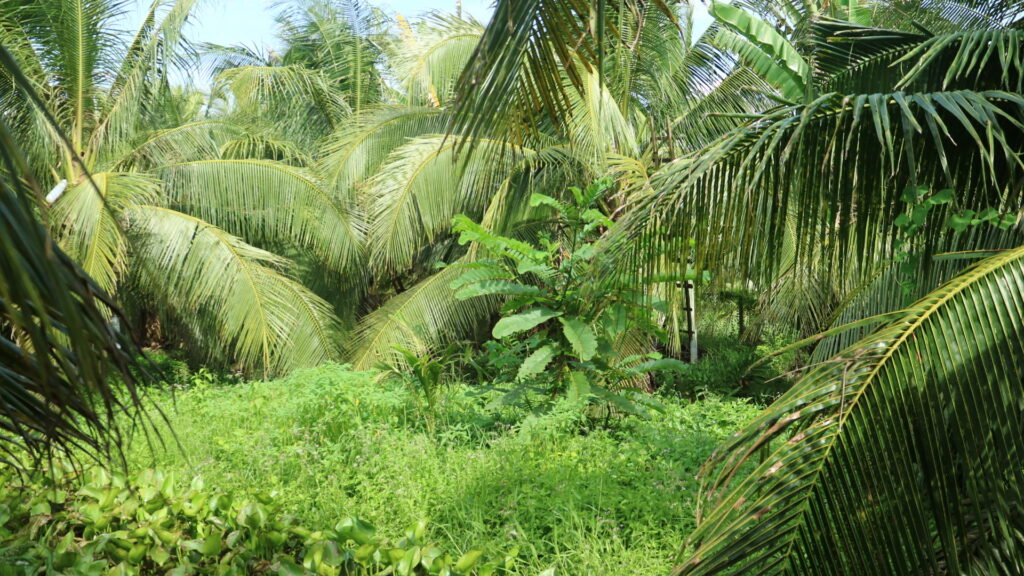
In fact, because I have friends there, I often had the chance to visit areas in southern Vietnam such as Ben Tre and Tra Vinh. Driving about an hour from Ho Chi Minh City, the economic hub of the south, coconut trees grow thick and a scene that is distinctly tropical unfolds.
Vietnam, a Fruit Paradise
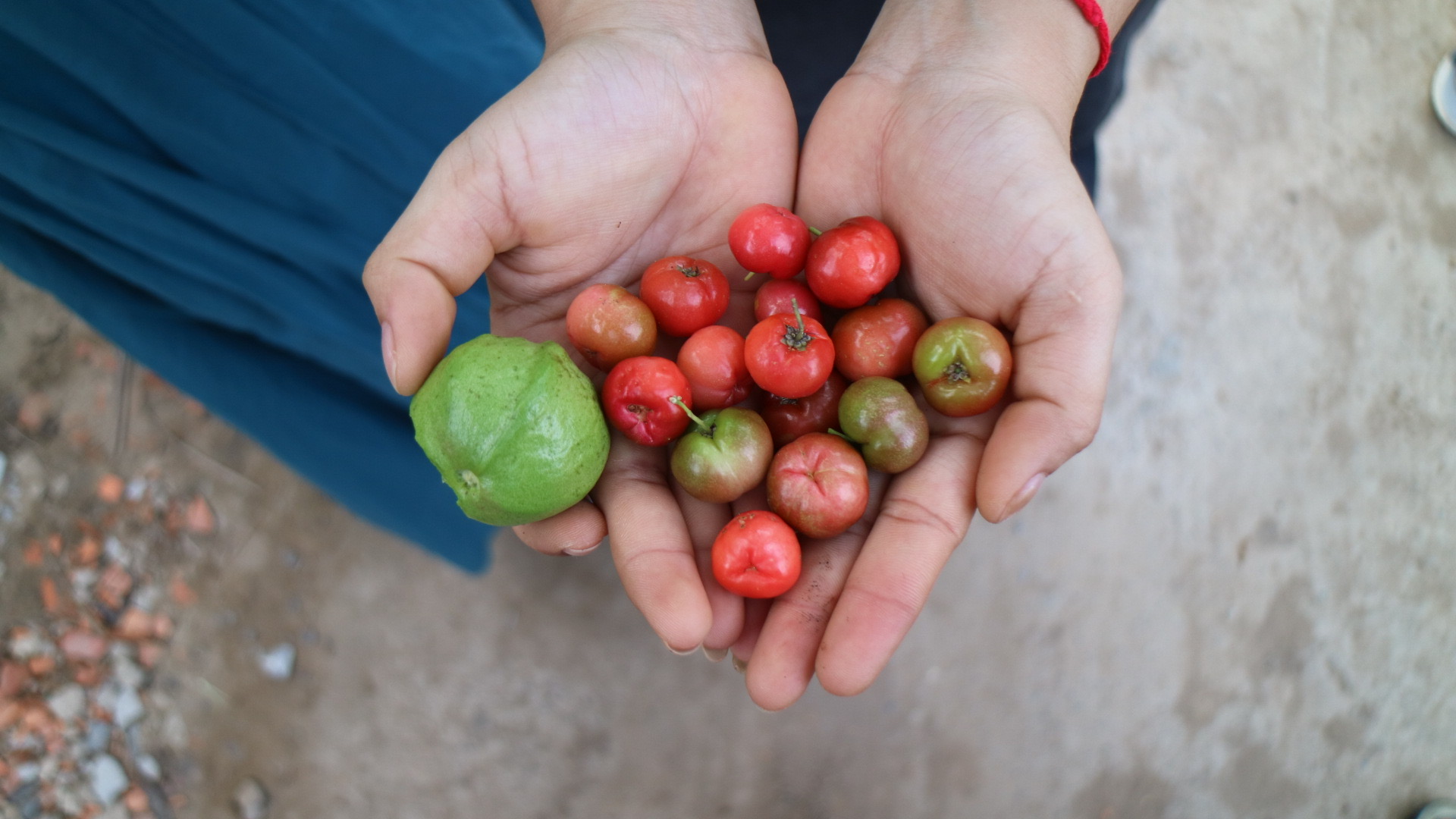
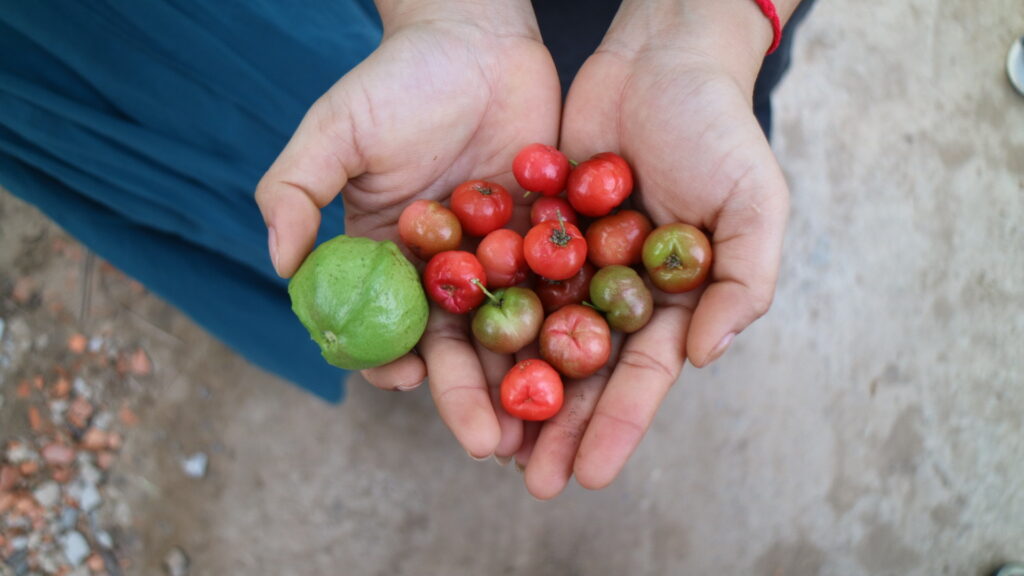
Starting with coconut, you also get to see fruit rarely seen in Japan, such as dragon fruit and guava. Even at urban supermarkets, a whole watermelon for 30,000-50,000 VND (about 200-300 yen), or around 10 bananas for about 100 yen, are fairly good buys. These are brought from the tropical areas and transported to the places where they are consumed.
From what I heard, each area has an organization for each item that sets the price and sells in bulk, a kind of small agricultural cooperative that optimizes distribution. Even when visiting farmers, I did not get much sense of agriculture being done in a businesslike way; the mood was more of people simply growing fruit on their own land.
Incidentally, Vietnamese people like to eat fruit as is, so apparently they do not favor processed fruit products.
SokFarm, a New Form of Agriculture
Meanwhile, in the Tra Vinh area, there is a startup working on the coconut industry, whose earnings are kept unstable by the Mekong Delta's salt damage, called SokFarm Sokfarm. In the Mekong Delta, where the effects of climate change and salt damage sharply reduce harvests and destabilize farmers' incomes, Sokfarm has, in response to that challenge, established a new business model that adds value to the nectar tapped from coconut flowers through product development. This flower nectar, which can be tapped daily without felling the trees, is not easily affected by climate change and provides a stable, year-round income source, while also differentiating itself from the coconuts sold cheaply within Vietnam. By working with farmers to handle everything from tapping to processing and sales in an integrated way, it supports the sustainable development of the local economy while keeping its environmental impact low.
Vietnam has bountiful harvests, but I think every region suffers a certain amount of damage from climate change and distribution challenges. A business in which companies like Sokfarm set out to solve these holds potential unique to Vietnam, in my view.
Vietnam Means Cacao and Coffee
Signed between Japan and Vietnam in September 2025, the 'Japan-Vietnam Medium- to Long-Term Vision for Agricultural Cooperation' describes concrete, large-scale real-world implementation, stating that investment will continue as an extension of what has come before, in areas such as the Mekong Delta salt damage mentioned earlier, the implementation of smart agriculture and the development of agriculture-related infrastructure.
Among these, I find the items that are harvested in Vietnam and heavily consumed in Japan interesting.
Some time ago, I had the chance to look at the back of a blended-coffee package in Japan. Where it used to say Ethiopia or Brazil, recently it had changed to say Brazil and Vietnam. And with the surge in cacao prices leading to substitution with Vietnamese product, Vietnam, being close to Japan, is also a growing region with hidden potential. I intend to keep following these trends closely going forward.
This is a rather rambling piece, but Vietnam, while an agricultural nation, will likely face challenges from climate change and the like in the years ahead. Also, as sourcing shifts due to transport costs and the like, Vietnam, being close to Japan, stands to benefit, and together with its domestic growth it will surely become an important country in ASEAN. On such Vietnamese agriculture, I will share through this media outlet not only online information but also what I have learned through local reporting and business on the ground.
If there is anything, please feel free to let me know.